Although we could see Albania from Corfu it still came as a surprise that it only took just a few hours to sail from Garitsa Bay in Greece to Sarande in Albania where we checked in.
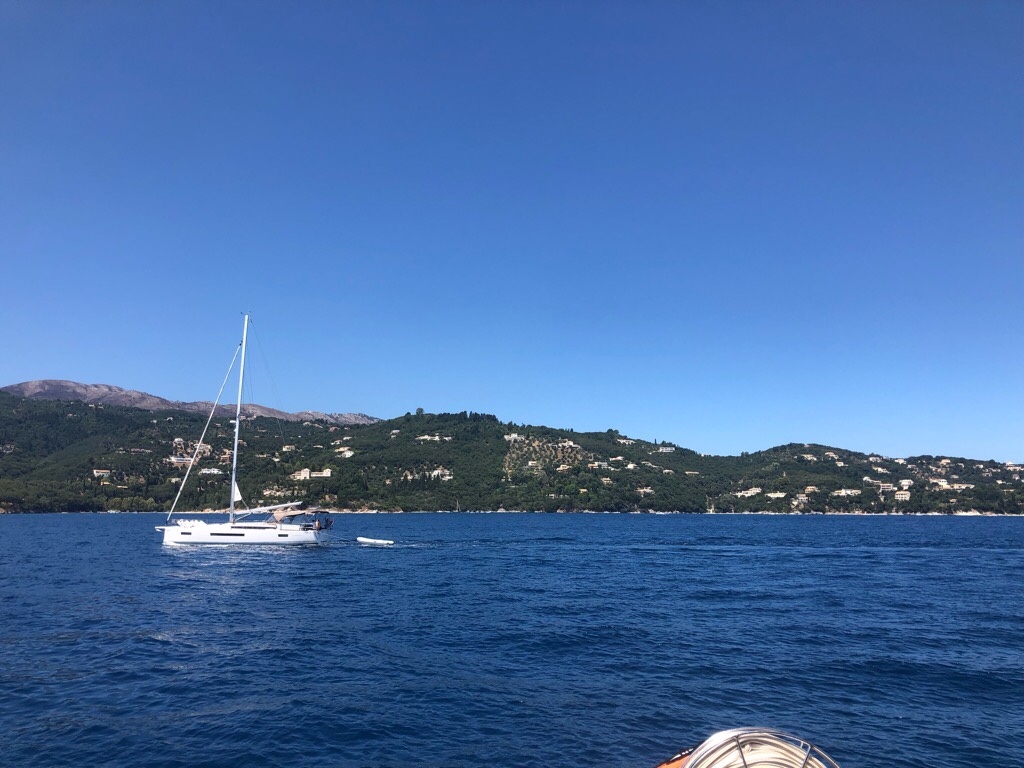
We were leaving Greece after three wonderful months – travelling first to the island of Limnos, from Turkey, and then stopping at many gorgeous Greek islands, eventually transiting the Corinth Canal and finally arriving in Corfu after a brief look at some of the glorious Ionian islands.

Our great friends from Brisbane Peter and Cathy were travelling this leg with us aboard Sunday – their first time travelling from one country to another aboard a yacht!

We were all excited about visiting Albania as it isn’t on the regular tourist trail. Jonathan and I had driven through in our camper van a few years ago and it hadn’t left the best impression (crazy drivers, terrible poverty)) but we were really hoping to be pleasantly surprised on this, our first “proper” visit.
We travelled north following the coast of Corfu with the impressively mountainous coastline of Albania to the east.
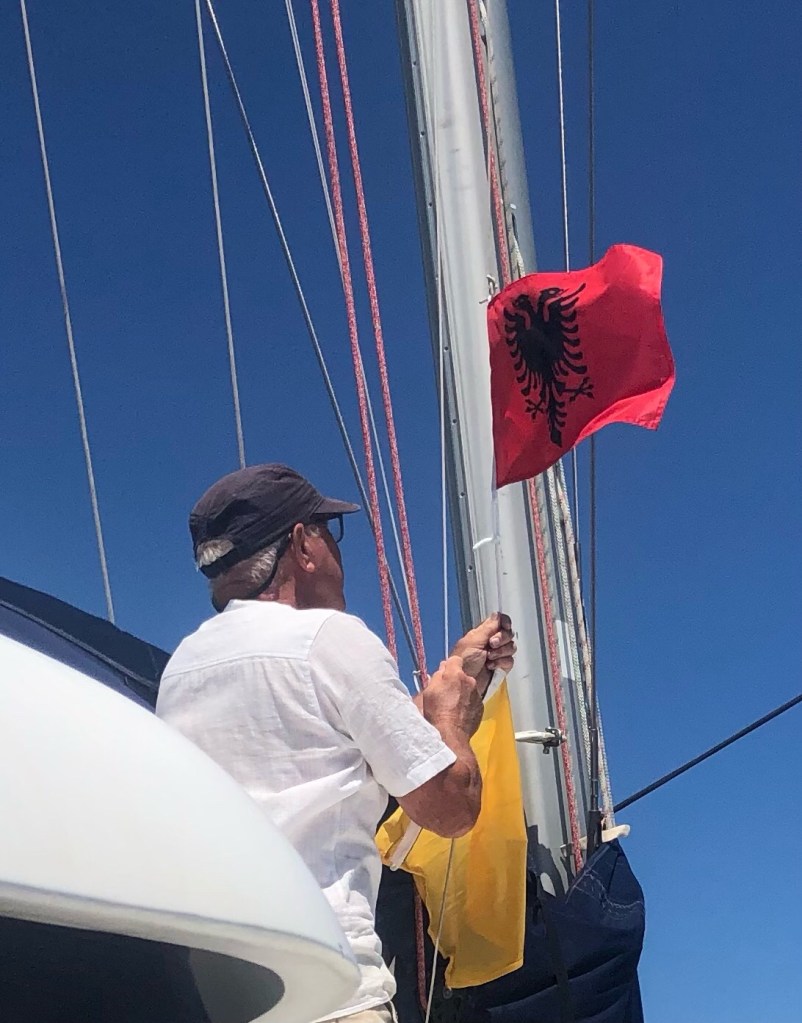
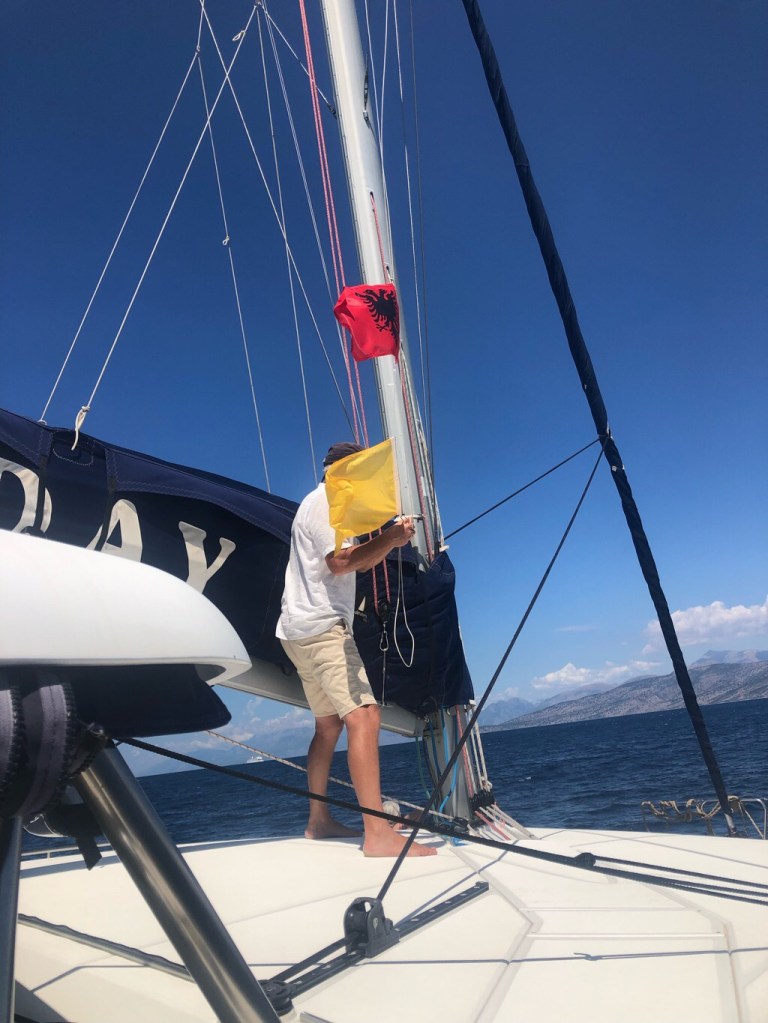
We then travelled through the narrow channel between Corfu and Albania where we dropped our Greek flag and raised our Albanian flag with the yellow “Q” flag that indicated that we had yet to clear immigration, quarantine and customs.
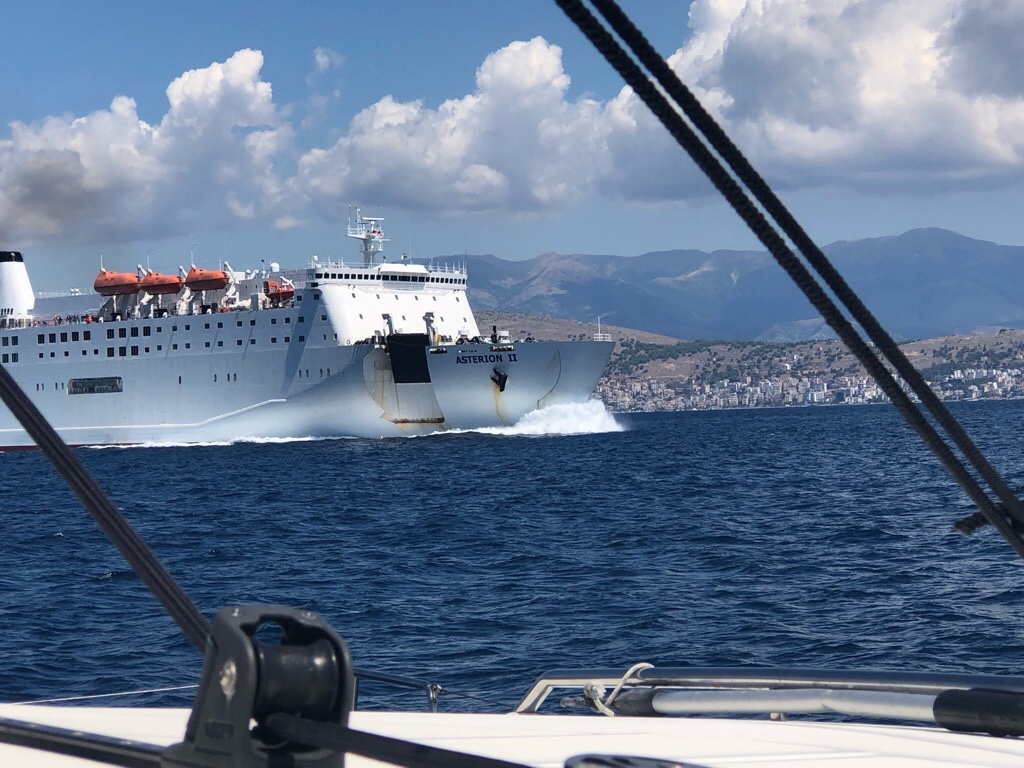
Peter and Cathy did really well with no signs of seasickness or nerves – even when a large car ferry seemed to be heading straight for us as we travelled through the rather narrow channel!
After seeking permission from the harbour master we anchored in the large bay in Sarande. Soon after, our agent – the diminutive Jelja Serani – contacted us and advised Jonathan where to go ashore to meet her to complete all the necessary formalities with the immigration/custom authorities.
This all seemed to go well according to Jonathan and Jelja was very helpful but the so-called dinghy dock was a nightmare! He said he had to haul himself up into a big barge and then clamber over it onto the dock. Then he had to walk through a customs hall and explain he was from a yacht to anyone who challenged him before finding his way onto the street.
Our first challenge after clearance therefore was to find somewhere else to park the dinghy as there was no way Cathy and I would have been able to haul ourselves onto the barge without some difficulty.
To that end, after a bit of exploring, Jonathan found a tiny harbour on the sea front in which small local boats tied up. In one corner was a set of steps leading to a restaurant called Bar Restaurant Limani.

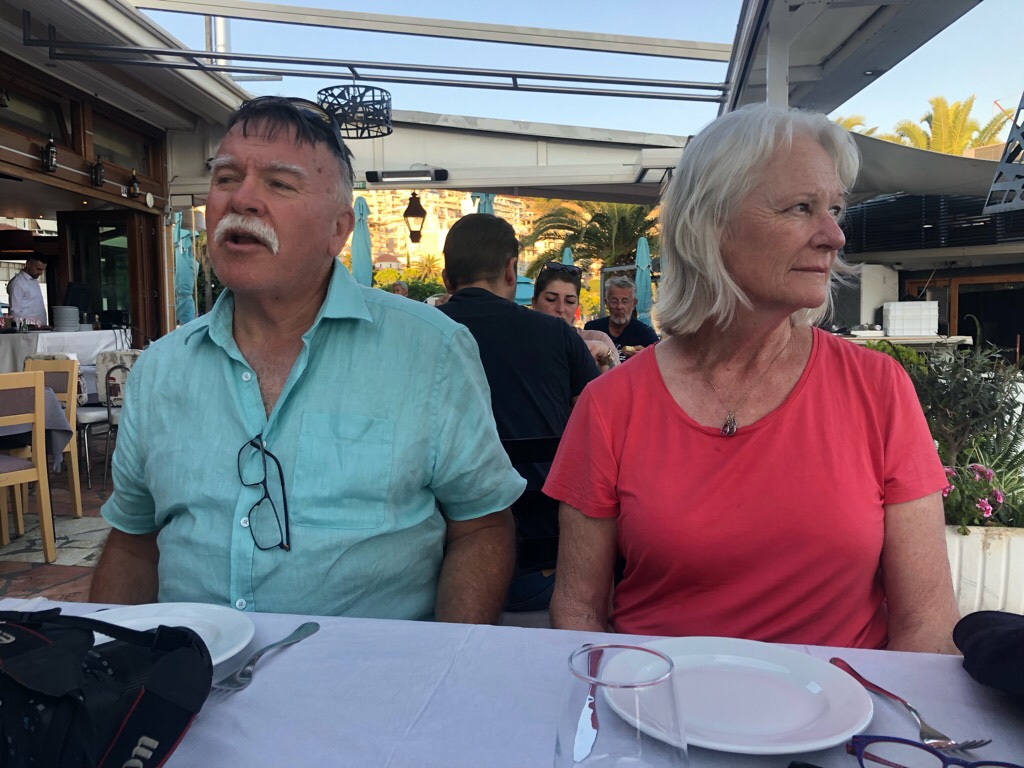
Fortunately, the manager there was very kind and allowed us to use the steps to tie up to. We had to enter the restaurant and onto the sea front by walking past the kitchen staff but they didn’t seem to mind. Later on we had a lovely meal there with good food and very friendly and efficient wait staff.
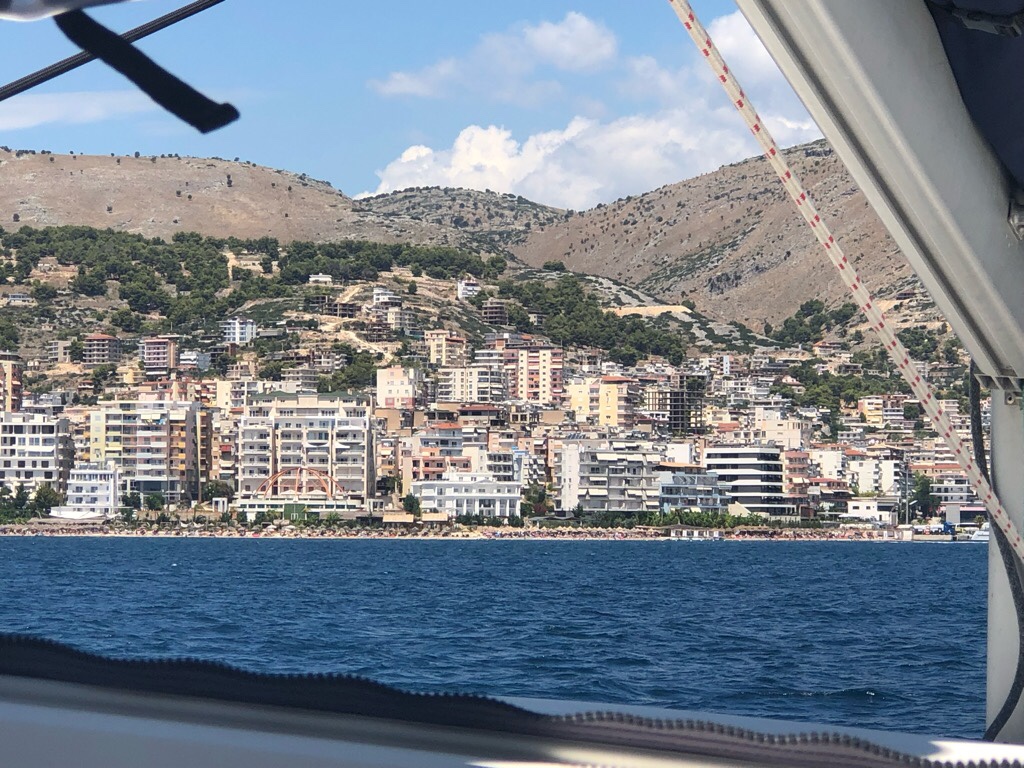
Our first impression of Sarande (as seen from the boat) was that it was incredibly crowded (the beaches looked packed) and the architecture was not attractive – mostly late modernism communist-style apartment blocks.
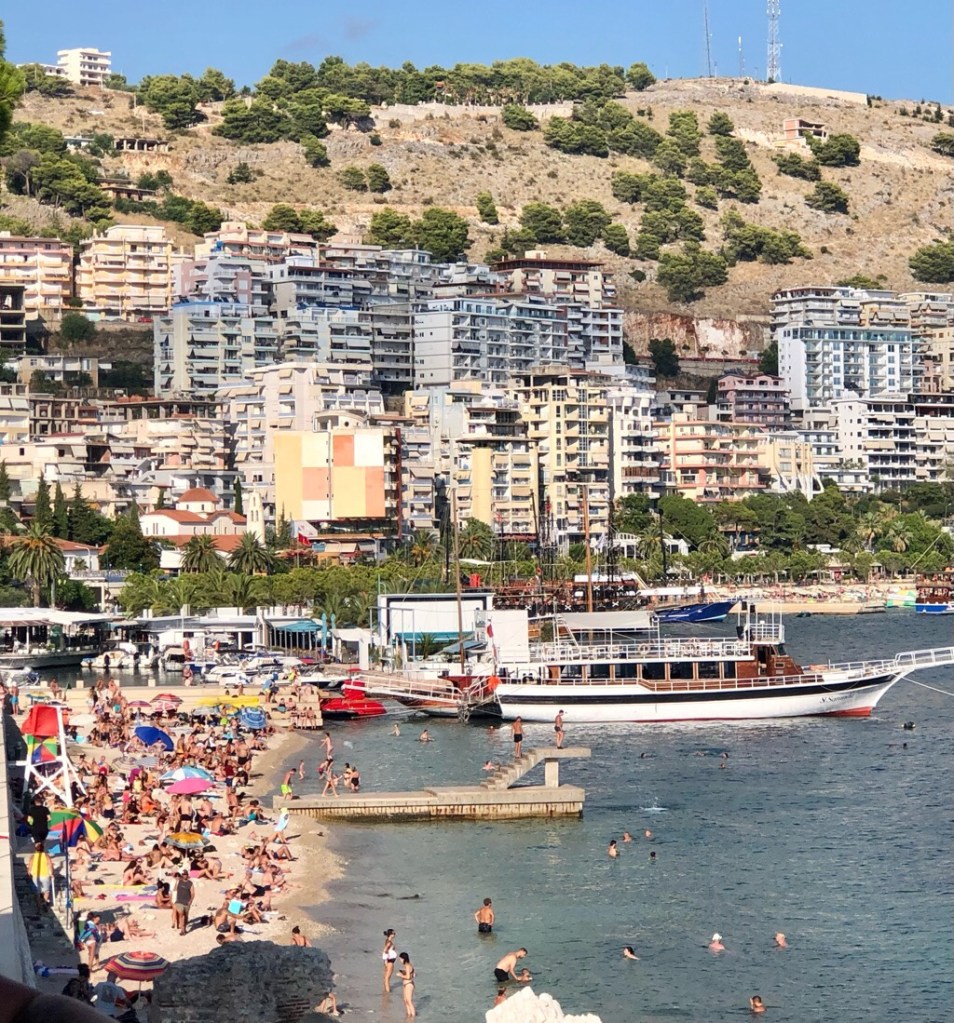
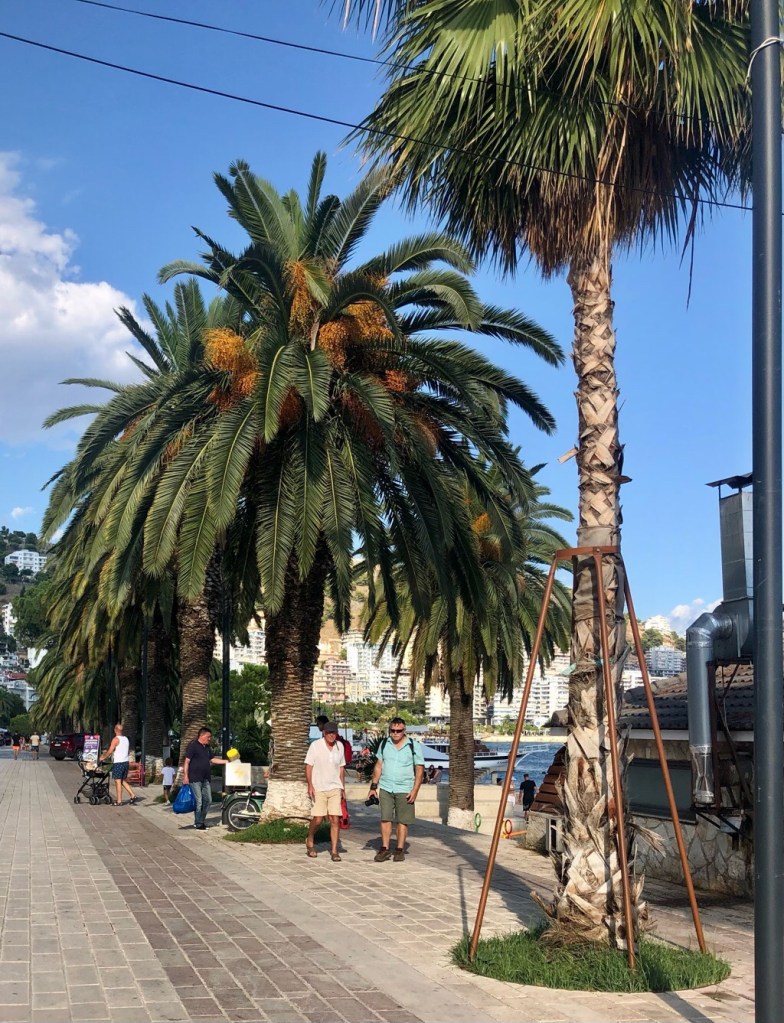
However, walking along the seafront was actually quite enjoyable and once we had done some exploring we found a very pleasant rooftop bar which sold beer and cocktails at a very reasonable price!
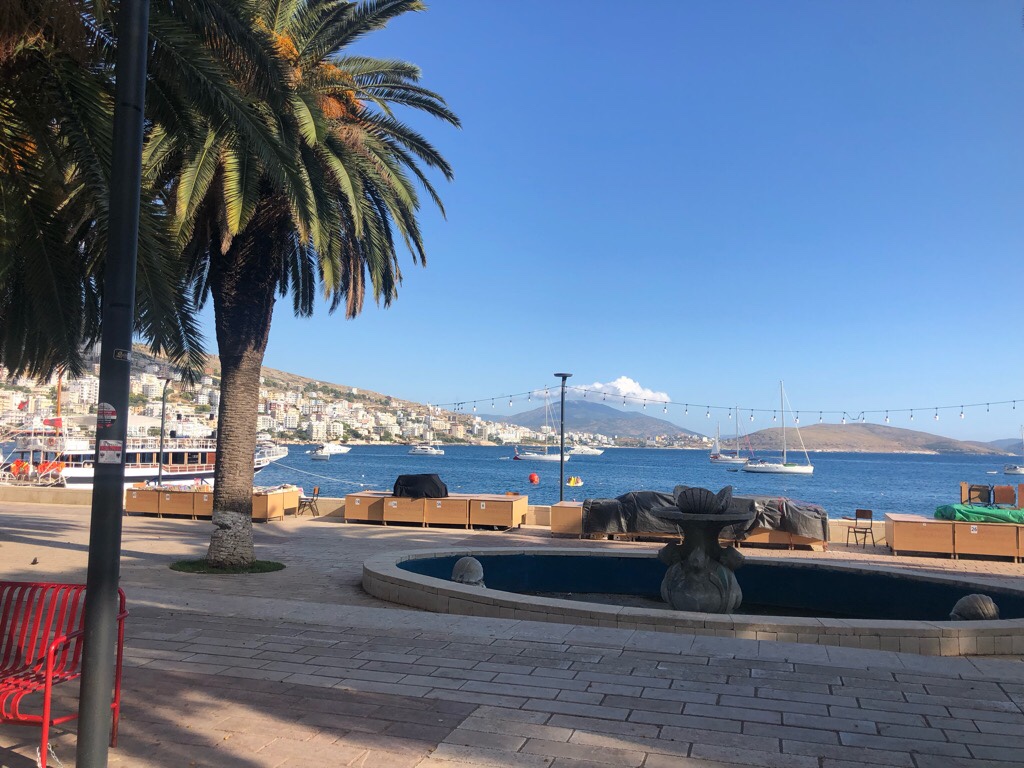
was quite enjoyable
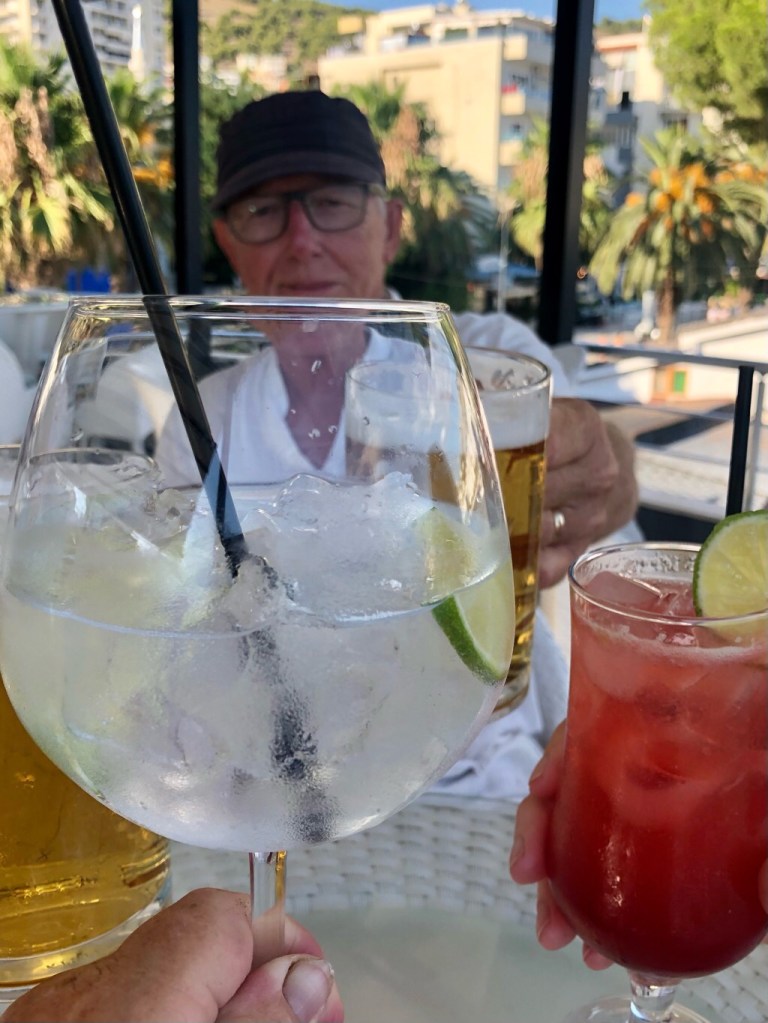
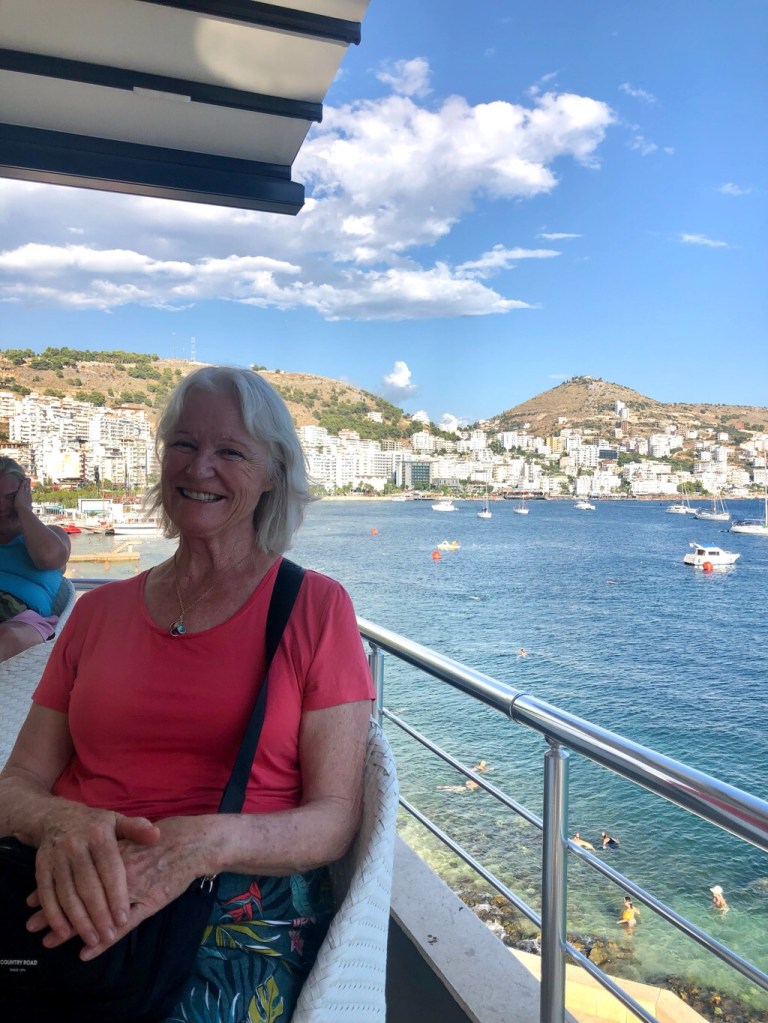
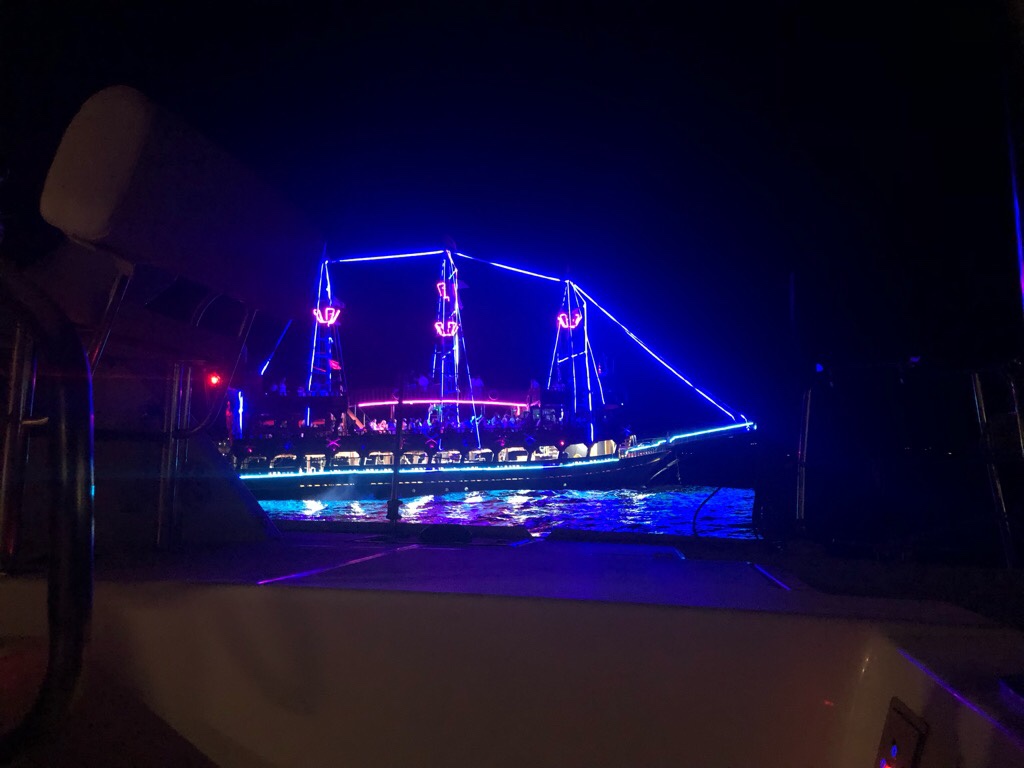
Back on the boat later that evening we were invaded by noisy pirates – quite literally! As soon as night fell, the tourist “pirate” boats cast off with “music” blaring and lit up like Christmas trees. They motored very slowly and loudly past us and sailed around the bay for an hour or two and then made their way back – very slowly and loudly – to their mooring.

Meanwhile, on shore, a cacophony of thumping music echoed out across the water from the many nightclubs and restaurants. It wasn’t a restful night!
The following day we hired a car to explore a bit of the interior (our agent Jelja organised this for us).
Getting out of Sarande was a challenge- the streets were very narrow and incredibly difficult to negotiate due to masses of cars parked on the roadsides meaning traffic was reduced to only one lane much of the time. Albanian driving was also a nightmare as rather than patiently allowing oncoming traffic to move through, most drivers just drive straight at the oncoming cars in what seemed like a game of chicken. This invariably caused gridlock and everything ground to a halt before someone backed down.
It was a relief to get out of town and on our way!
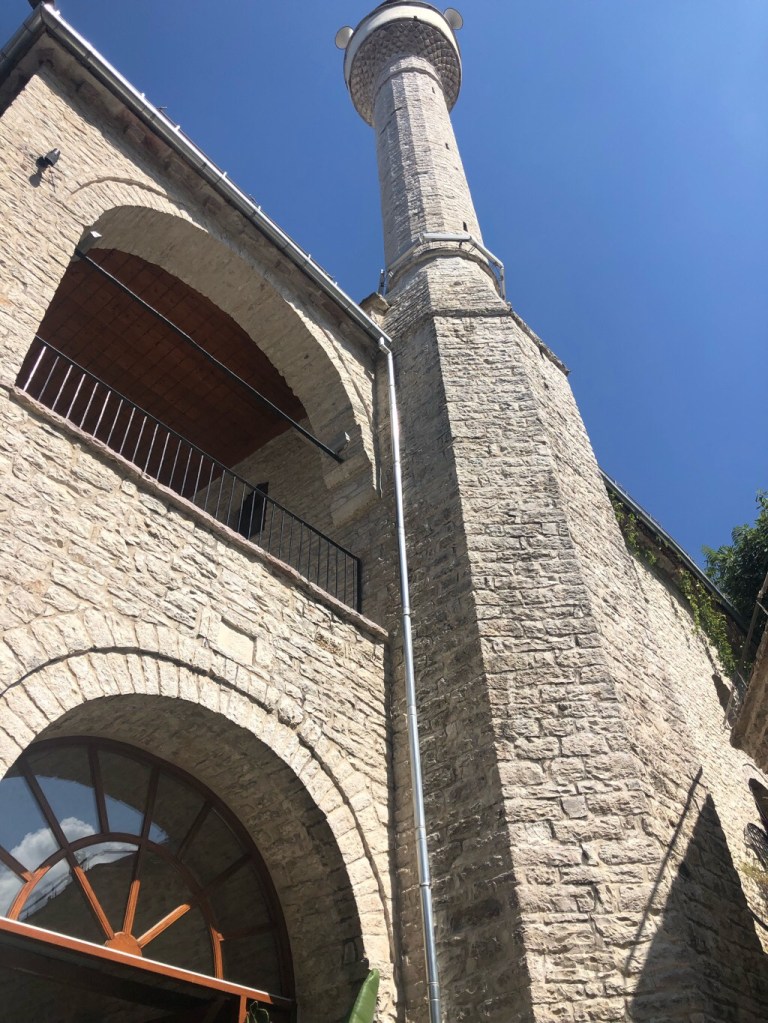
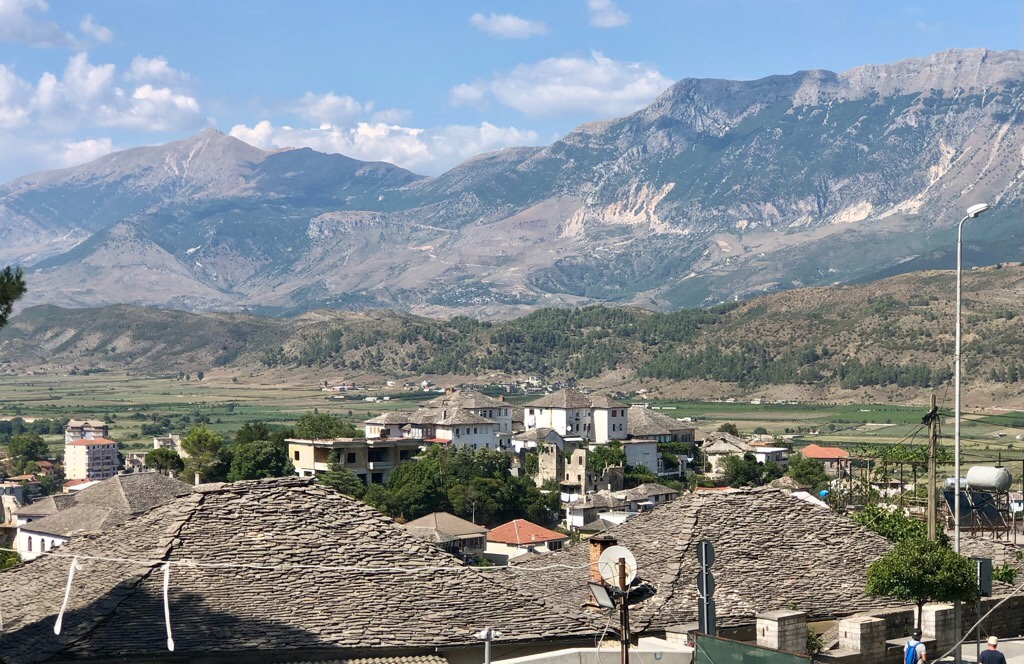
Our first destination was Gjirokaster, an inland city with an old town area (nicknamed “the city of stone”) that has UNESCO World heritage status due to it being a rare example of a well preserved Ottoman town.

The journey there was uneventful and we enjoyed the excellent views of rugged mountains and the contrasting fertile valleys along the way.
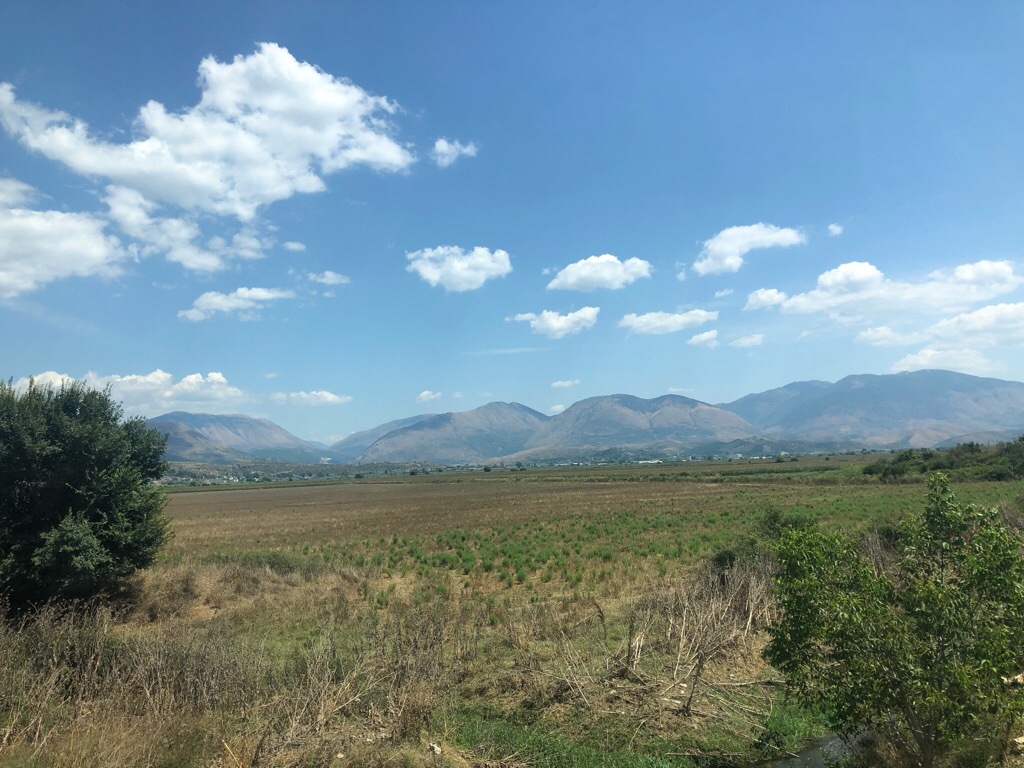
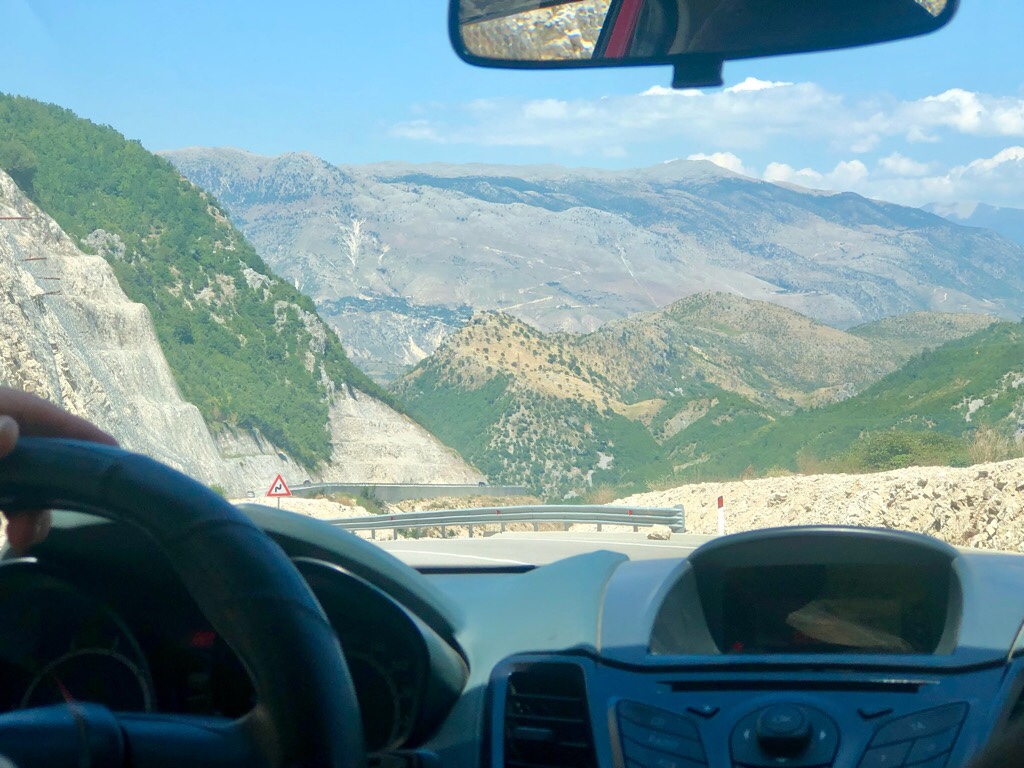
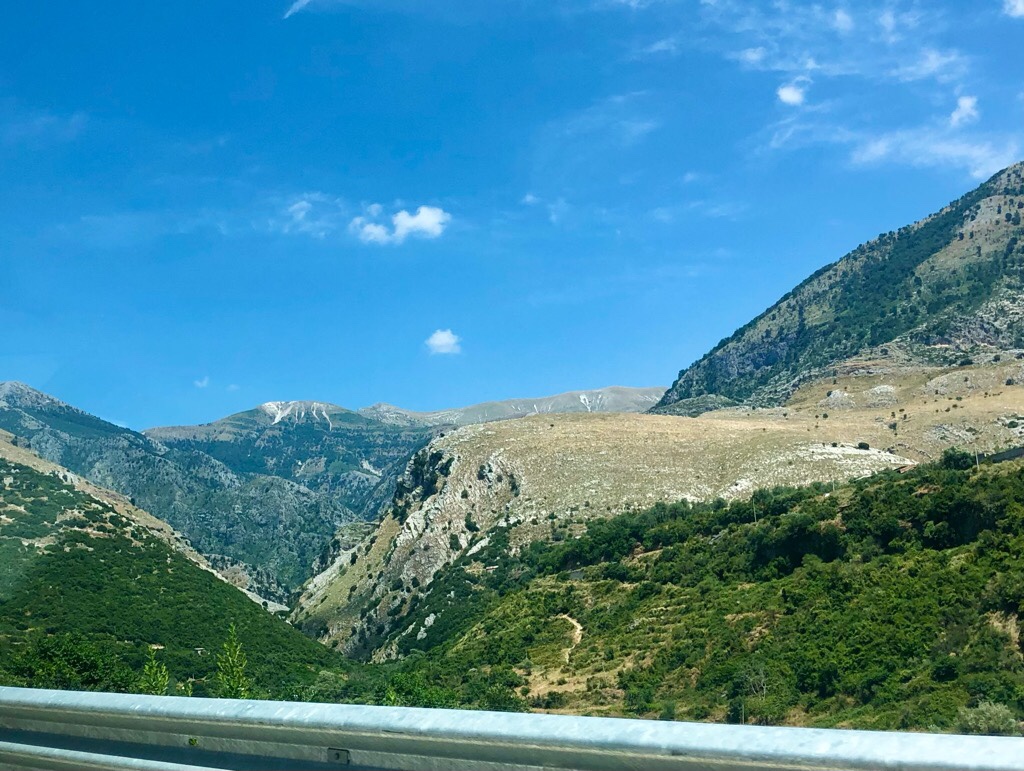
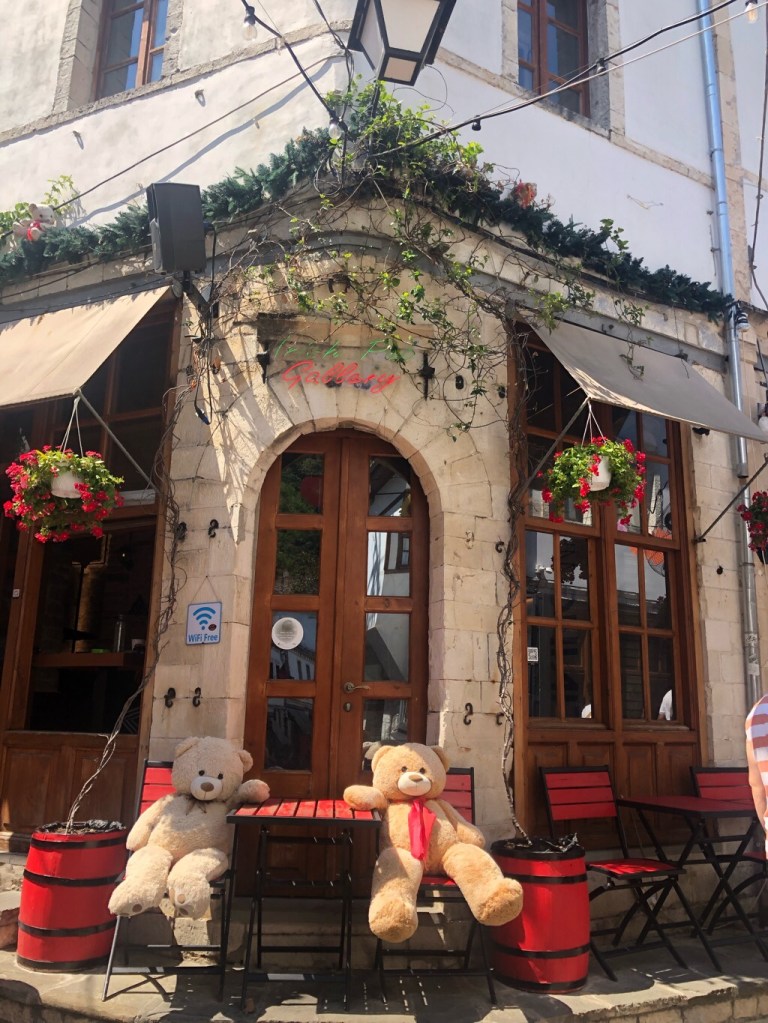
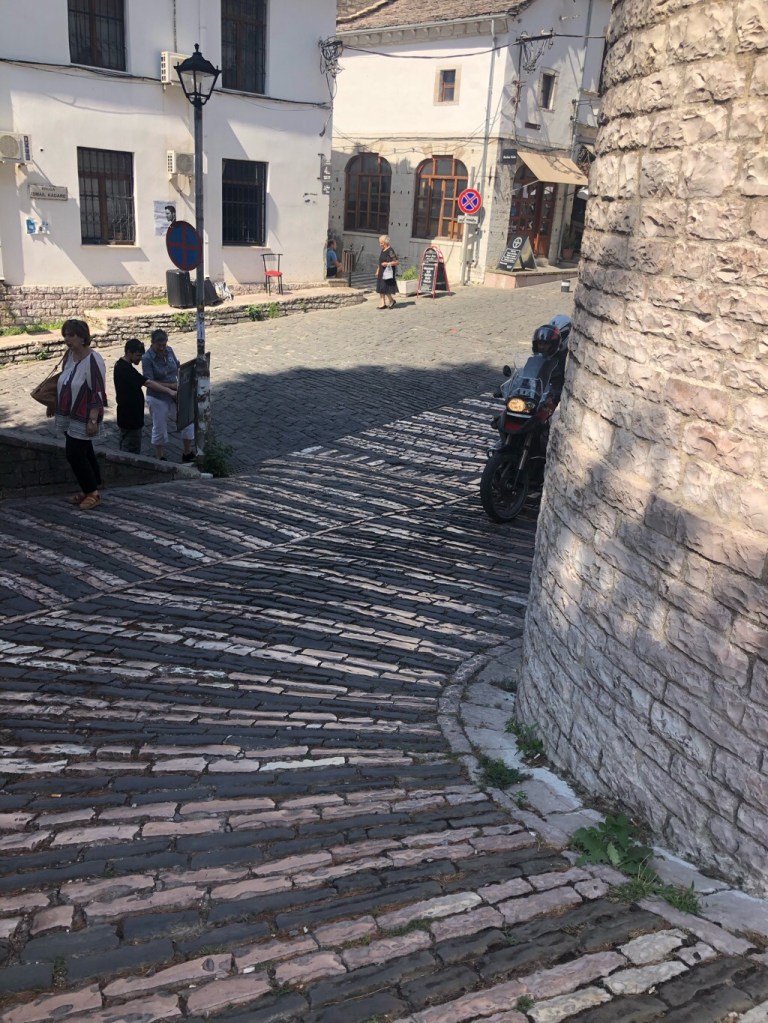
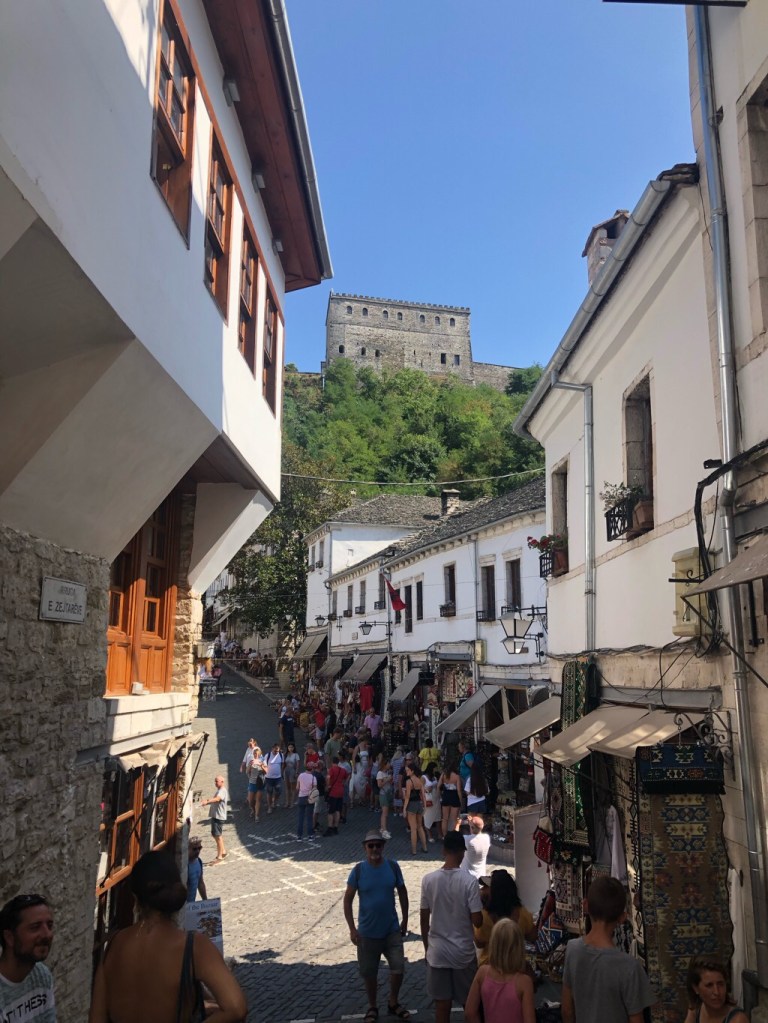
The old town of Gjirokaster is built on a steep hill and it is well preserved. It is quite charming but in my opinion, rather over commercialised – with loads of shops selling tourist tat interspersed with eateries of all kinds (even an Irish pub!).
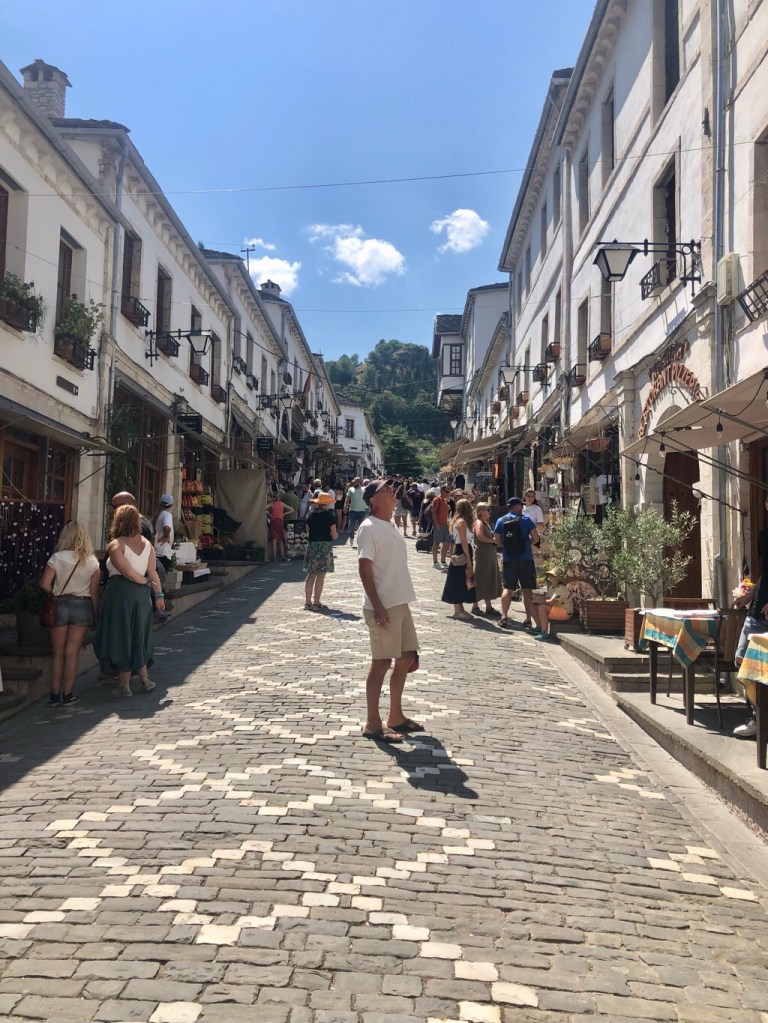
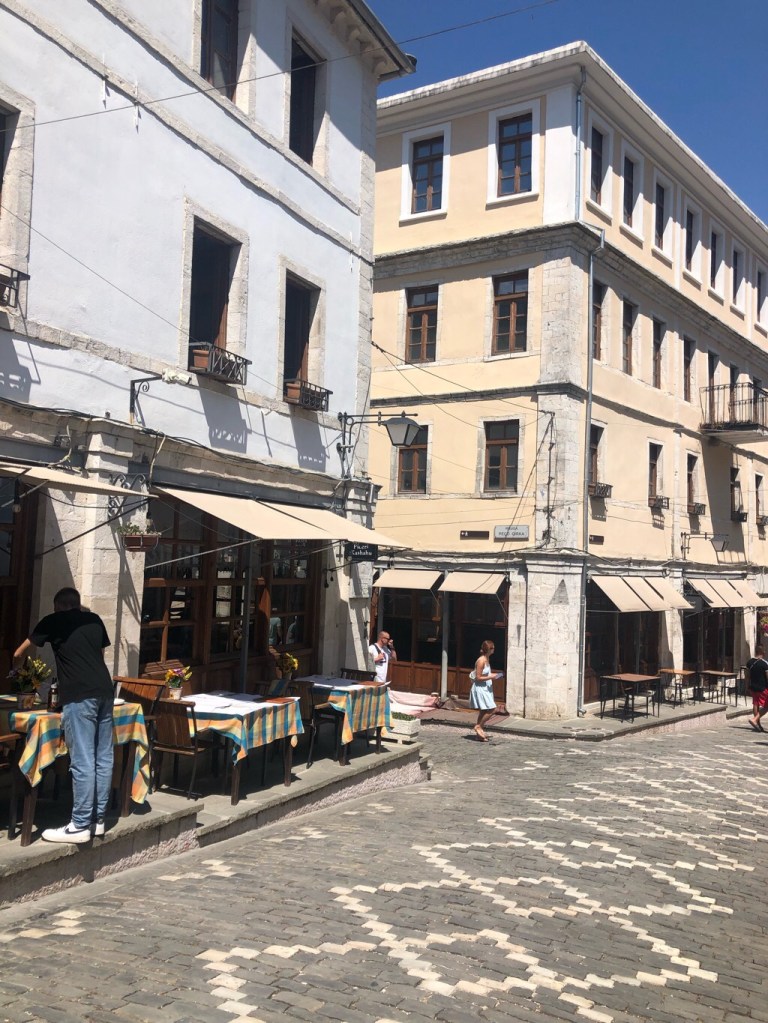
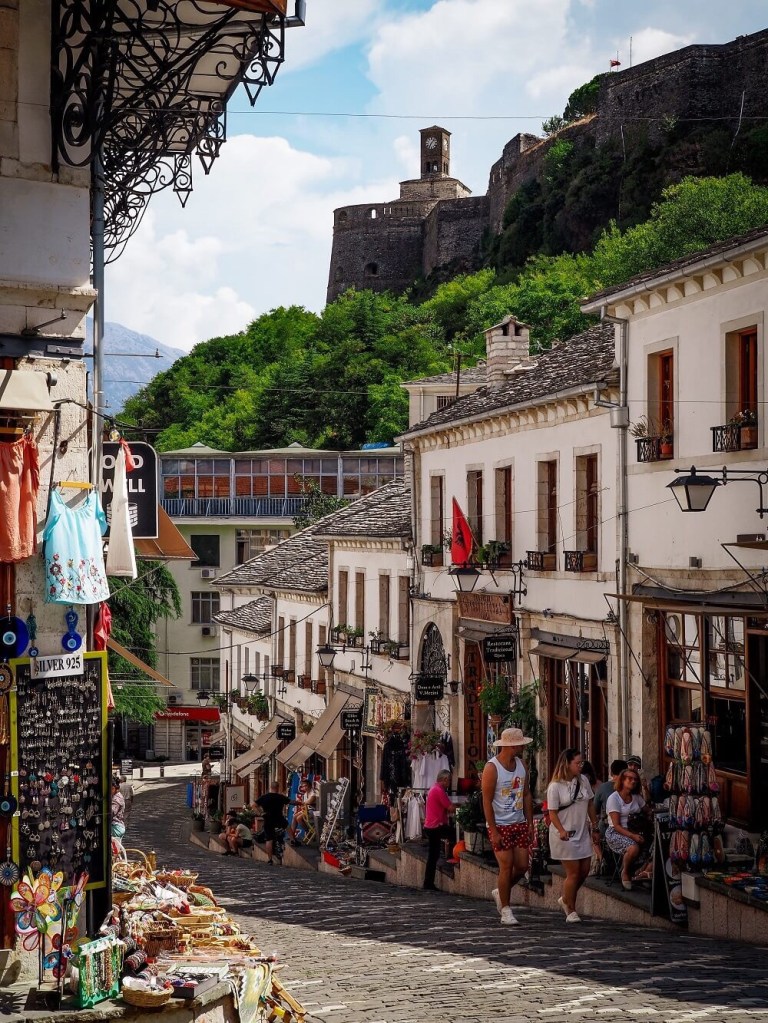
The massively sturdy (and surely incredibly heavy) stone roofs were one of the most interesting features but generally I didn’t find the architecture particularly interesting or striking.
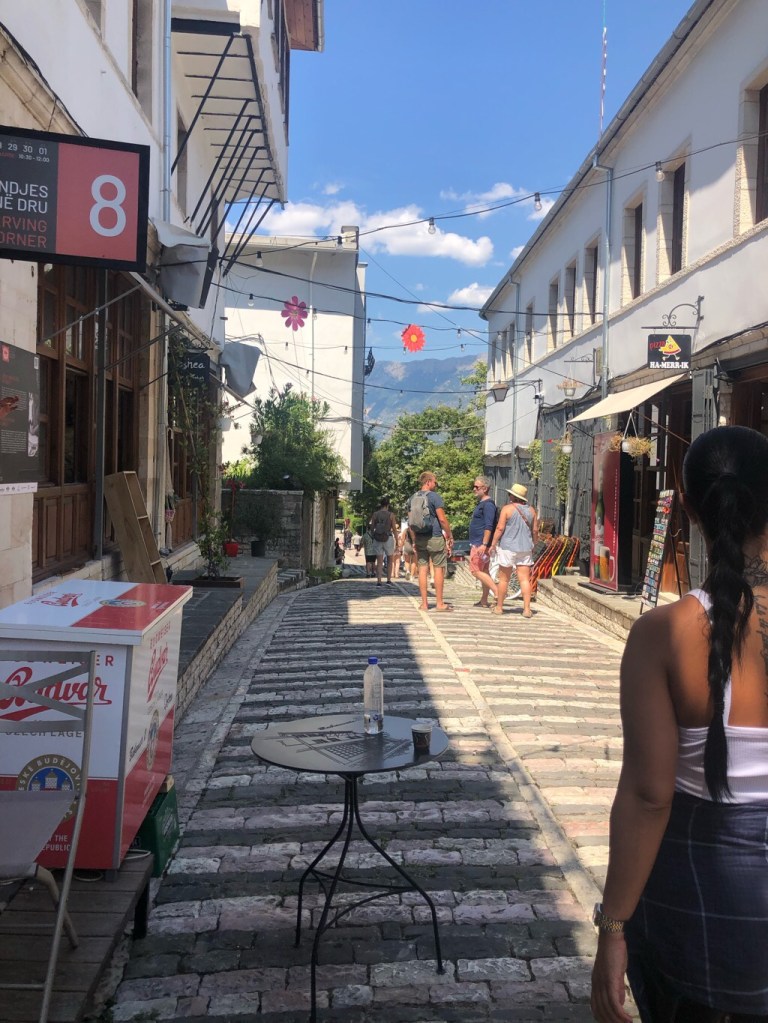


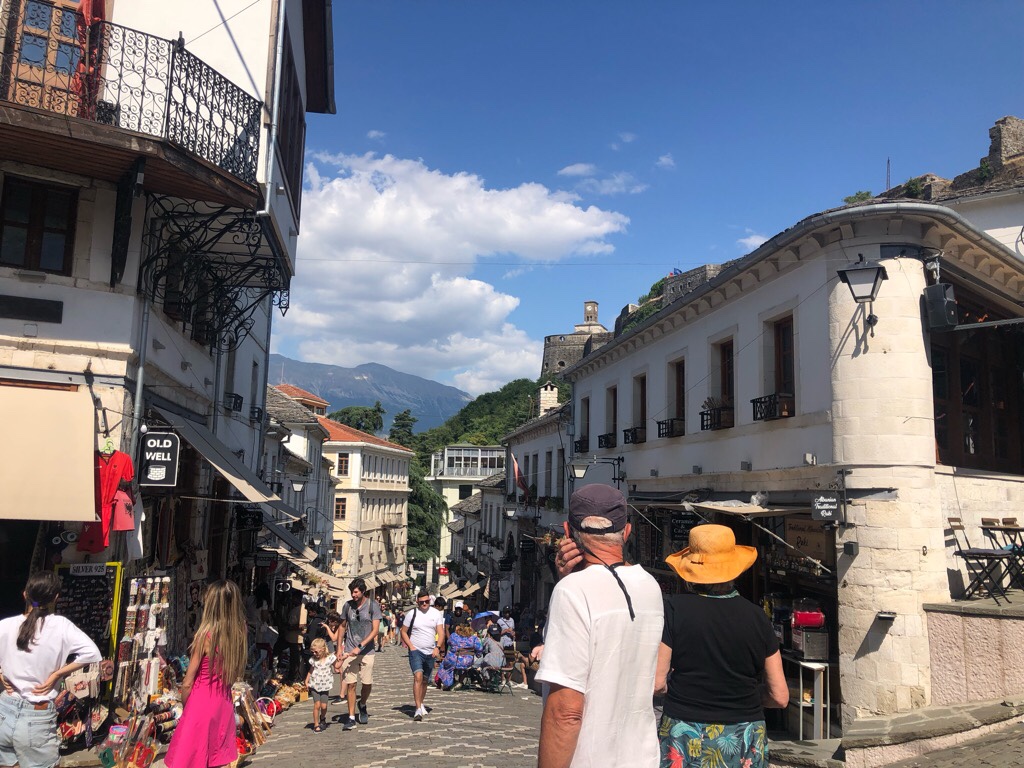
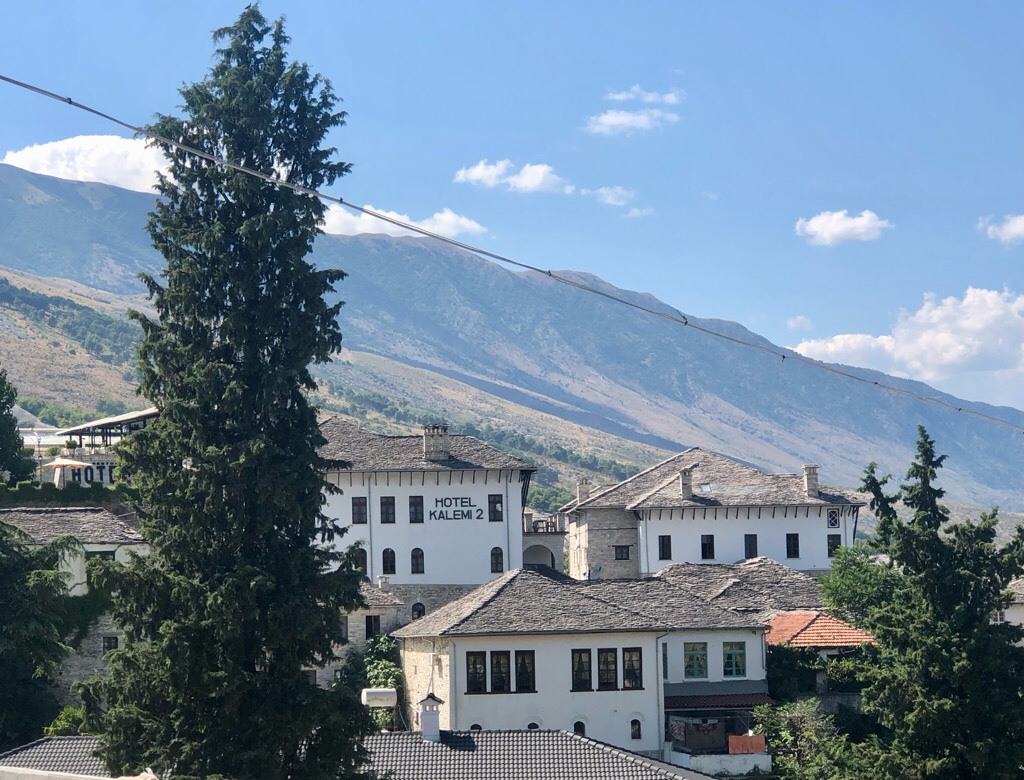
Towering above the town was an impressive castle. Originally built in the first half of the 13th century, its last major rebuilding was in 1812. The castle was once used as barracks for up to 5,000 soldiers. There is now a display of weapons and – apparently – a US Air Force Lockheed T-33 training jet.
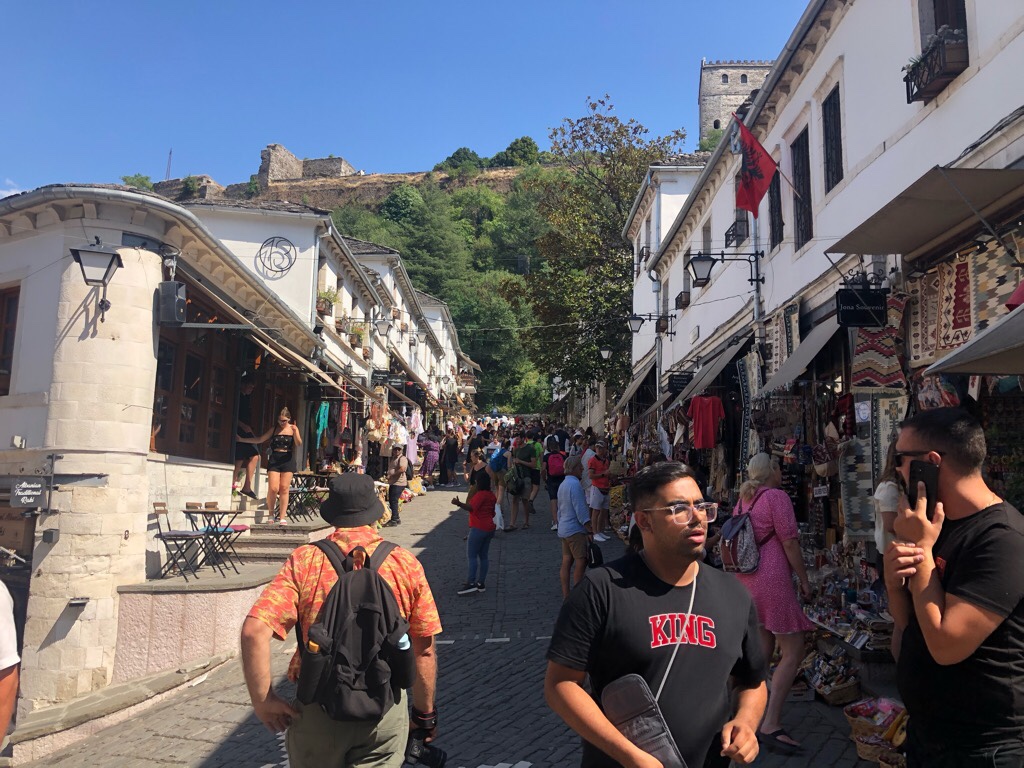
an impressive castle
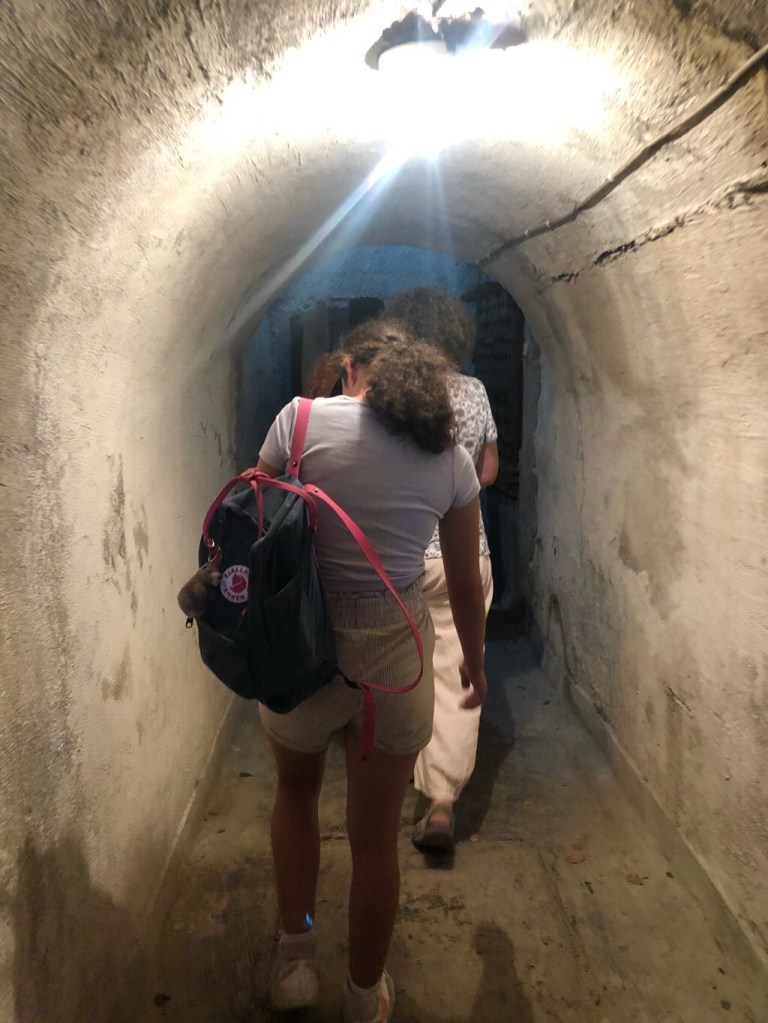
It was very warm so we decided against the long haul up the hill and instead went underground into the nuclear bunker built in secret – a bleak reminder of the 1941-1985 reign of dictator Enver Hoxha.
After Albania’s breakup with the Soviet Union in the 1960s, Hoxha became so paranoid about being invaded that he started to build bunkers and shelters around the entire country.
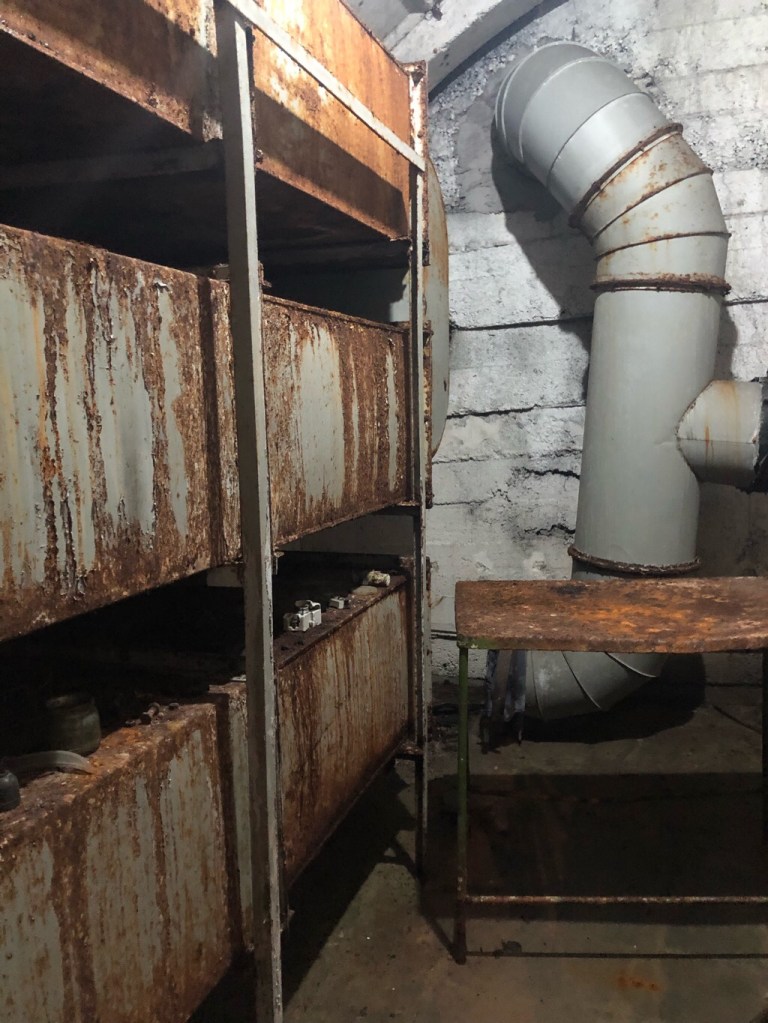
We were told that in the case of the Gjirokaster, the local population were on the brink of starvation while enough food and drink to feed up to 300 top officials was replaced monthly and – because of the secrecy surrounding the bunker – was just thrown away when it was replaced. The locals got their own back after the fall of the communist government in 1992 – they stormed the bunker and looted anything worth having.
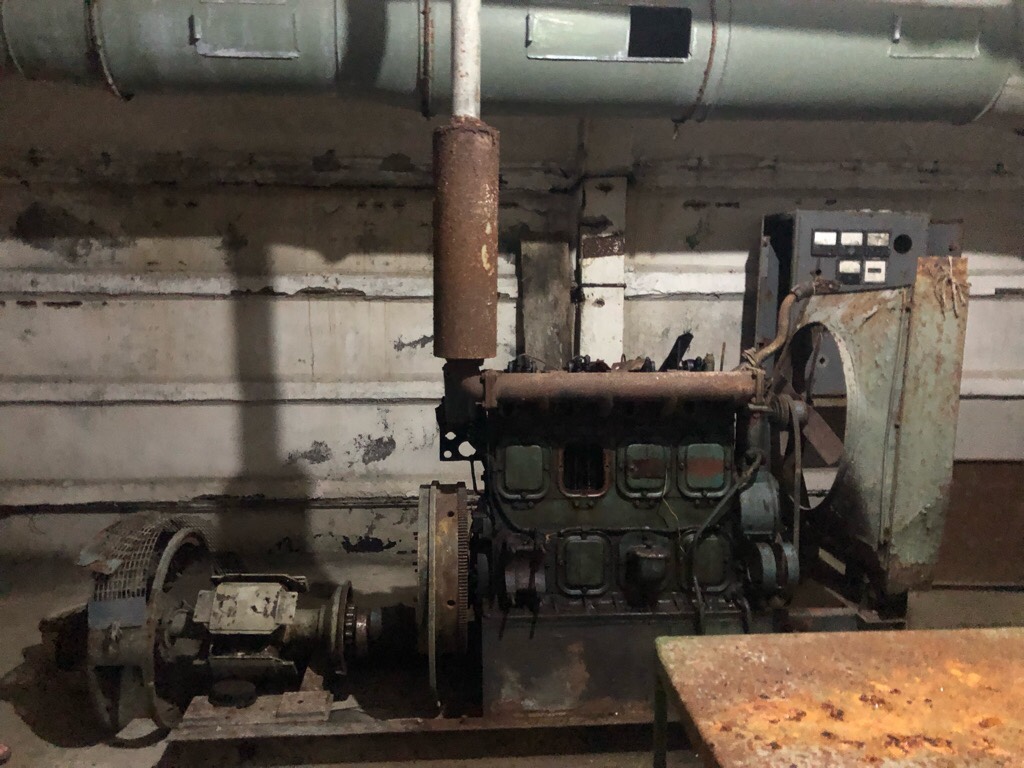
The tunnel complex is 800 meters long and has 59 rooms – all with different functions – we saw bunkrooms, meeting places, a kitchen, a pathetically small bathroom, power generation, an air filtration room and a decontamination room for use after a nuclear attack.
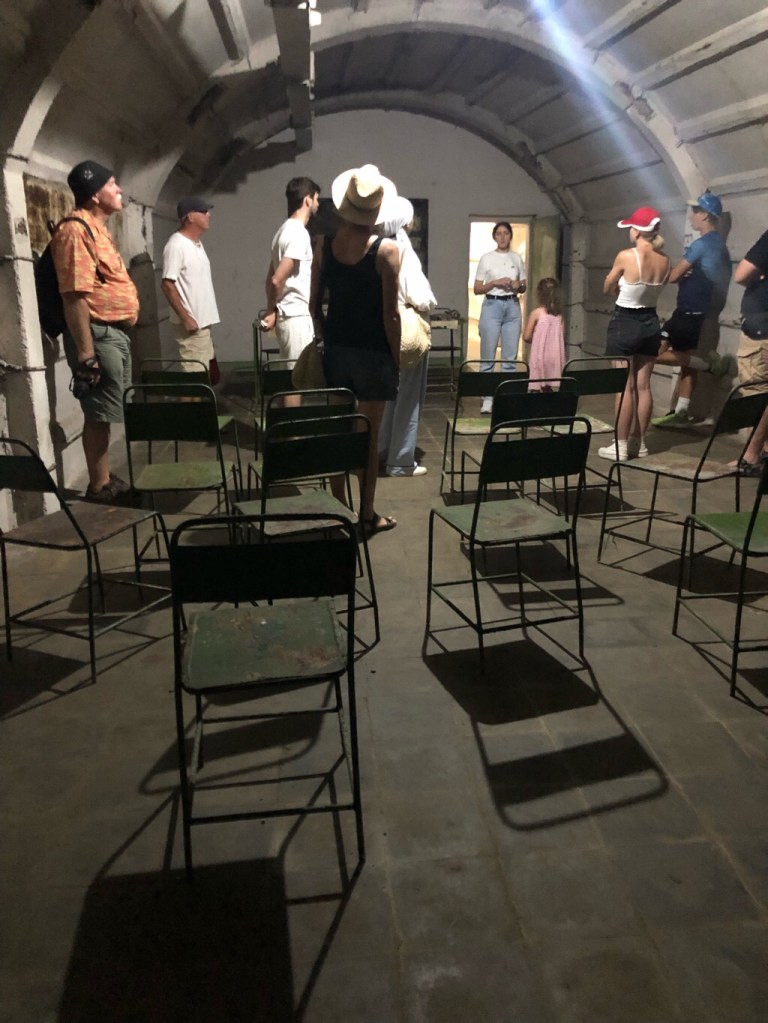
We were lead through the dark corridors by a guide and although deliciously cool after the intense heat outside, we felt extremely uncomfortable and rather claustrophobic.
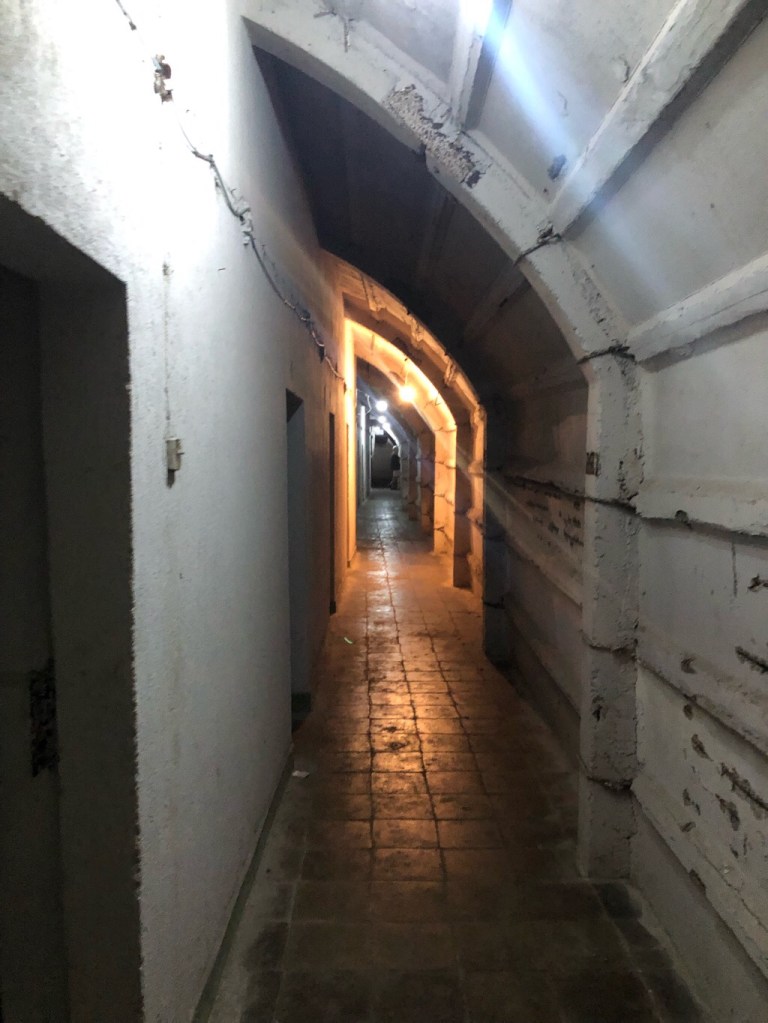
the dark corridors
We all agreed that most people wouldn’t have lasted long down there, regardless of the dangers outside the bunker!

The following day we woke up early and got going quickly so we could take advantage of the car for another half day. We set of for Butrint Archeological Park hoping to beat the crowds however, that was not to be!
We had parked in the port car park and made pretty slow progress getting out of this hectic and crowded area but thought that once on the road it would be less busy and the traffic would flow freely. We were wrong!
The 17 kilometre drive should have taken us around half an hour but it actually took us well over an hour and a half to crawl there. Narrow roads, with too many cars combined with tour buses blocking the way, so no one could move in either direction while they stopped to unload their passengers, resulted in a nightmare scenario.
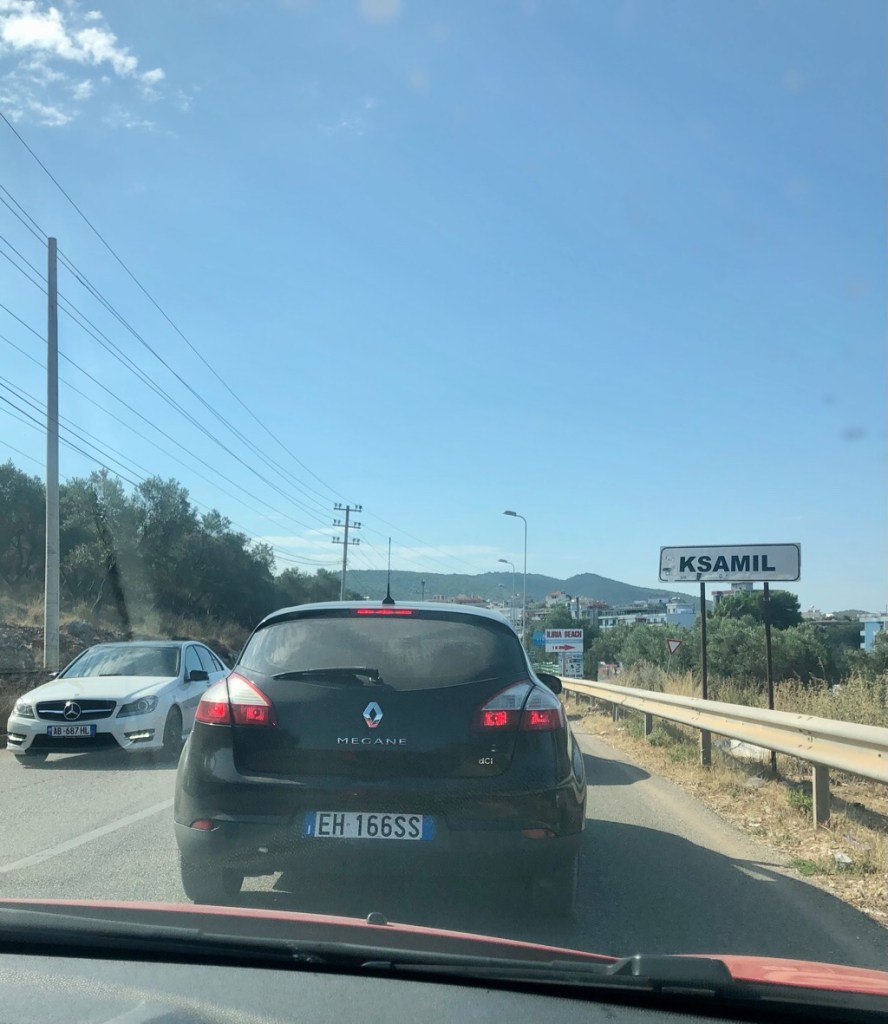
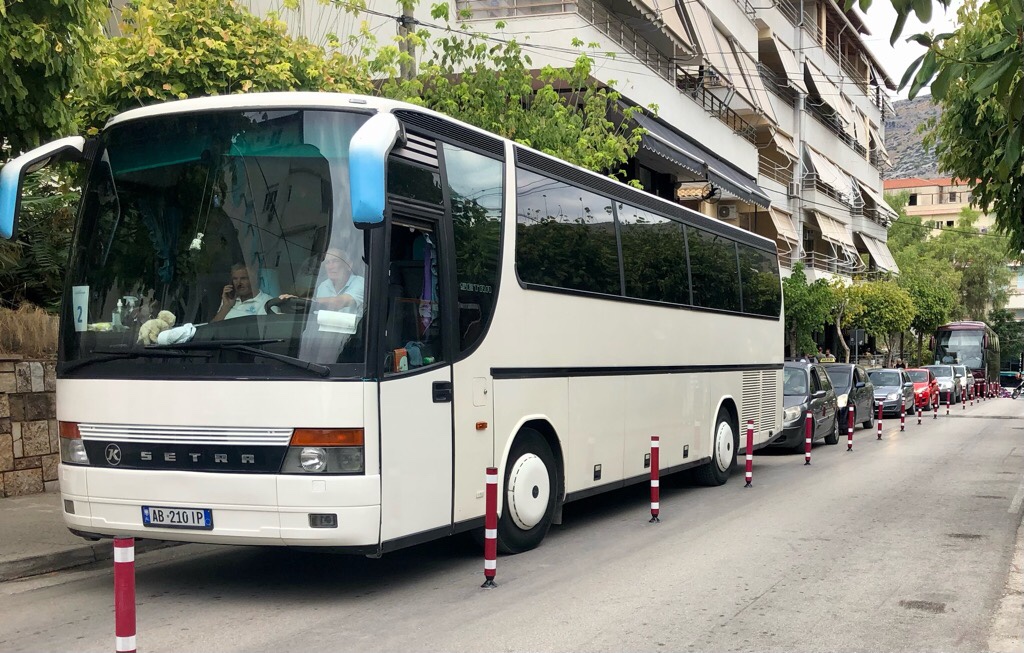
We almost turned round at one point but thankfully we didn’t as when we finally arrived at Butrint Archeological Park there was plenty of space to park and surprisingly there weren’t massive crowds to contend with.
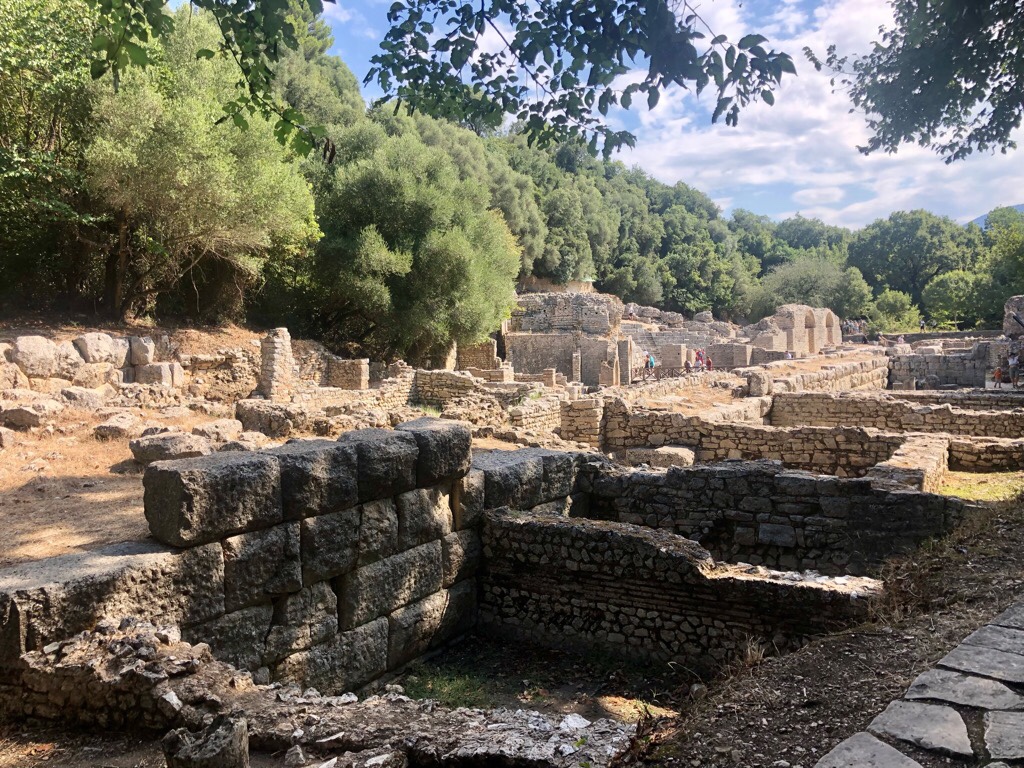
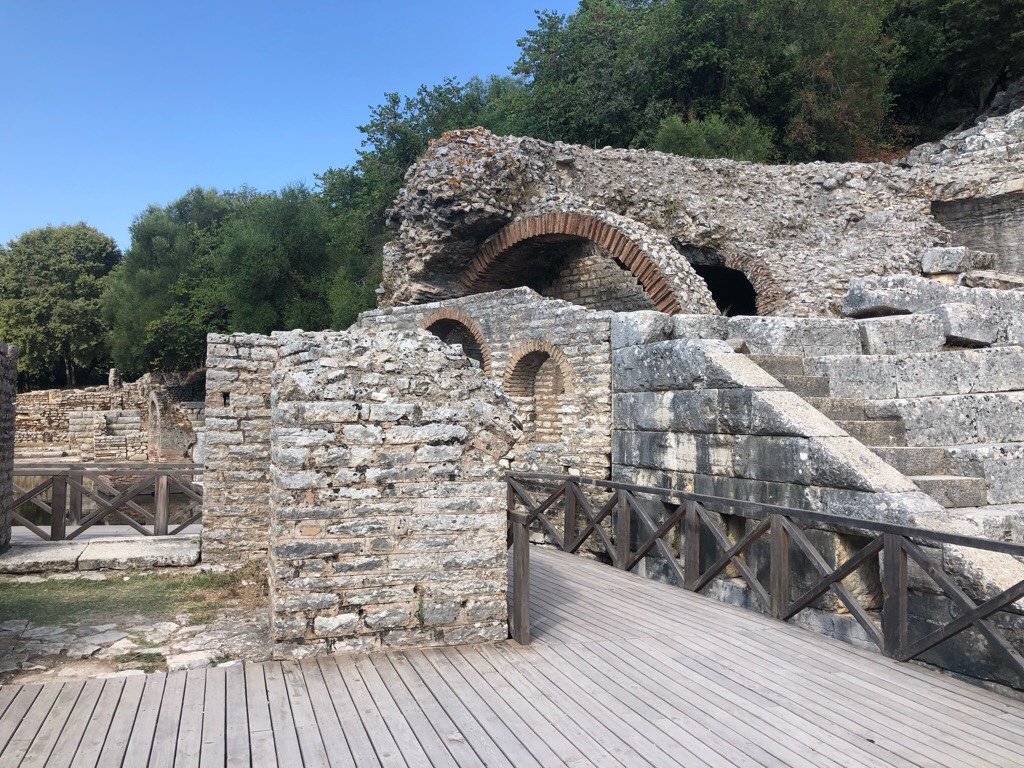
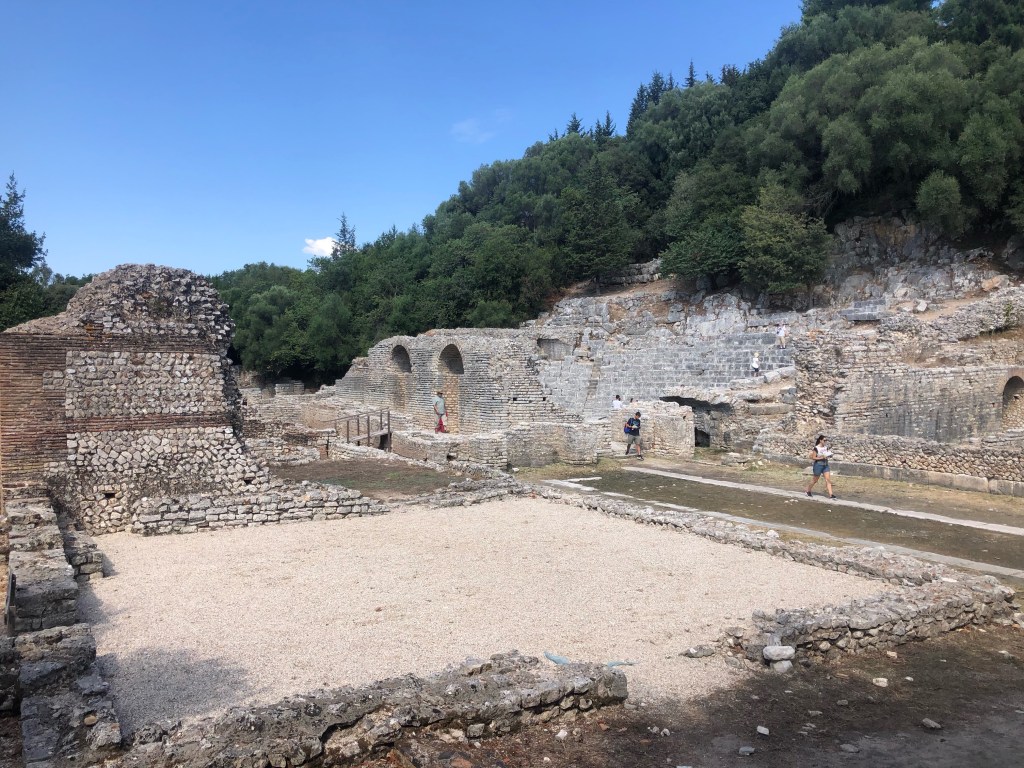
Butrint is one of the most important archeological sites in Albania and it is well kept and pleasant to walk round as there are meandering paved paths shaded by beautiful trees that lead you around the site. The natural beauty of the site with a lake, streams, as well as the woodlands enhanced the enjoyment of seeing the ancient remains.
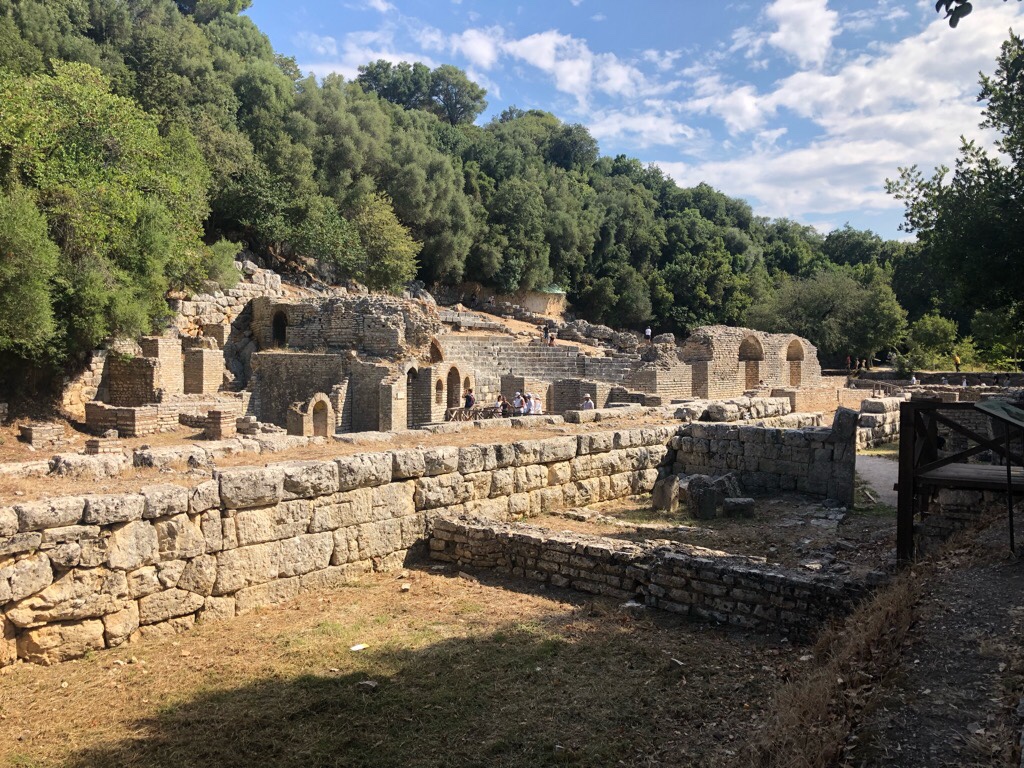

are meandering paved paths
shaded by beautiful trees
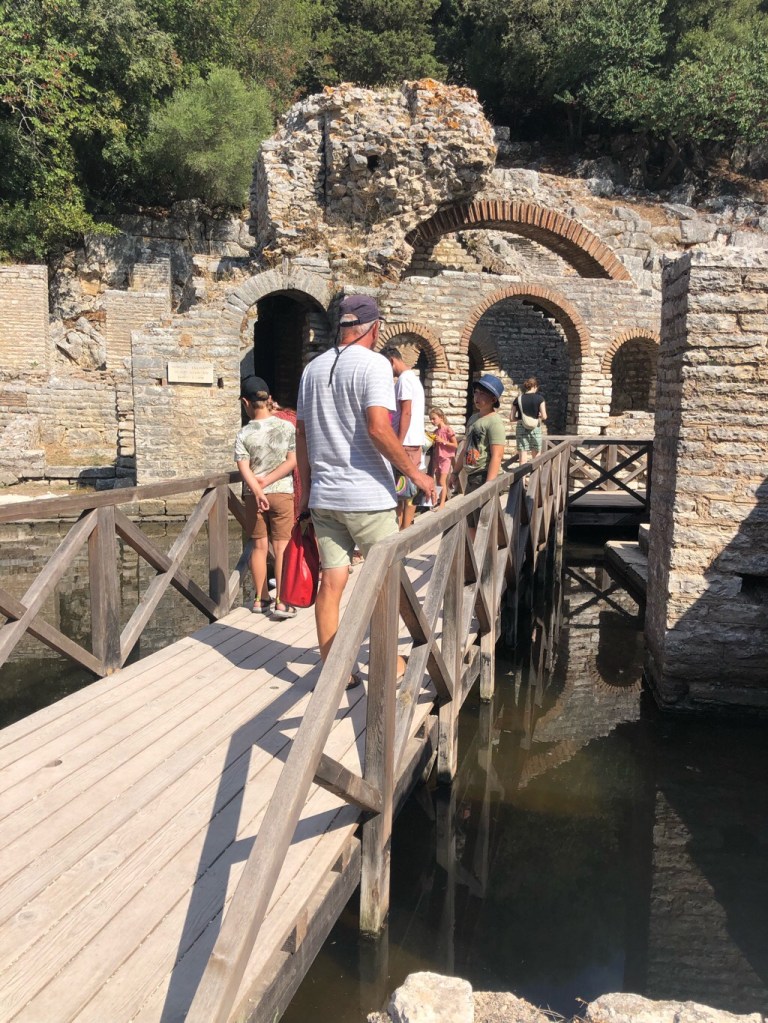
There was quite a lot to see – the city walls, a late- antique baptistery, a basilica, a small but impressive Roman amphitheatre and castle remains.




Fortunately, the journey back to Sarande was quite a bit faster than on the way there but hitting the narrow streets of the town was frustrating, exhausting and infuriating. We were all very happy to see the back of the car by the time we dropped it off!

 Salty tales from Bali Hai on Sunday
Leave a comment