After a very busy and uplifting time in the Netherlands with our two adult children and their partners and various friends and family, Jonathan and I decided it was time to go back on the road again for some more camper van adventures.
So we took off for the small town of Aire-sur-la-Lys in Northern France.

Aire-sur-la-Lys is only three and half hours drive away from our daughter and son-in-law’s home in The Netherlands but it looks and feels like another world in many respects.
The beauty of being in Europe is that you can be in a completely different country in no time at all. Not only is the language different but also the architecture, the countryside and most importantly the culture.
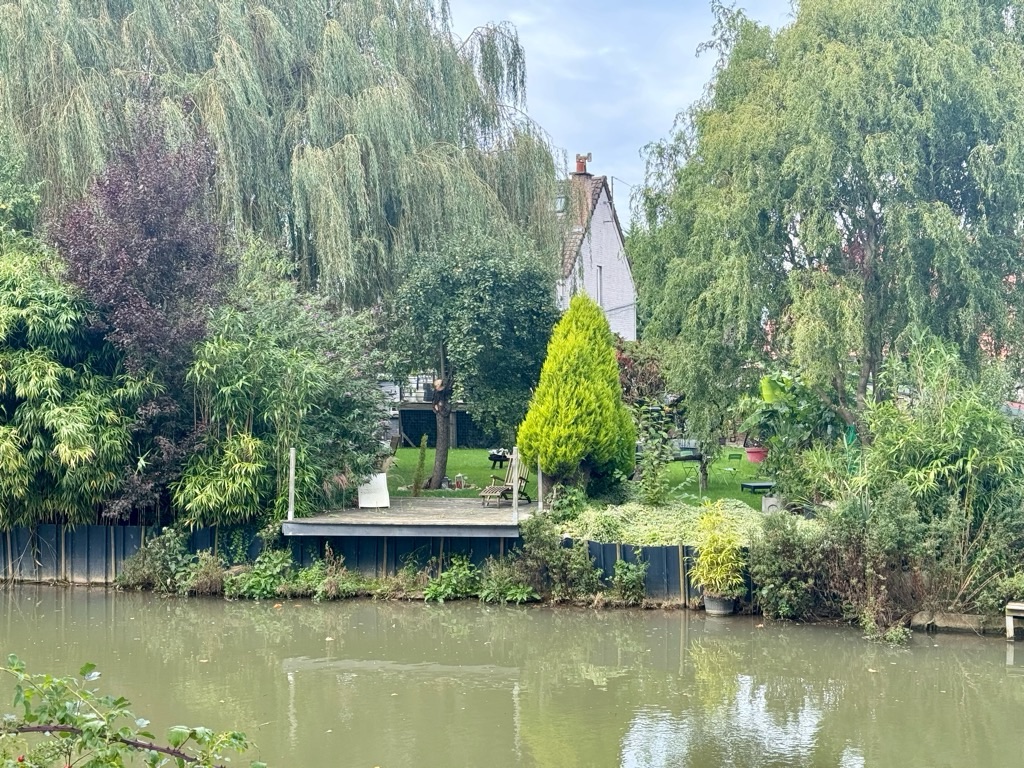
Aire-sur-la-Lys
France is one of the very best countries in Europe to visit in a camper van. There are plenty of really good local council sites that provide everything you require and they are often free or charge only a token amount. “Wild” camping is also allowed in most areas so long as you aren’t causing an obstruction or behaving in a selfish manner.
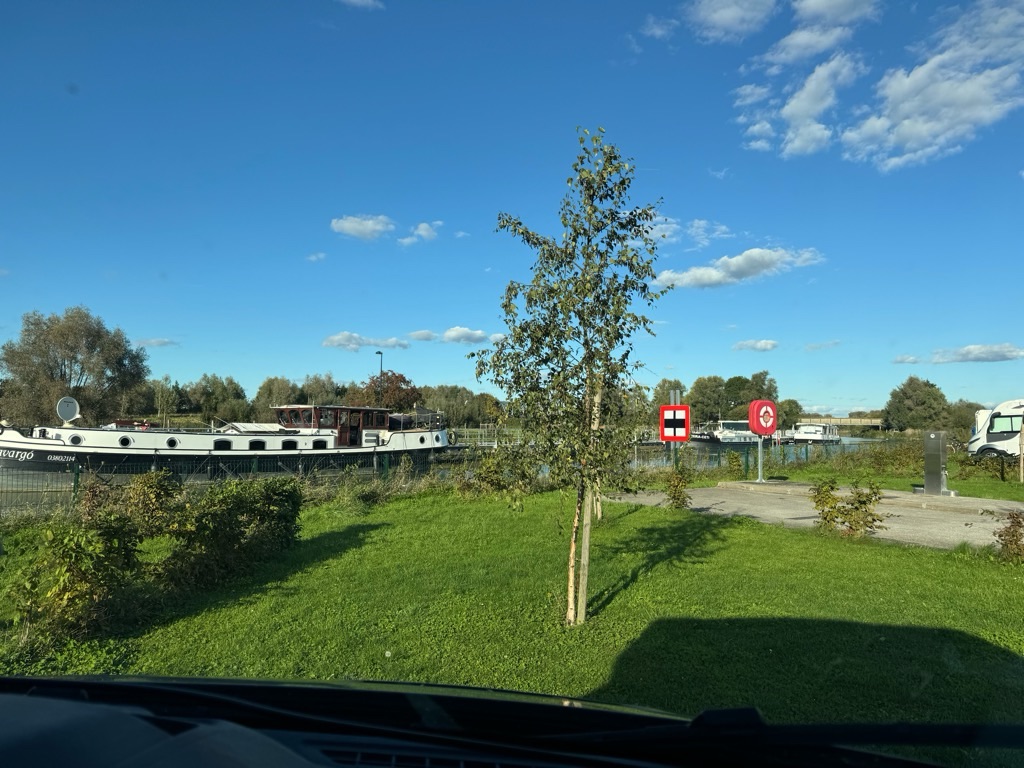
The site in Aire-sur-la-Lys was in a pretty location, adjacent to a canal and close to the River Lys. It was quite busy, probably due to the fact that it is quite close to Calais and we were told that people often stay the night in their vans there before they catch the ferry to England.
We walked into town to explore but as it was a Sunday we expected the town to be a little quiet. We weren’t far wrong – it was absolutely deserted!
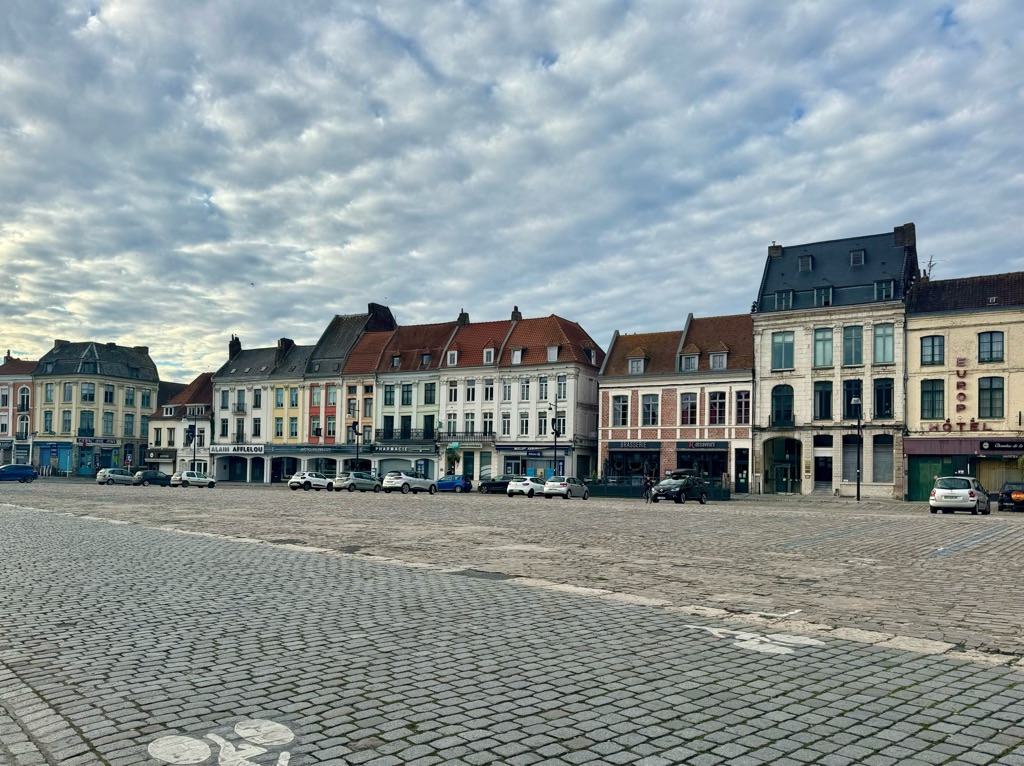
There was literally no one on the streets, not even a stray dog or a jogger or a family out for a walk – just no one – it felt very eerie!
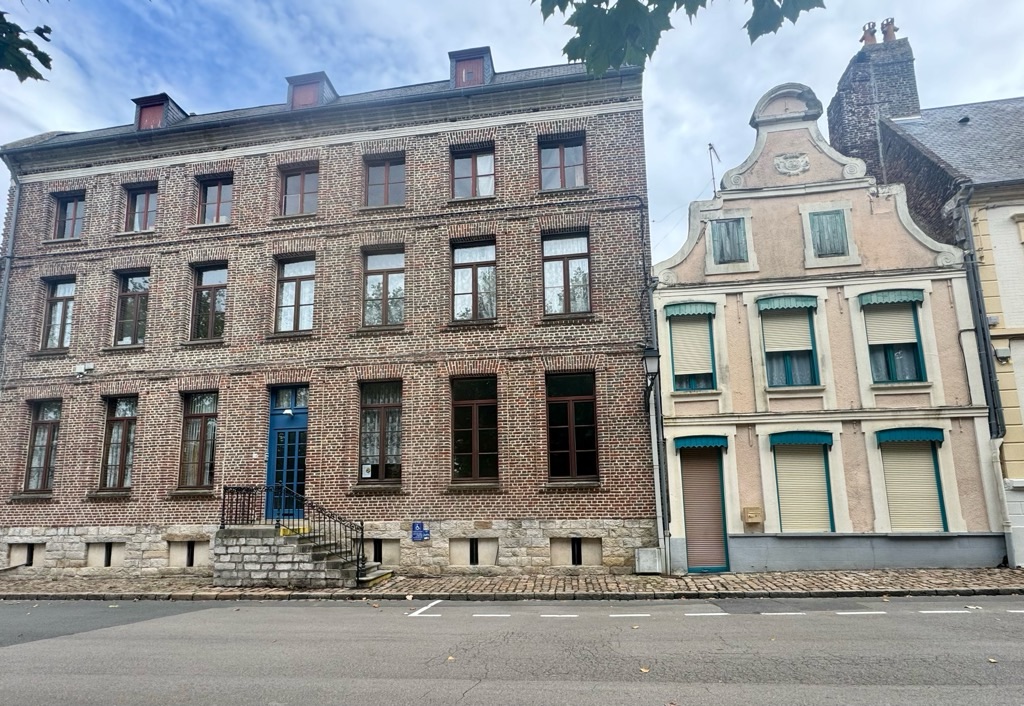
The architecture was mostly quite French – solid, rectangular and well proportioned but we also saw a few houses that looked very Dutch which we thought odd until we learned that Aire-sur-la-Lys was part of the Spanish Netherlands from the beginning of the 16th Century until 1713. The Dutch style houses are relics of that part of the town’s history.
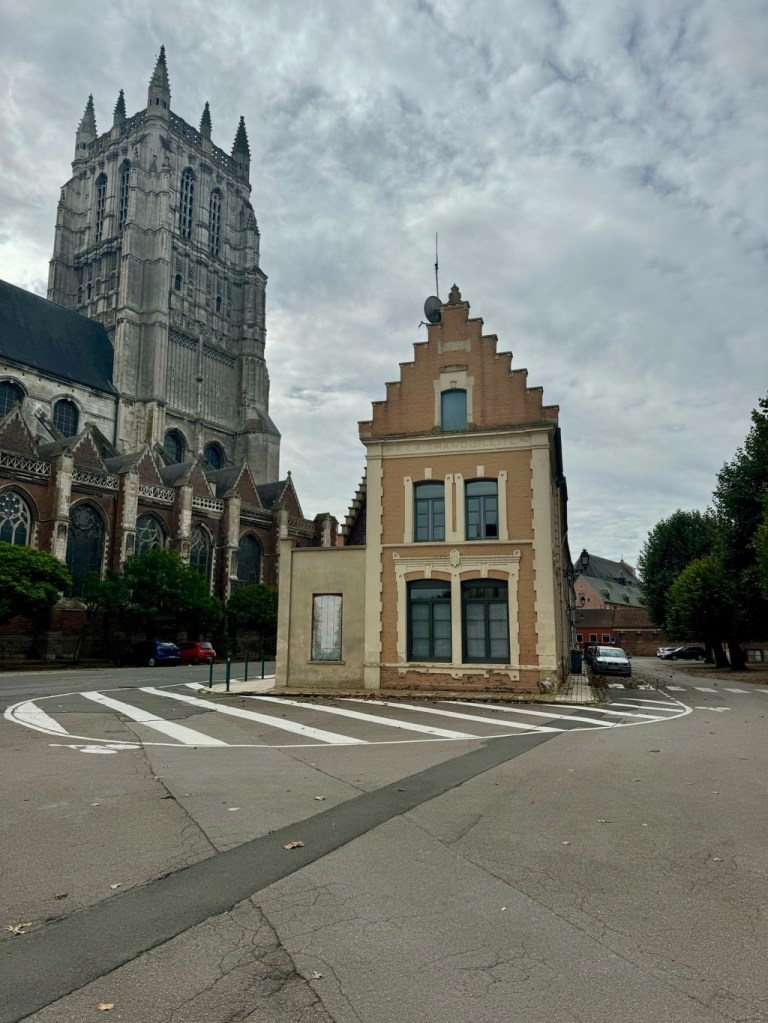
We had a walk round the collegiate Church which was very impressive in its dimensions – it was the size of a Cathedral in fact – but in many parts it was badly in need of renovation.
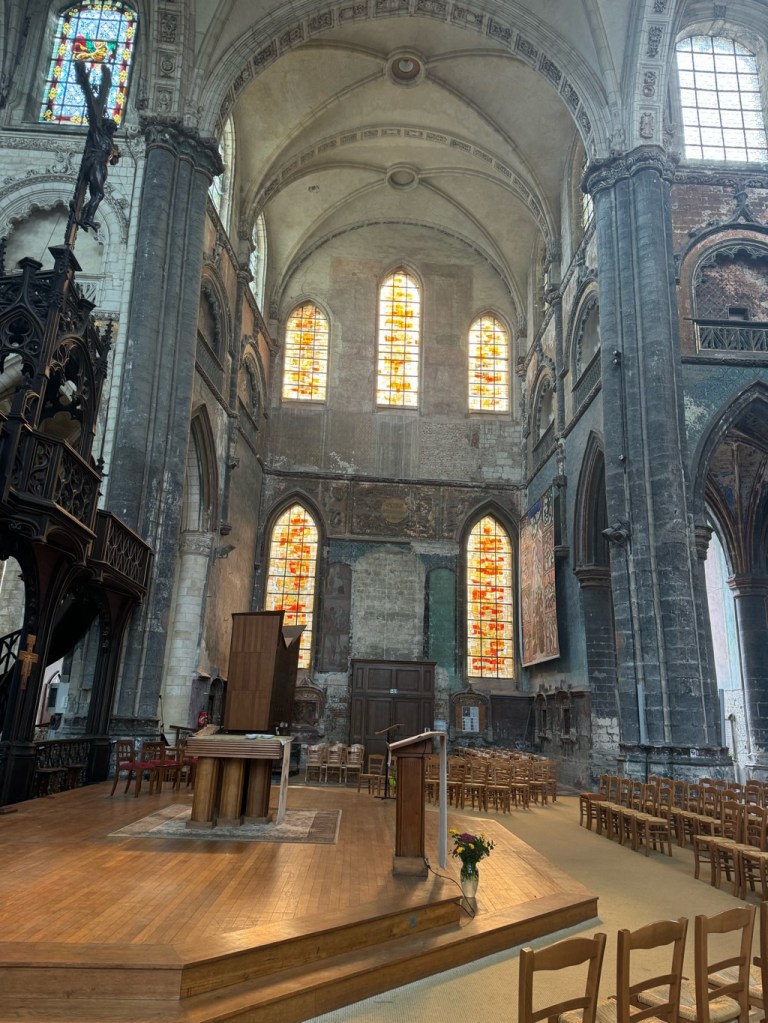
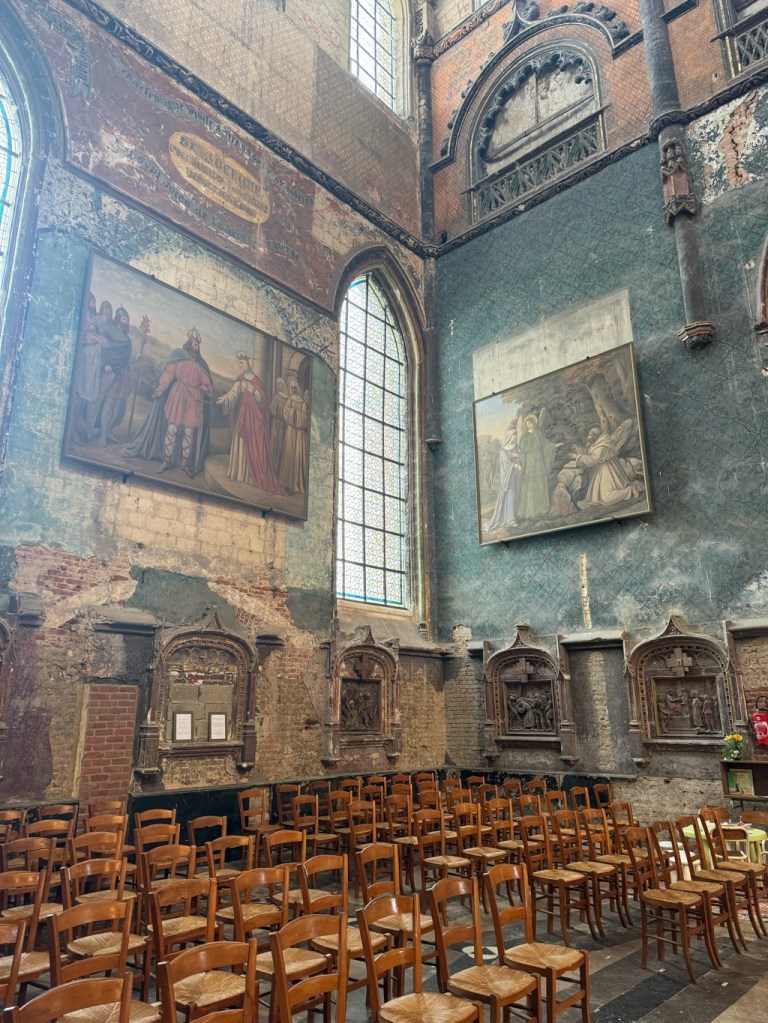
The Church as it stands today was built slowly starting in the 15th Century and only completed in 1634. Subsequently there were renovations undertaken in both the 18th and 19th Centuries. Early in World War ll a German bombing raid caused some damage and it was hit again in 1944, this time by British bombs which caused more significant damage.
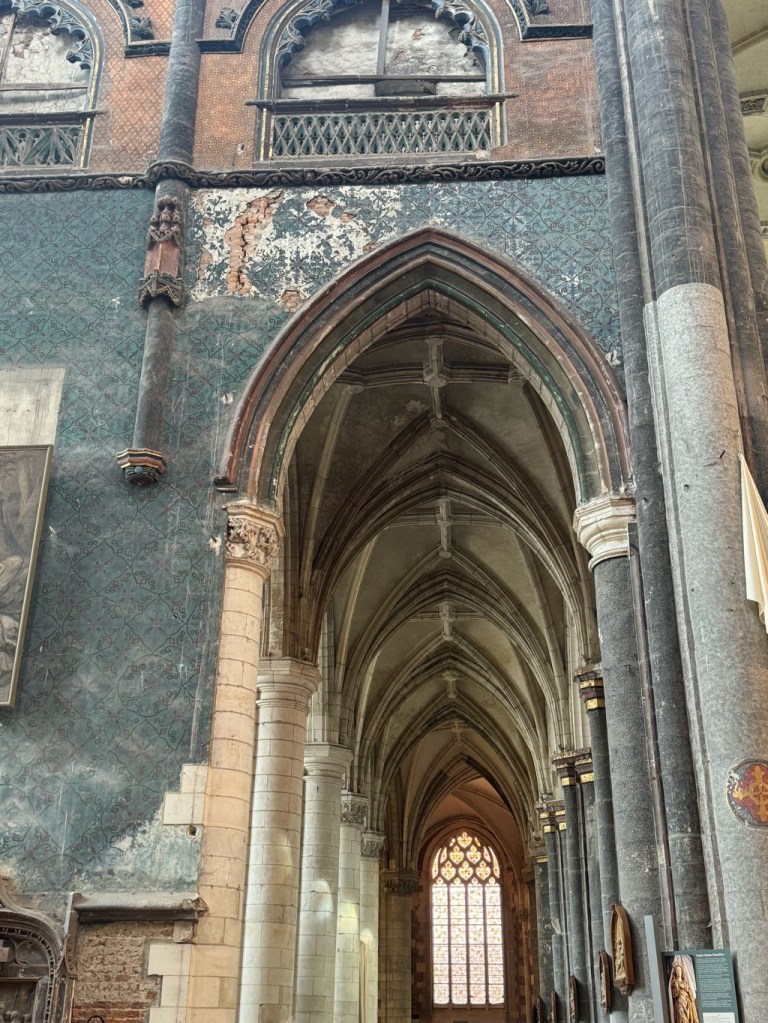
It looked to us as though the post war restoration have also been rather lengthy and are in fact, still a work in process!

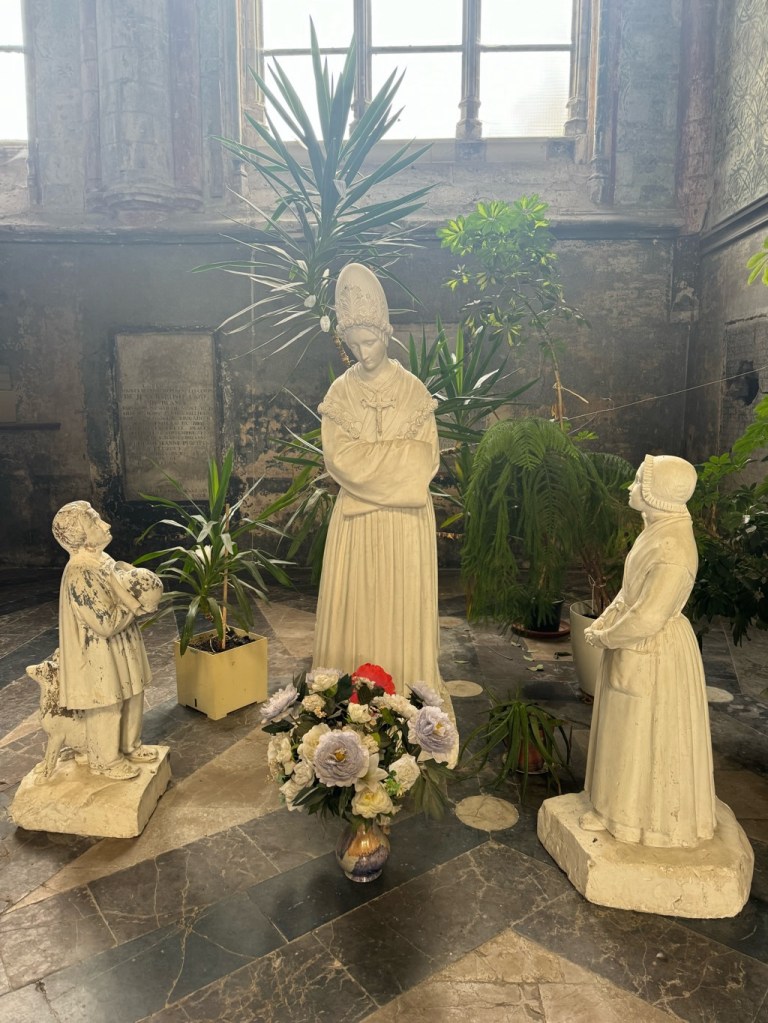
We carried on through the deathly quiet town and despite the deserted atmosphere found it to be very pleasant with interesting and often picturesque architecture. We could understand how the town came to be officially listed among the 100 ‘most beautiful detours’ in France.
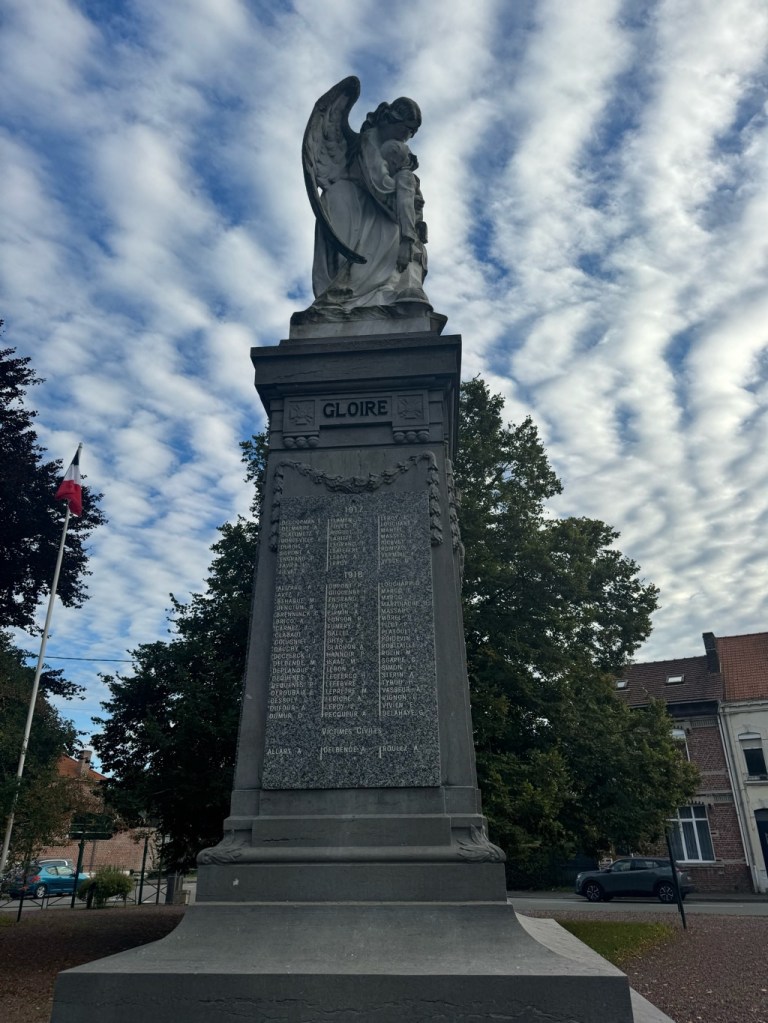
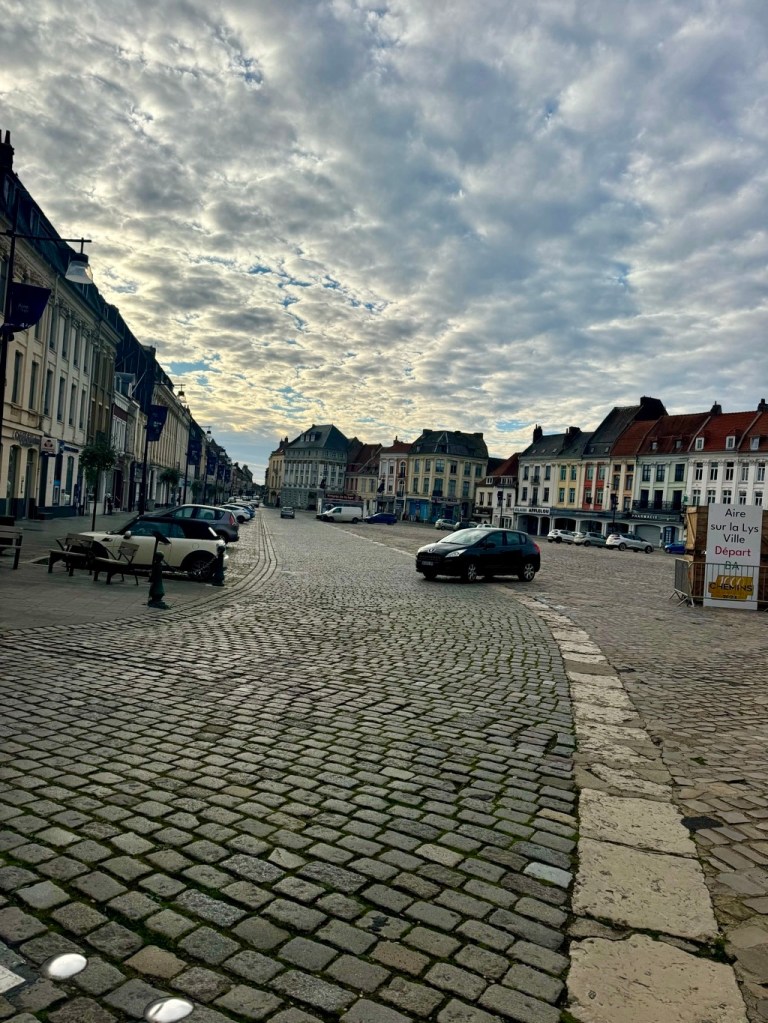
One of the things that makes the town unusual is that the main square (la Grand Place) is triangular in shape rather than the more usual square or rectangular design. I have no idea why this!
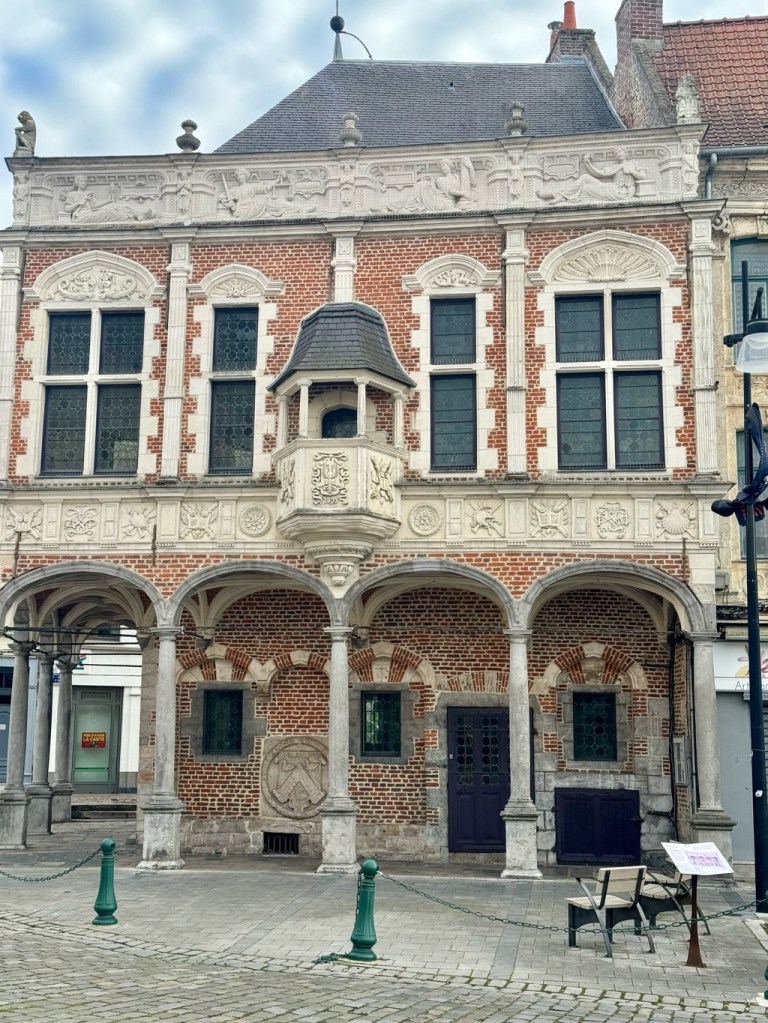
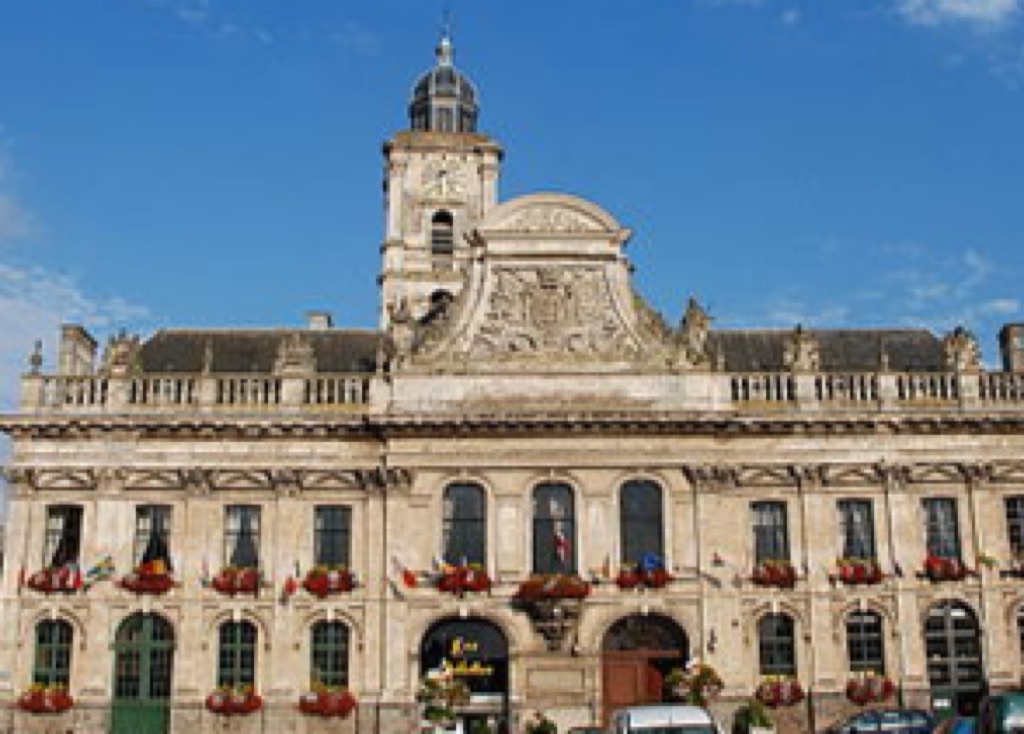
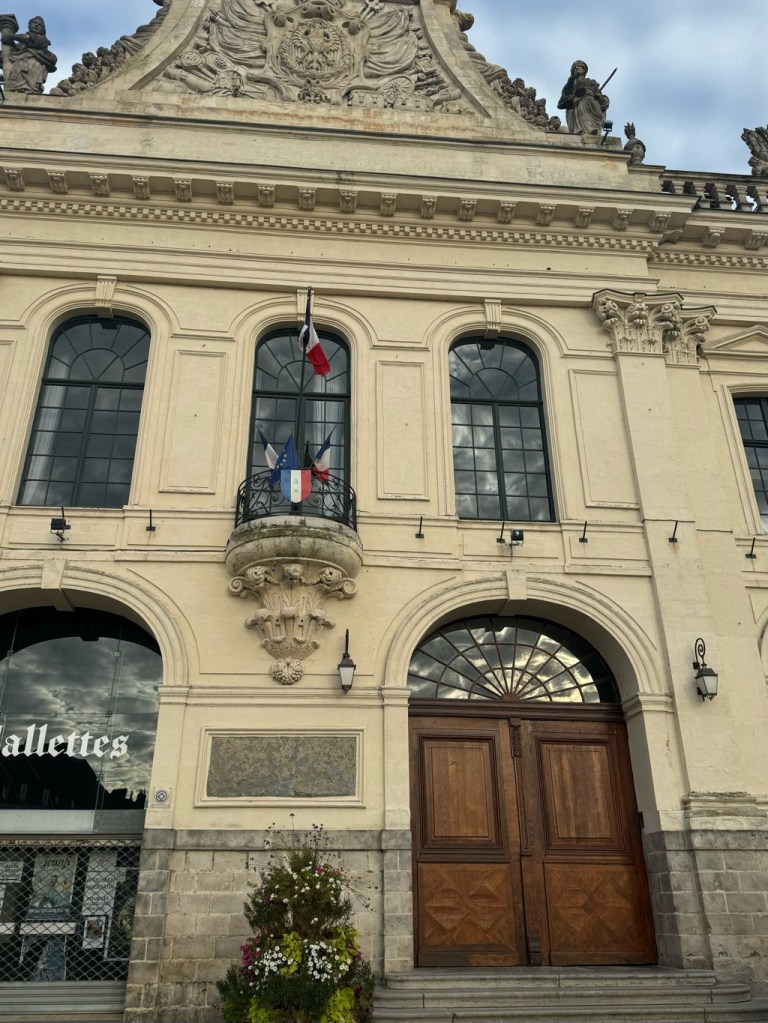
One of the most attractive buildings in the square is the “bailliage” built in 1600. This ornately decorated renaissance style building has arcades around the ground floor, separated by narrow columns, ornate stone surrounds to the windows, and decorative, Italian Renaissance inspired, friezes running around the outside. The bailliage was originally built as a guard house for the militia of Aire-sur-la-Lys and it also served as the bailiffs court. It now houses the tourist office!
Other impressive buildings included the imposing town hall and the seven floors high clock tower.

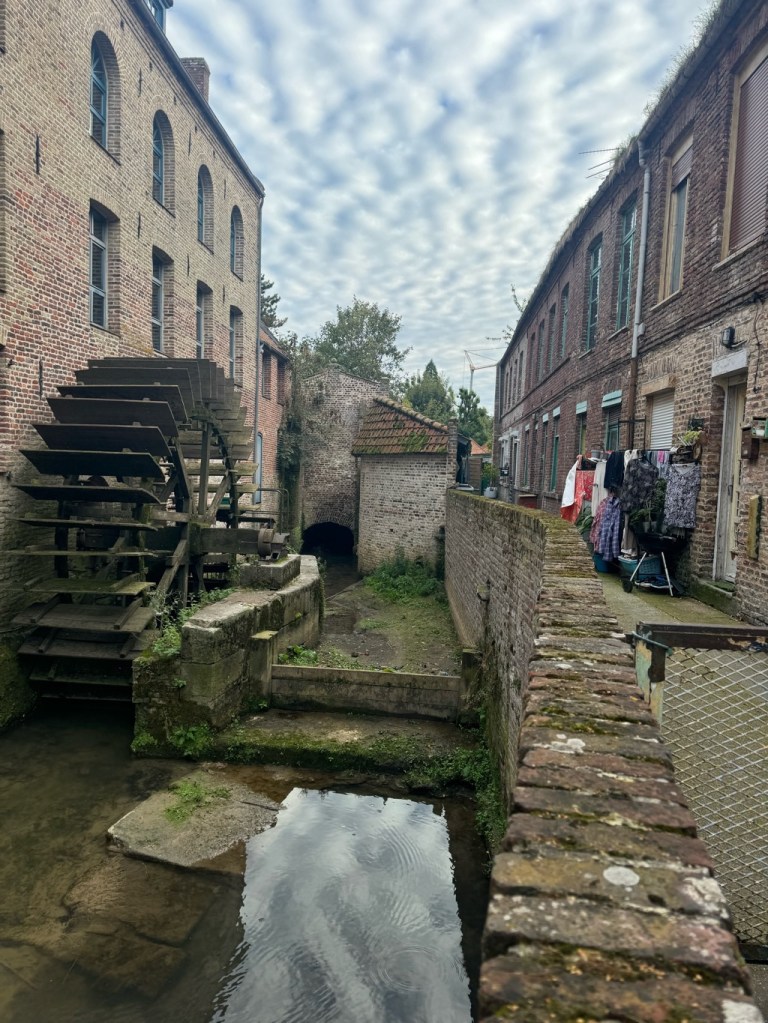
Our favourite “tourist attraction” however, was the disabled servicemen’s mill and cottages, built in 1682, to give injured soldiers a home and a living.
From Aire-sur-la-Lys we drove to a fabulous rural area near Gravelines which is about half way between Calais and Dunkirk.
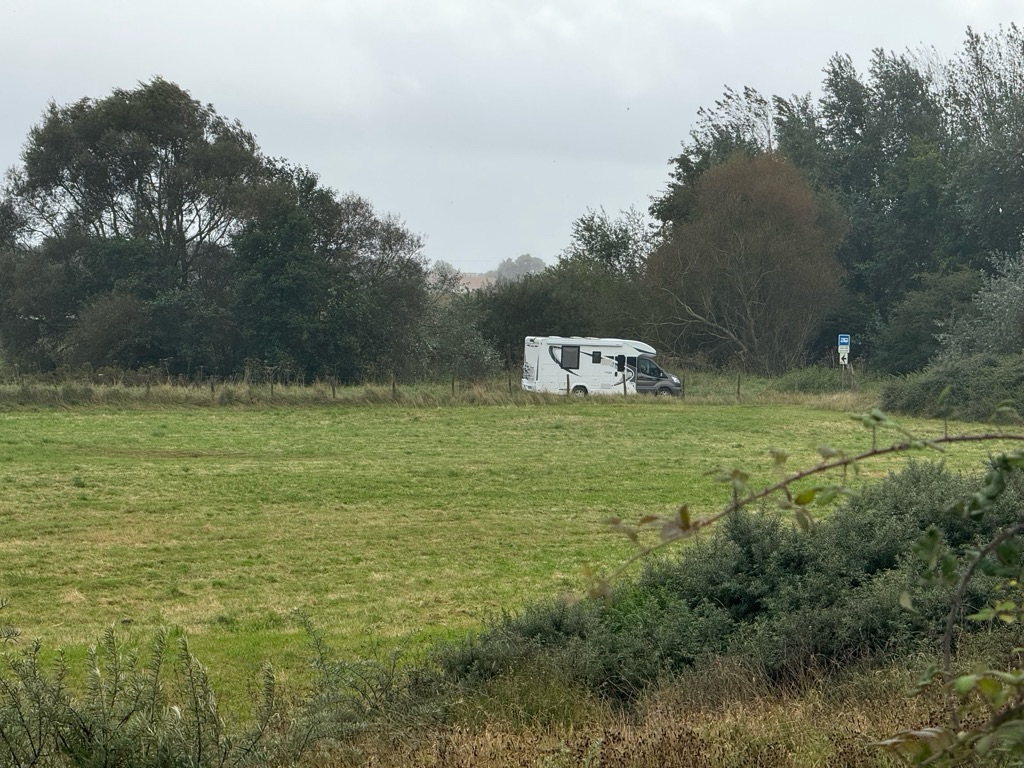
We wild camped very close to the Platier Oye national nature reserve which is a paradise for bird watchers.
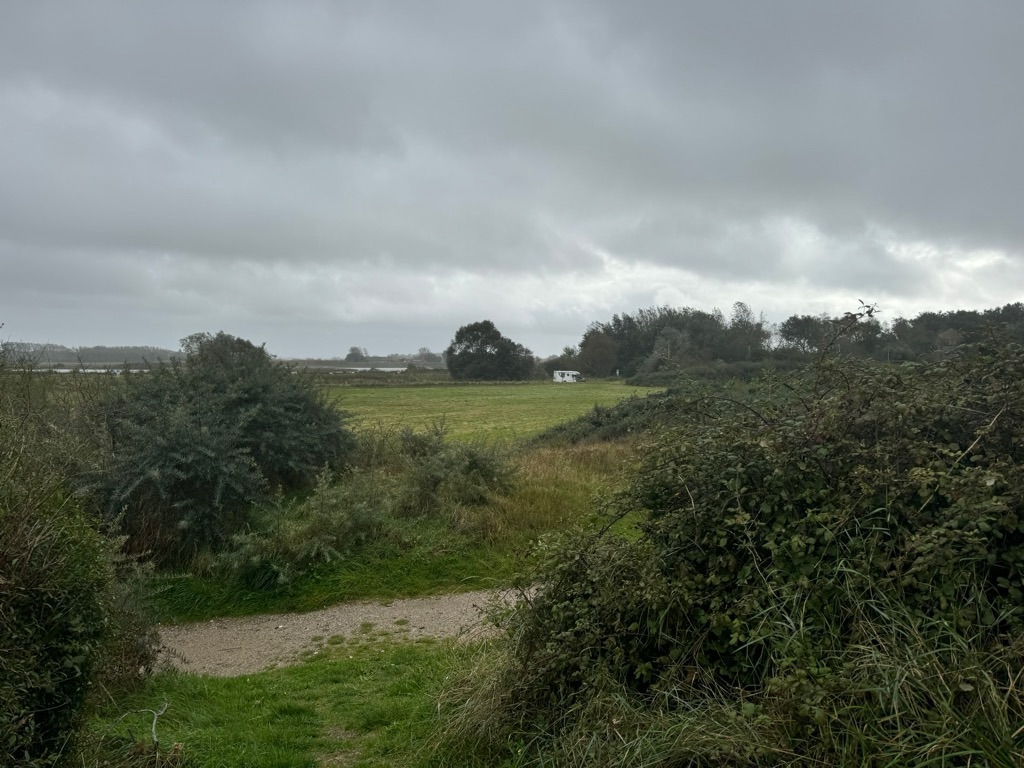
There is a marvellous board walk which is part of an eight mile long loop through the sand dunes.
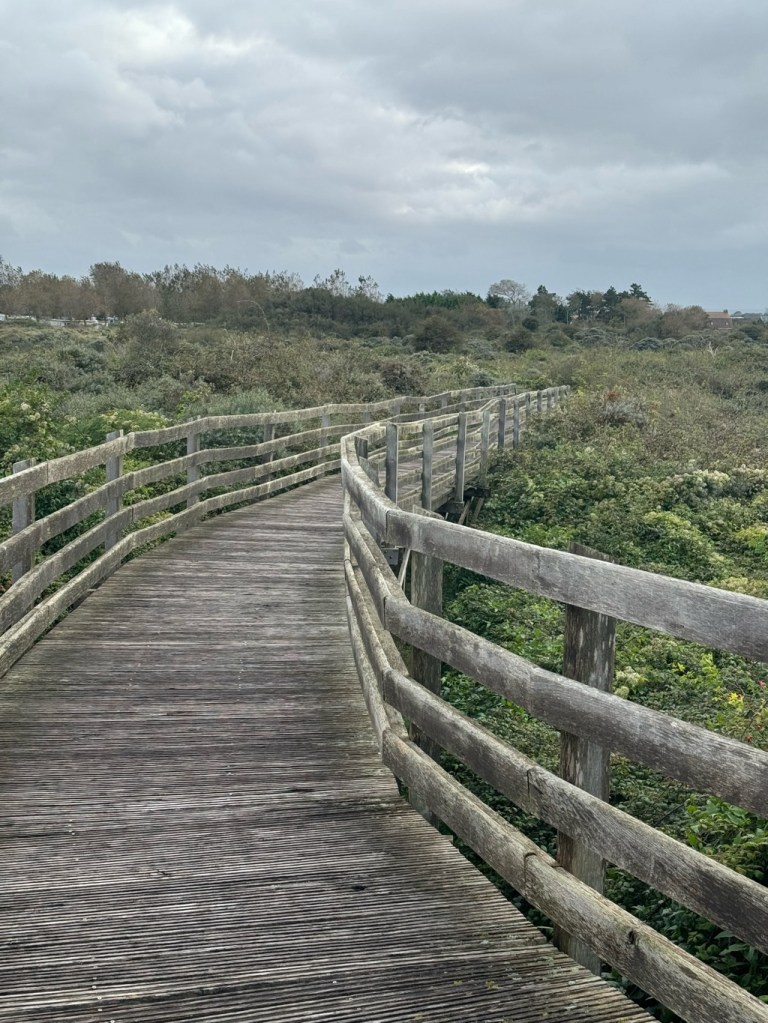
During our walk we spotted remnants of various World War ll fortifications and there were also a couple of well built bird hides from which we could have studied the wild life had we remembered to bring binoculars!

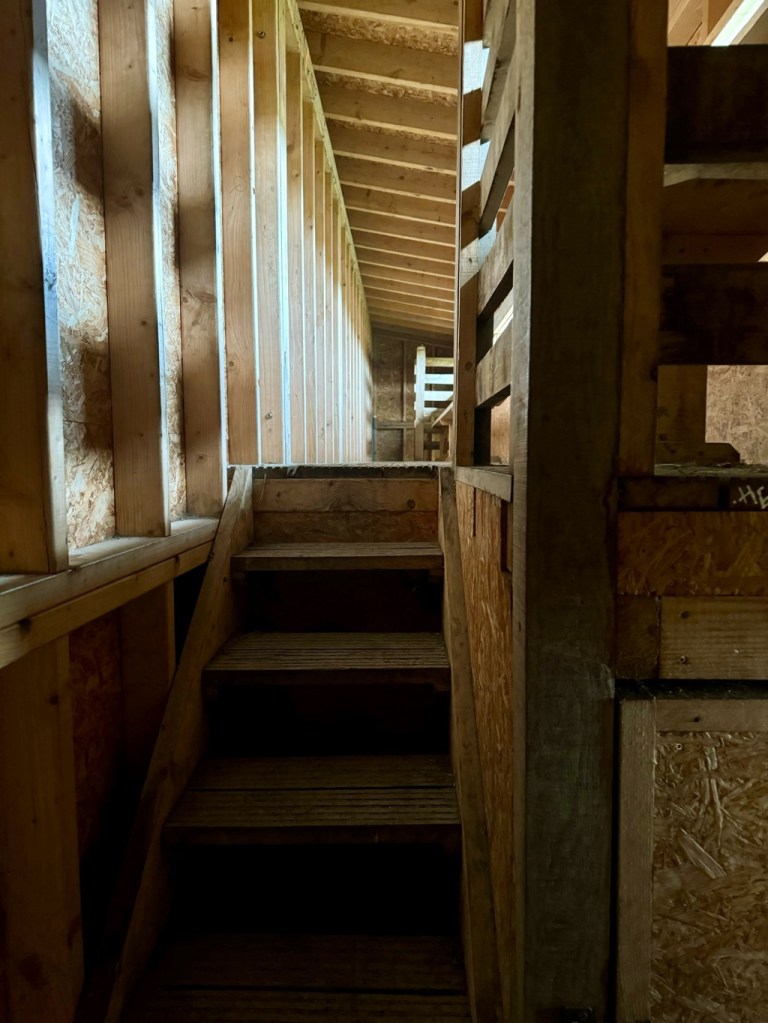
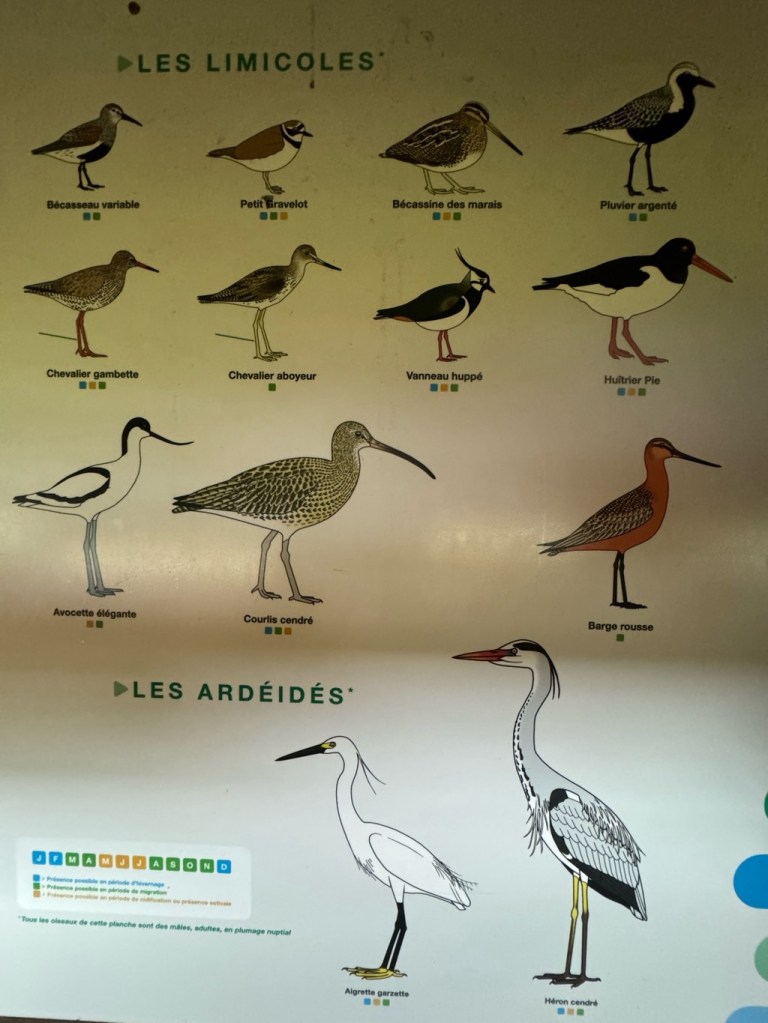

When we were coming out of the first bird hide we all but bumped into three police officers, all dressed head to toe in camouflage uniforms and holding high powered weapons. They were entering the hide as we came out and we wondered what on earth they were doing with their weapons at the ready in the middle of a wilderness area!
We passed another group of three on the board walk later on and we thought at first that they must be on some kind of exercise. Then we realised what was “going down”!
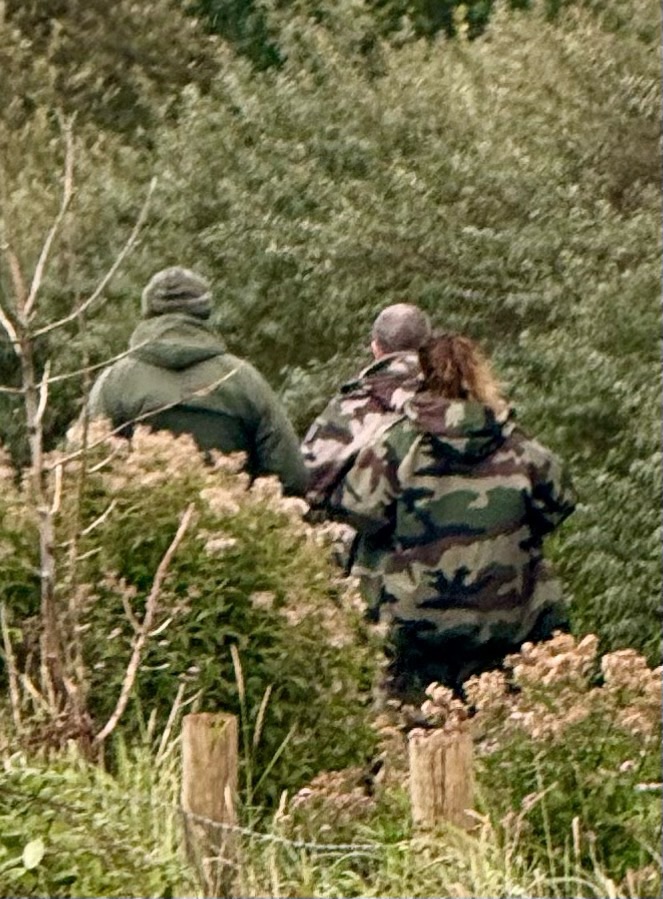
These were border police patrolling the area for people planning to leave France and enter England illegally by boat! The desolate and lonely sand dunes with the large bird watching hides would be an ideal place for desperate people to hide in while waiting for an inflatable boat to pick them up from the windswept beach and take them over to England via the shortest distance across the Channel.
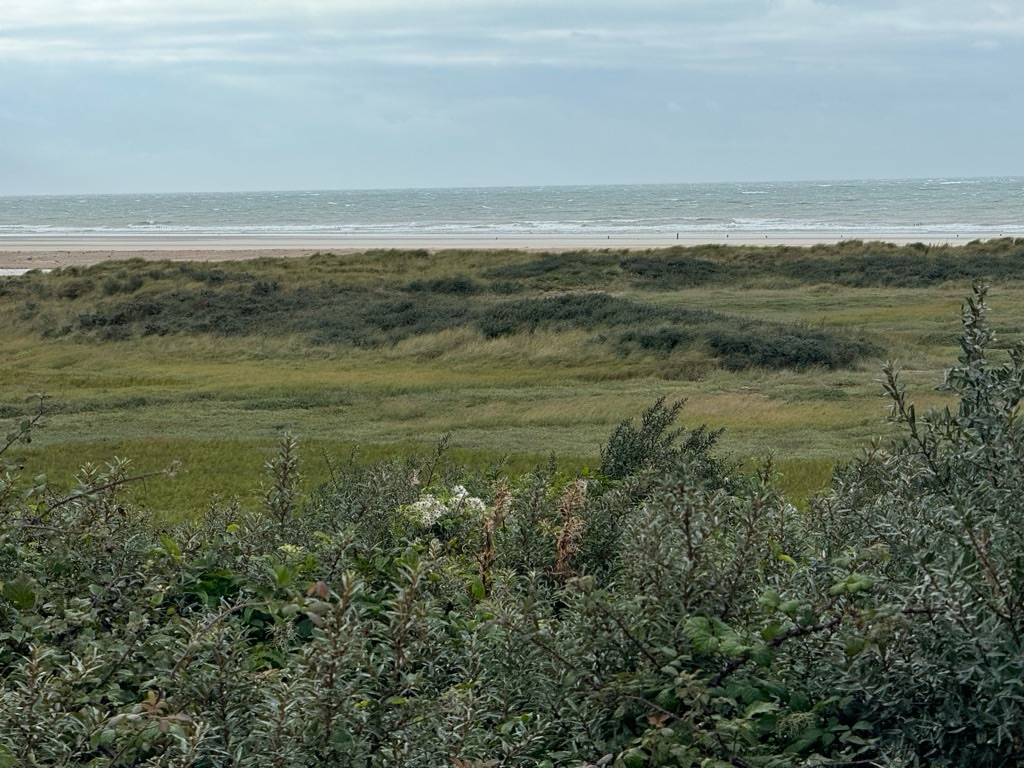
We certainly didn’t see anything suspicious but the (border) police were obviously expecting an imminent attempted crossing!
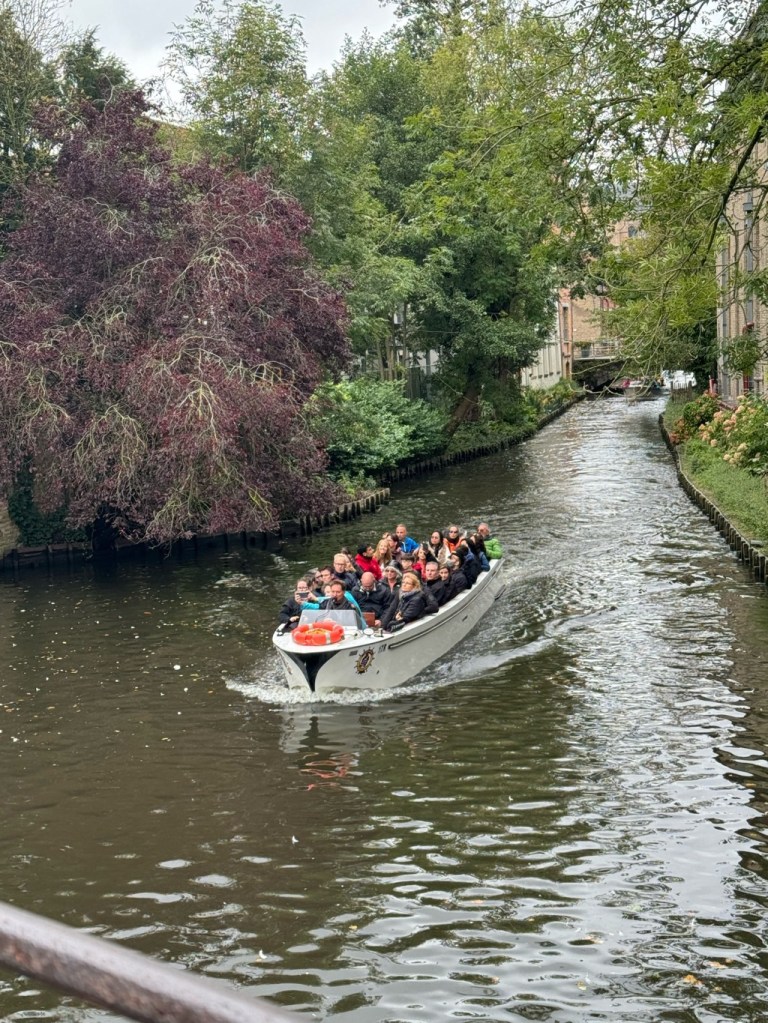
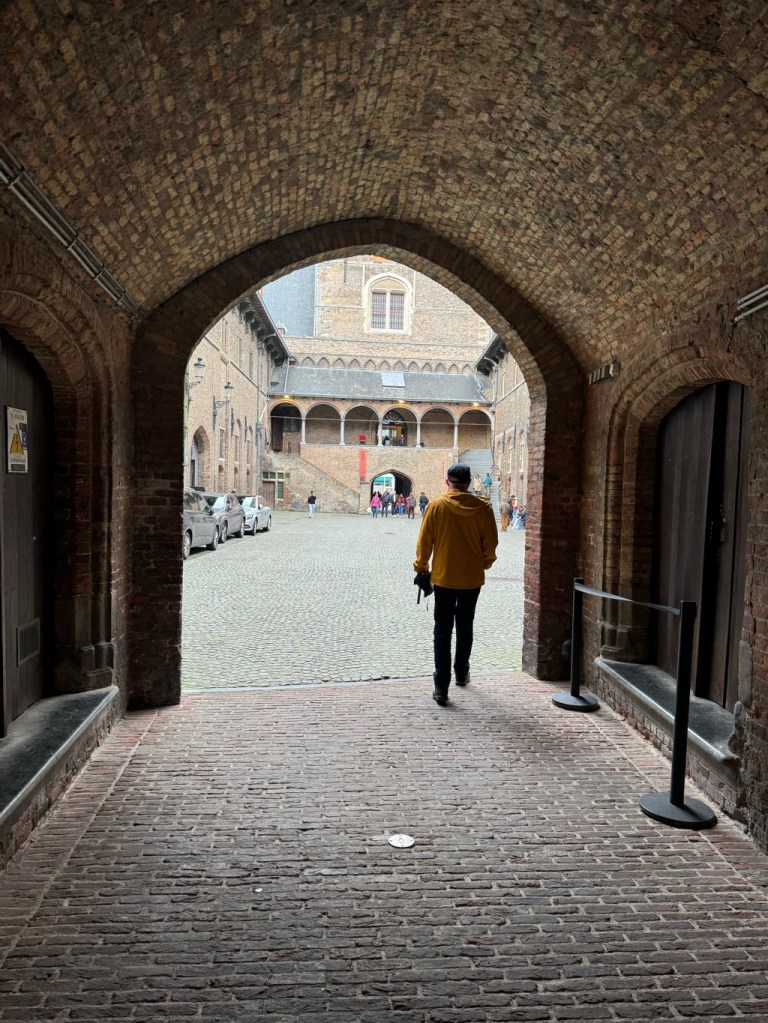
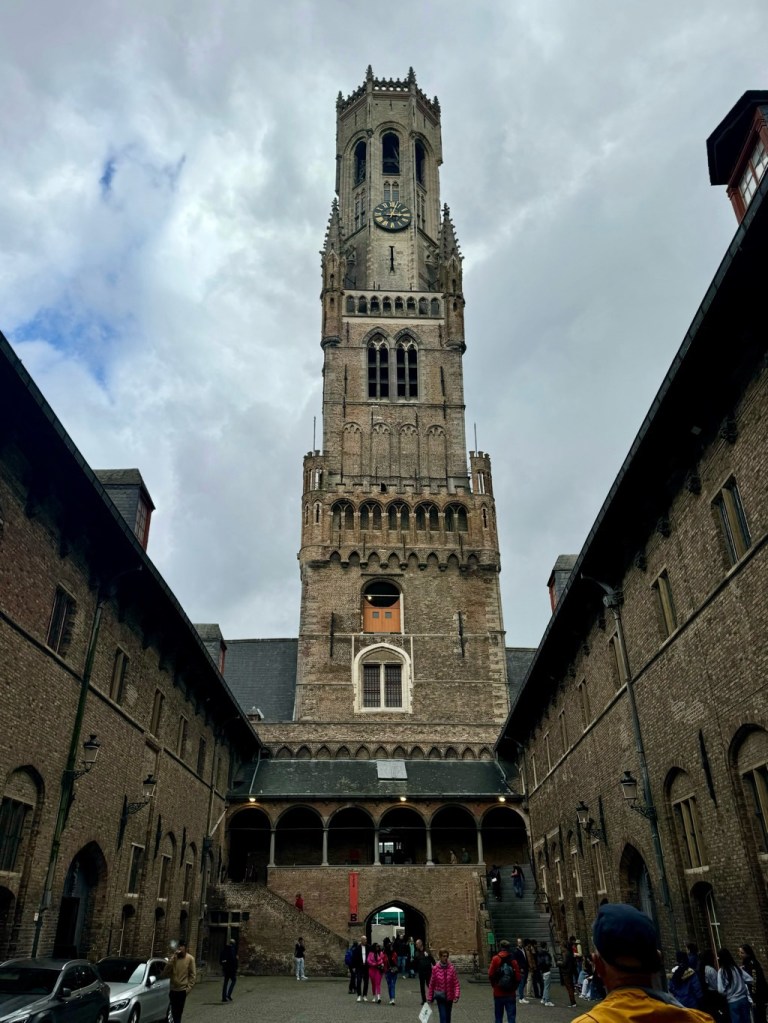
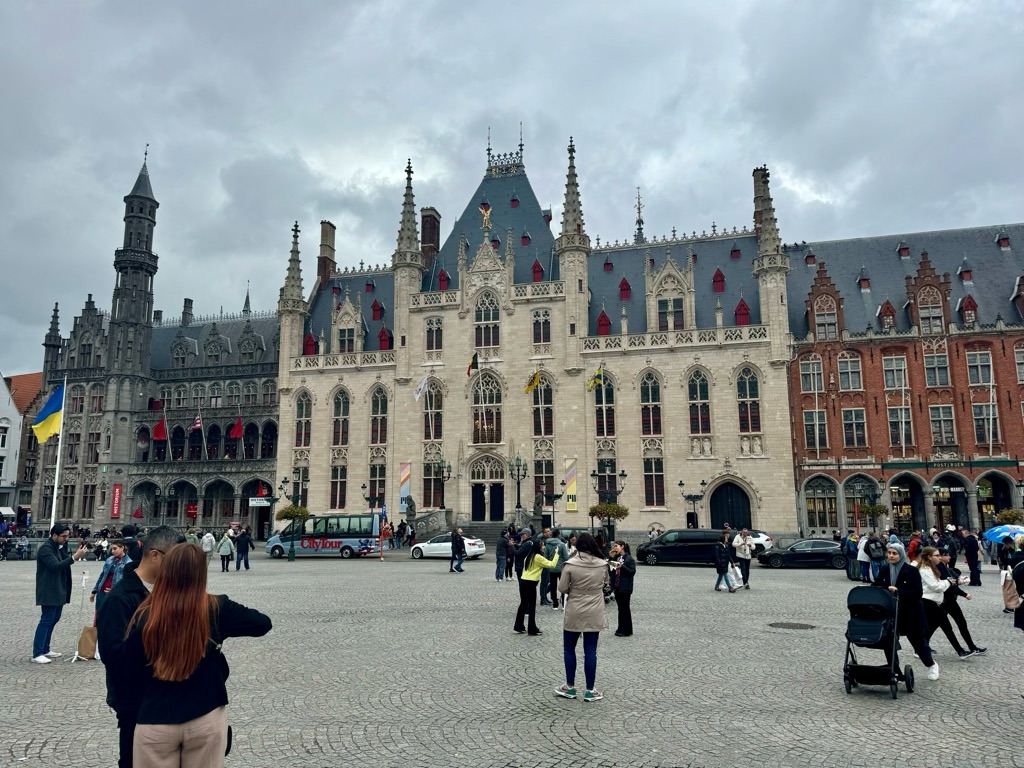
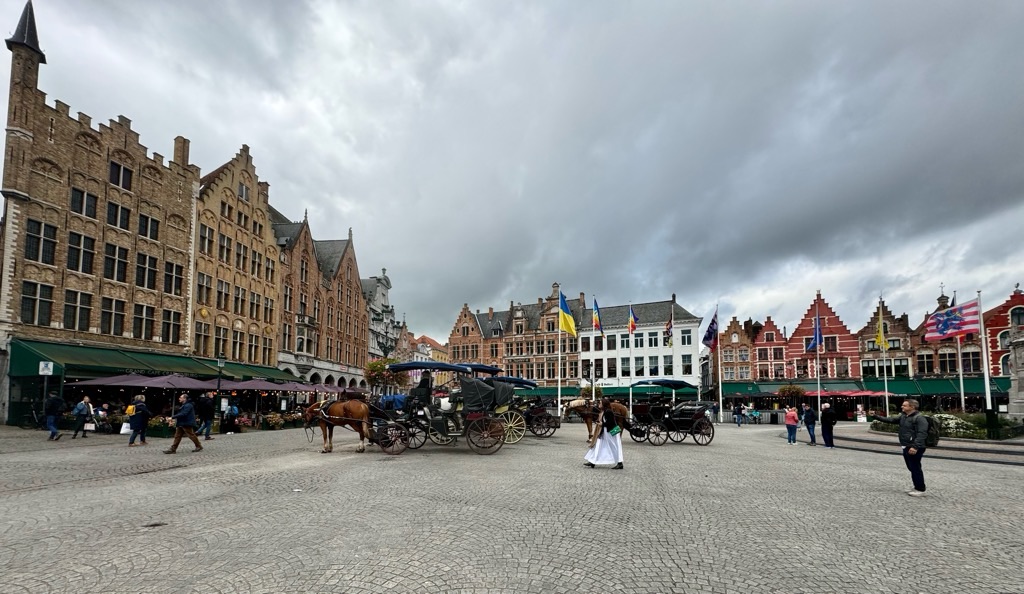
Our final destination for this little trip was Bruges, one of our favourite cities which has a great camper stop within easy walking distance of the amazing city centre.
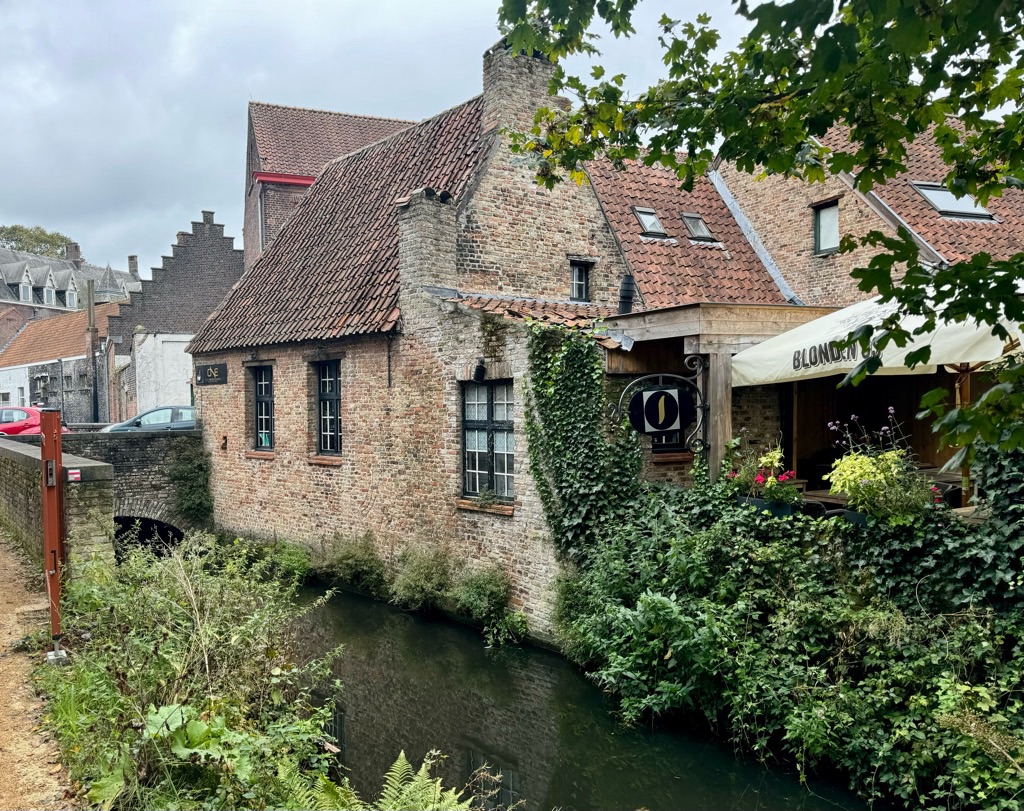
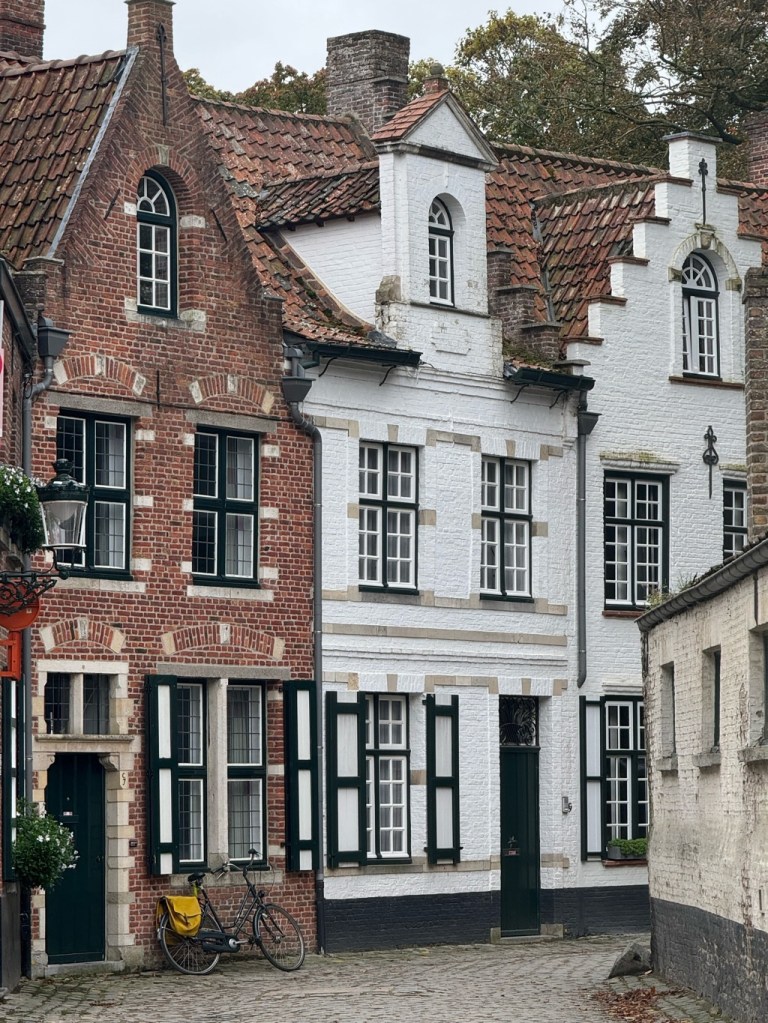
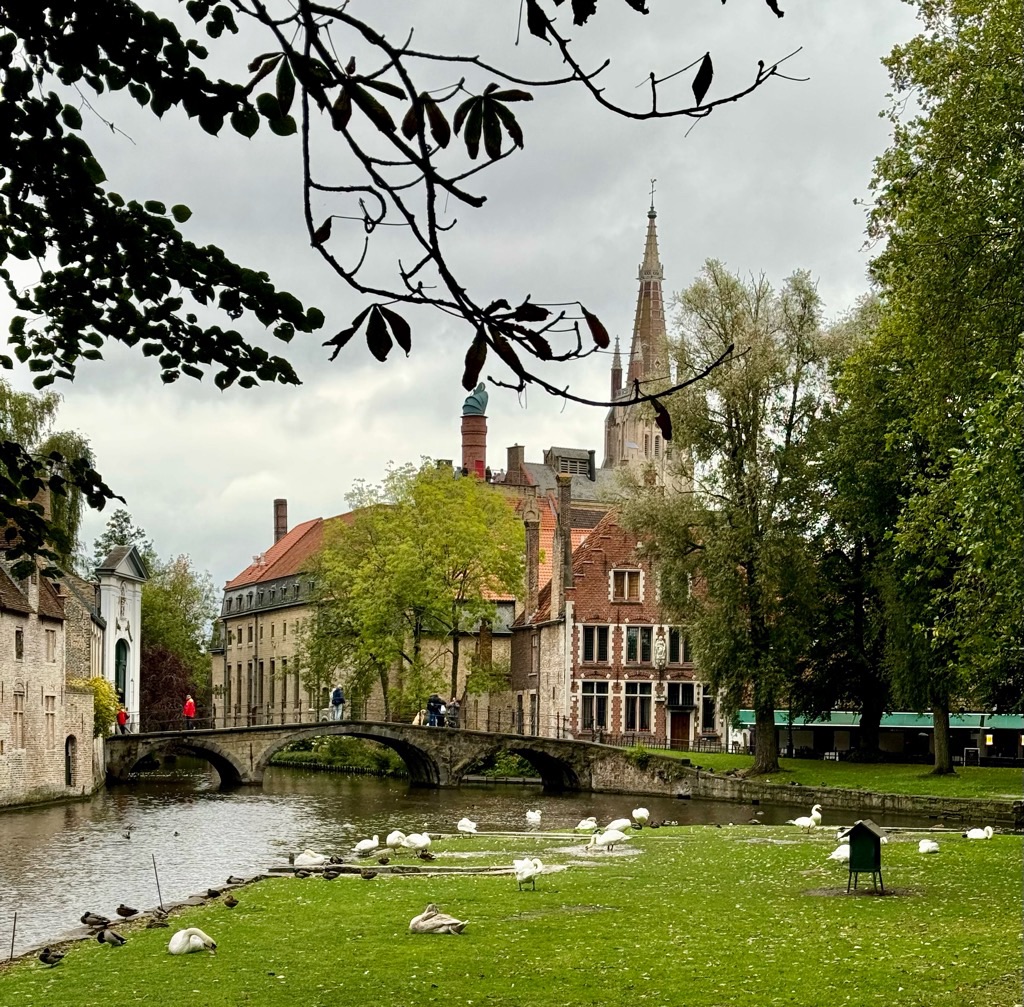
We only spent one night there as we have visited Bruges many times before but as always, it was a real joy to walk through the streets and marvel at the wonderful and well preserved architecture.
We couldn’t go to Bruges without sampling the delicious frites – the best chips (and maybe the most expensive) in the world! They were delicious and we didn’t regret our decision or the shocking price one little bit!


 Salty tales from Bali Hai on Sunday
Leave a comment