After driving through Jarawa tribal land on the Andaman Trunk Road which runs the length of three of the main Andaman Islands, we boarded boats to the famous Limestone Caves in the Homfrey Strait.
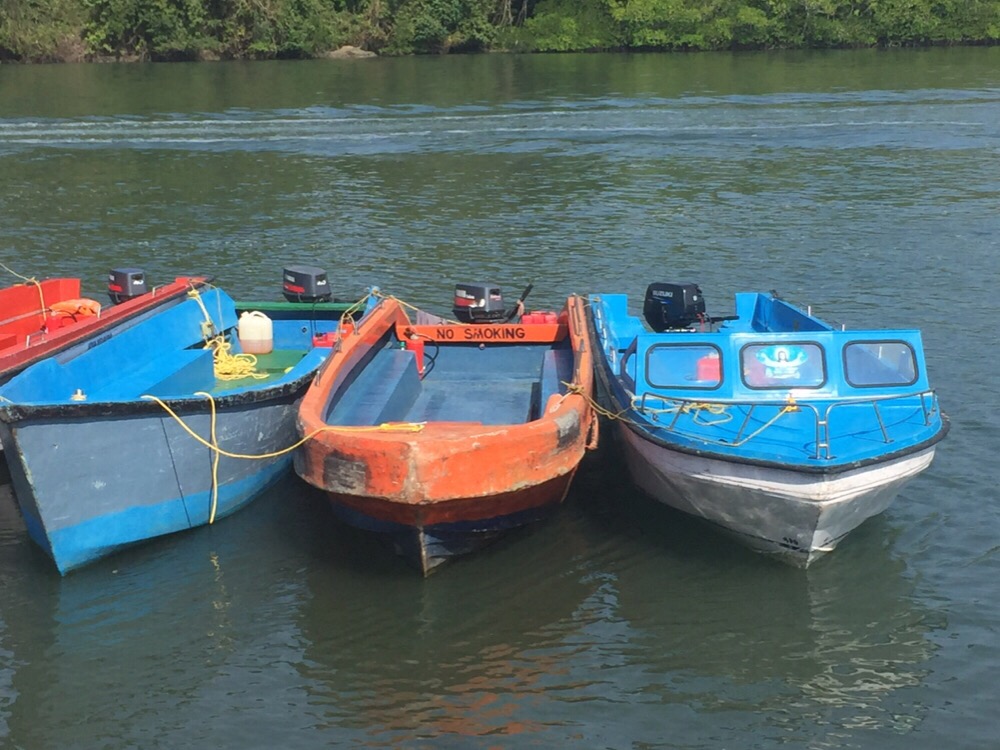 Some of the tourist boats that ply the route to the Limestone Caves
After a ride of about 25 minutes we came to a timber jetty at the end of a boardwalk. Rather than stop there we headed into a narrow opening between the mangroves and bumped our way along the narrow channel, jostling with other boats in a chaotic but cooperative manner – rather like Delhi traffic.
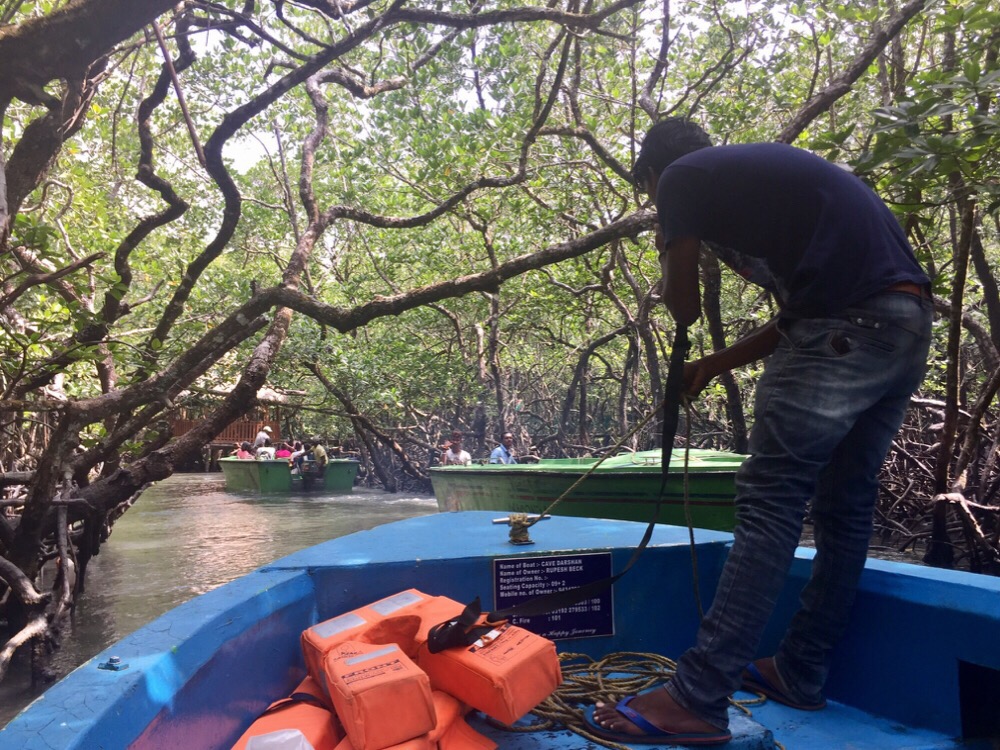 Negotiating our way through the mangroves
Inching forwards we stopped to let other boats out and took our turn at a small pier while we disembarked.
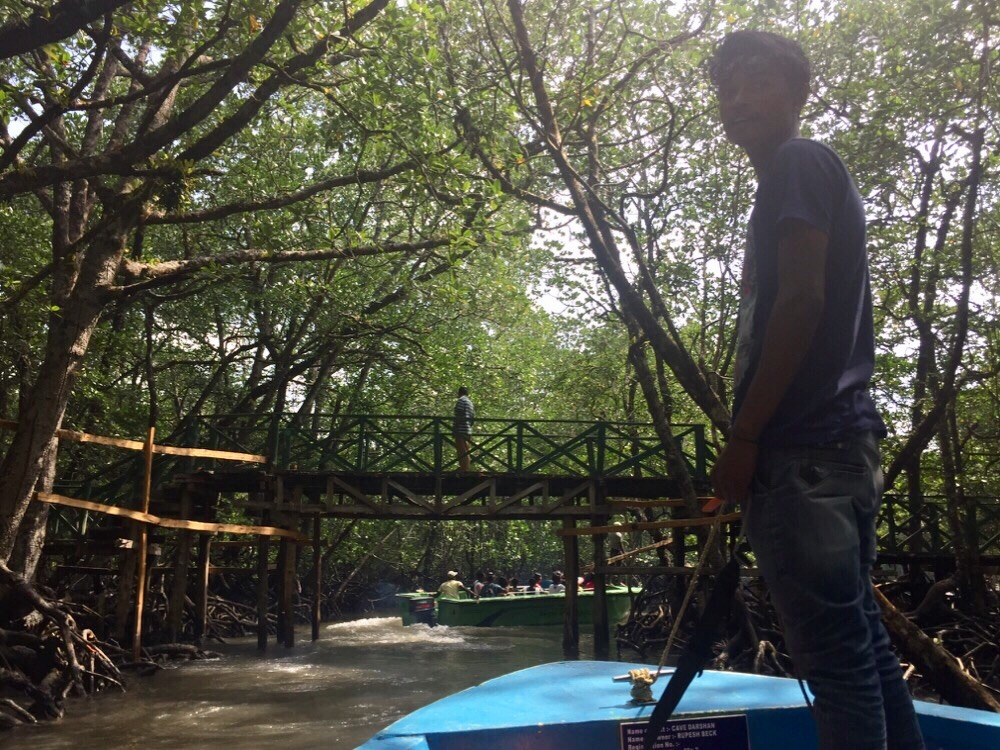 Arriving at the disembarkation point
The walk to the limestone caves was one of the highlights of the day. A board walk through the mangroves gave way to a rocky path through a wood and out in the open to farm land with a village in the distance.
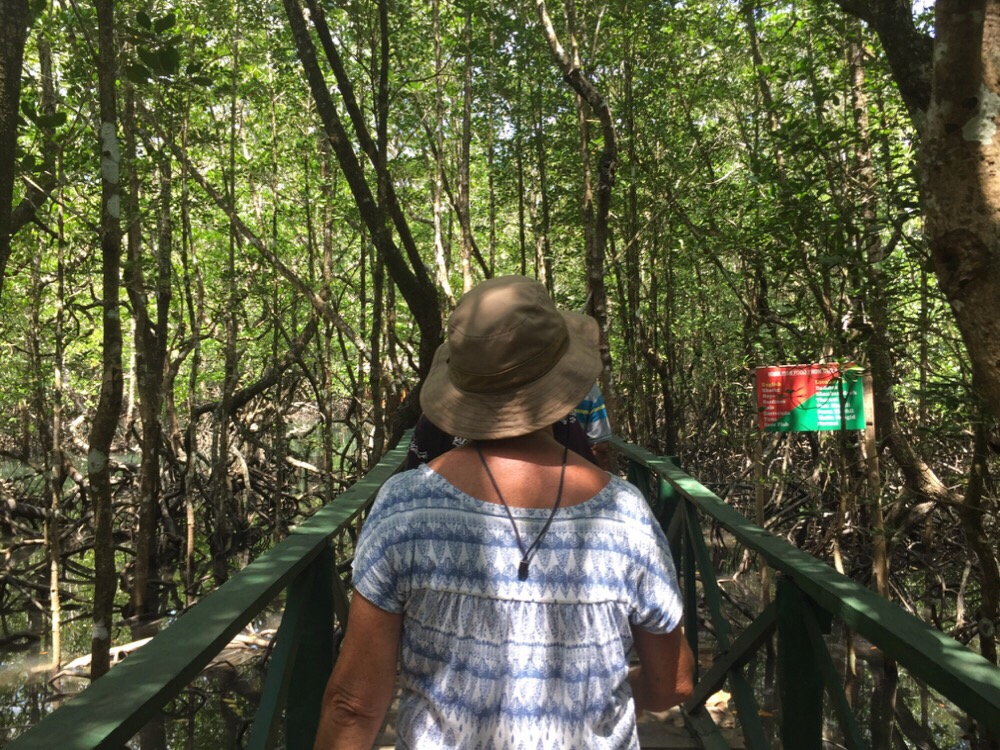 A lovely walk amongst the trees…
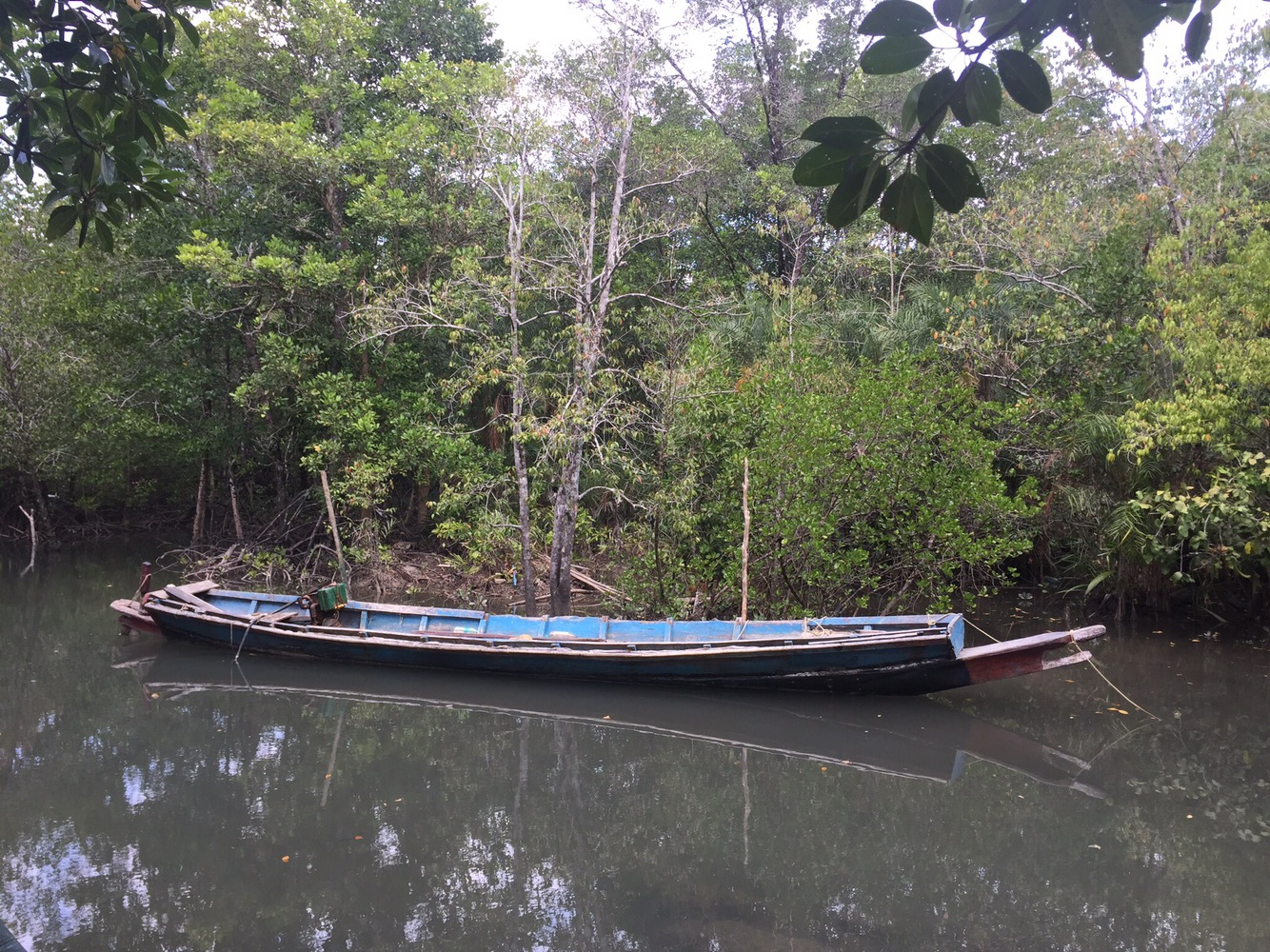 ….by the water…..
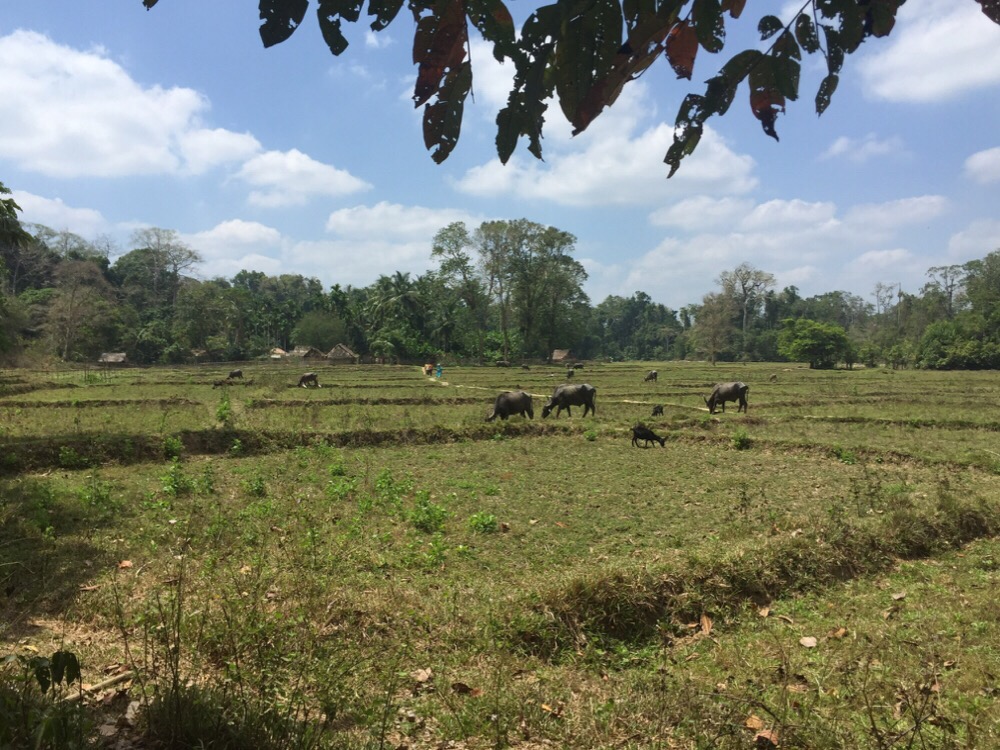 ….and through some fields
After walking through more copses of trees, the path started to become rougher with more rocks to pass through – allowing single file only which proved to be tricky when meeting people coming the other way.
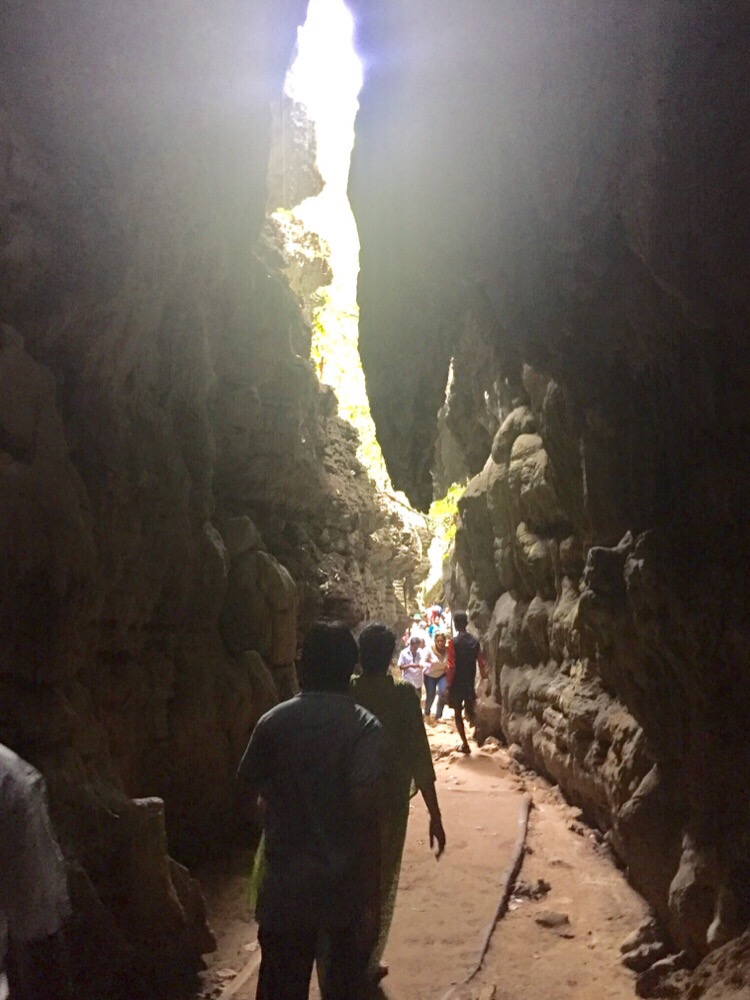 Some parts of the path were very narrow
The caves were a good example of the effects of water on limestone and there were some interesting stalactites and stalagmites but they were absolutely heaving with people and it was very hot.
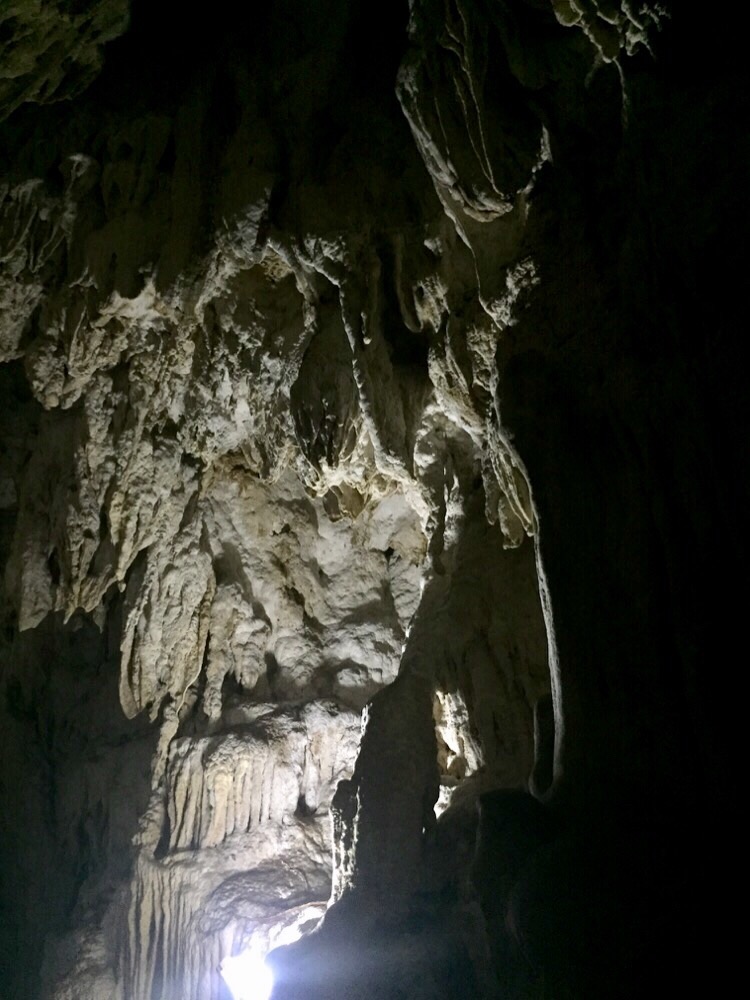 Inside the Caves
In some places there was room to allow only one person to go through at a time. A nightmare for a anyone who hates crowds and is a little claustrophobic.
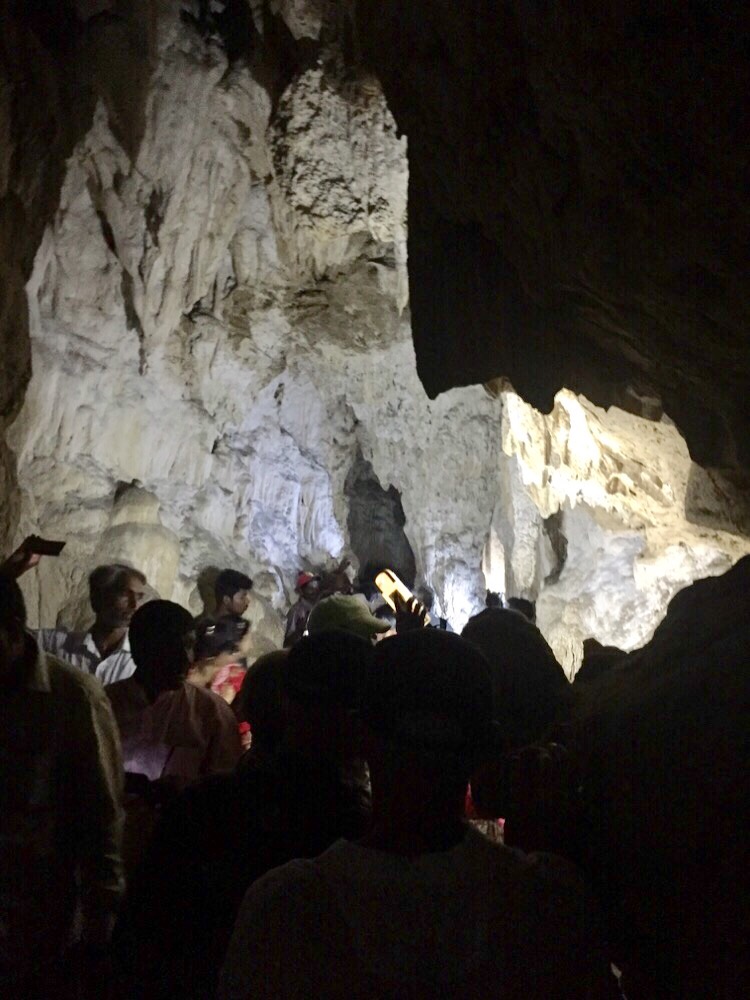 It was hot and crowded!
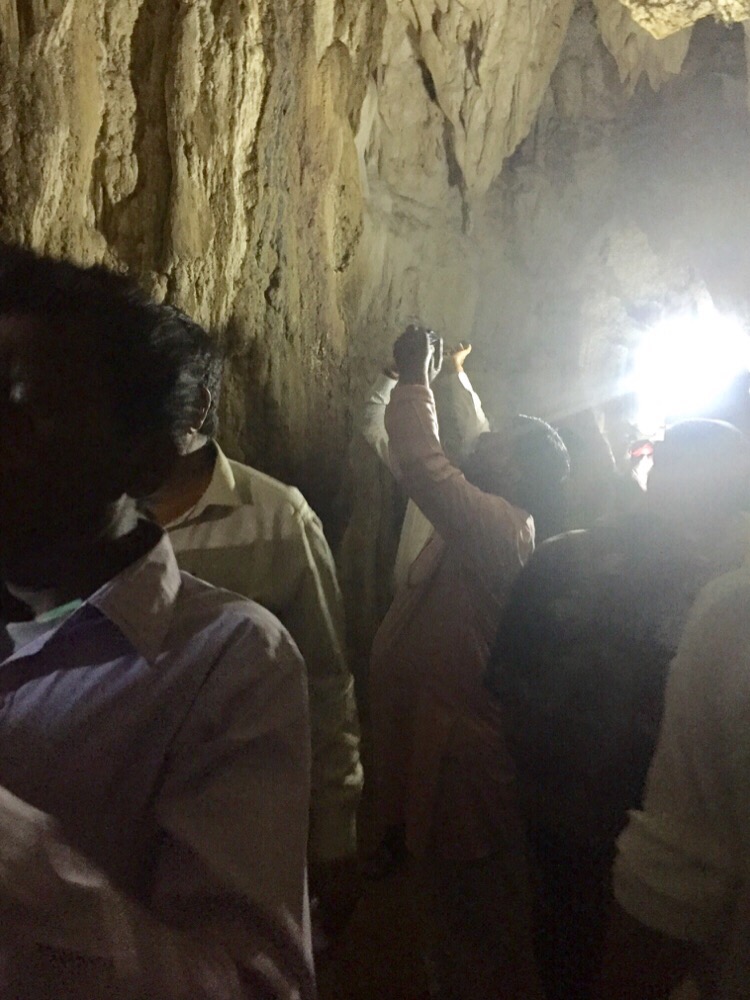 It wasn’t easy getting out!
Picking up our boat after the cave visit was a typically Indian affair. We were sent along a further piece of boardwalk which took as to the entrance to the mangroves.
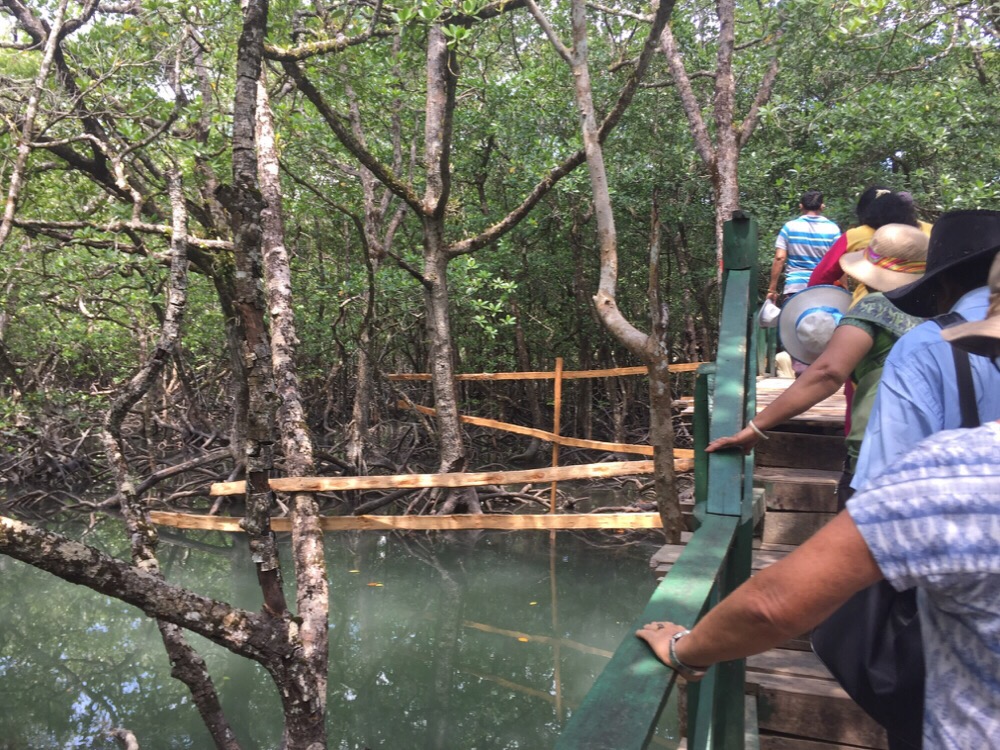 The boardwalk leading to the jetty
Everyone crowded onto the small and rather fragile jetty and as the boats jostled to come in to pick them up, the crowd surged forwards and tried to get down the jetty steps.
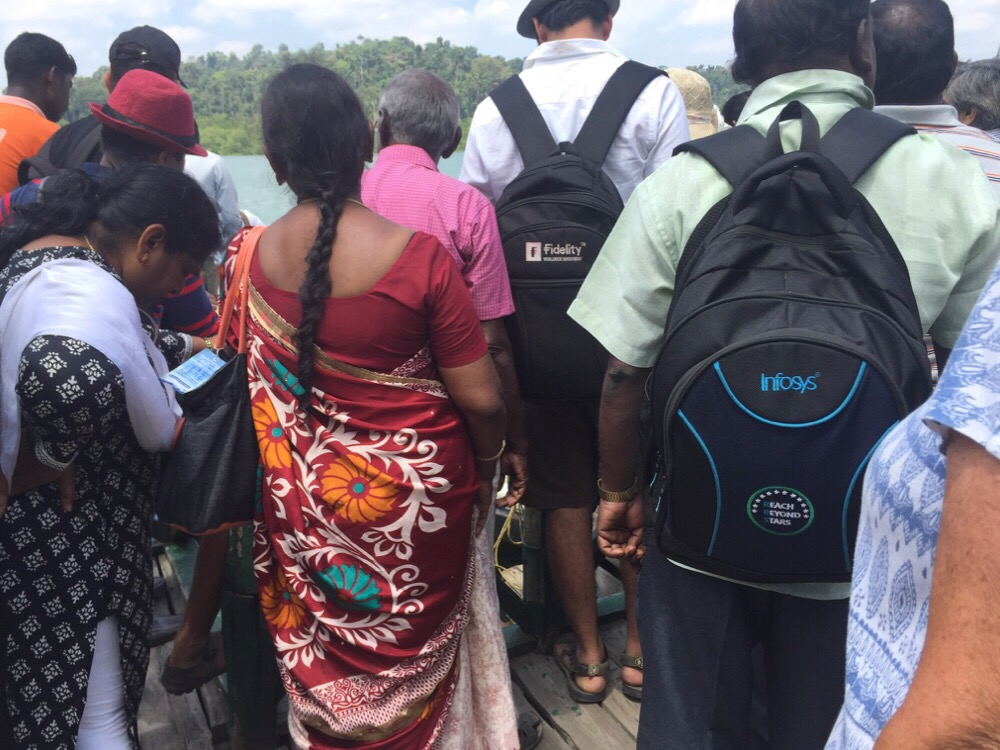 Everyone crowded onto the jetty
The boatmen would unexpectedly push in front of each other so that the people on the steps would have to let the ten other people whose boat had arrived through the crowd to load the boat. Goodness knows how, but everyone managed to board their own vessel without falling in or the jetty collapsing – despite the boats banging into it at full tilt like dodgem cars at a funfair!
 It was a scramble to get into your boat
Back at the ferry stop we waited to board in the shade of some trees. Goats and cows foraging for food pushed passed us, one giving a none too friendly but quite gentle butt as he passed the Yantaras.
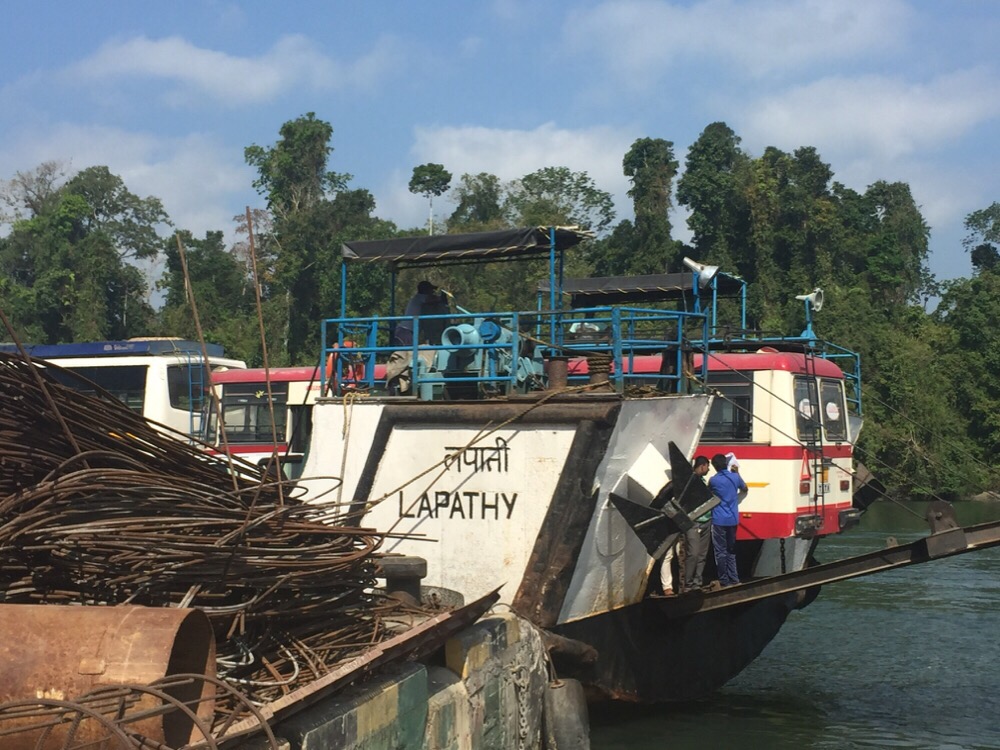 The good ship Lapathy unloads ready for us to board
We were among the last to board the ferry figuring last on would be first off.
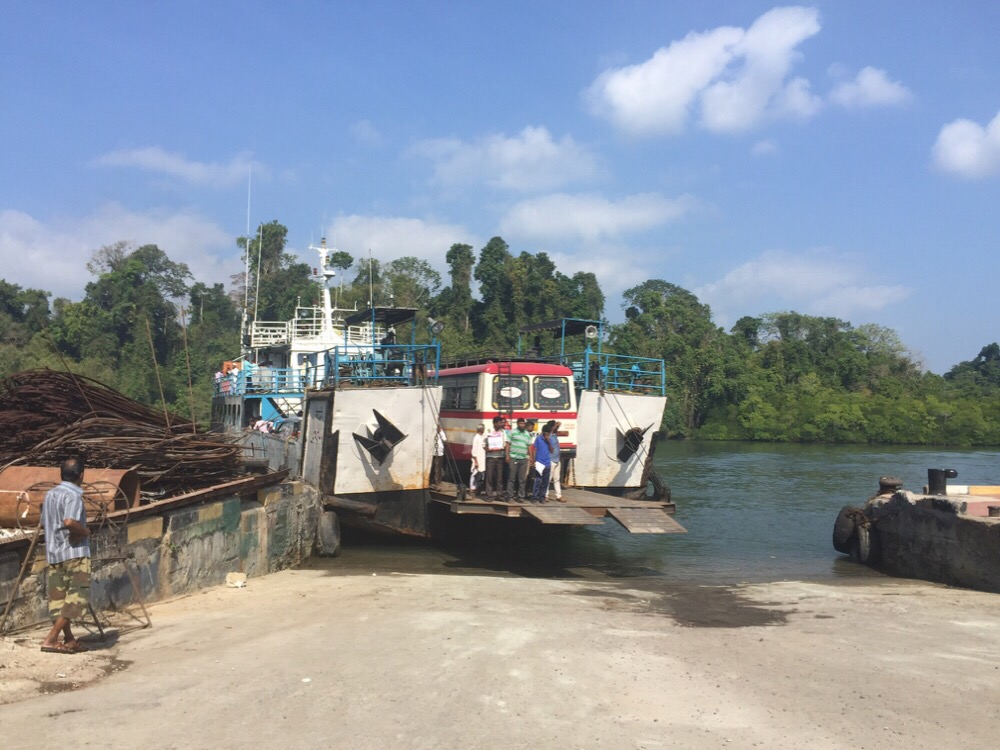 Time to reboard the ferry
On the other side there were some thatched open sided huts where we unpacked our picnic on the bench.
After a delicious lunch organised by the famous Ravi – former taxi driver, and a “go to” person in Port Blair we prepared to get back in the car for the trip back.
 Just before we got back in the car…
Just as we were getting in our driver pointed out to elephants walking through the shallows, taking a break from the logging work going on to one side of the ferry terminal.
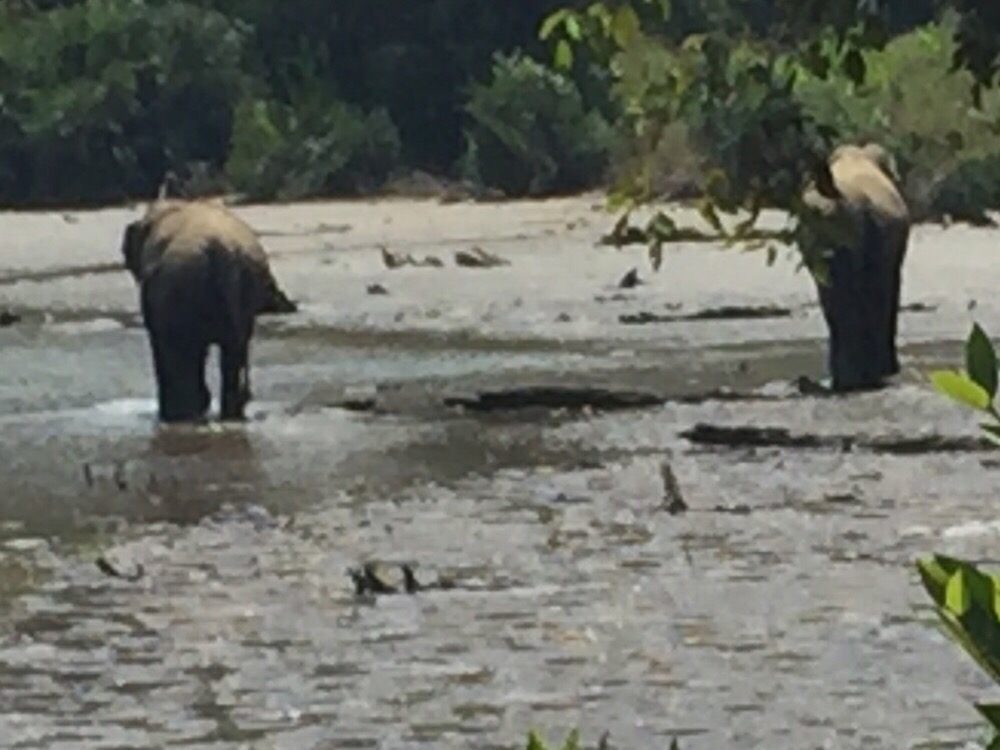 …. our driver spotted elephants!
On the drive back we passed one group of young male Jarawas but apart from a policeman on patrol standing guard in the middle of the forest saw no one else.
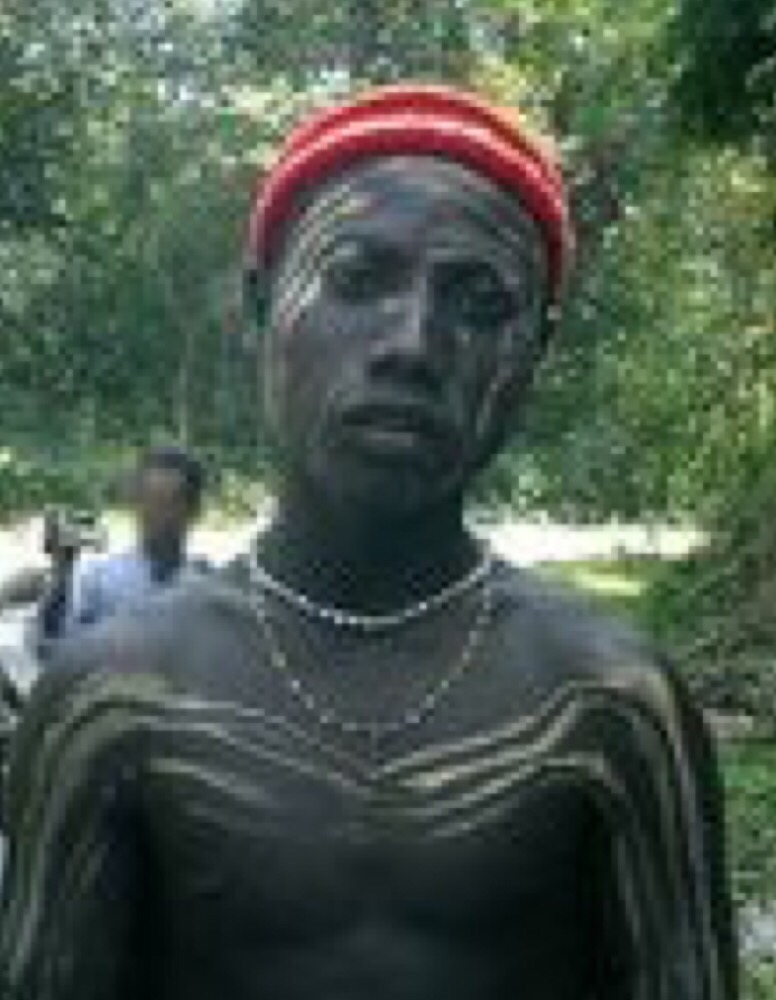 A young Jarawa tribesman
Once through the checkpoint it was interesting to see the large areas of wetlands covered with many ducks and other water birds that had been created as a result of the 2004 Tsunami.
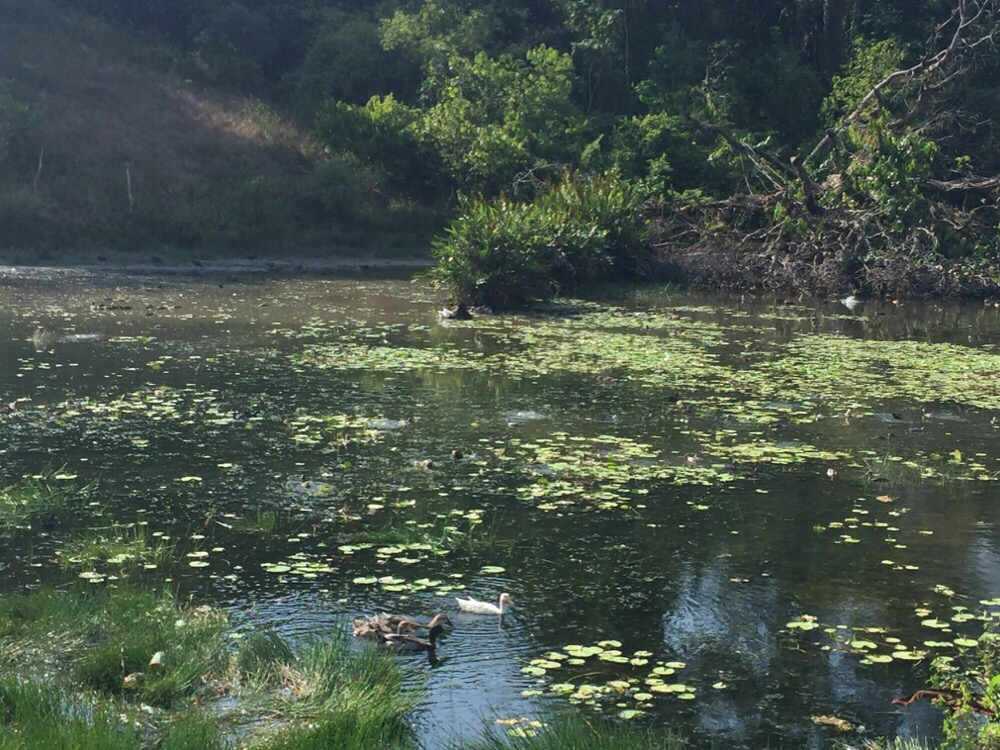 Paddy fields inundated by the Tsunami
The inundation of seawater into what were once rice paddies and other farmland areas, resulted in the brackish water wetlands that now attract a variety of different species of water birds.
 Too many documents in glass cases and not enough in the way of introductions
It was very interesting but desperately needed some proper organisation with summaries at each point where the subject matter changed. There were many old documents which gave the visitor a little insight into life during for example,the Japanese occupation or at the time of India gaining her independence but there were very few artefacts that could inform and bring exhibits to life.
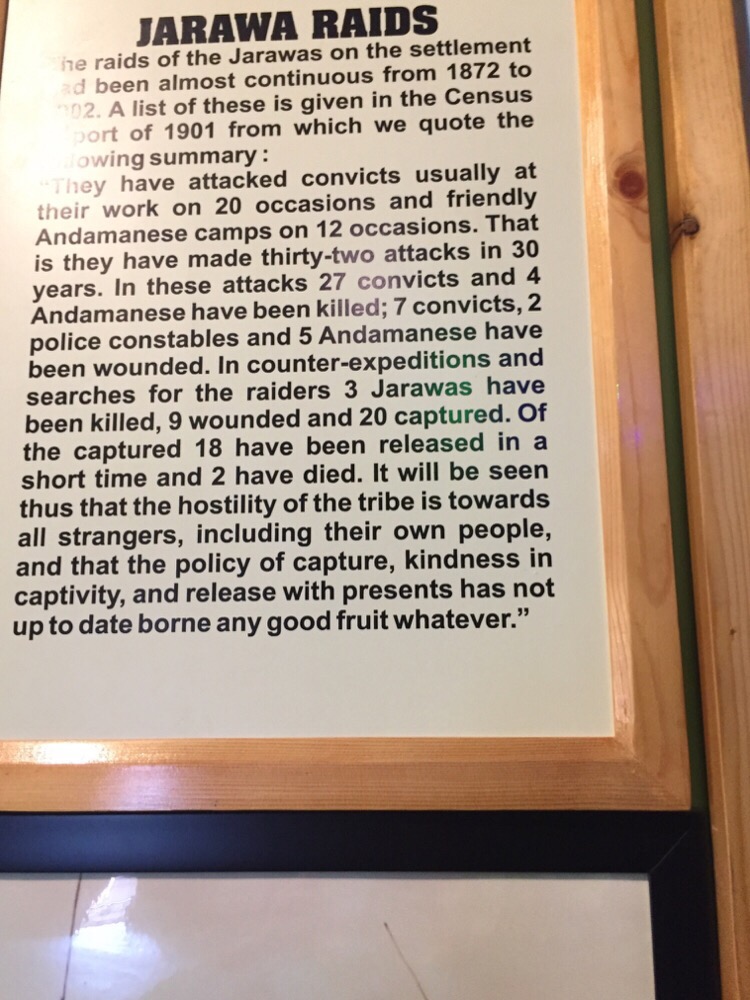
The museum was definitely worth visiting but needed someone to pull all the information together and give it context and help link the information all together.
For more information on travelling through Jarawa tribal land go to
https://dotsailing.wordpress.com/2017/05/17/the-andaman-trunk-road-a-highlight/
Or for another blog update about cruising the beautiful Andaman Islands go to:
https://dotsailing.wordpress.com/2017/05/20/engine-troubles-sorted-we-head-southwards/


 Salty tales from Bali Hai on Sunday

Leave a reply to The Andaman trunk road – a highlight – Salty tales from Bali Hai Cancel reply