What a magical place La Brigue is! Nestled in the Alpes-Maritimes of Southeastern France, this atmospheric little village was Italian until just after World War ll at which time it became part of France as a result of the Treaty of Paris negotiated between Italy and the Allied Powers.
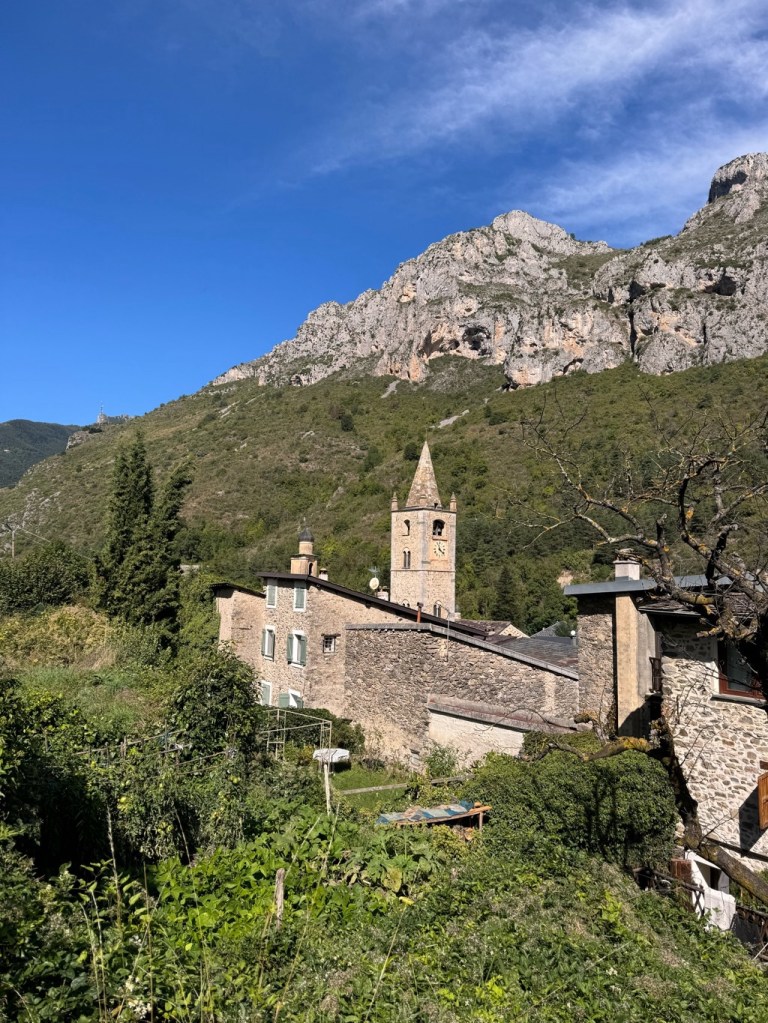
What makes this place so special? Well for a start, the beautiful mountain air is something we noticed straight away. Then there’s the scenery which is just stunning – the village is surrounded by magnificent steep cliffs and mountain peaks.
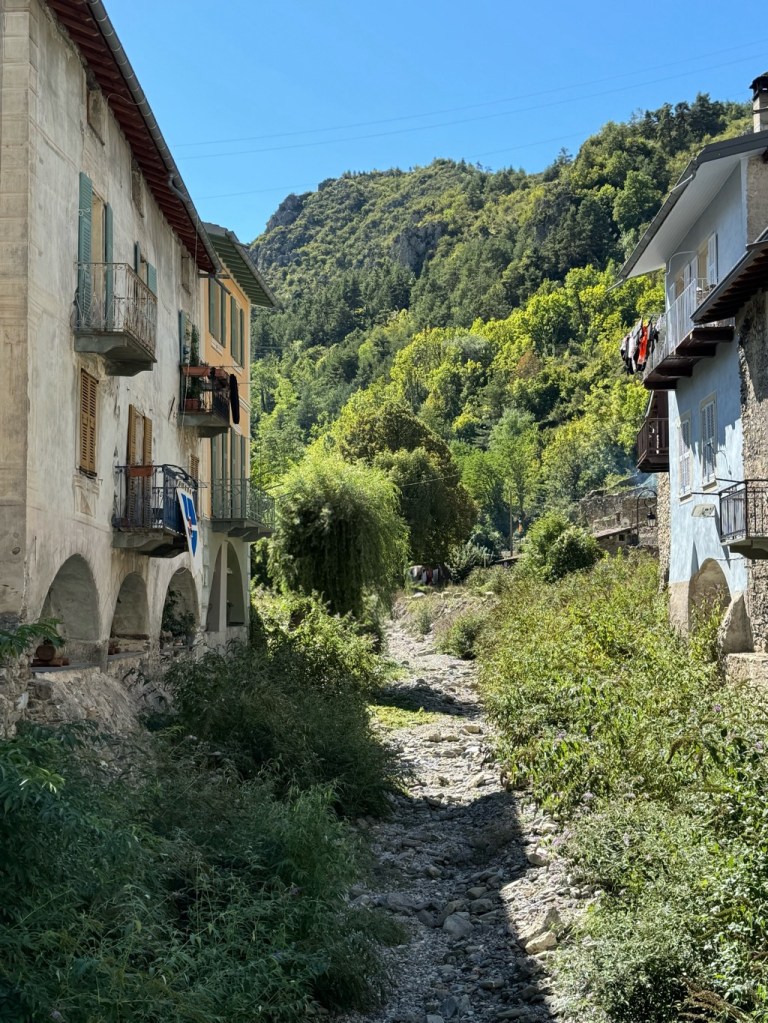
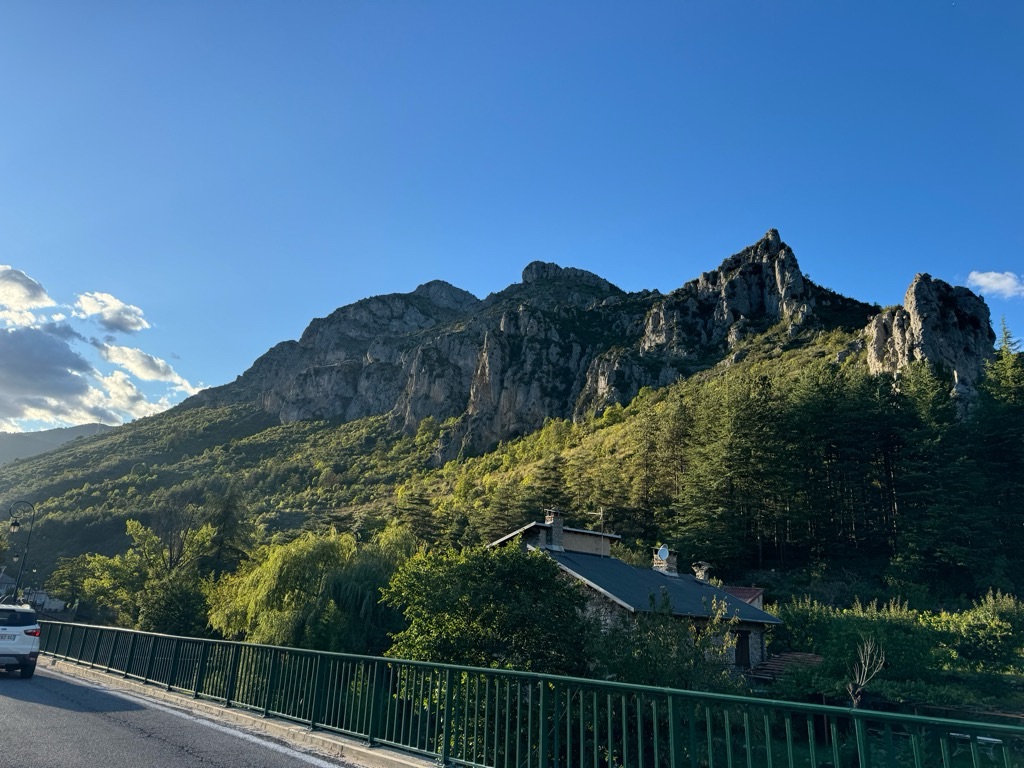
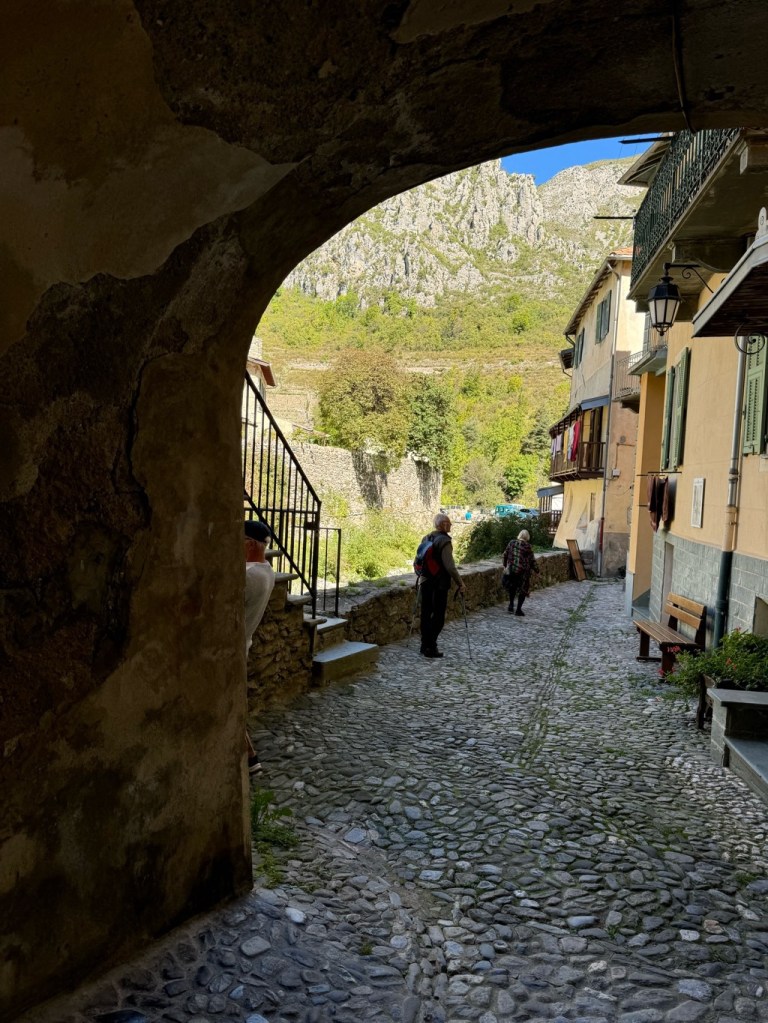
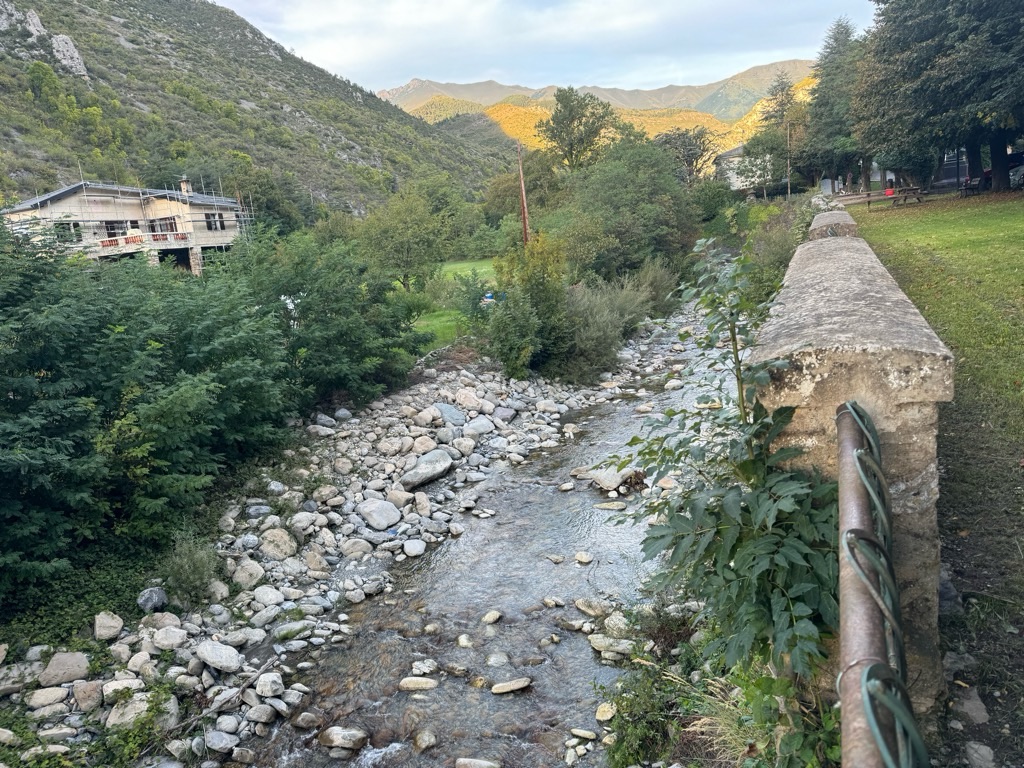
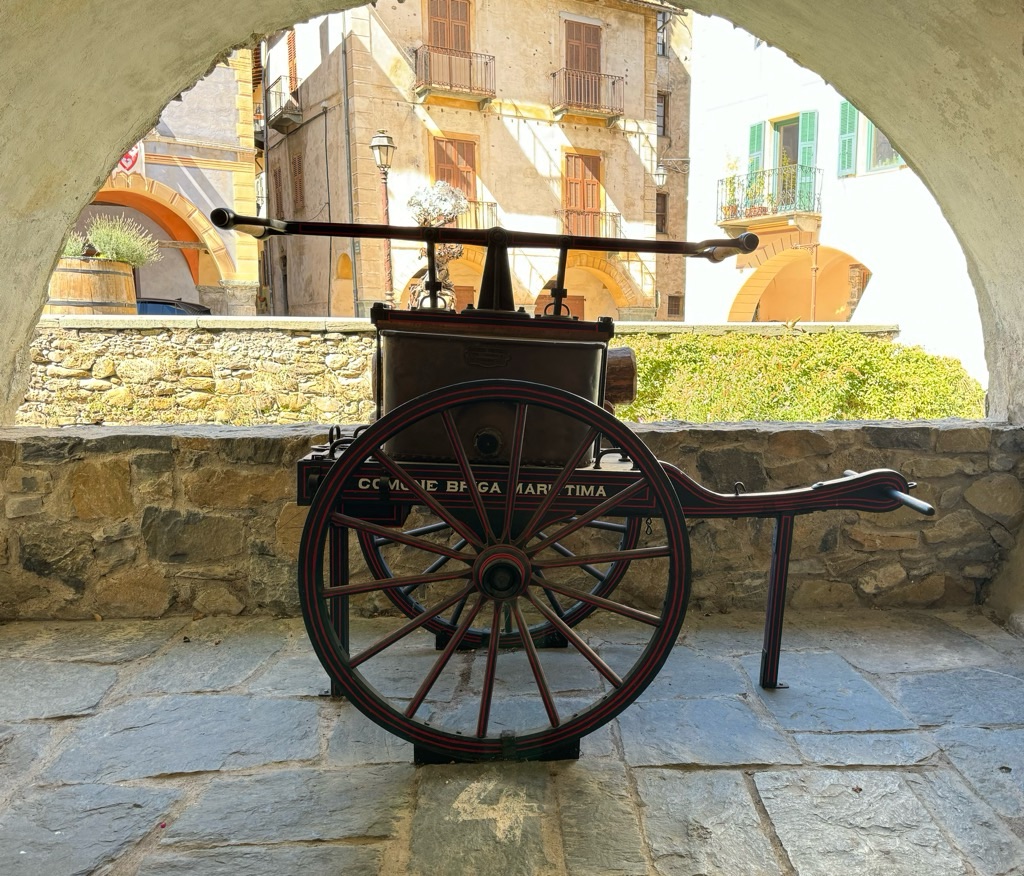
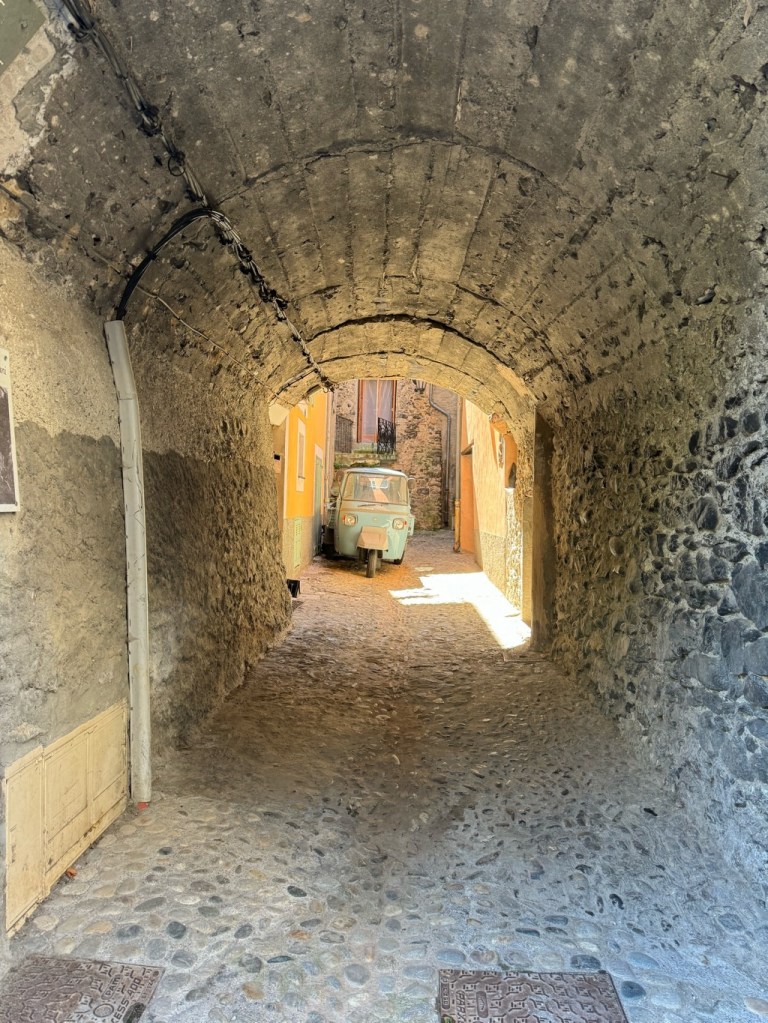
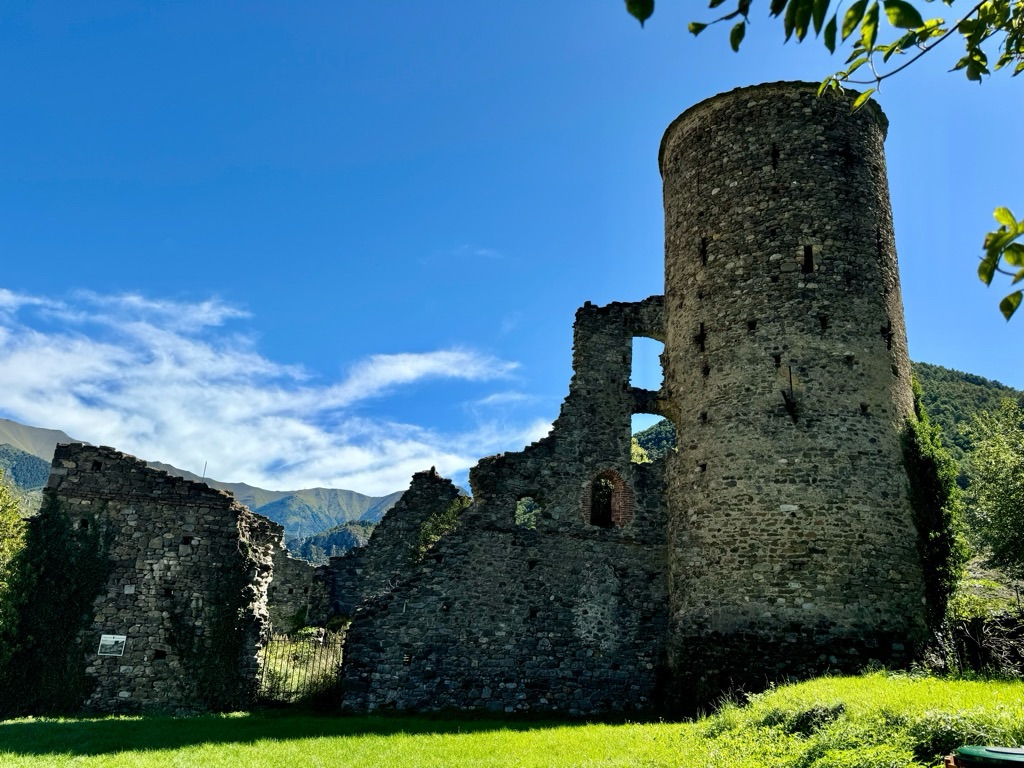
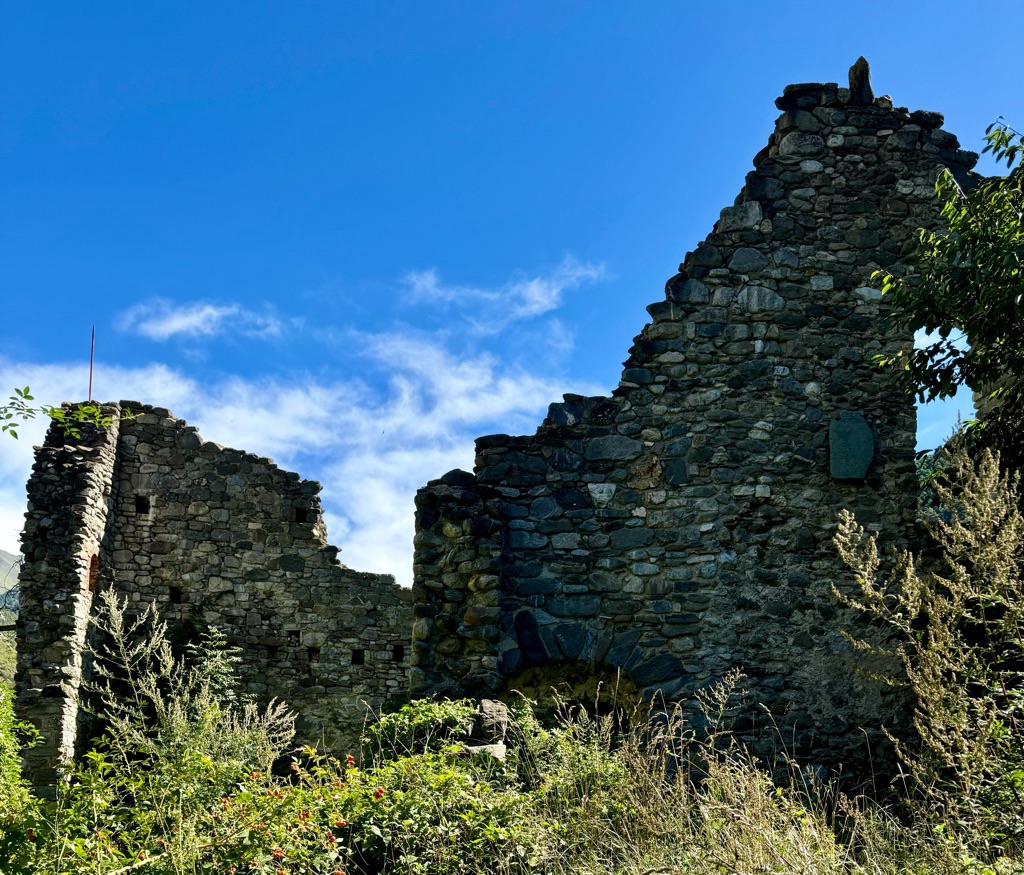
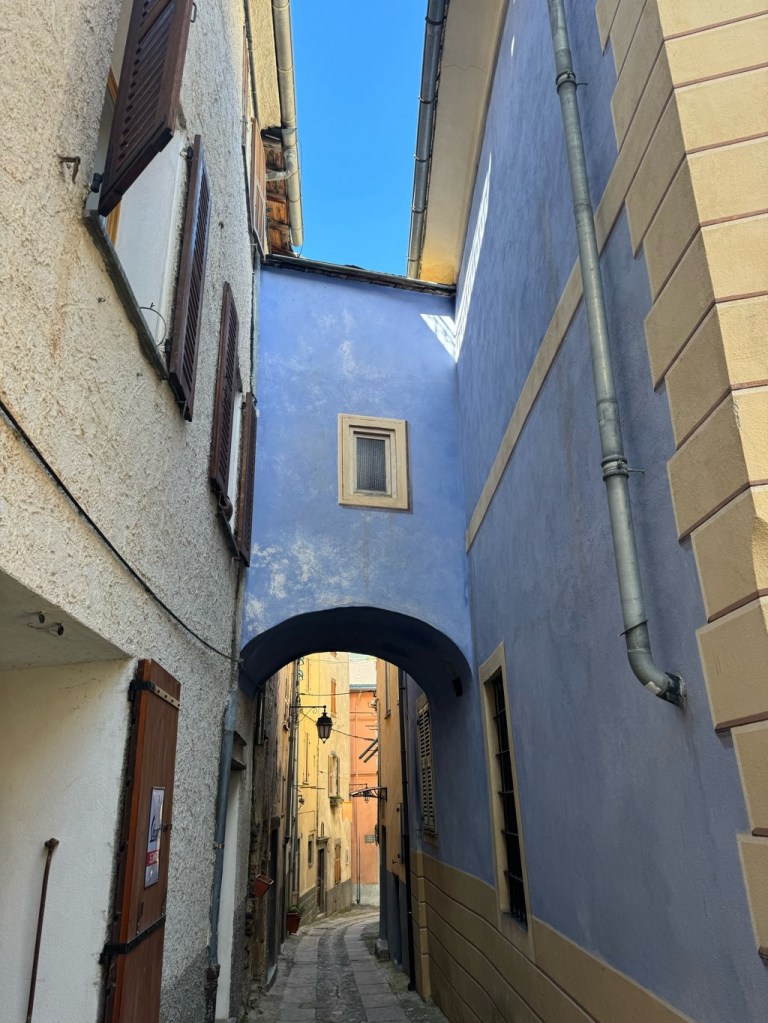
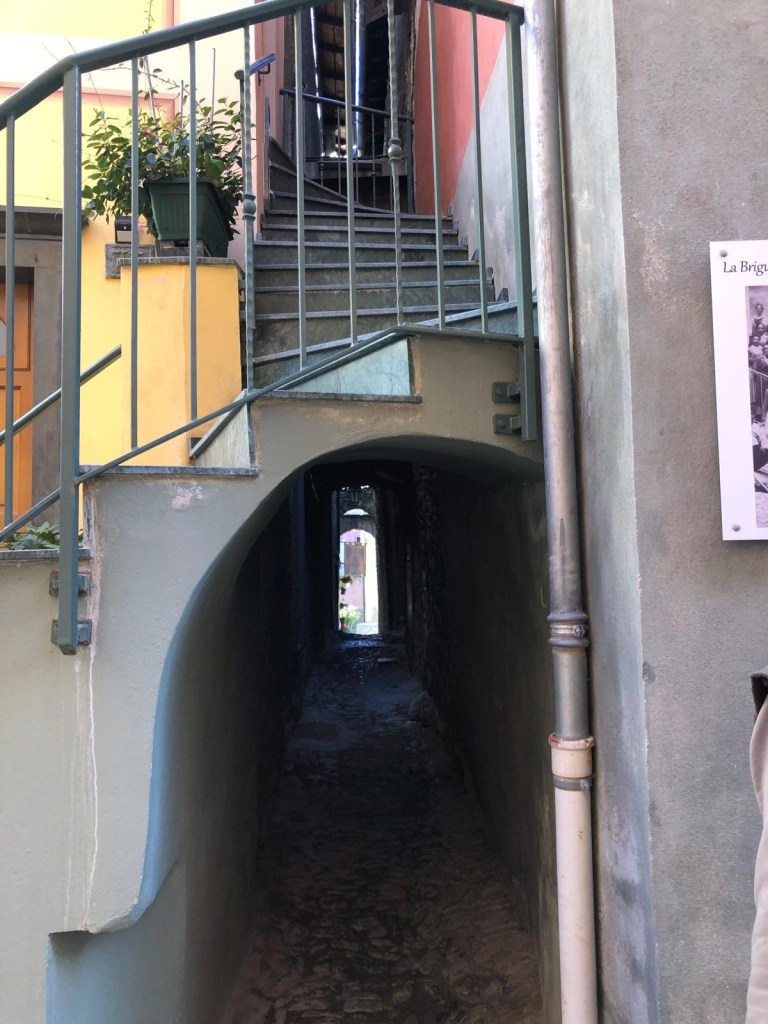
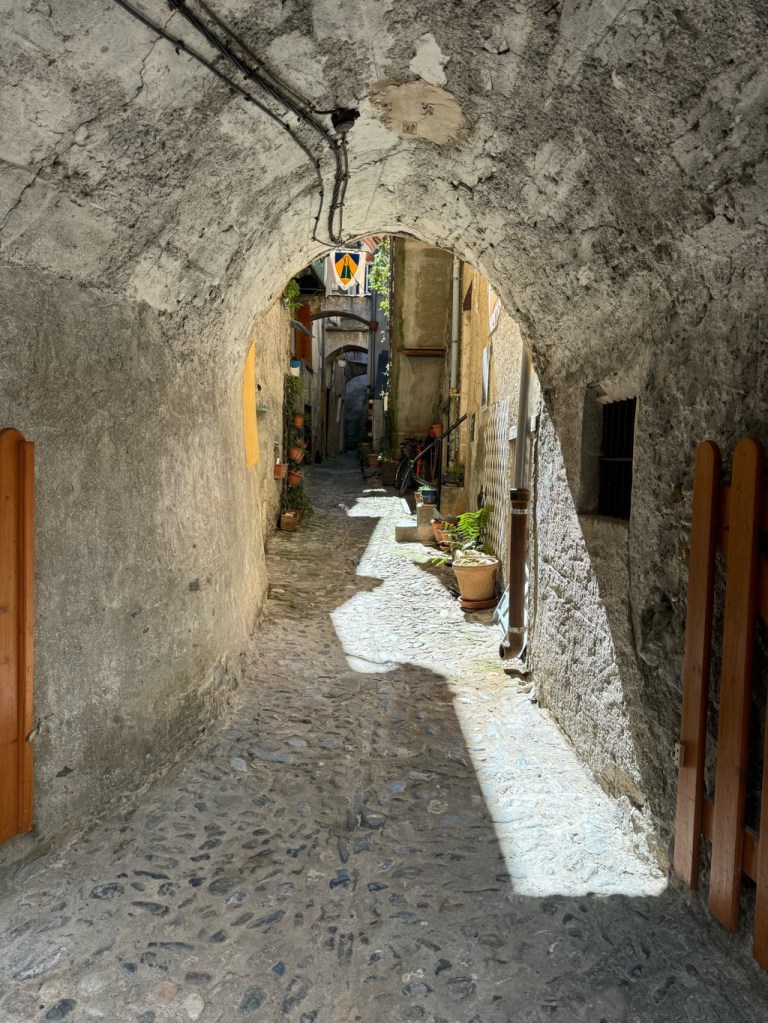
The village itself is delightfully picturesque with cobbled streets and brightly coloured houses, long arched arcades, small squares, a cascading river, and above the village, the ruins of the 15th century Chateau Lascaris.
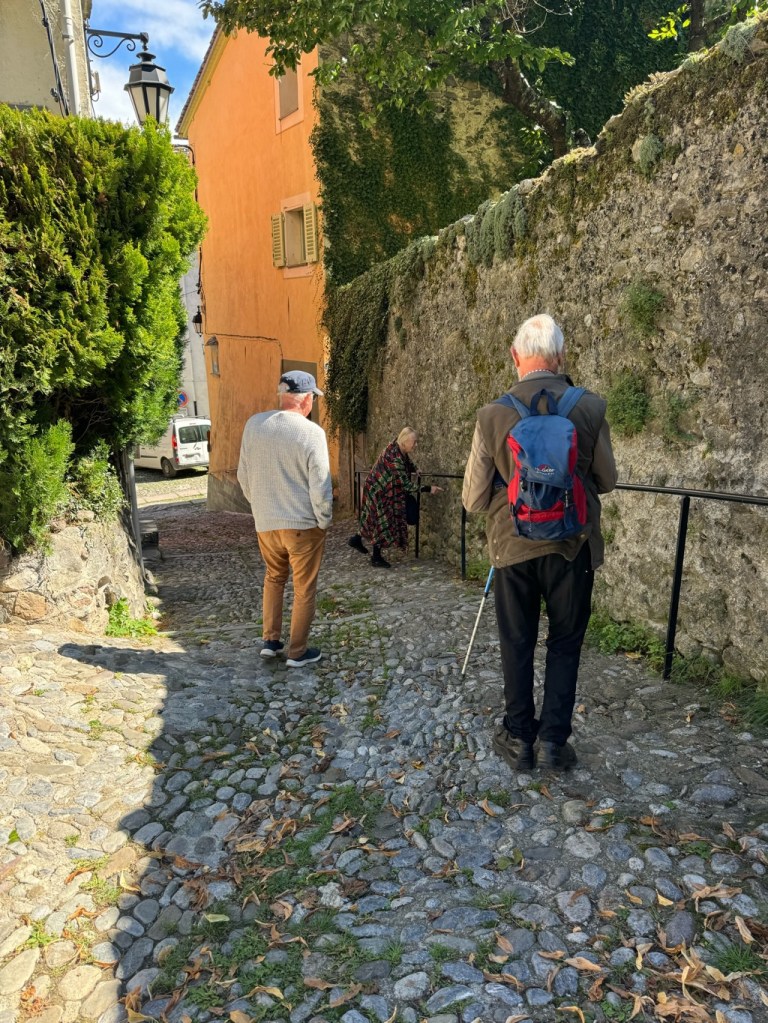
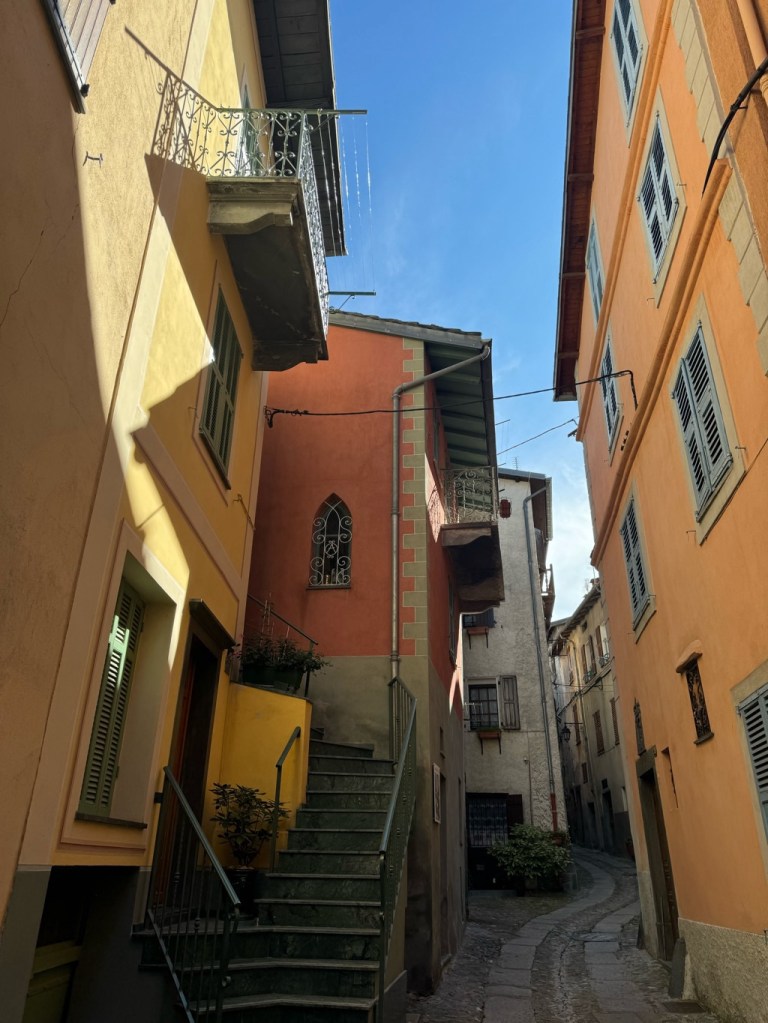
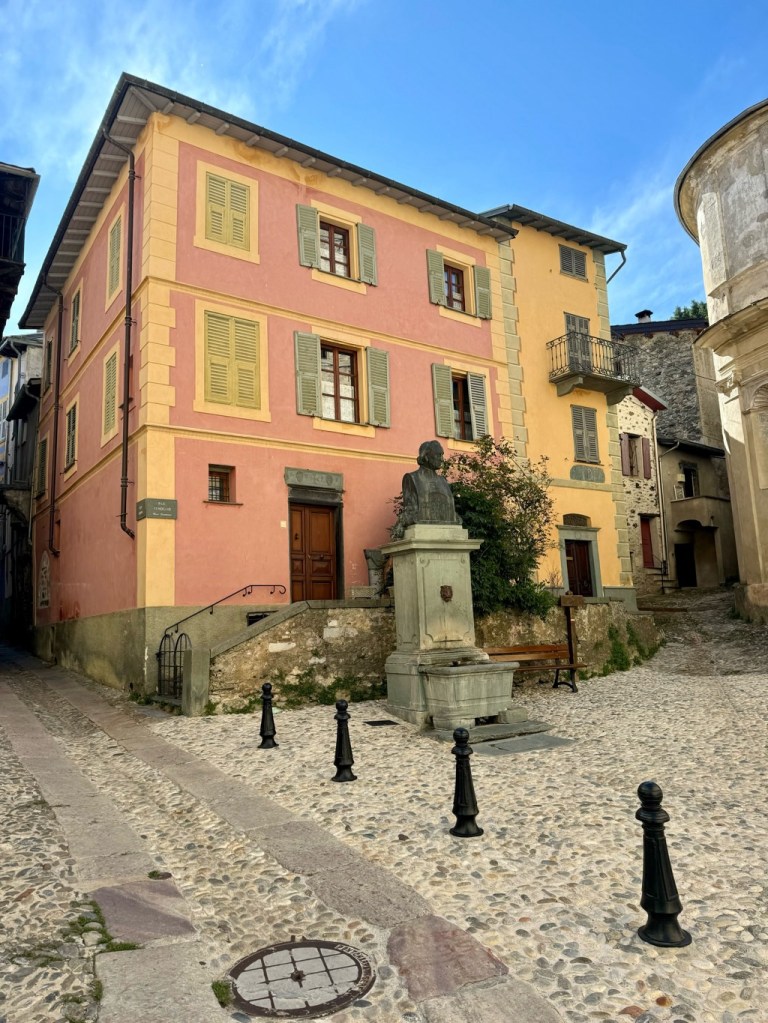
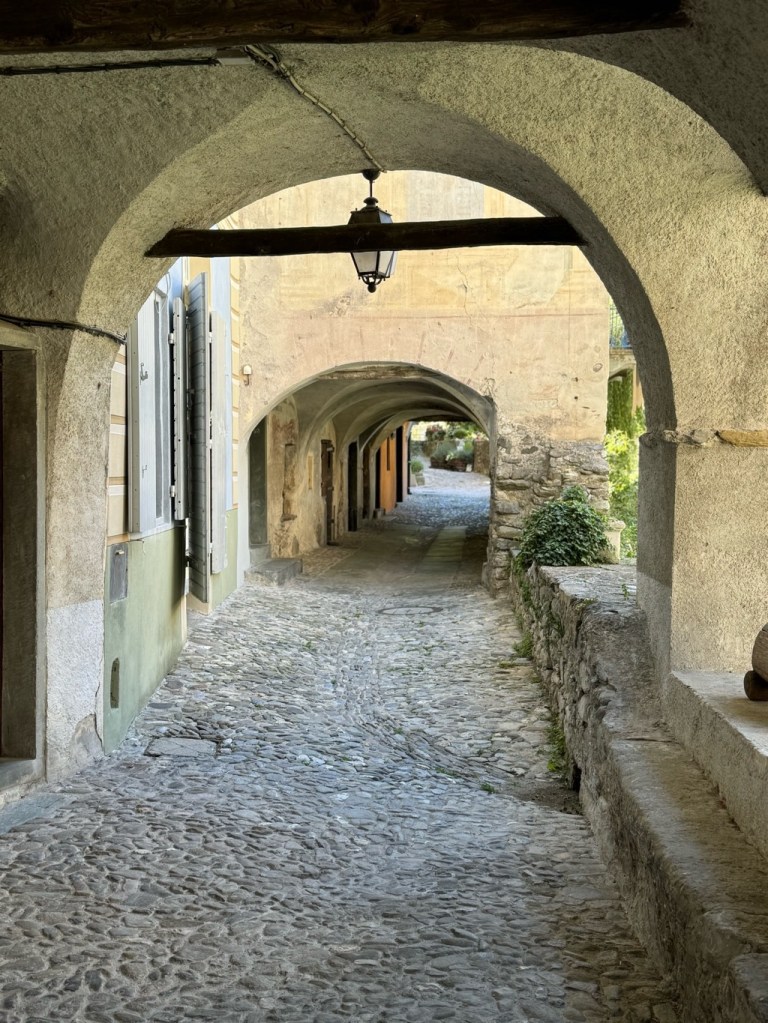
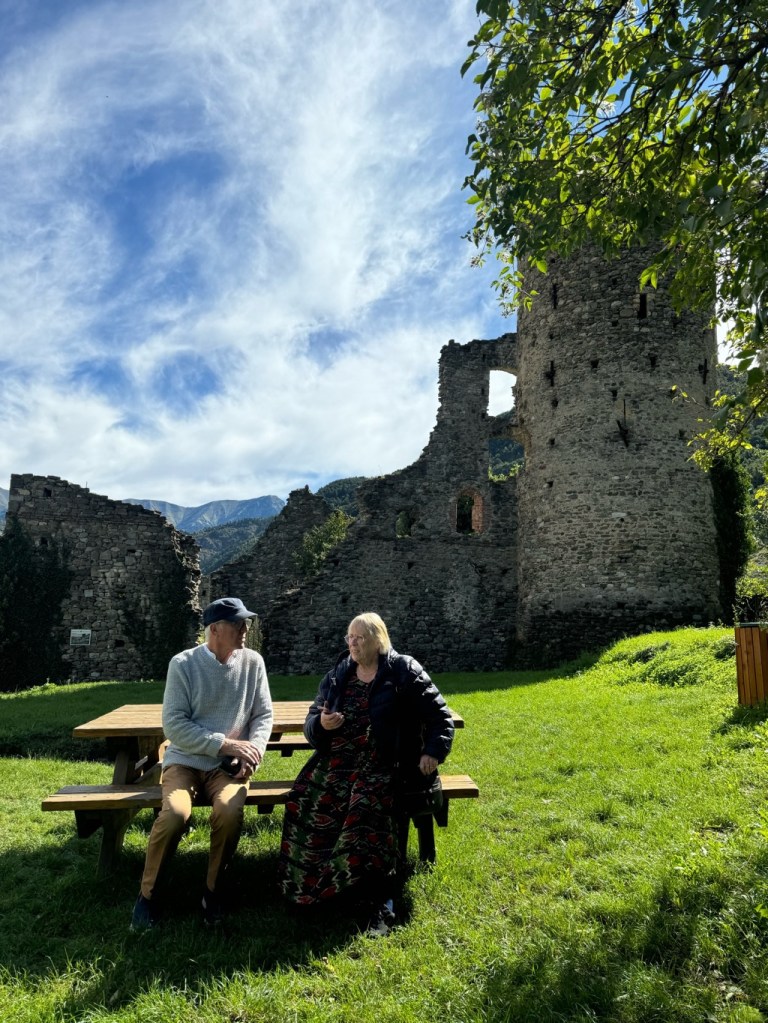
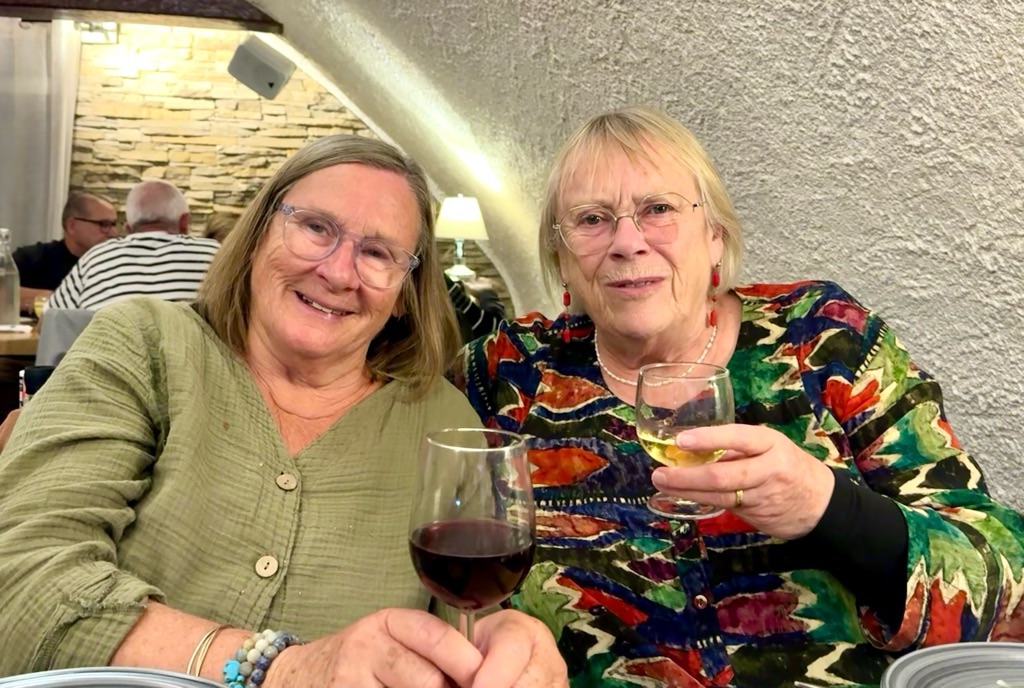
We were there to meet my sister Sarah and brother-in- law Martin who were spending a few days of their summer holiday in La Brigue.
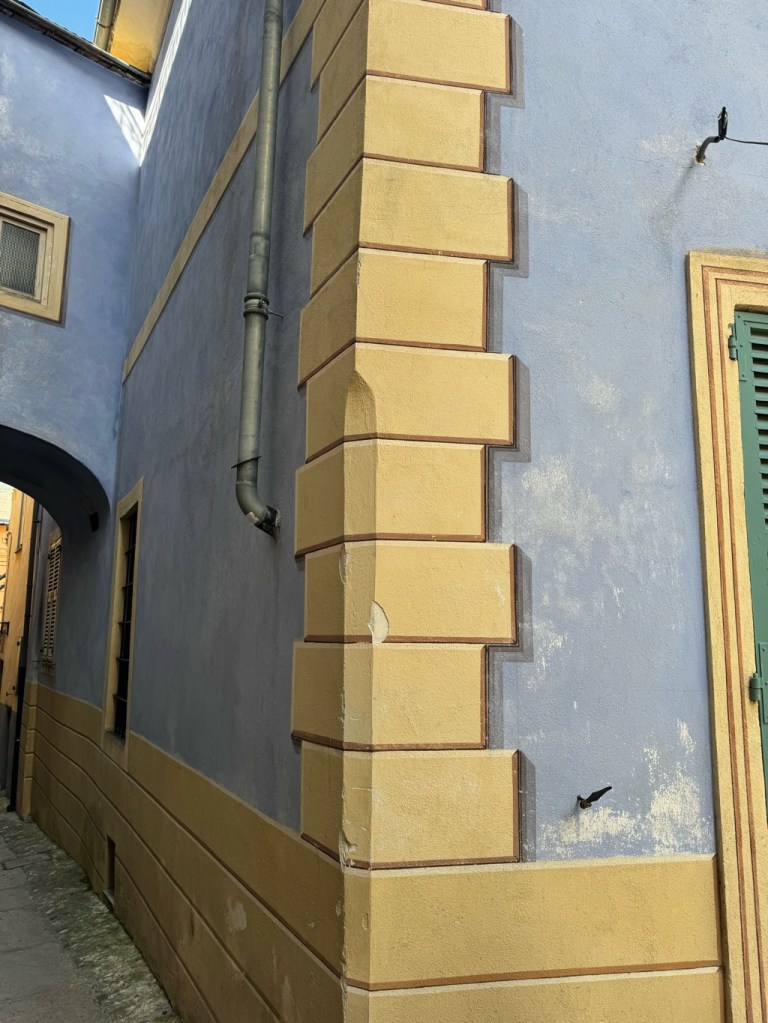
The balcony at their hotel (Auberge St Martin) overlooked the Church of Saint-Martin , an impressive Baroque building with a trompe-l’oeil façade.
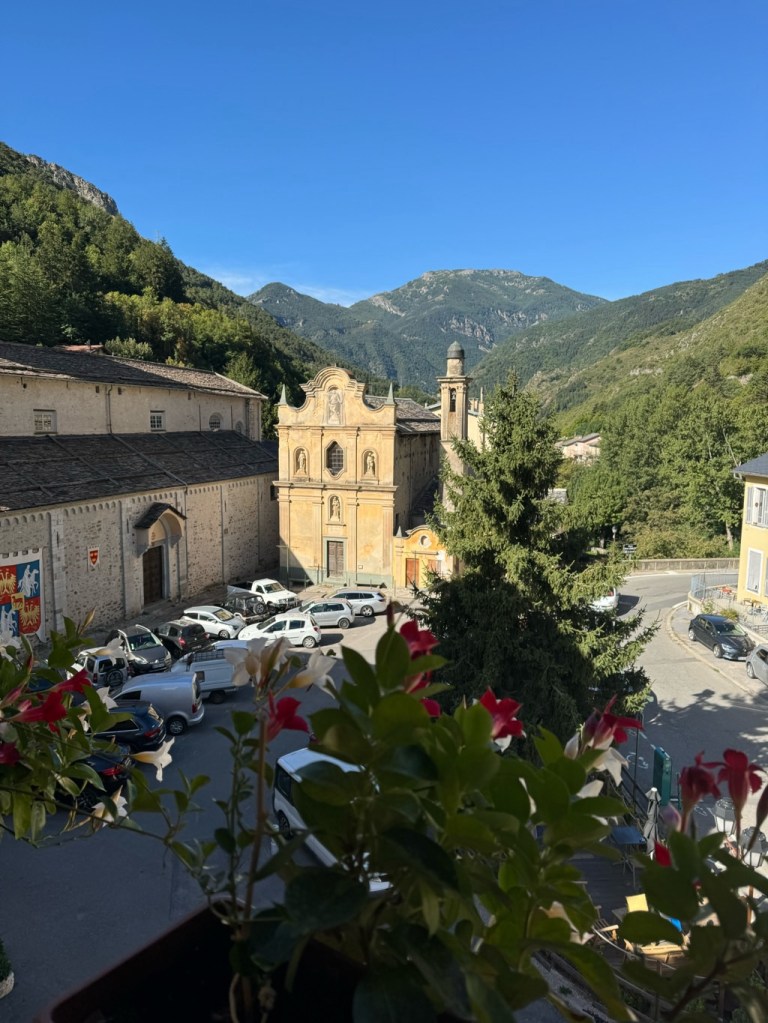
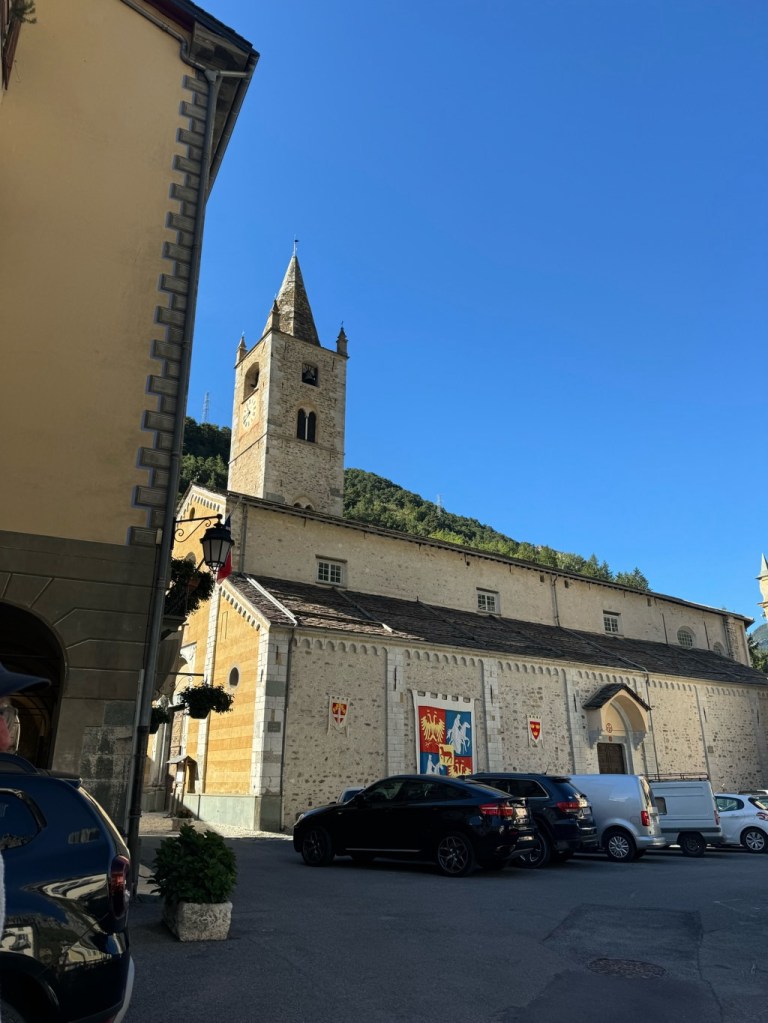
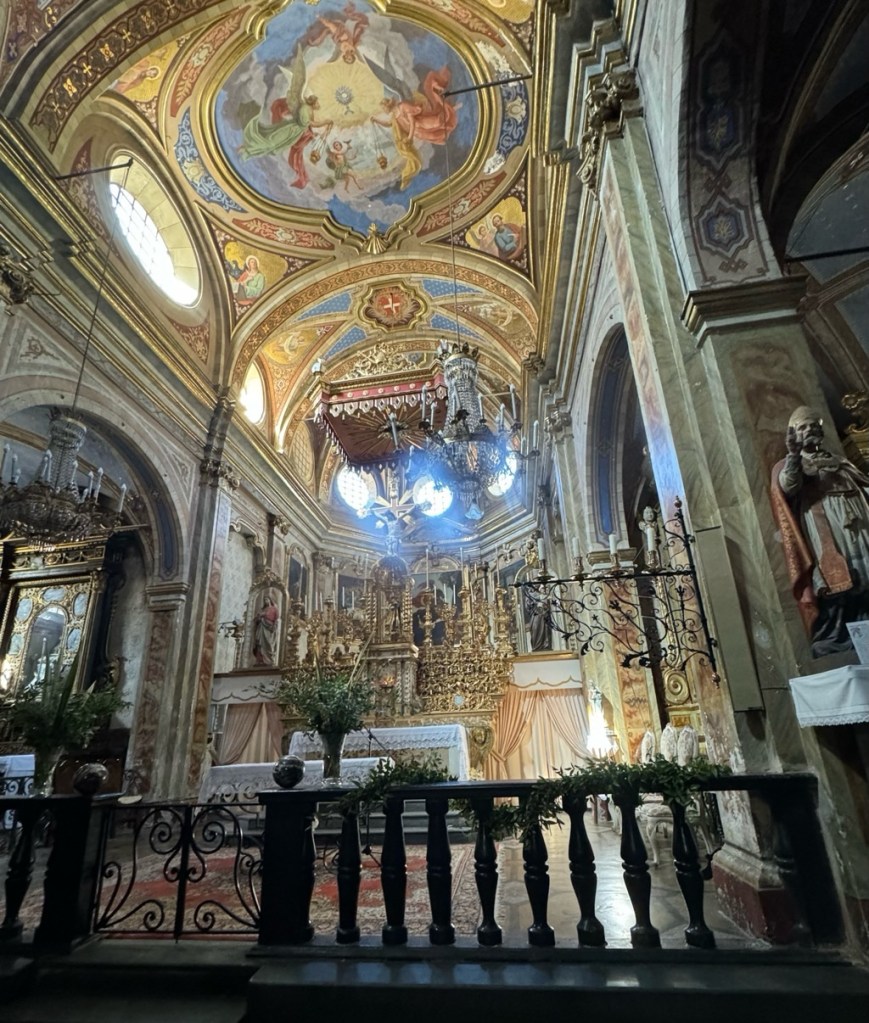
This is a much larger and better cared for Church than you would normally expect in such a small village and it had some valuable frescoes and paintings inside.
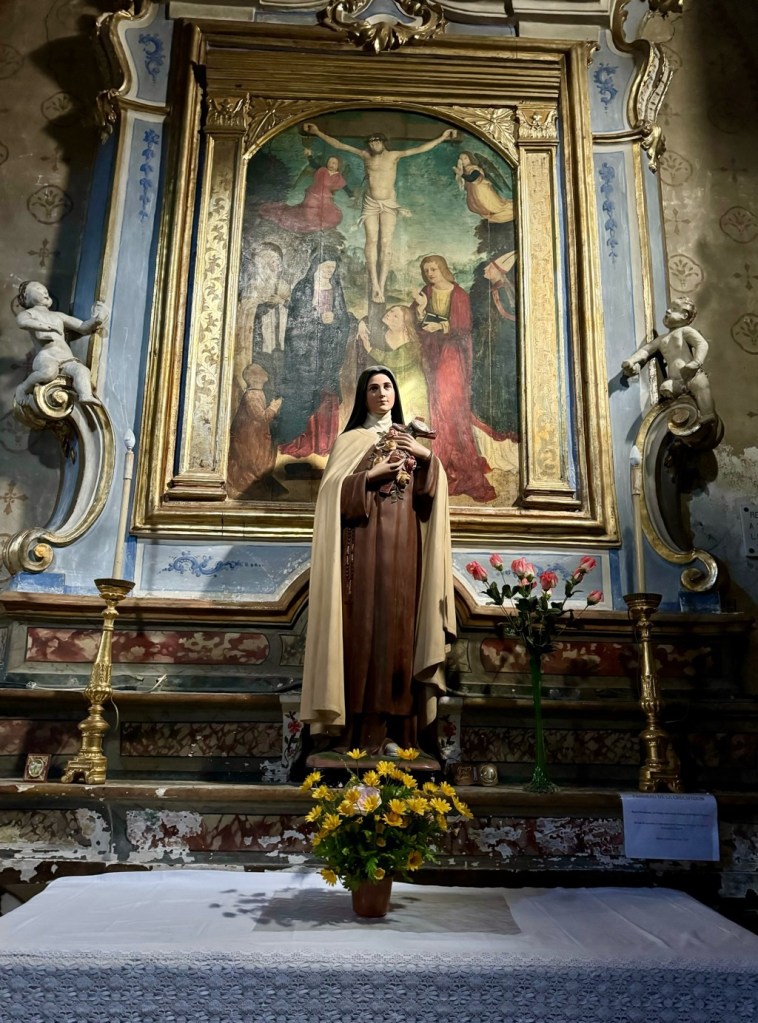
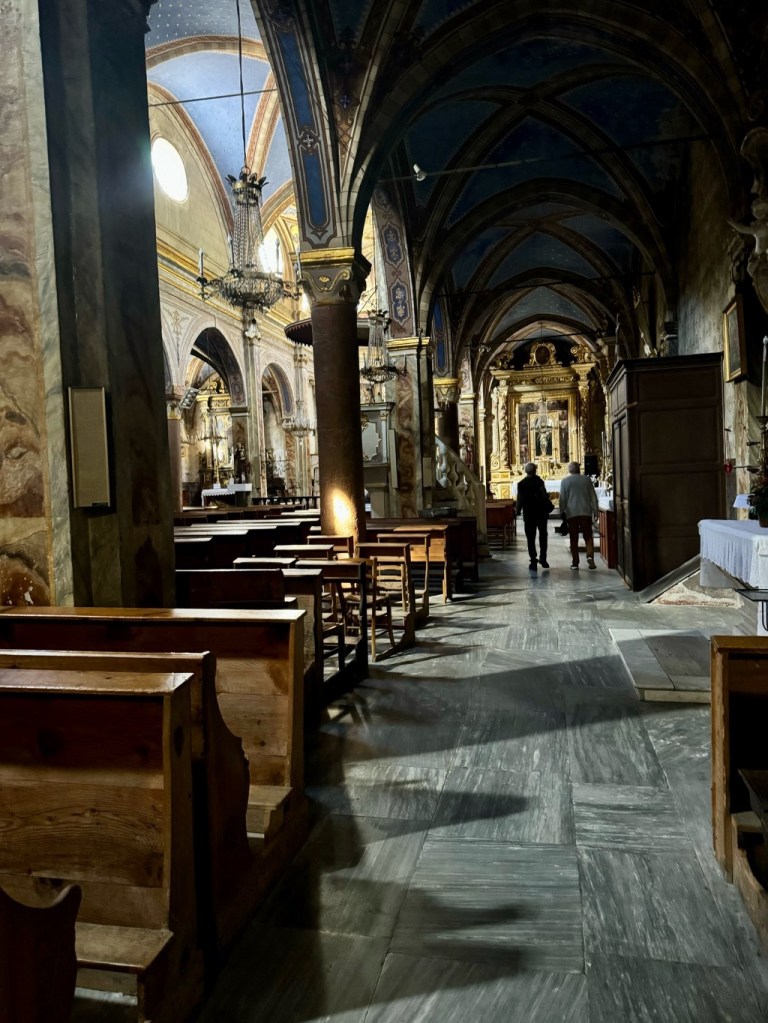
This is because La Brigue was once extremely wealthy as it was an important stopping point on the ancient salt trade route.
Although the salt traders have long gone the village is still doing very well for itself as it is very popular with hikers, cyclists, motor bikers, climbers and other tourists.
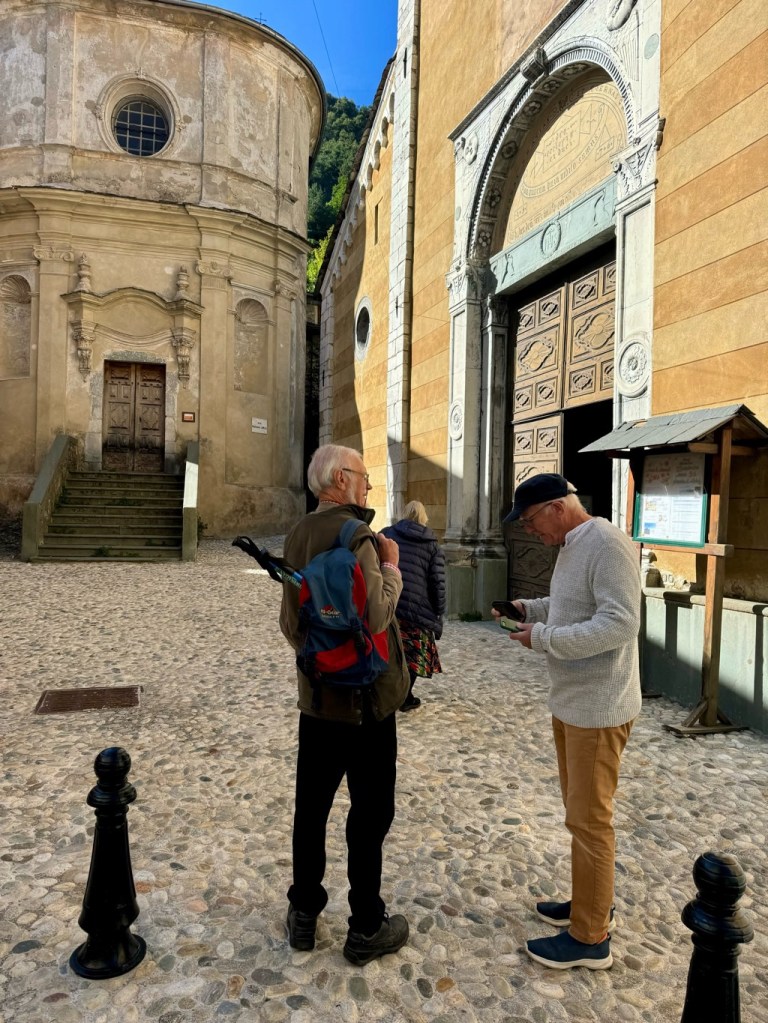
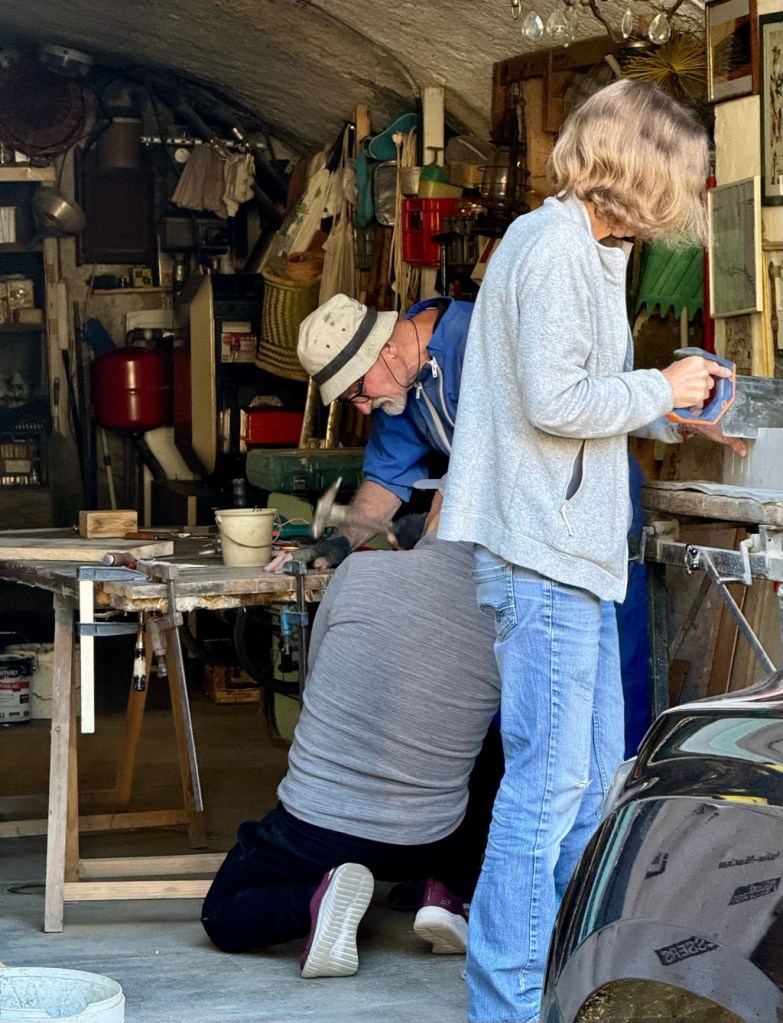
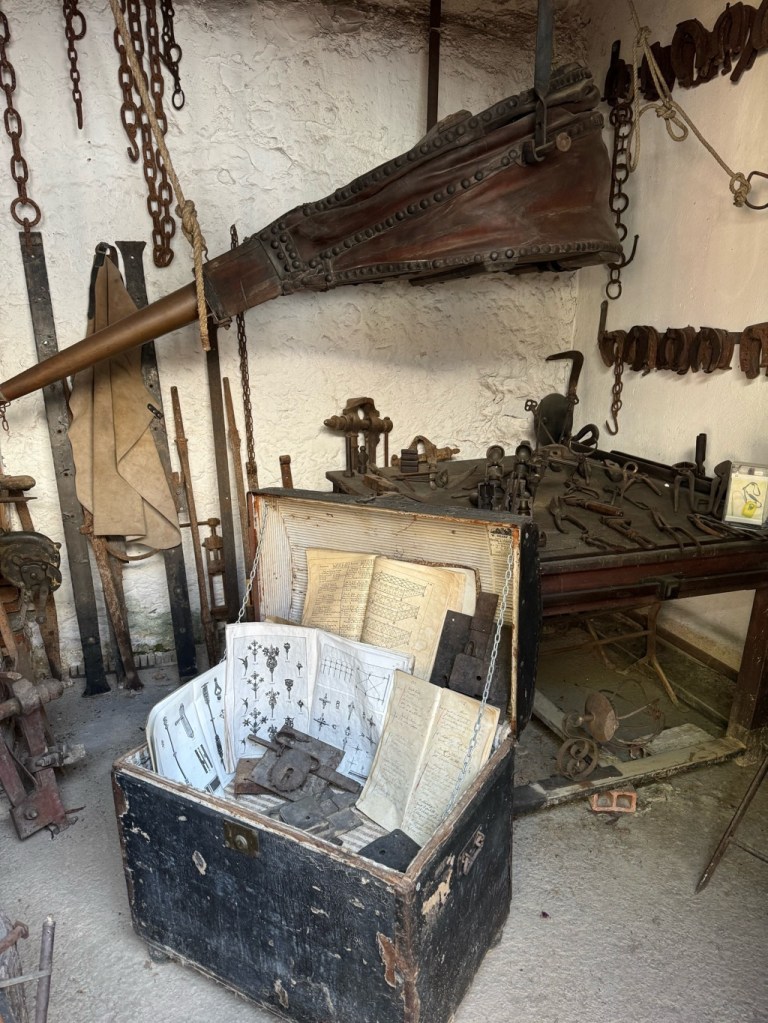
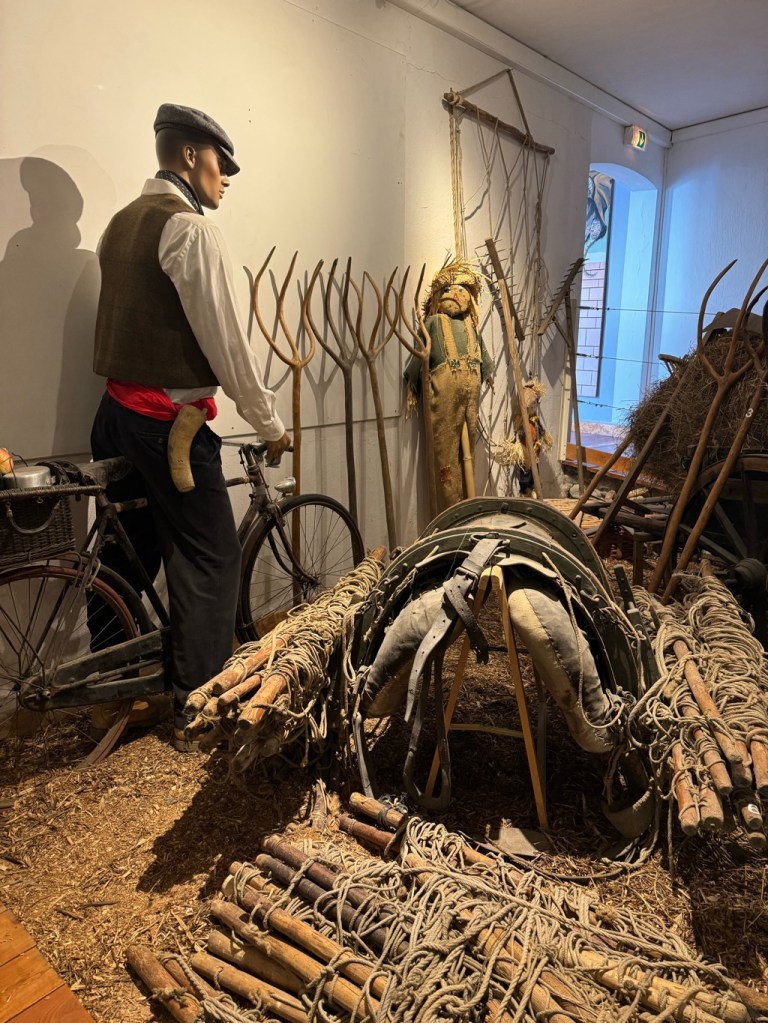
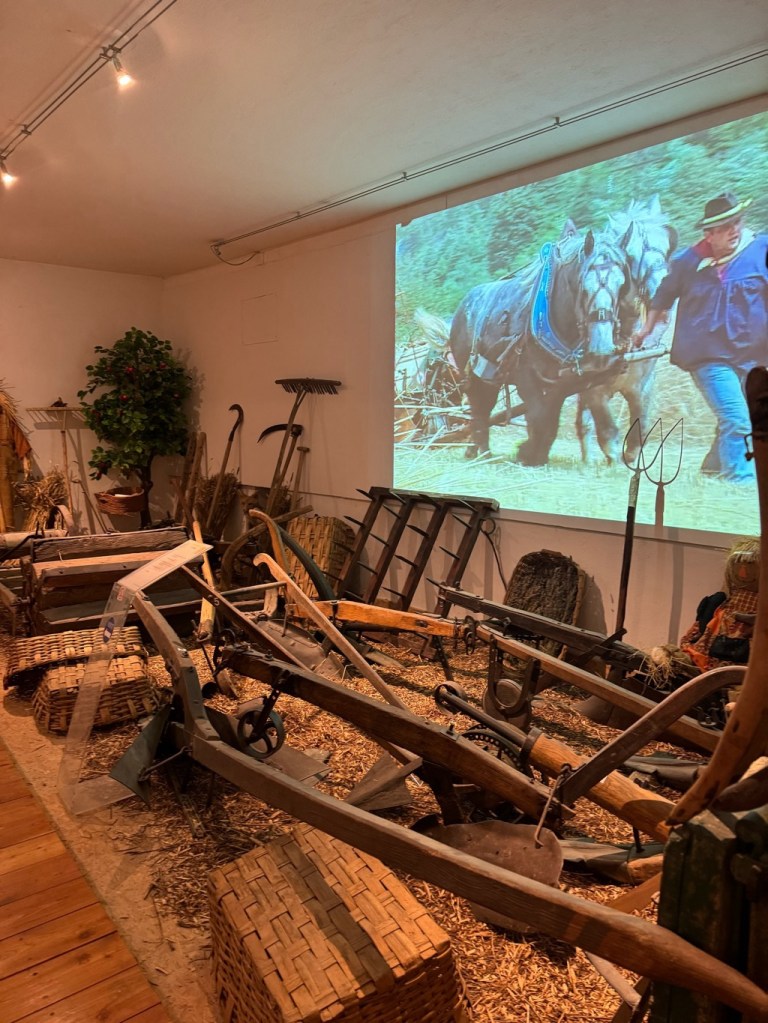
There are many artisan workshops and a very good museum that we enjoyed going round. As well as exhibits depicting the rural life of bygone days, there was an amazing collection of Church organs on display.
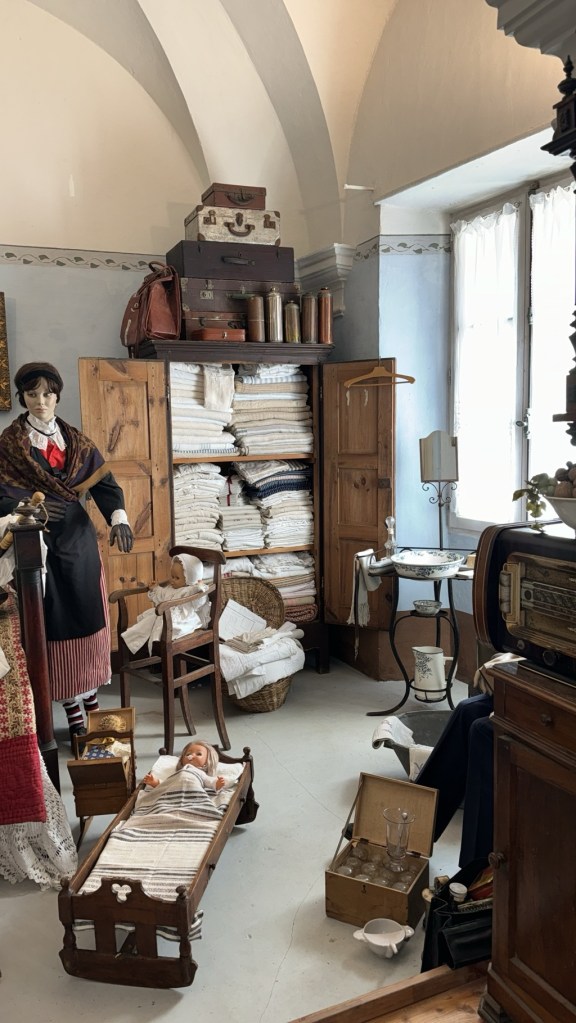
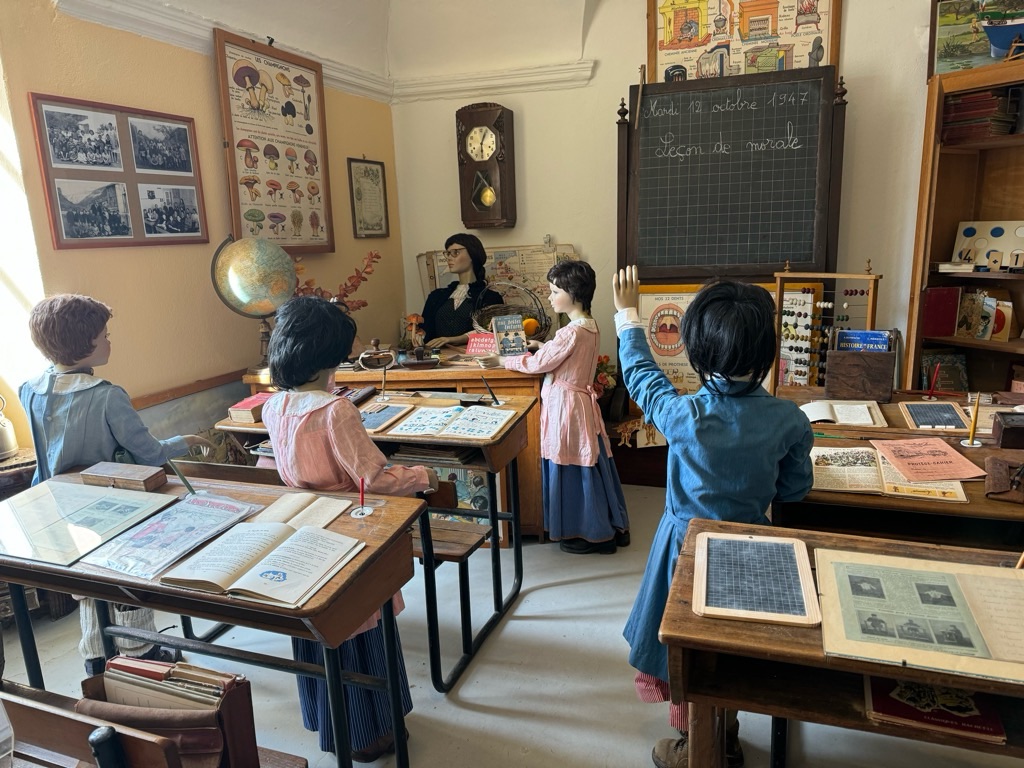
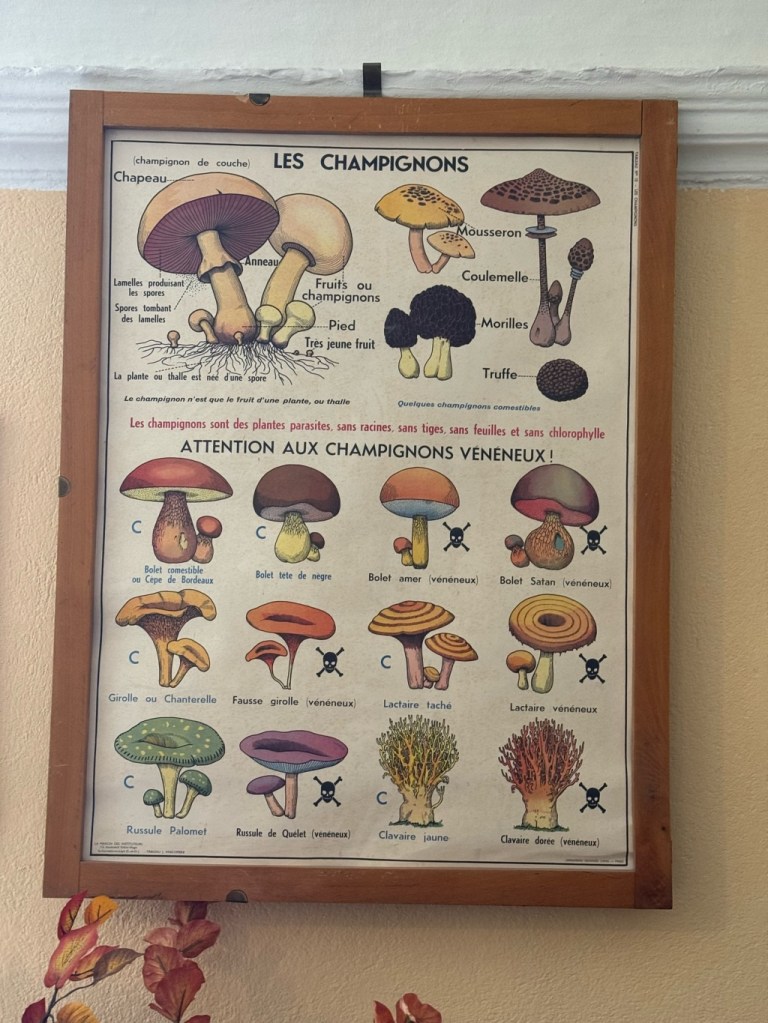
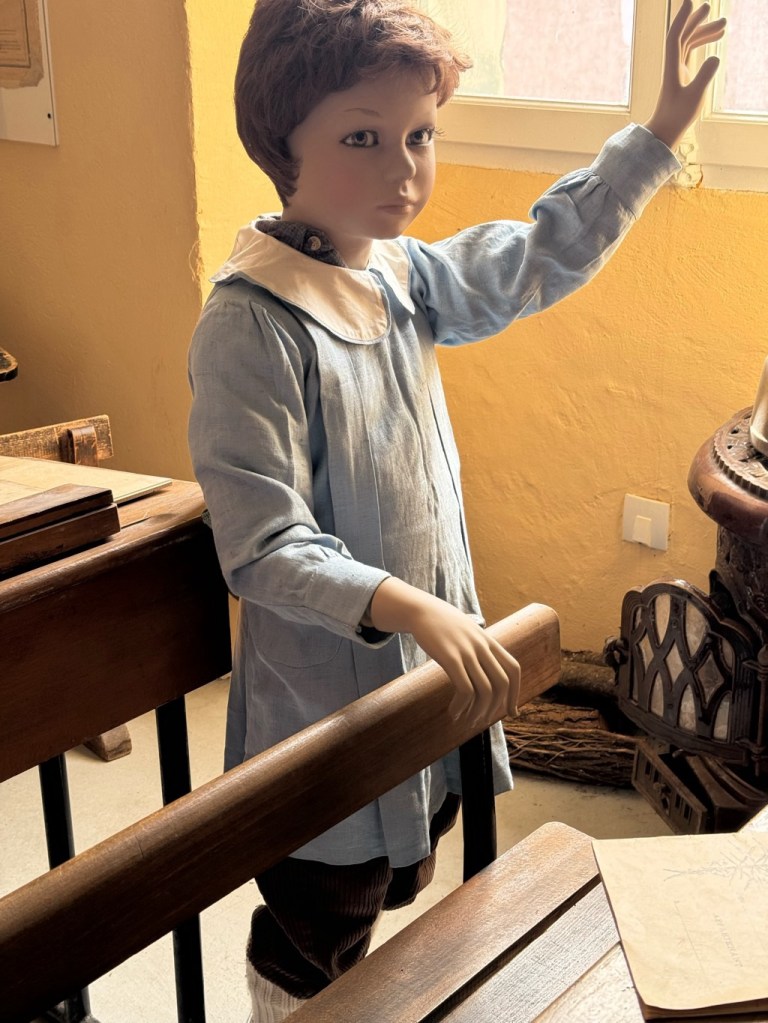
I really enjoyed the model school room as it reminded me of my very first school that I attended in Egypt when I was three or four years old which was run by French speaking Armenian nuns. I wore a little blue overall just like the models in the museum.
One of the most amazing attractions in the area is a small unassuming chapel in the woods called the Notre-Dame des Fontaines.
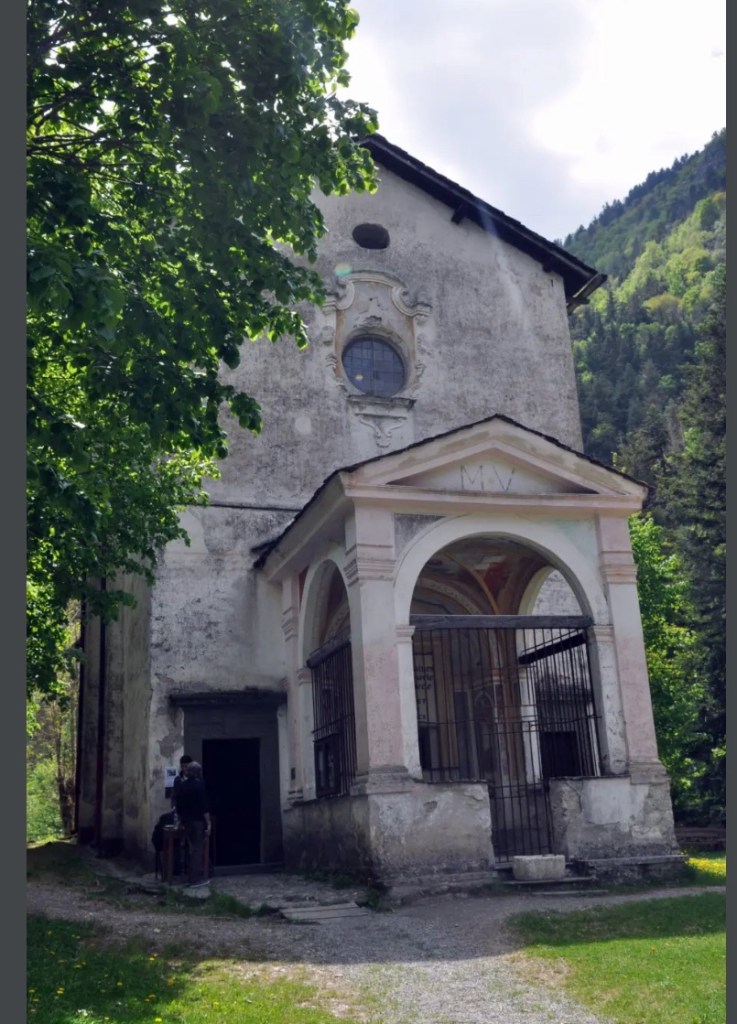
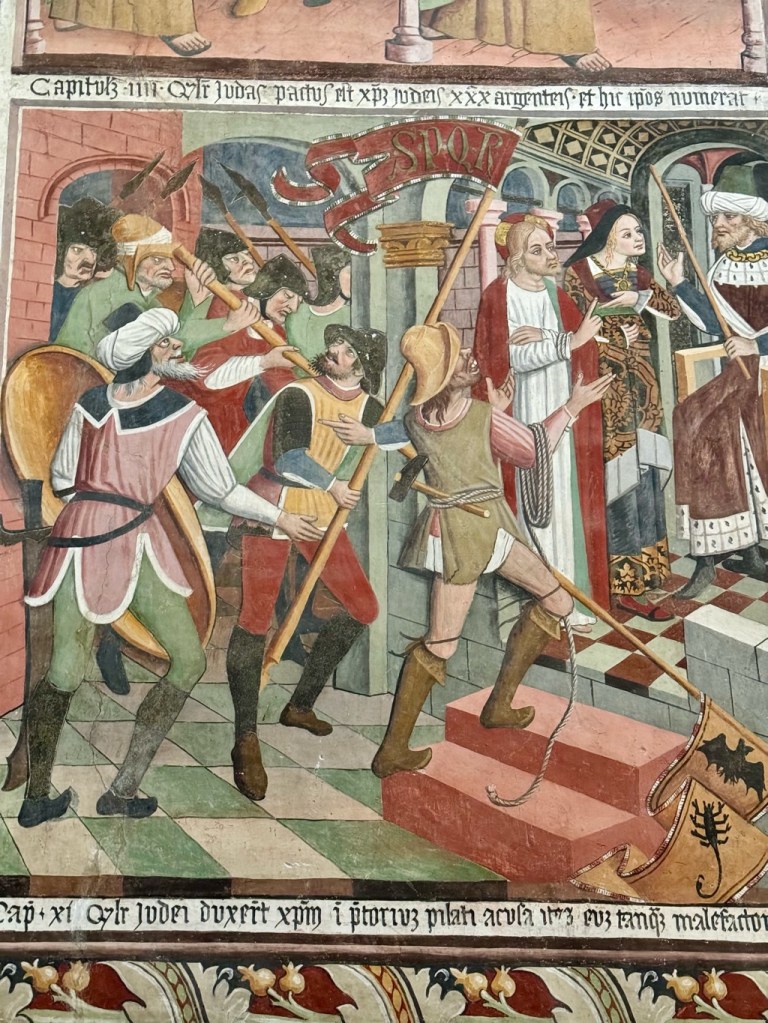
The peaceful setting and simple design of the chapel gives little clue to what lies in the interior – an incredibly impressive series of frescoes painted in the 15th century by an artist called Canavesio.
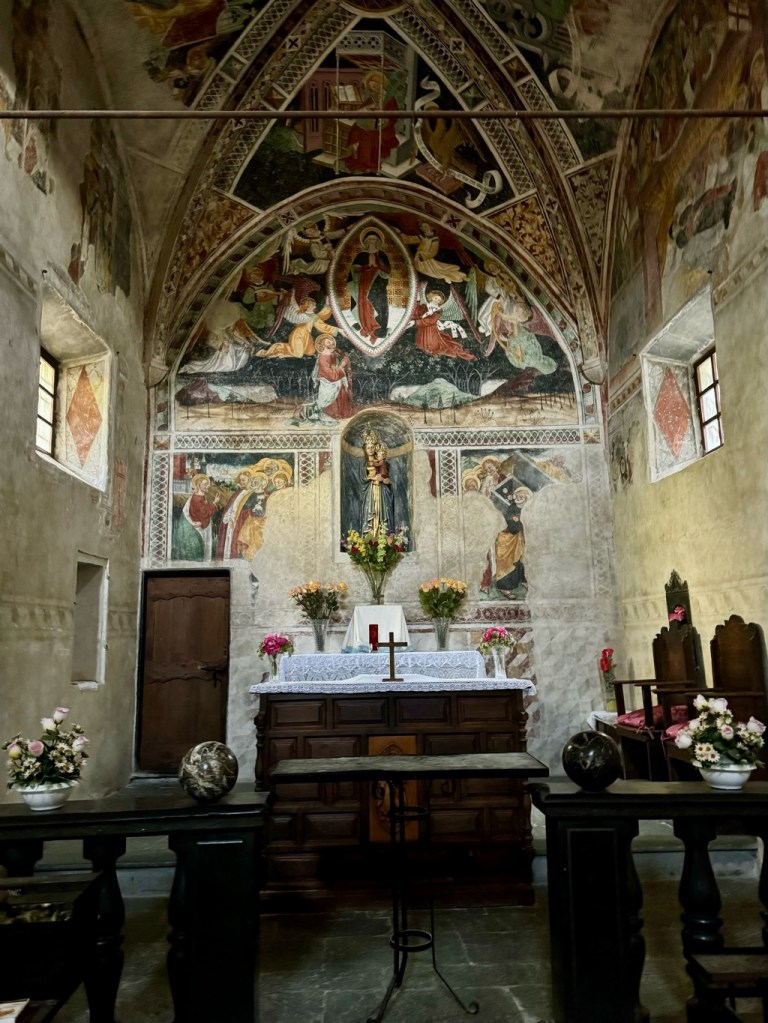
These frescoes are the major attraction for the village and the chapel is sometimes referred to as the ‘Sistine Chapel of the Alps’.
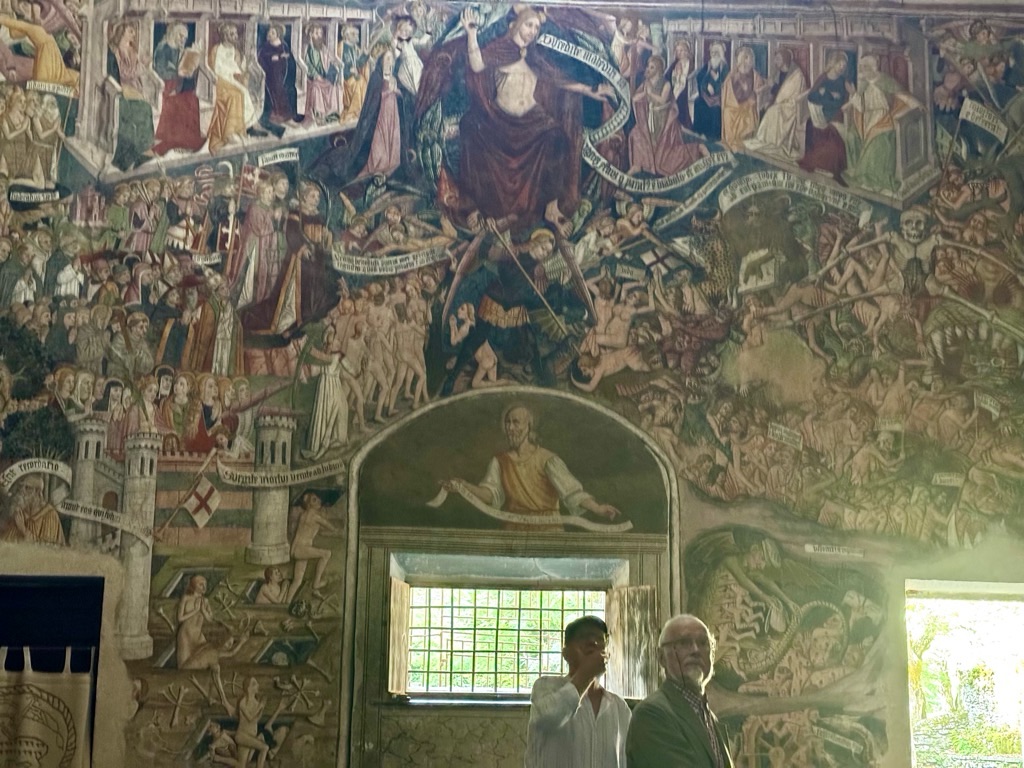
Inside is an impressive series of frescoes painted in the 15th century by an artist called Canavesio
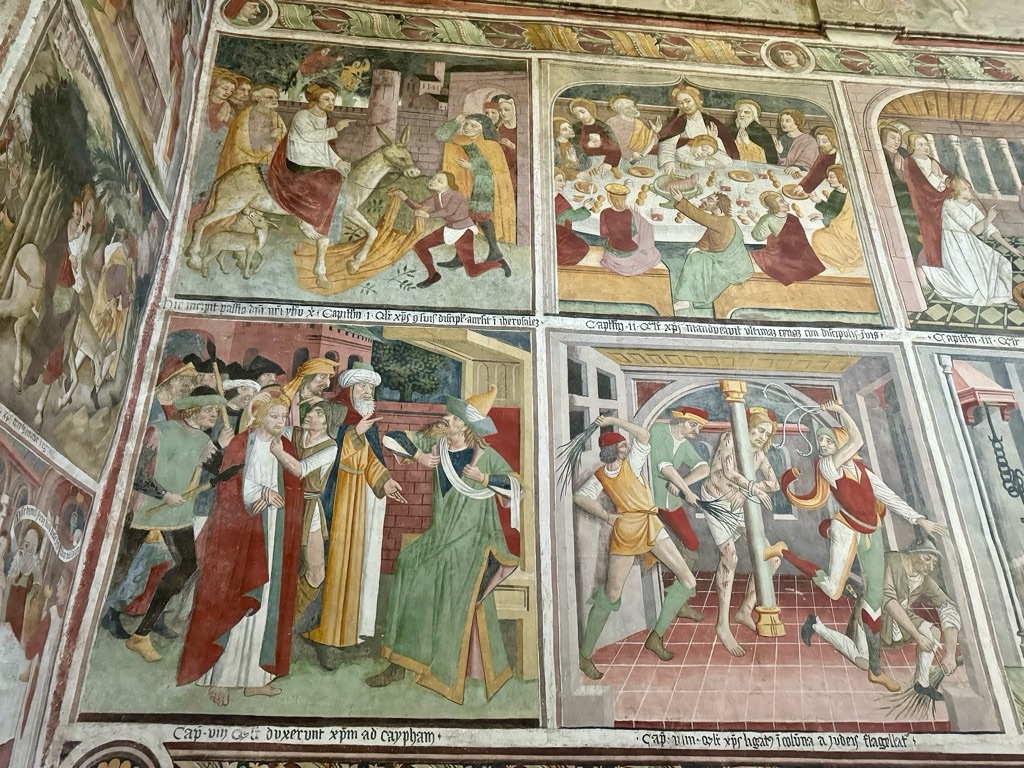
The most striking thing is that the colours are so vivid that you would think that the frescoes were painted yesterday. Apparently they have never been touched up or received any restoration work. Some of the frescoes depicted extreme violence and were very gory and quite horrifying!

After a couple of very pleasant days, Jonathan and I were on our way again, this time heading for Grenoble where we had an urgent appointment at the Ford Garage.
We have had our French registered van for more than six years now and have always had it serviced regularly but one thing we have neglected to do is to obtain a “control technique” certificate which we recently found out was required for all French registered vehicles over four years old – whoops!
Fortunately we were able to make an appointment for the test to be done in Grenoble so we headed off quite early so that we could arrive before dark.
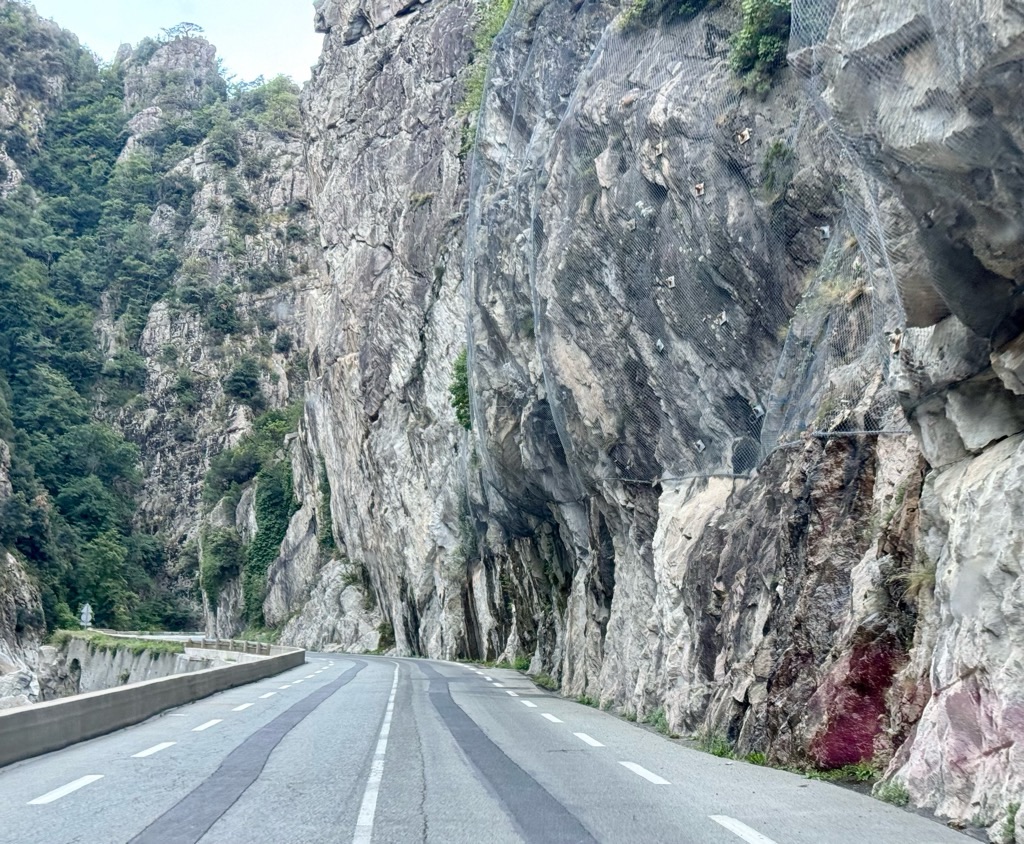
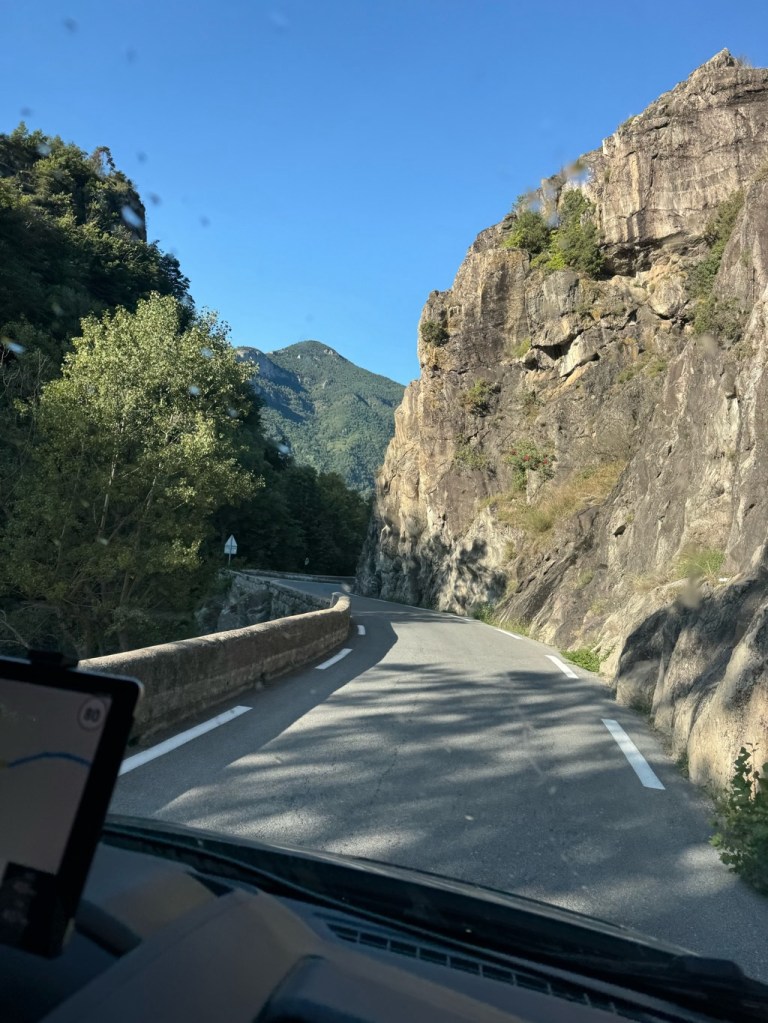
At first the trip down the mountains was enjoyable – really glorious views (so difficult to capture in a moving van) but with exciting bends and slightly worrisome overhanging cliffs.
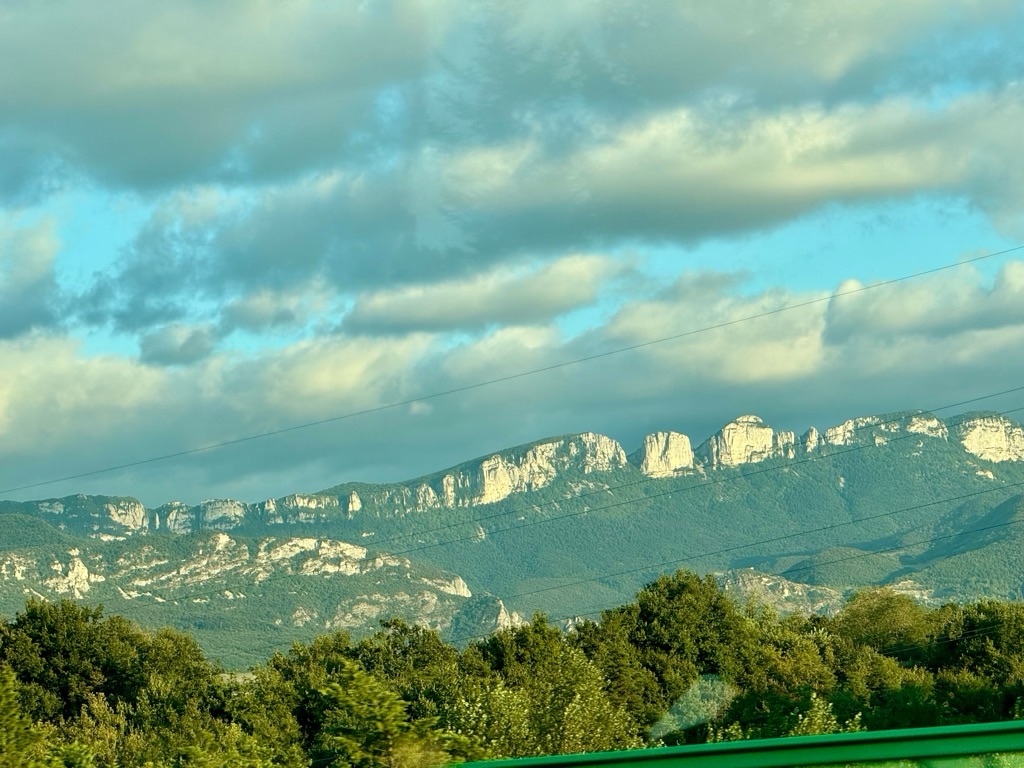
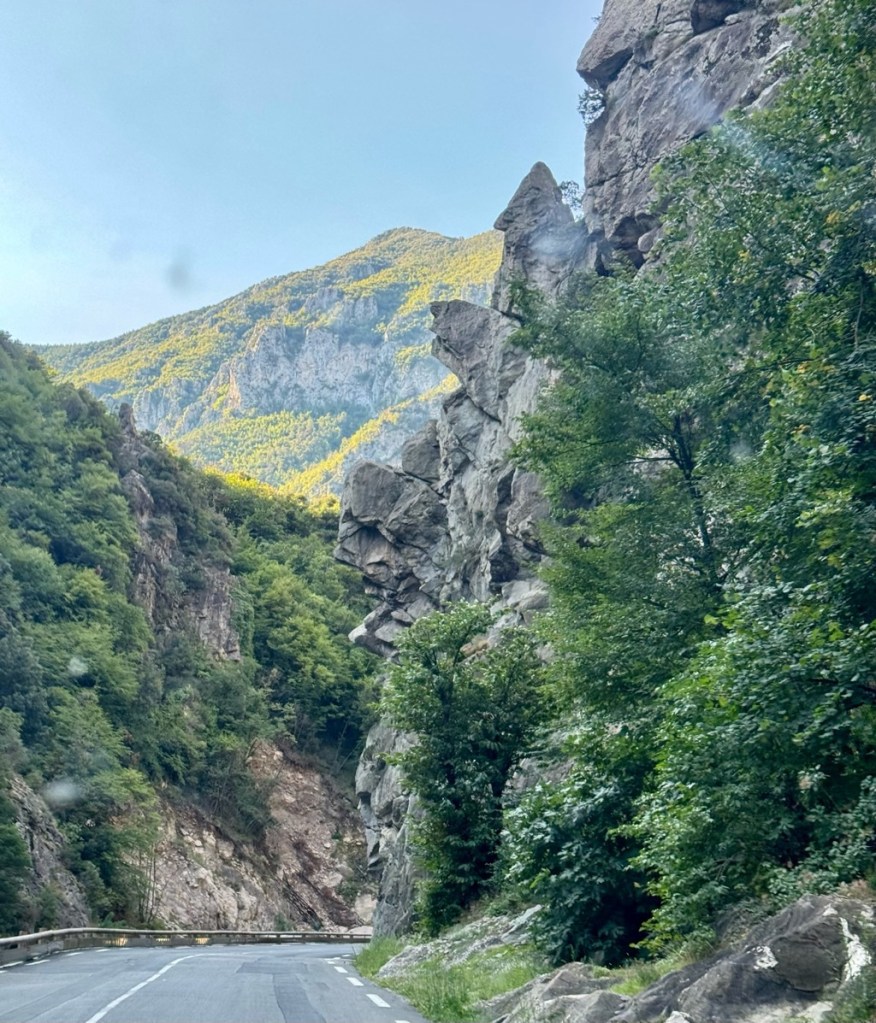
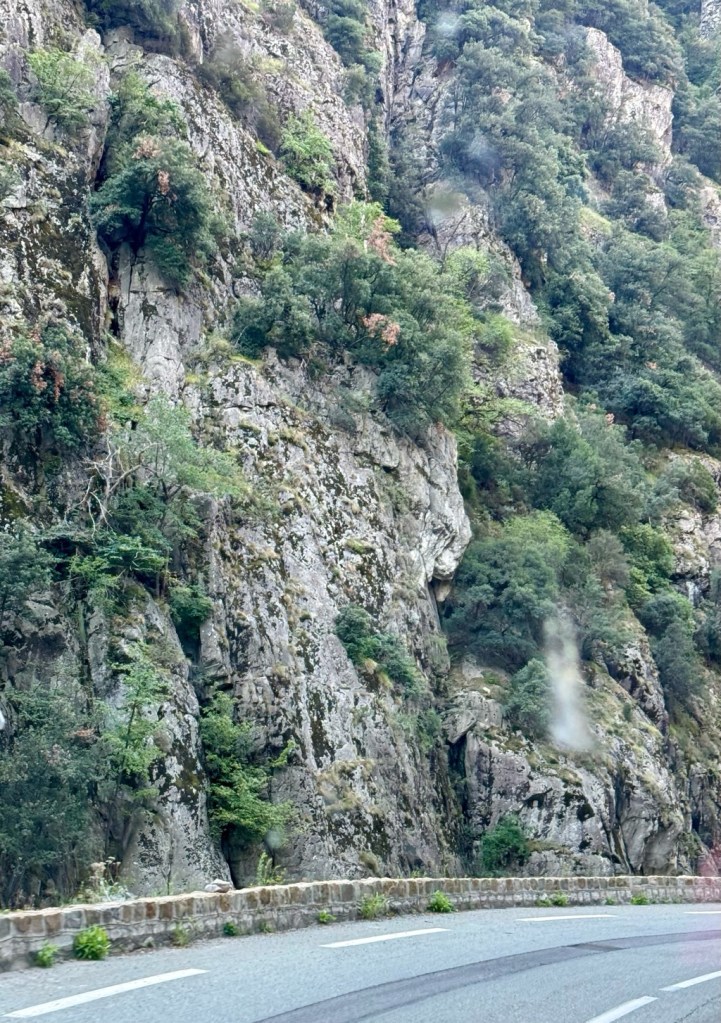
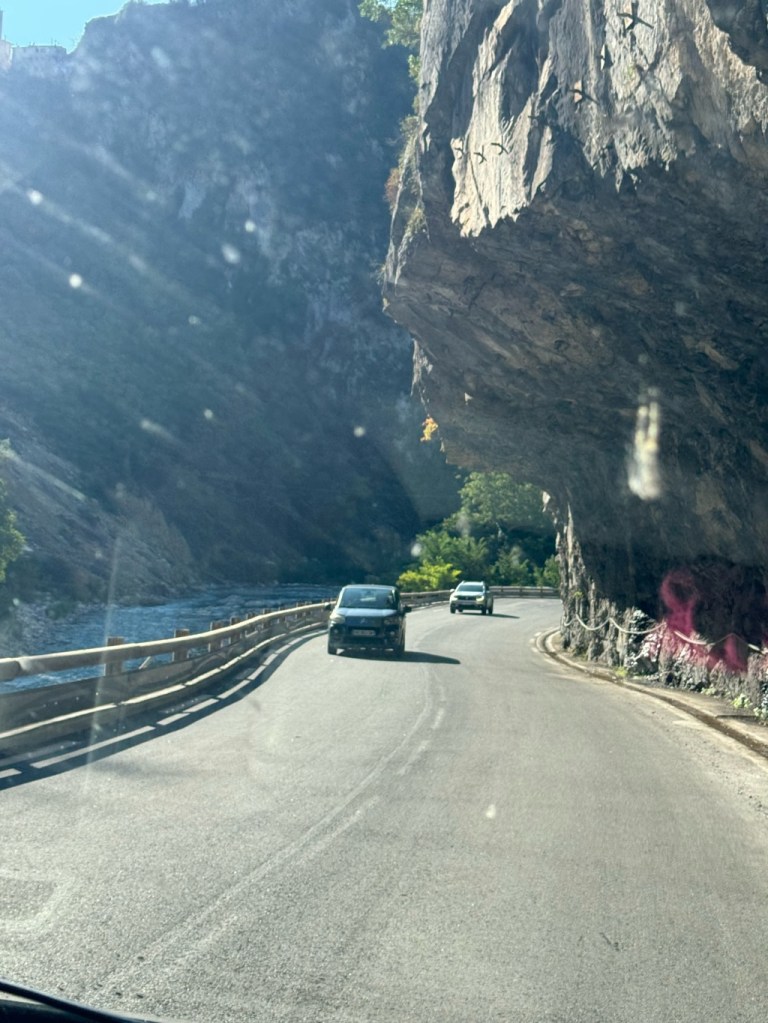
We went through a couple of villages- one with a fuel station – but unfortunately we didn’t fill up while we had the chance.
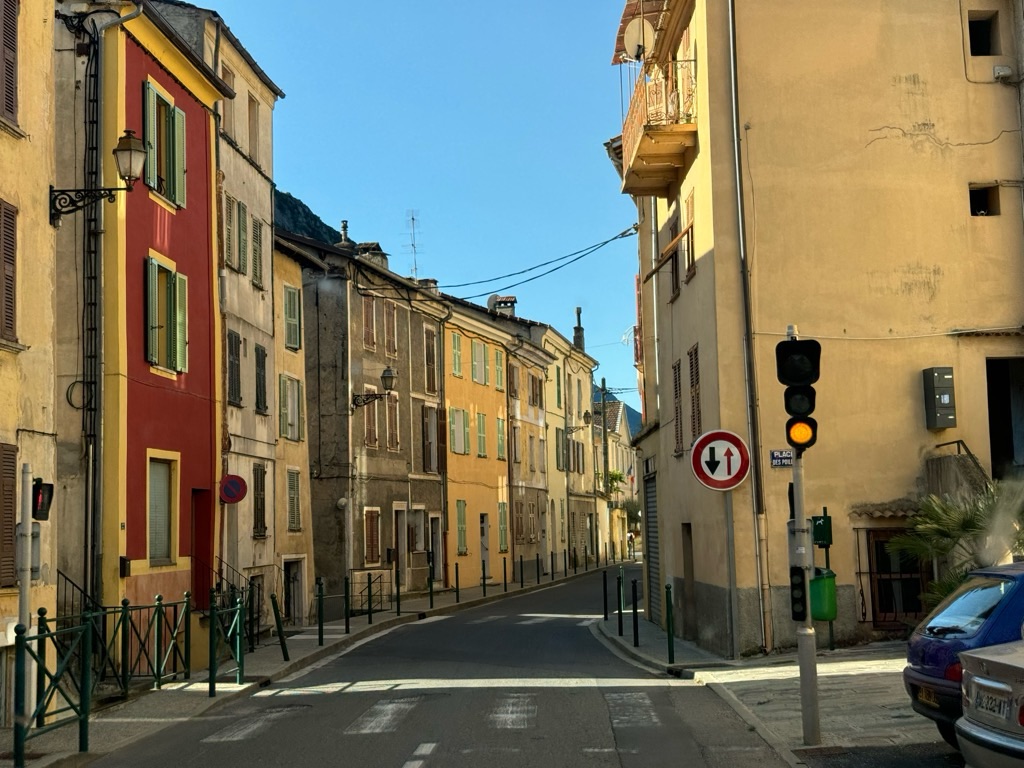
The road we took was very steep, with alarming hair pin bends and the journey down was very much longer than we had anticipated.
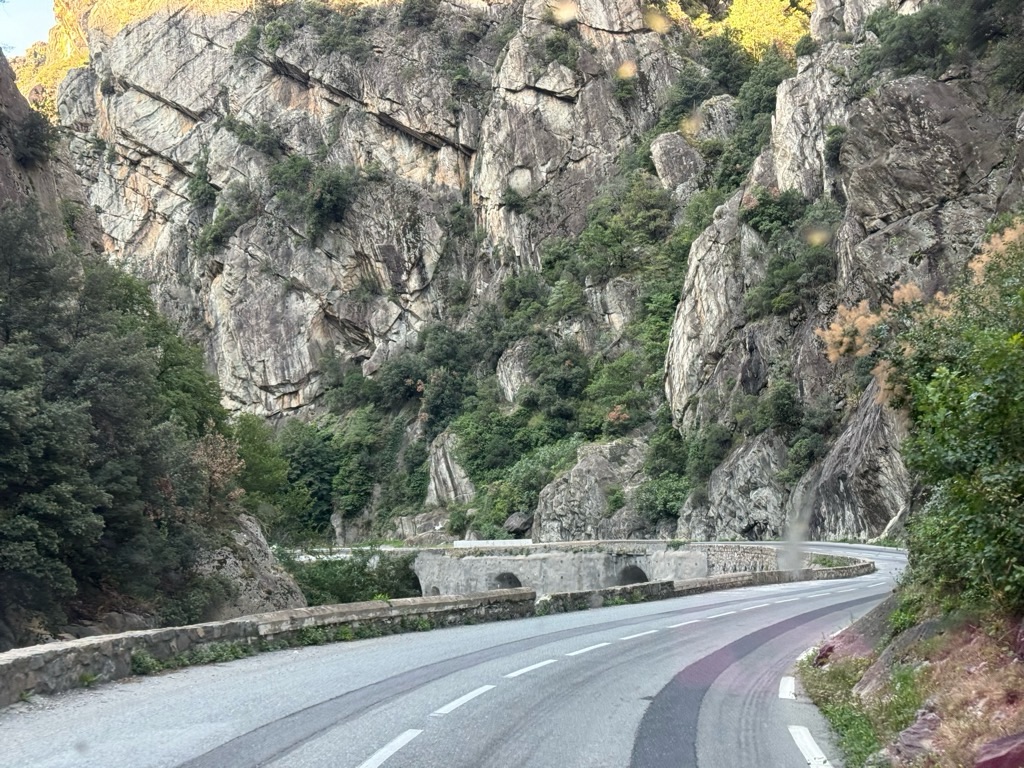
We had been winding down the mountain for about an hour when we realised that we were very low on diesel but we were sure we would see a fuel station soon.
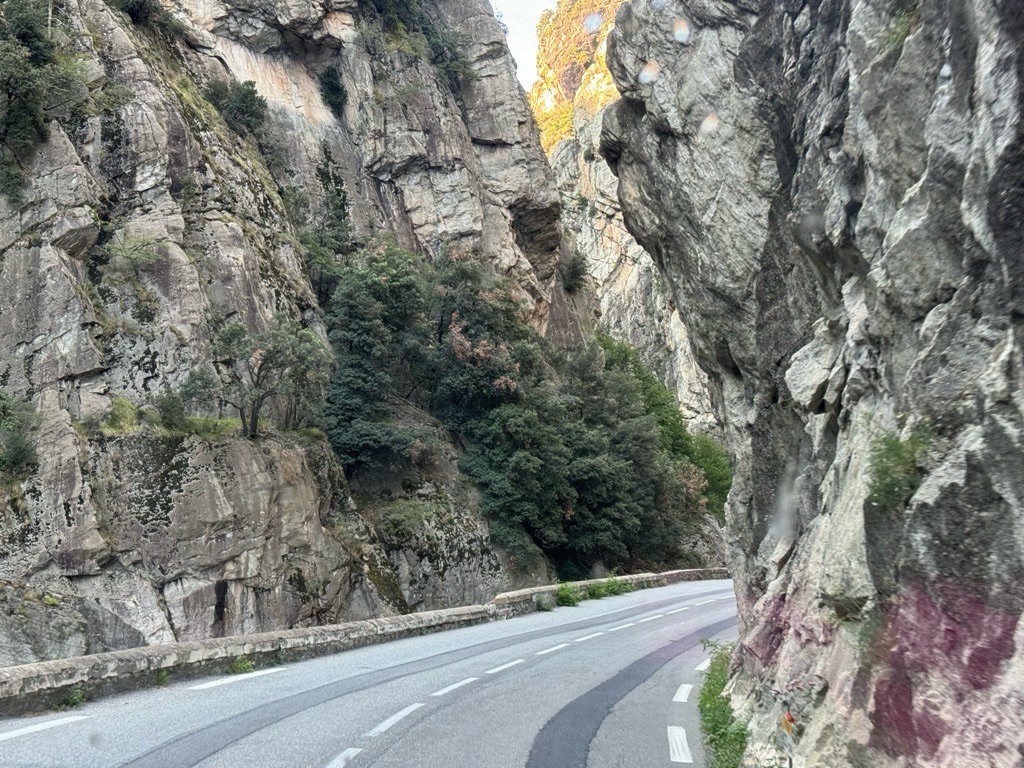
After going through several villages with no sign of a place to fill up we started to get very anxious and berated ourselves for not getting diesel when we could.
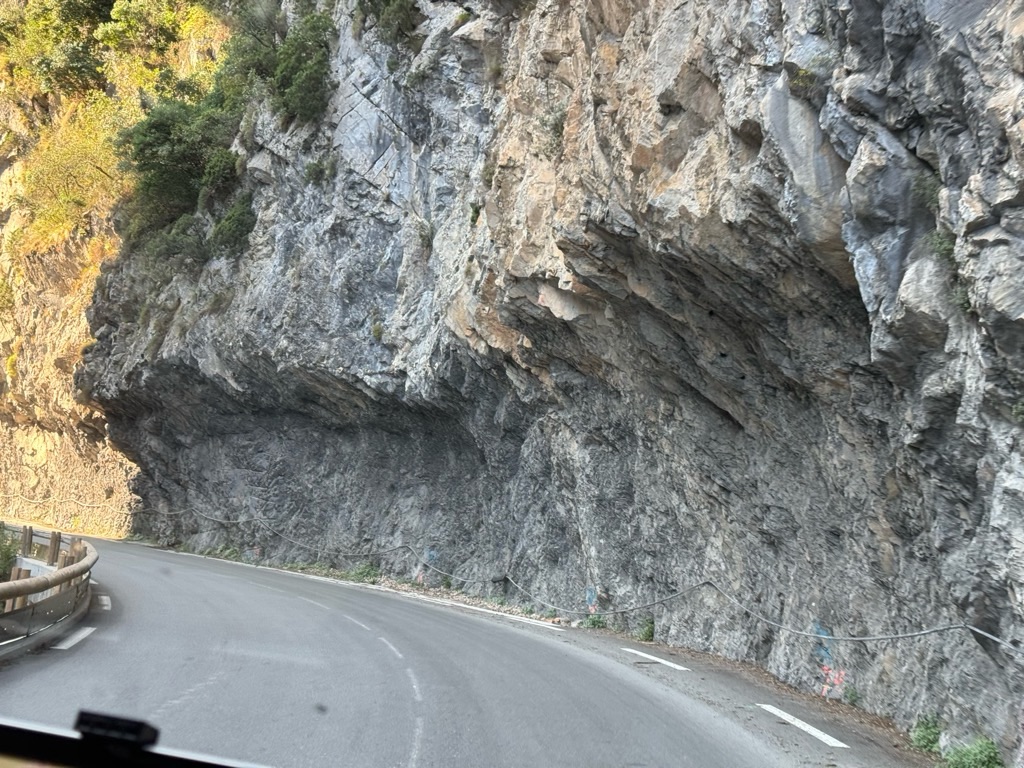
The fuel gauge went down very fast and soon we were driving on empty minus 20 kilometres, 30 kilometres, 40 kilometres, at which point Jonathan put the gears in neutral and we coasted our way down the rest of the way!
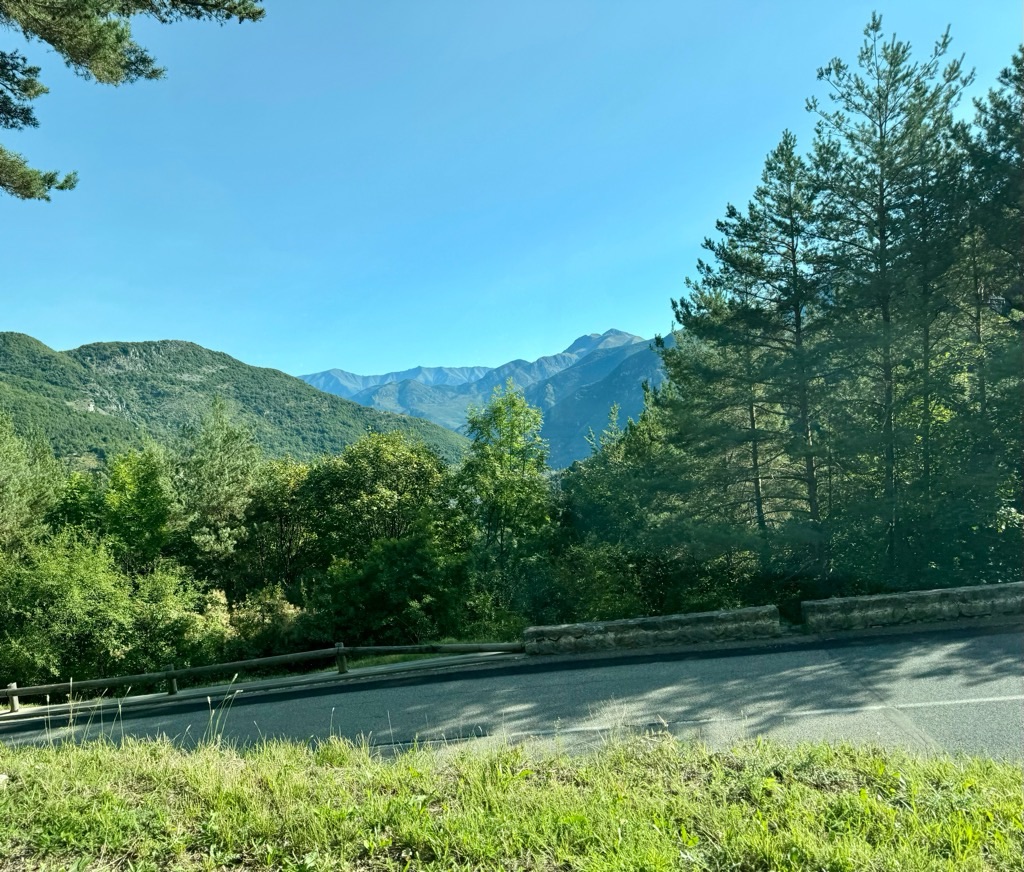
Eventually we arrived in quite a large village with a big supermarket which were so relieved about. However, our feelings of relief were soon deflated when we asked a local guy the direction to the nearest fuel station.
In my school girl French I managed to convey our plight and in his school boy English he explained that the closest fuel station was still at least another ten kilometres away!
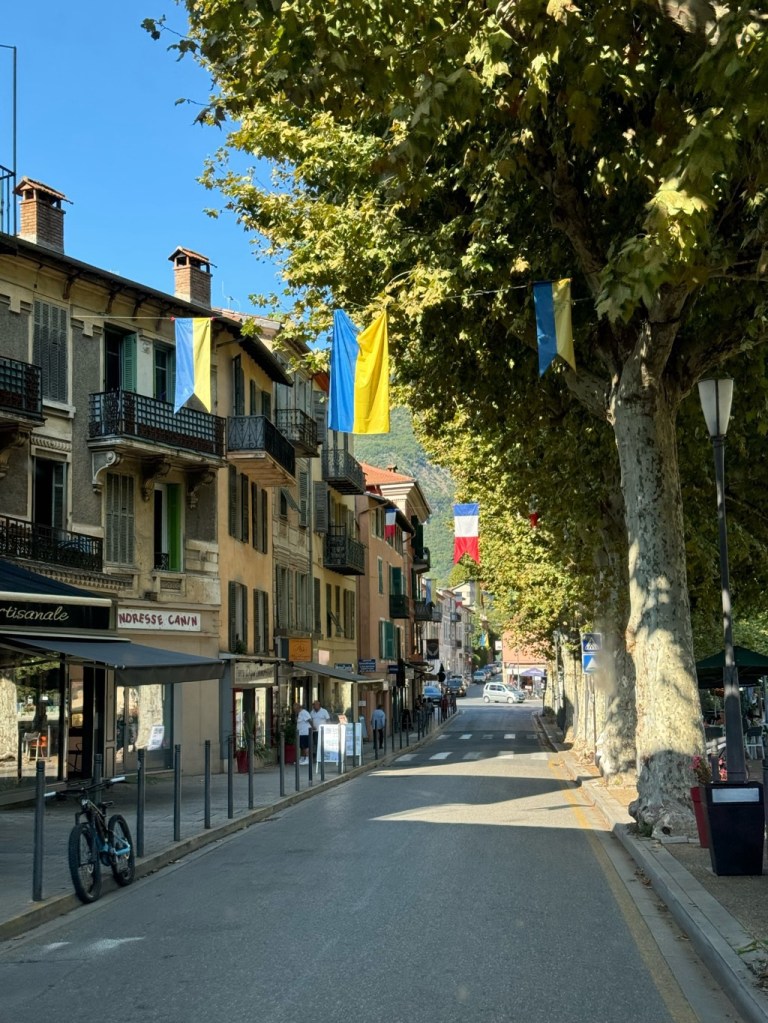
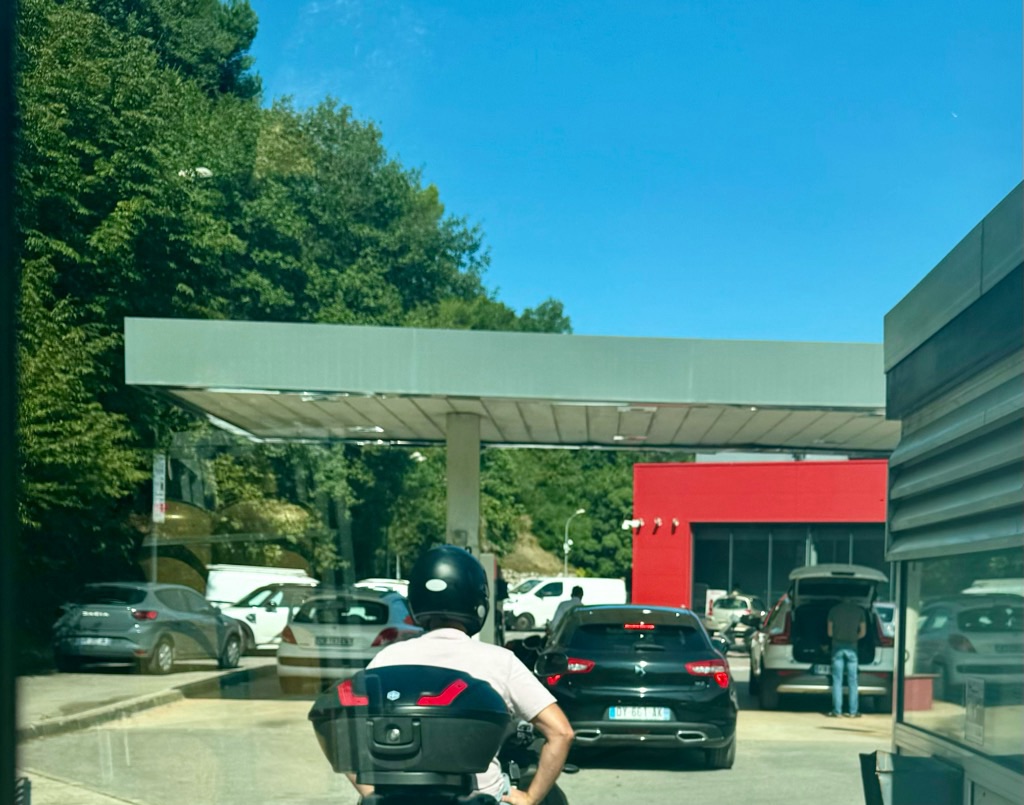
Our helpful French man sent us down the narrowest of winding roads but much to our great relief this route was a short cut to the next town and we just made it there without running out of fuel!
It was such an overwhelming feeling when we saw the fuel station sign as it would have been so dangerous if we had ground to a halt on one of the hundreds of hairpin bends that we had travelled that day!


 Salty tales from Bali Hai on Sunday
Leave a reply to Lorely Britton Cancel reply