We were glad of an extra day in Port Blair which allowed us the time to visit the notorious cellular jail and then take a short ferry ride over to tiny Ross Island which served as the capital of the Andaman Islands during the British occupation from 1858 to 1941 after which the Japanese occupied the island and used it as a POW camp.
 A model of the notorious cellular jail
The Cellular jail was built because it was felt that the prisoners (mostly political) banished from India by the British had it “too easy” compared with other prisoners in regular Indian prisons. As if the concept of banishment wasn’t enough!
 Looking through the bars of one wing into the back of the next wing. Each wing faced away from the next to prevent the prisoners from communicating
The following excerpt from proceedings of the Home Department which describes the reasoning behind sending prisoners from mainland India to the prison colony is chilling:
“The separation resembles that which takes place at that moment of death. The criminal is taken for ever from the society of all who are acquainted with him and conveyed by means of which the natives have an Indistinct notion over an element they regard (ed: the ocean) with extreme awe to a distant country of which they know nothing from which he is never to return.”
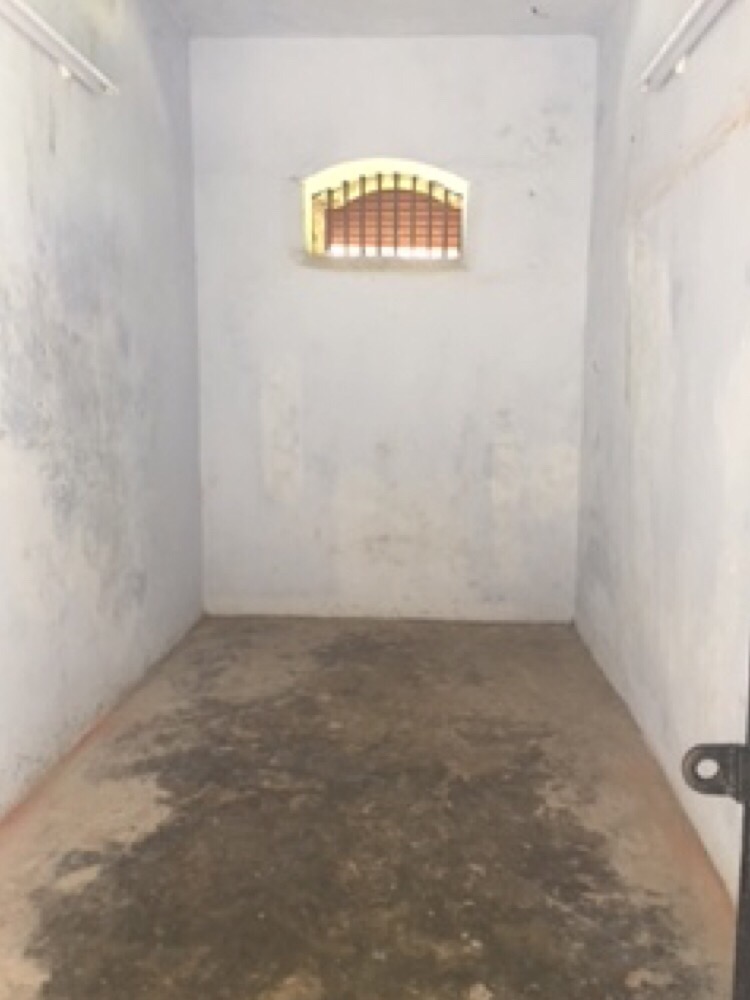 A typical cell where prisoners would serve a mandatory six months on arrival at the Cellular Jail
However, in the eyes of the British administration banishment alone was too good for prisoners who had the temerity to rise up against British rule and the Cellular Prison construction began in 1893 with the jail being completed in 1906.
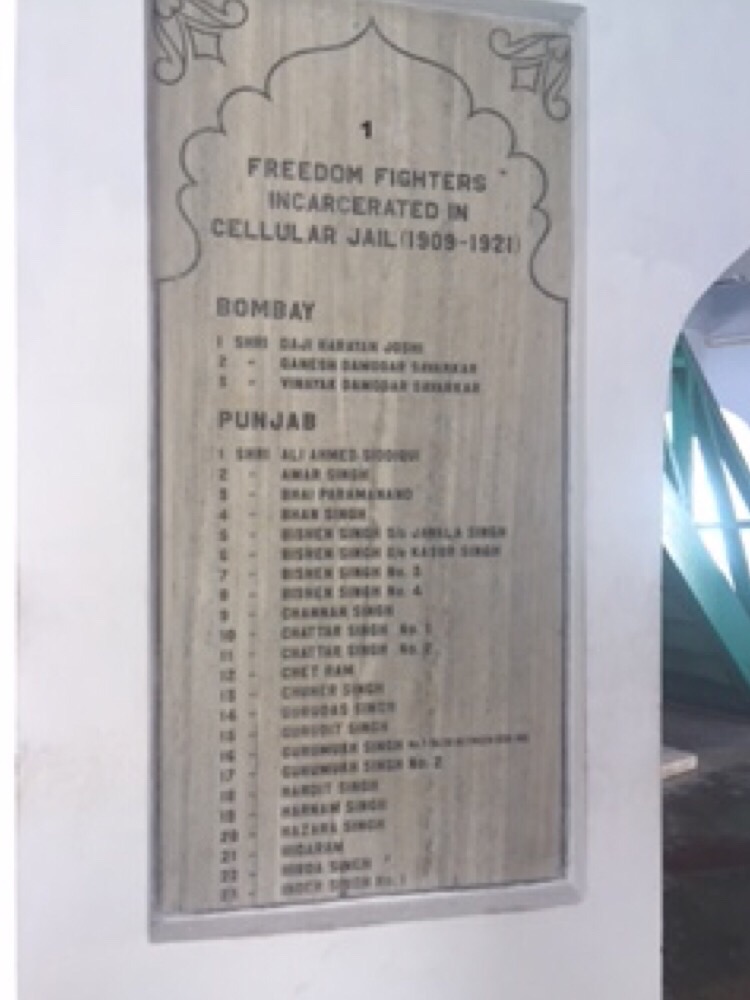 One of the many plaques dedicated to the Indian freedom fighters who were incarcerated in the cellular jail
This three storey structure comprising seven “spokes” leading from a central watch tower was where each prisoner arriving in Port Blair was put in solitary confinement for six months (and more if they did not comply with the many rules). Each cell wing faced the back of the next wing, with only a small vent near the ceiling for air circulation so the prisoners could not talk to or signal one another. The walls between each adjoining (tiny) cell were solid and thick, preventing any communication between prisoners.
 The ancestors of these dear little sparrows might have helped some of the prisoners kept in solitary confinement retain their sanity
Each prisoner had only a wooden bed, a blanket, an iron plate and bowl and an earthen pot. There were no toilets and the prisoners were only allowed to use the latrines three times a day. Any request to use the facilities at other times was met with “outrage”.
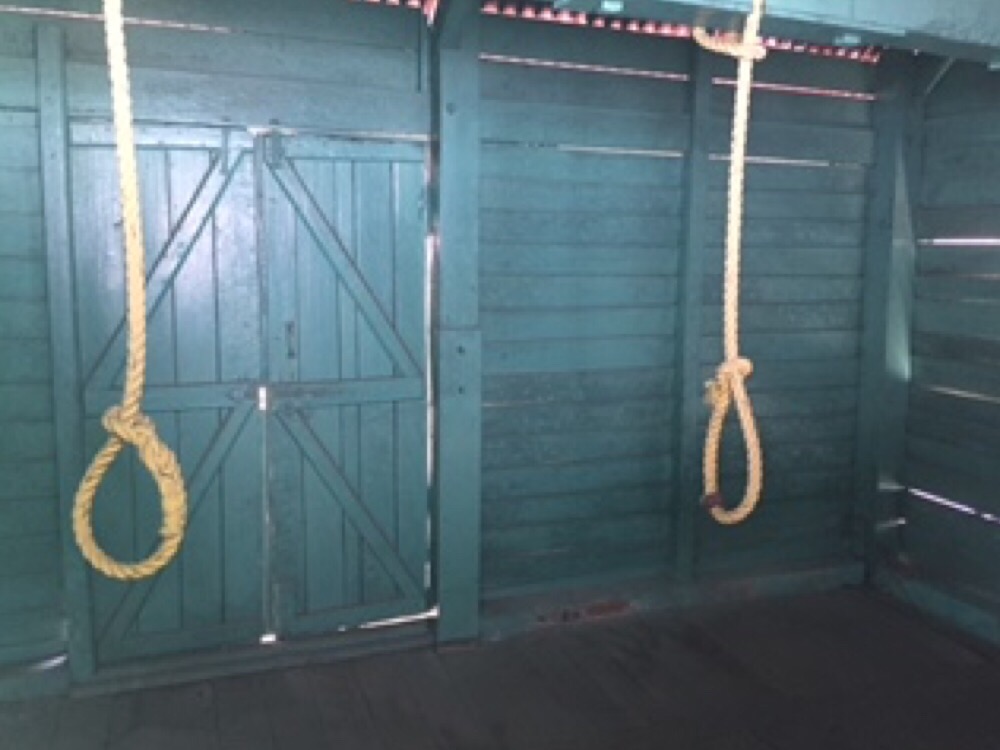 Hanging of prisoners was a common place occurrence if they tried to escape or committed an act of rebellion
The prisoners were locked in their cells at 6pm and the doors were opened again after 6 am. During the day they worked yoked to a mill, pressing oil, and if they failed to reach their target amount were brutally punished. For some, the grinding physical work and the loneliness of being in solitary confinement was too much and they hung themselves rather than live such a dreadful life.
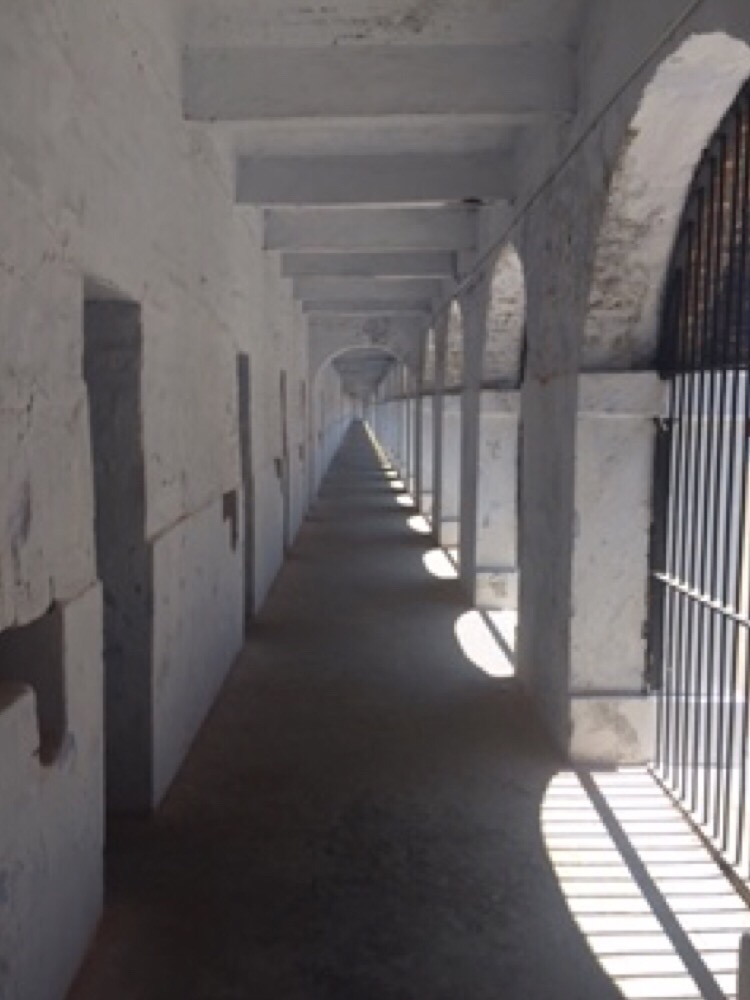 The open corridor along one of the remaining wings
Of the seven original wings only three remain today – the rest were destroyed by earthquakes and bombing in WWII.
 View of Ross Island from the ramparts of the Cellular Jail
After spending a couple of rather melancholy hours walking round the prison we took a small ferry over to Ross Island.
 On the ferry to Ross Island
In its heyday the diminutive island (only one square kilometre) was a thriving and vibrant community with shops, a fabulous bakery, printing press, well kept streets, sturdy houses, a massive Governor’s residence, Churches, clubs and even a swimming pool. Supposedly it was once known as “Paris of the East” but I’m not sure who by!
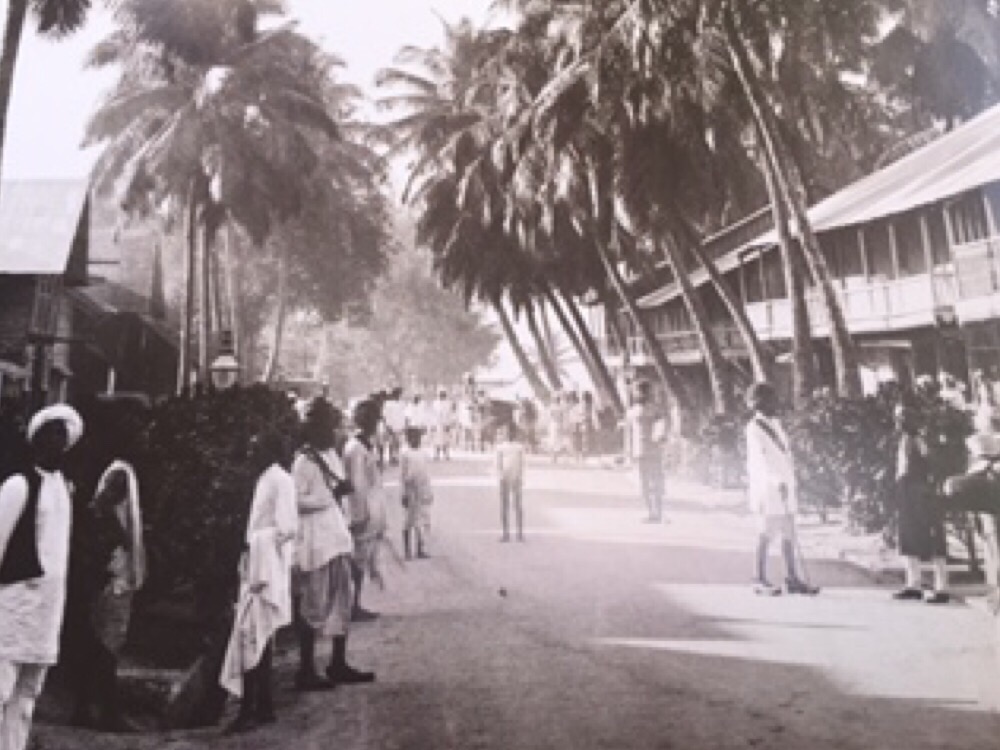 Ross Island in its heyday
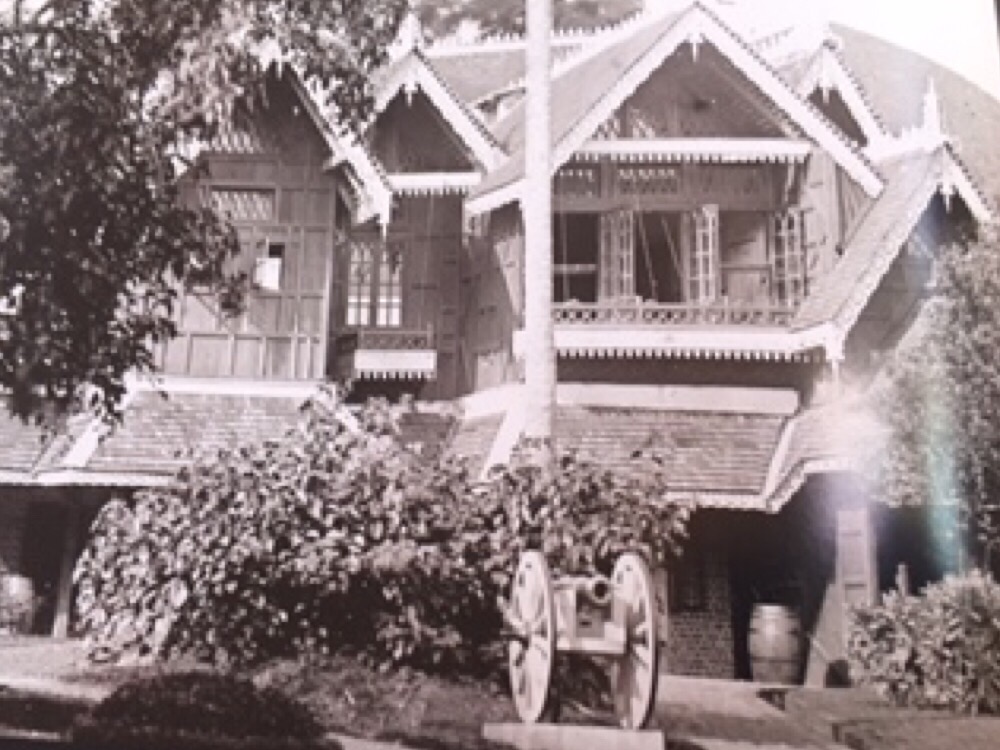 The Governor’s residence as it was
It was poignant walking round the island and seeing the once fine homes, shops, clubs and other buildings collapsed and being overtaken by strangler figs like a modern day Ankor Wat.
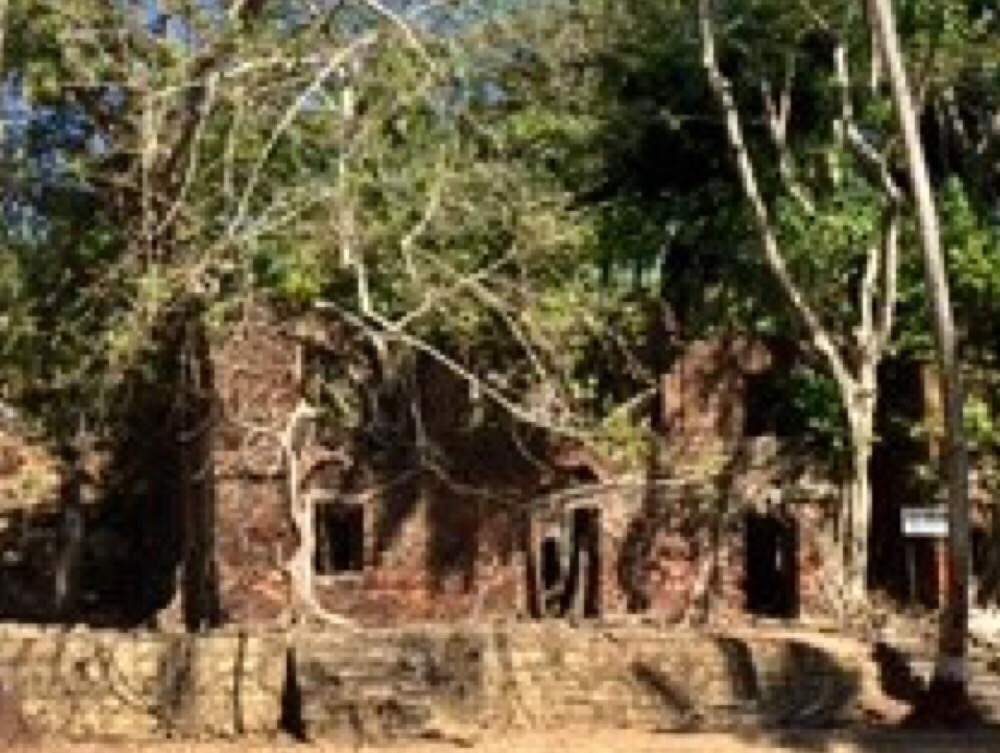 Nature taking over in the old colonial buildings
You could almost hear the echo of plummy English accents and the clink of teacups, the thwack of a tennis ball, far off laughter. Away from the brutality of the prison life, it must have been a wonderful haven for all those who resided on Ross Island – what a contrast to life in the Cellular Jail.
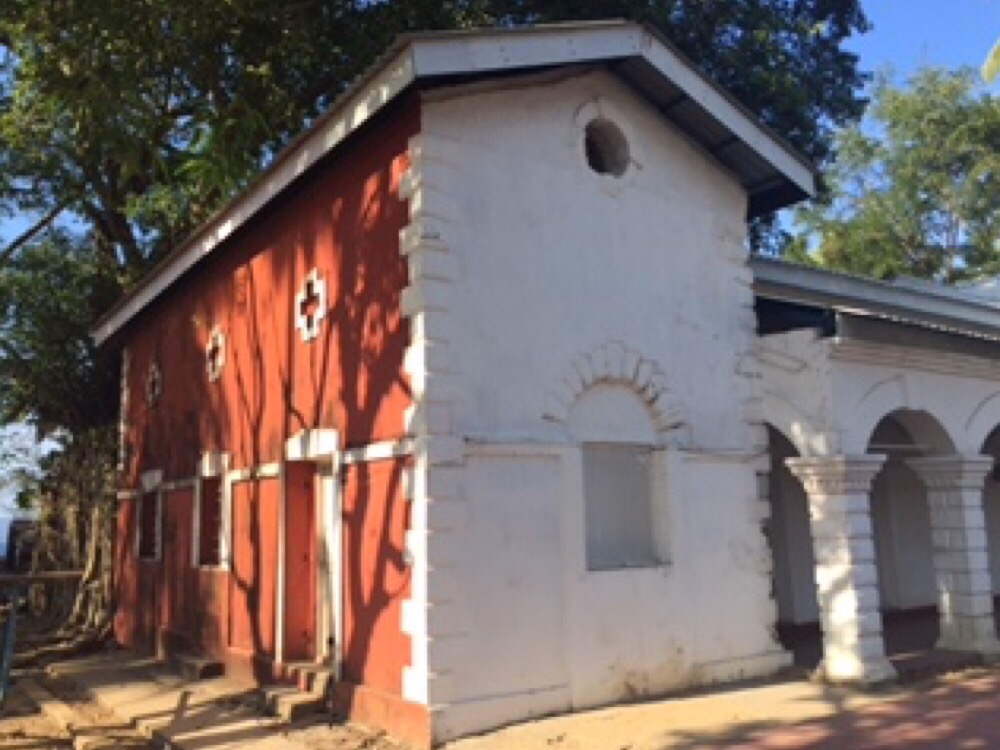 The well preserved bakery…….
Earthquakes and war, abandonment and looting all hastened the demise of Ross Island’s structures. The final blow came with the Boxing Day Tsunami of 2004 when the little island bore the brunt of that horrific onslaught, saving Port Blair from the worst of the marauding wall of water.
 …..,in contrast to surrounding buildings
Now, apart from the crumbling buildings, the island is home to a massive herd of spotted deer, domestic rabbits and a large number of handsome peacocks.
 An out of focus photo of a small number of deer
As we waited for the ferry back we were dazzled by a gorgeous kingfisher that flew directly in front of us – its vibrant azure plumage flashing in the sunlight. The water clarity was astonishing for a spot so close to a busy port and it was delightful to watch the clouds of blue and yellow fish darting through the shallows.
 Beautiful views for the former residents of Ross Island
We spent our final evening in Port Blair in the rooftop bar and restaurant at Seashells Hotel with Yantara and one half of the Smart Choice crew (the other half was on their way back to Australia by air). It was a great evening and we ended up dancing (oh no, old people dancing arggh!) to a two piece band who came from Nagaland – way up in the Northeast of India near the Chinese border.
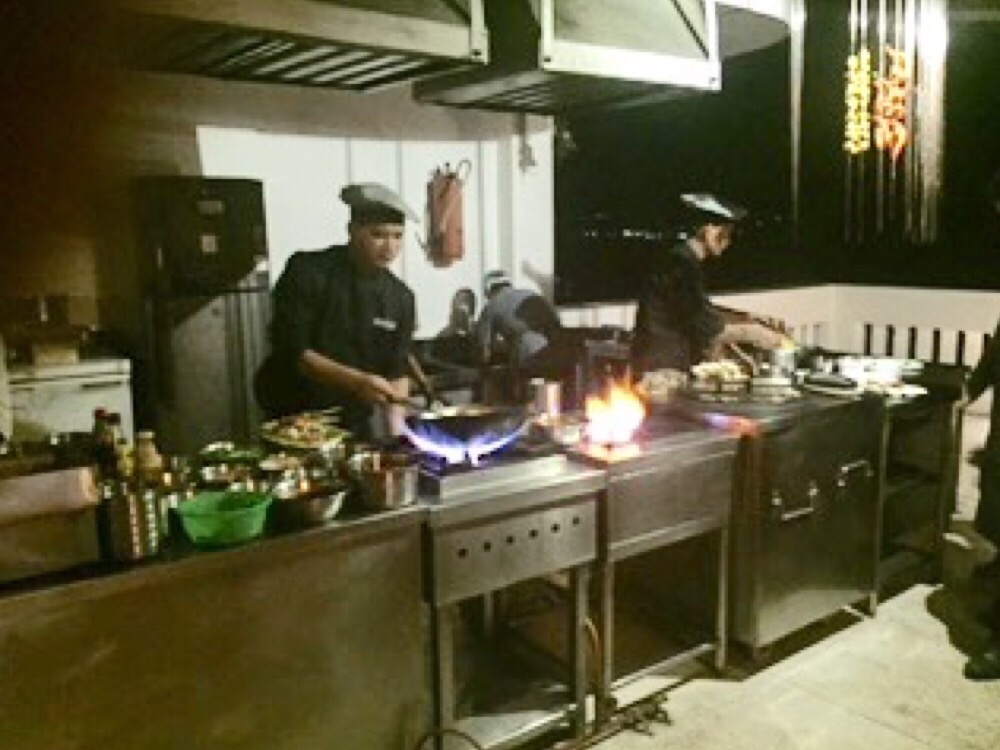 Cooking up a storm at Seashells
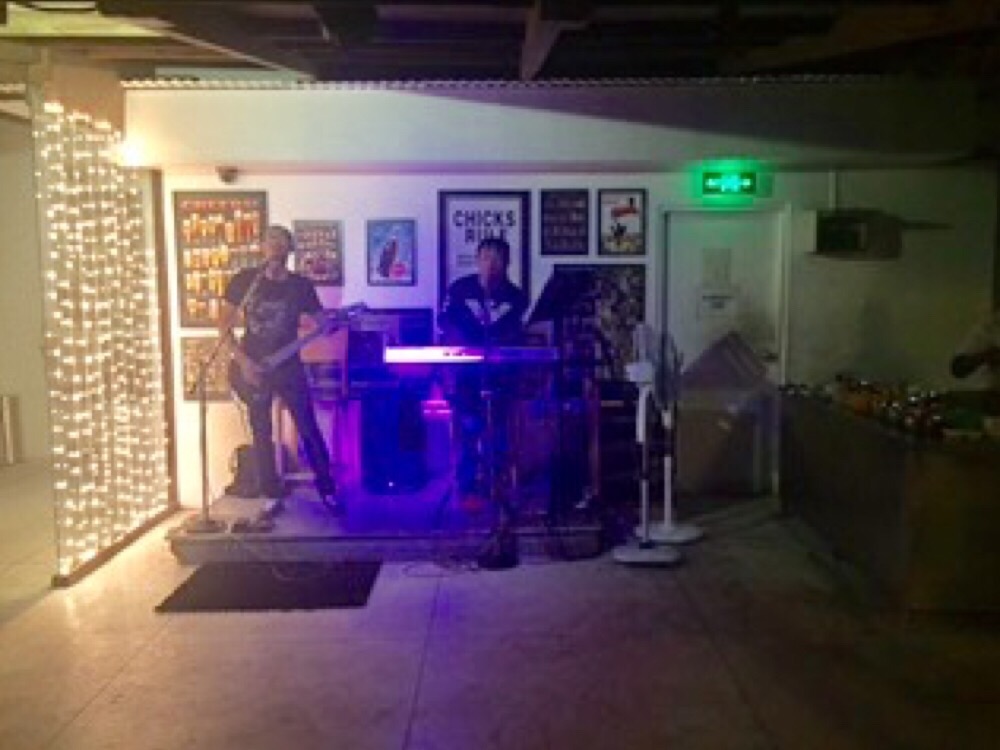 The band from Nagaland in North East India
 Last night in the Andaman Islands
We had a thrill a minute ride back to the jetty being hurtled around in the two tuk tuks that took us home. It was a giddy end to an amazing and fabulous four weeks in the Andaman Islands.
Read more about these wonderful islands at:
https://dotsailing.wordpress.com/2017/06/21/the-long-arm-of-bureaucracy/
Or my previous blog post:
https://dotsailing.wordpress.com/2017/06/10/sadly-leaving-the-captivating-cinque-islands/


 Salty tales from Bali Hai on Sunday
Leave a reply to Sadly leaving the captivating Cinque Islands – Salty tales from Bali Hai Cancel reply