While we were at the Chinchilla Visitor’s Centre we were told about an exhibition that was currently on display in Roma, about 190 kilometres down the road.
We were at the beginning of our month long trip in the Queensland outback and although we had a rough plan as to where we would go we decided to make an unplanned stop in Roma to take in the exhibition.
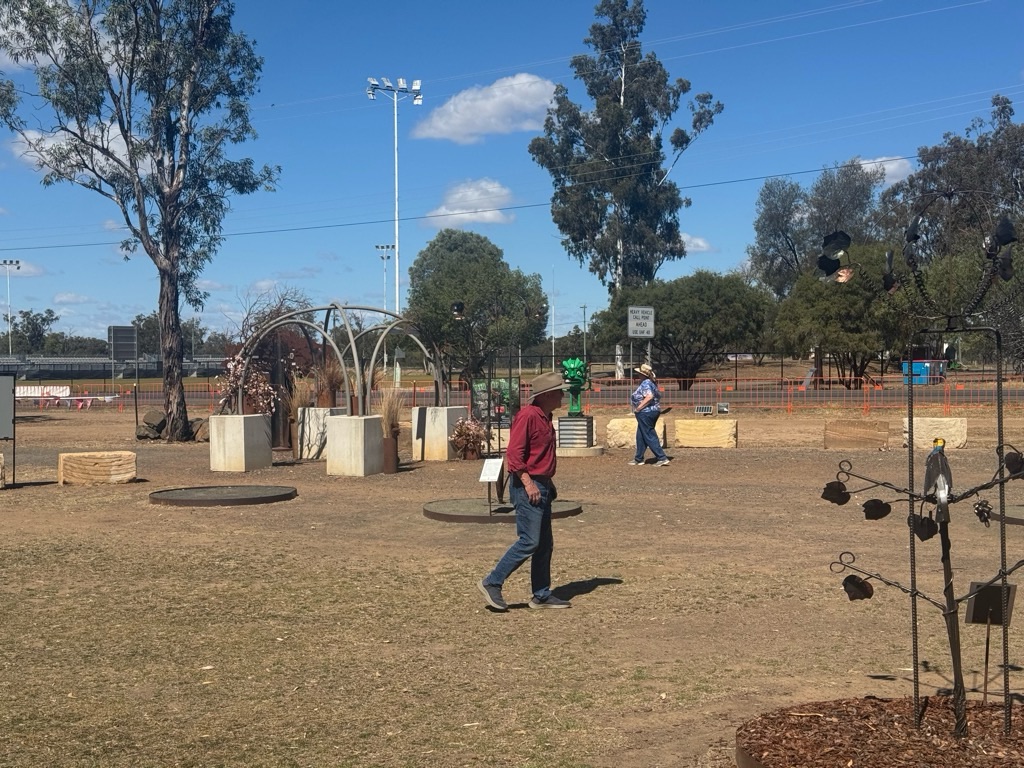
The Sculptures Outback Exhibition is an annual outdoor event that is held near the entrance to the town between June and September each year.
There were a number of categories that artists could compete in with themes that included celebrating local history, cultural heritage, community and the environment.
Points were awarded for first impression, creativity, originality, finish, composition and texture.
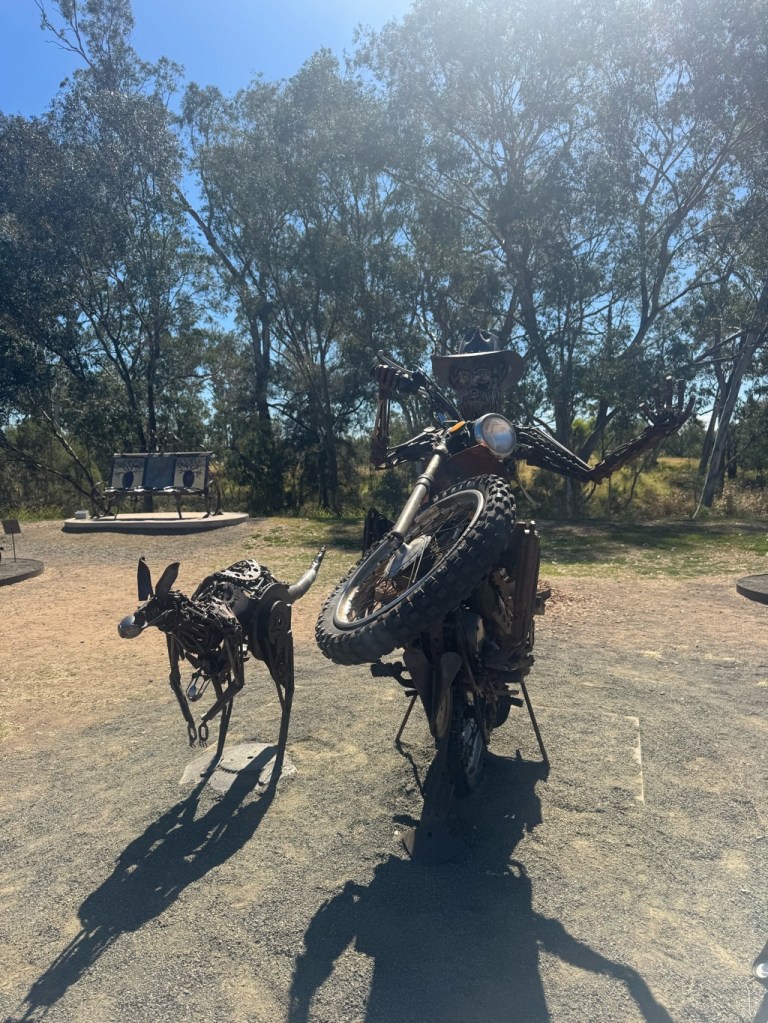
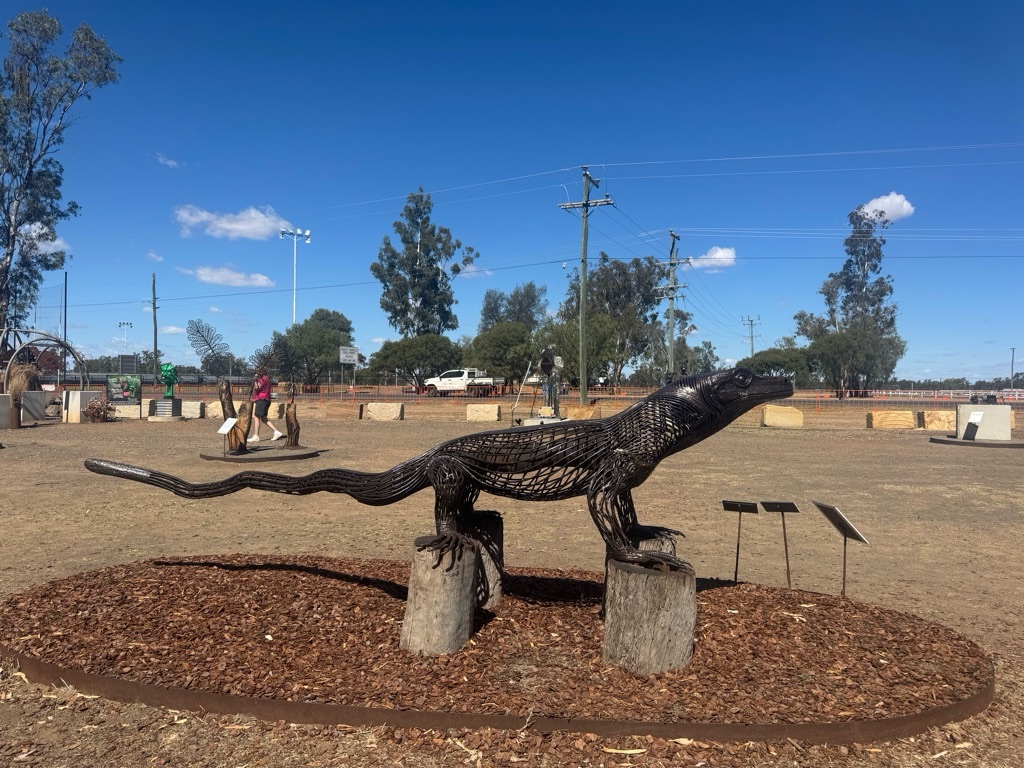
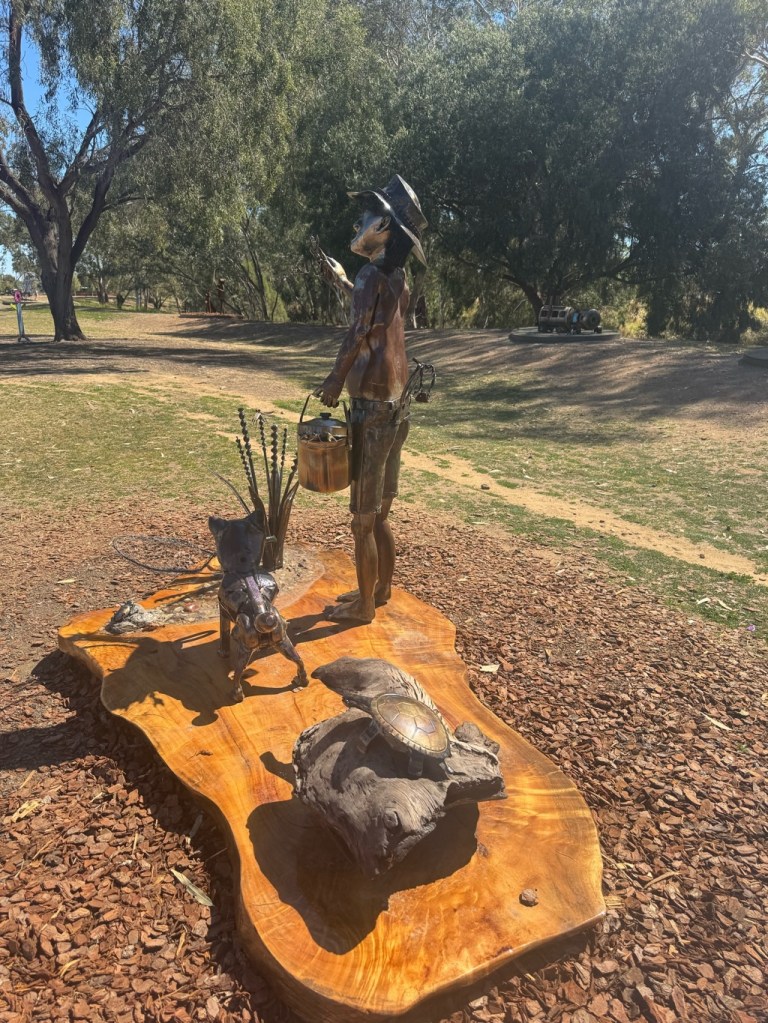
We spent quite a while wandering through the sculptures and were in turns amused, moved and impressed.
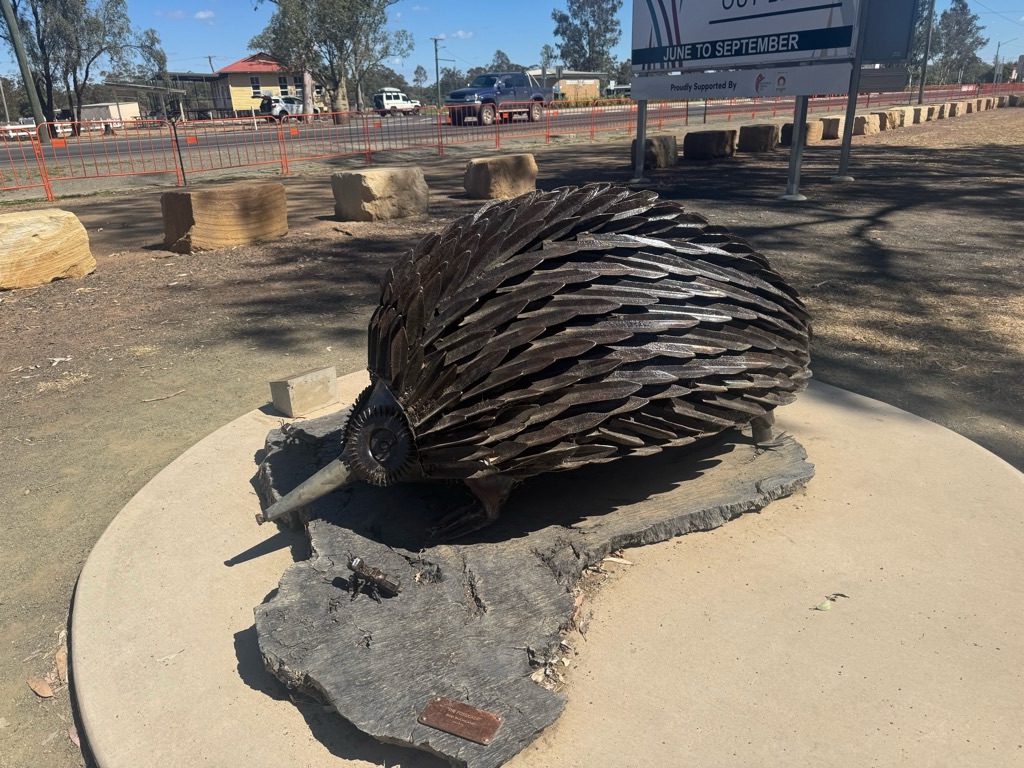
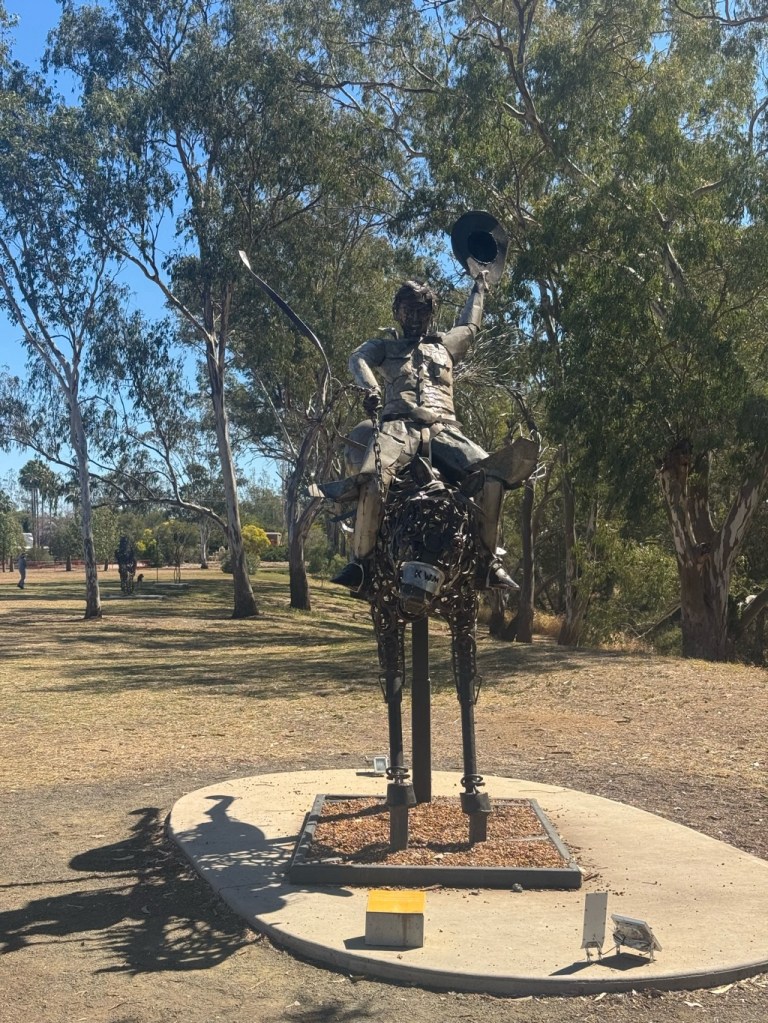
My own favourites were the soldier and his horse, a child on a swing, and the wedge tail eagle made by a fourteen year old out of second hand knives and forks!
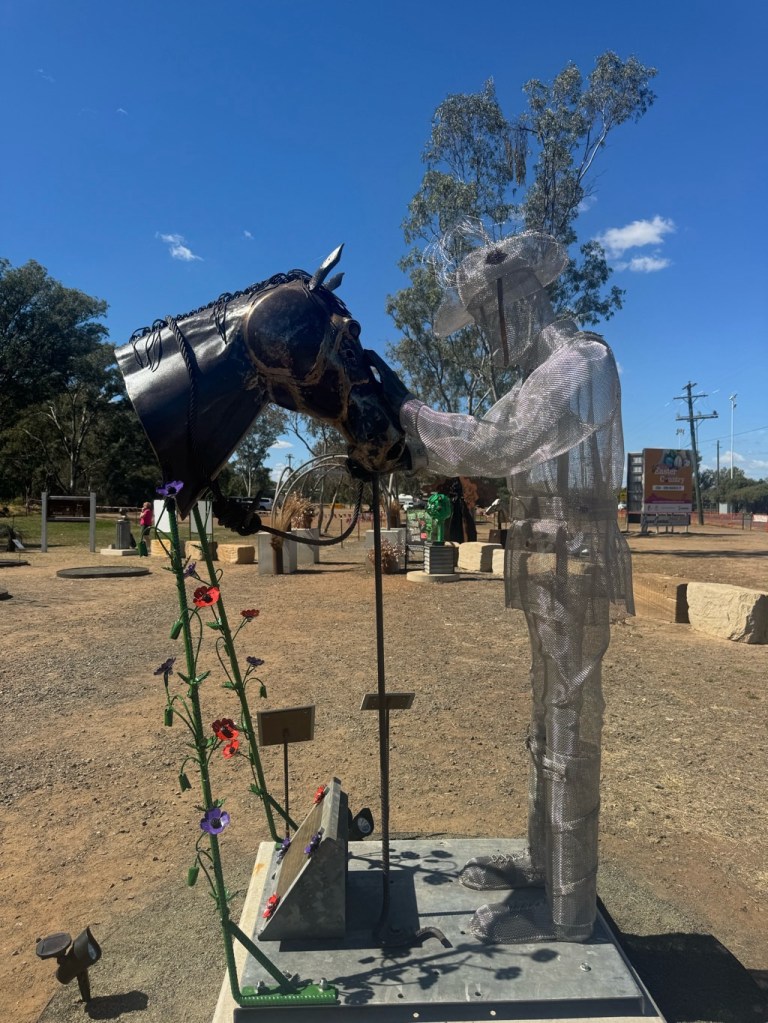
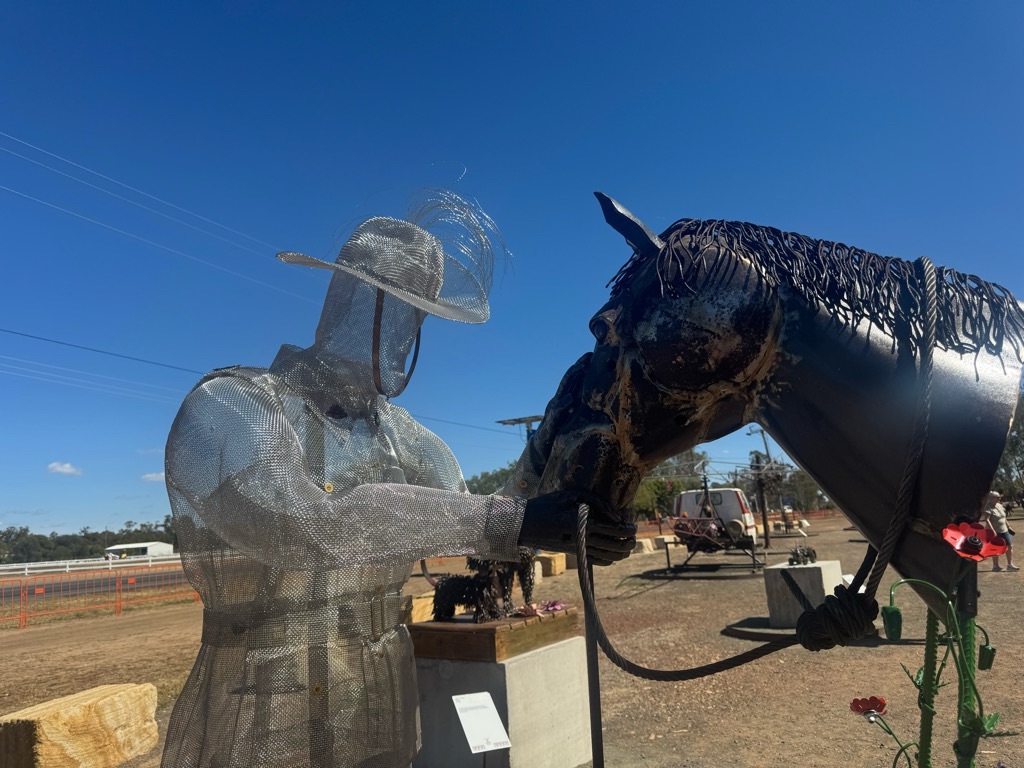
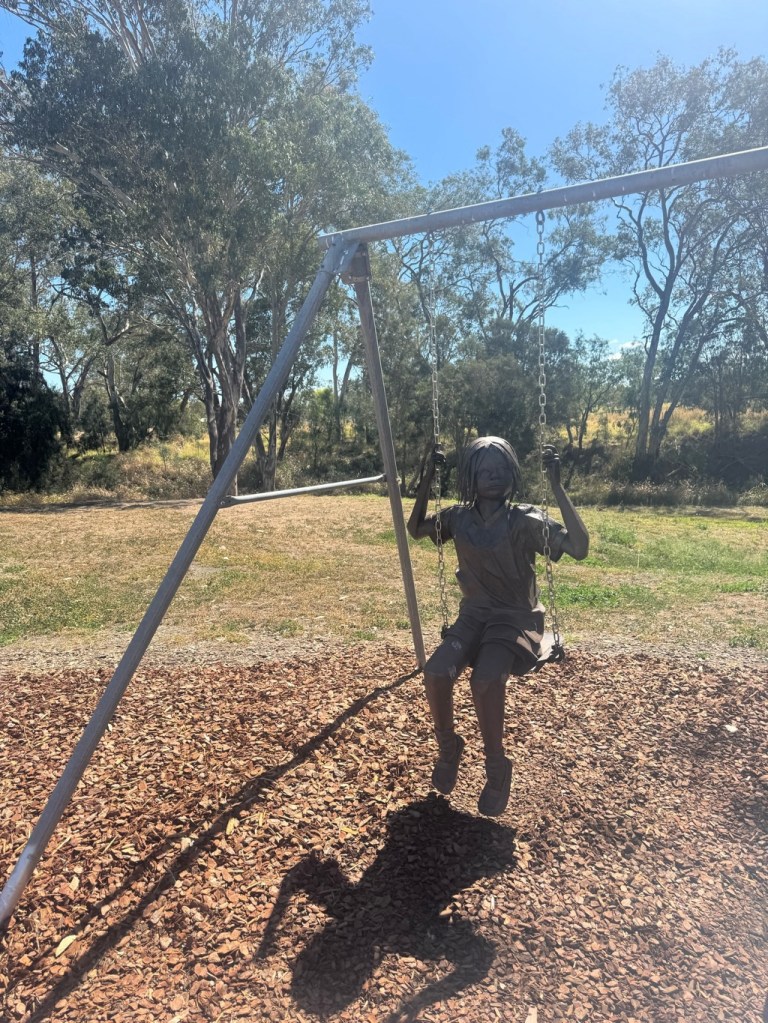
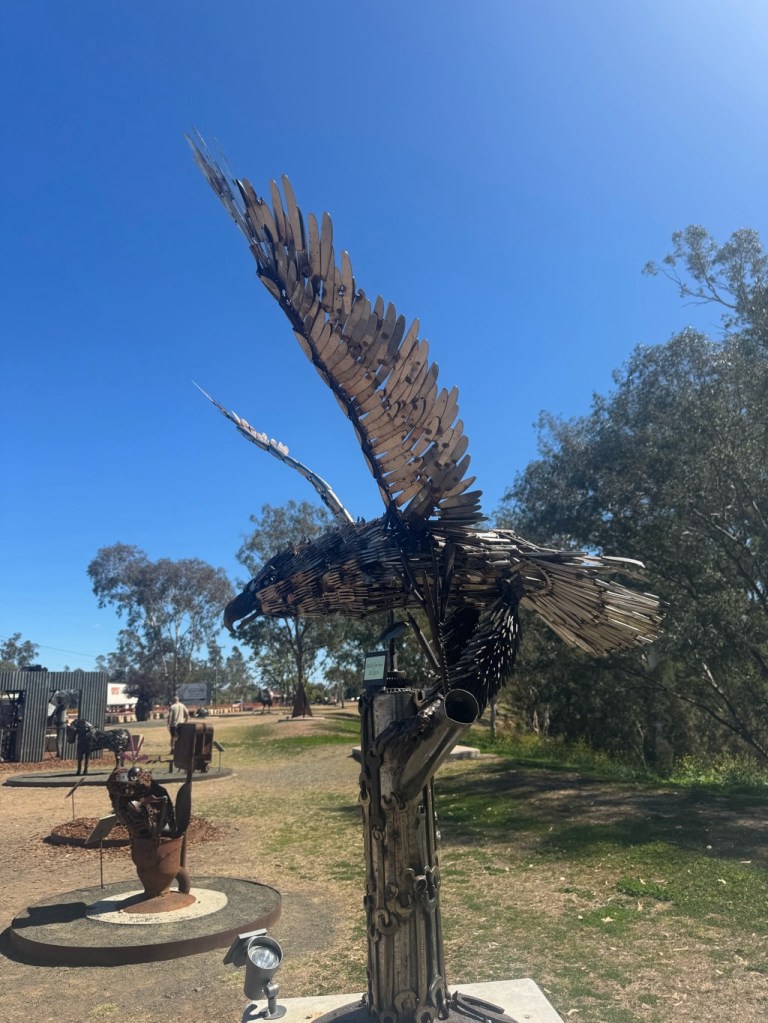
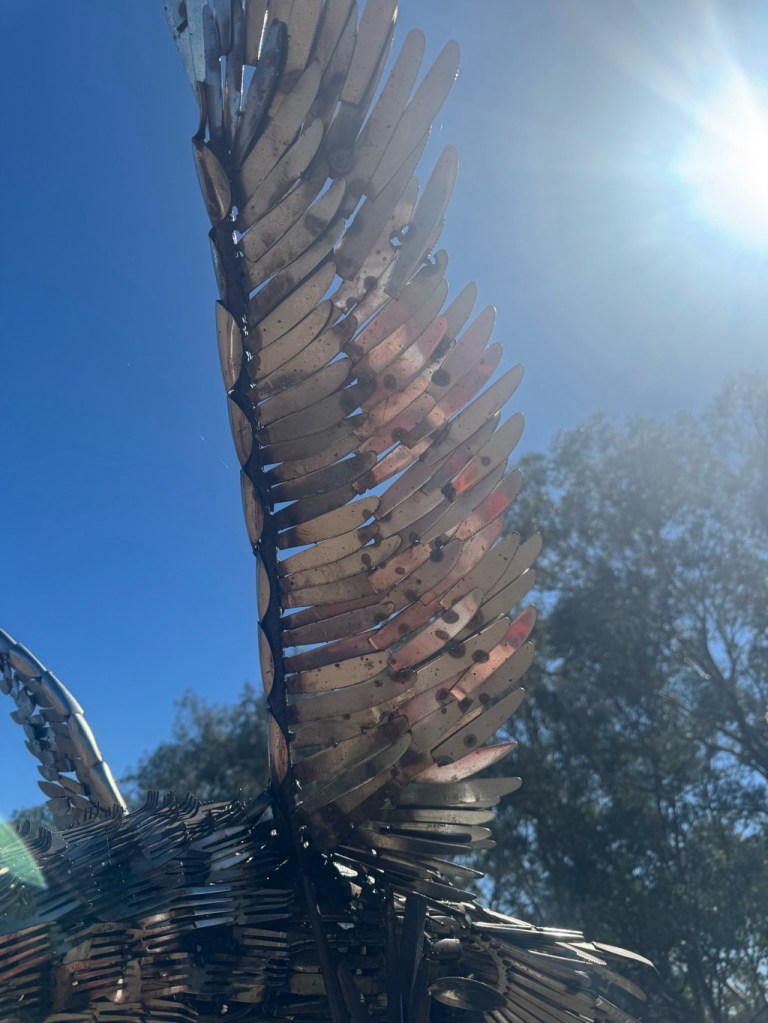
There were plenty of other interesting sculptures made out of various materials – however, the vast majority were constructed from scrap metal.
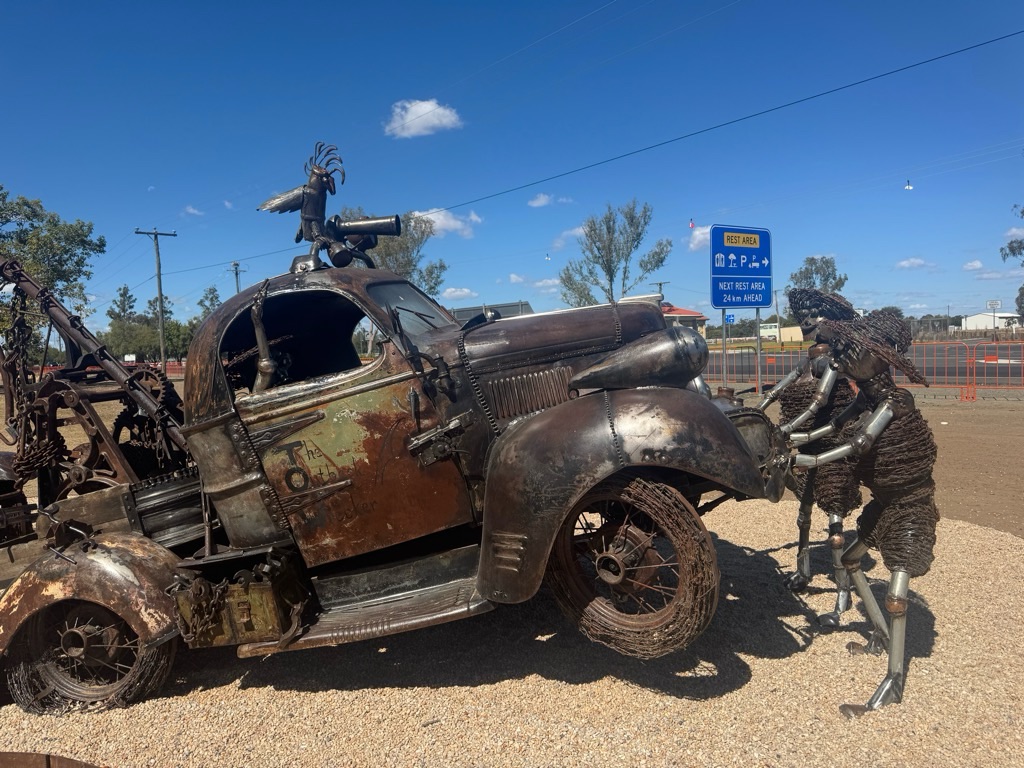
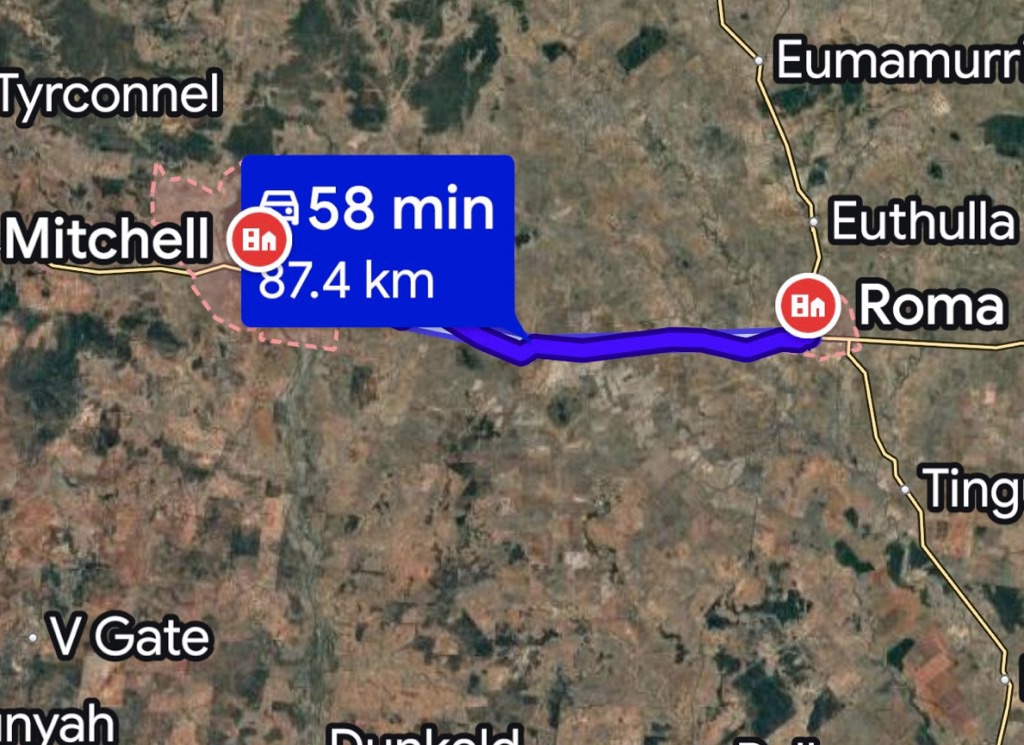
After abrowsing through the sculpture collection we set off again for the Major Mitchell Caravan Park in Mitchell.
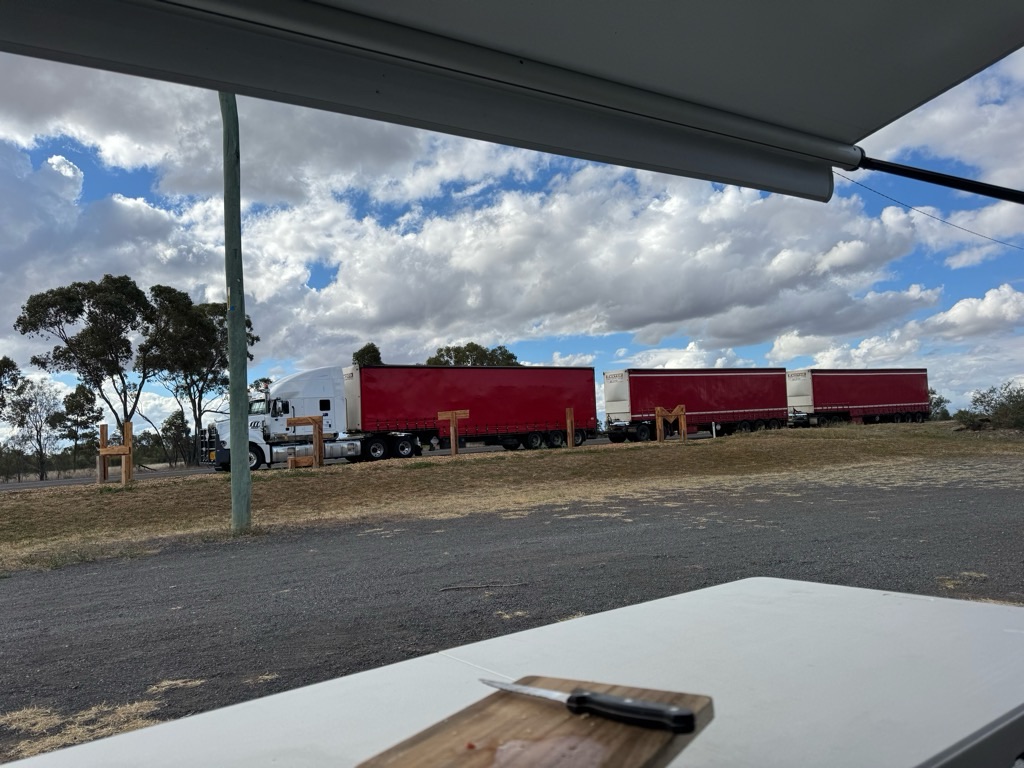
The campground in Mitchell was quite pleasant but our camping spot was right near the road which made it a bit noisy – especially when a road train lumbered by. Fortunately we there on the weekend so the road was relatively quiet.
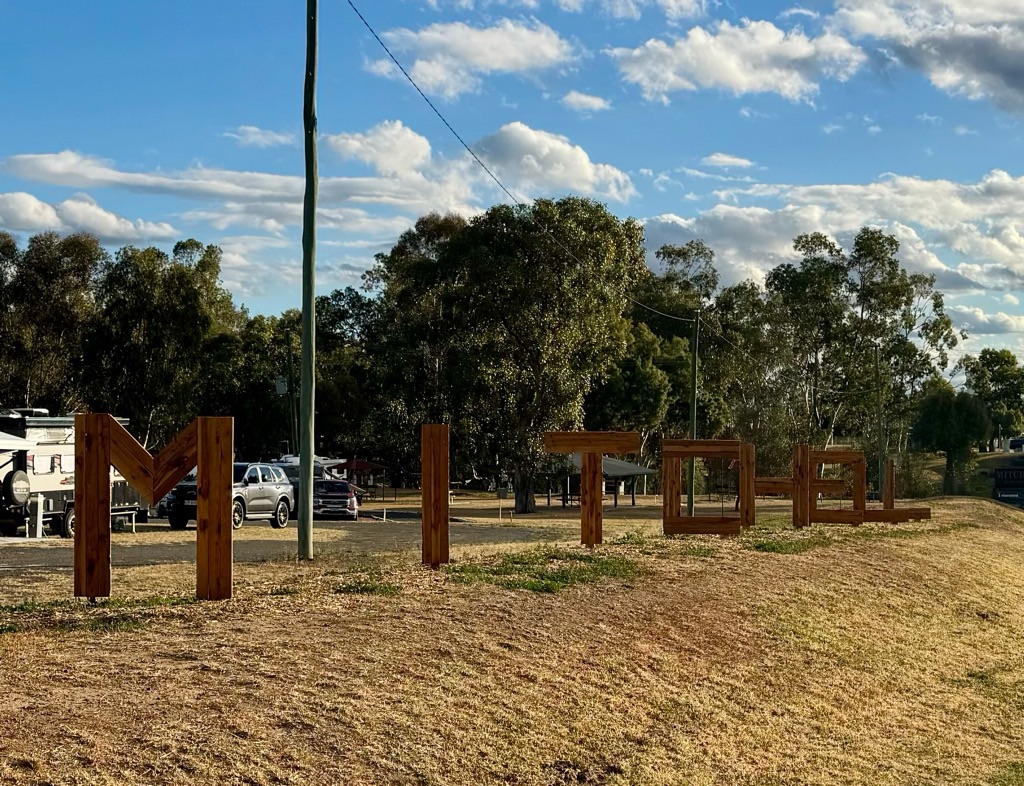
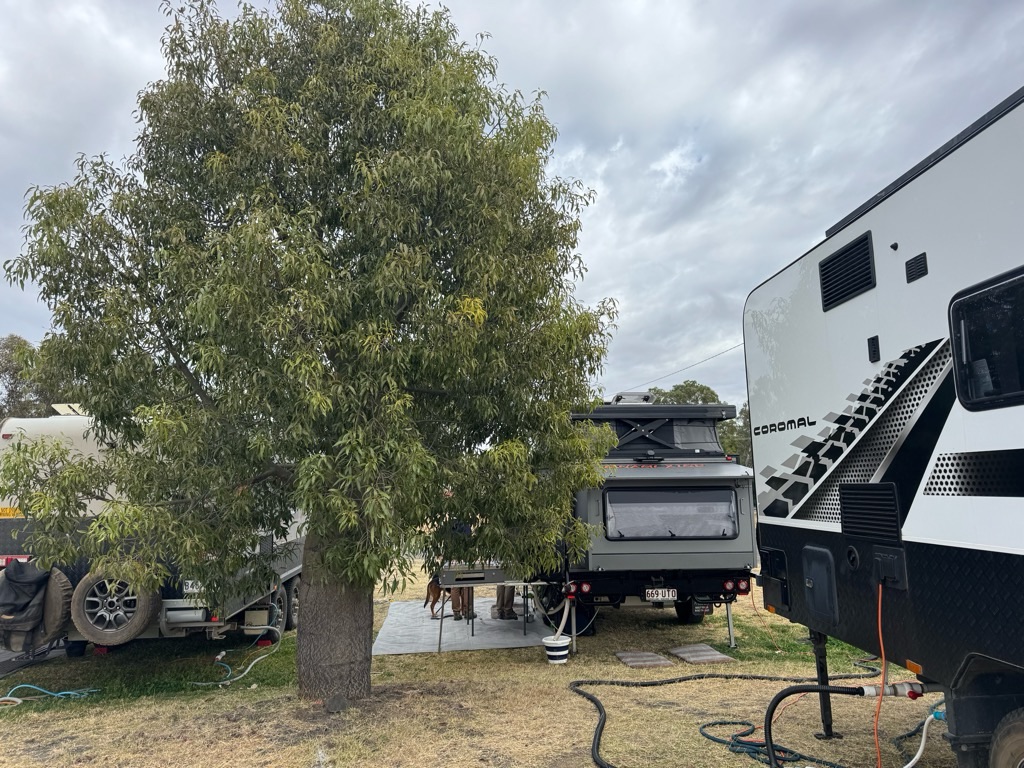
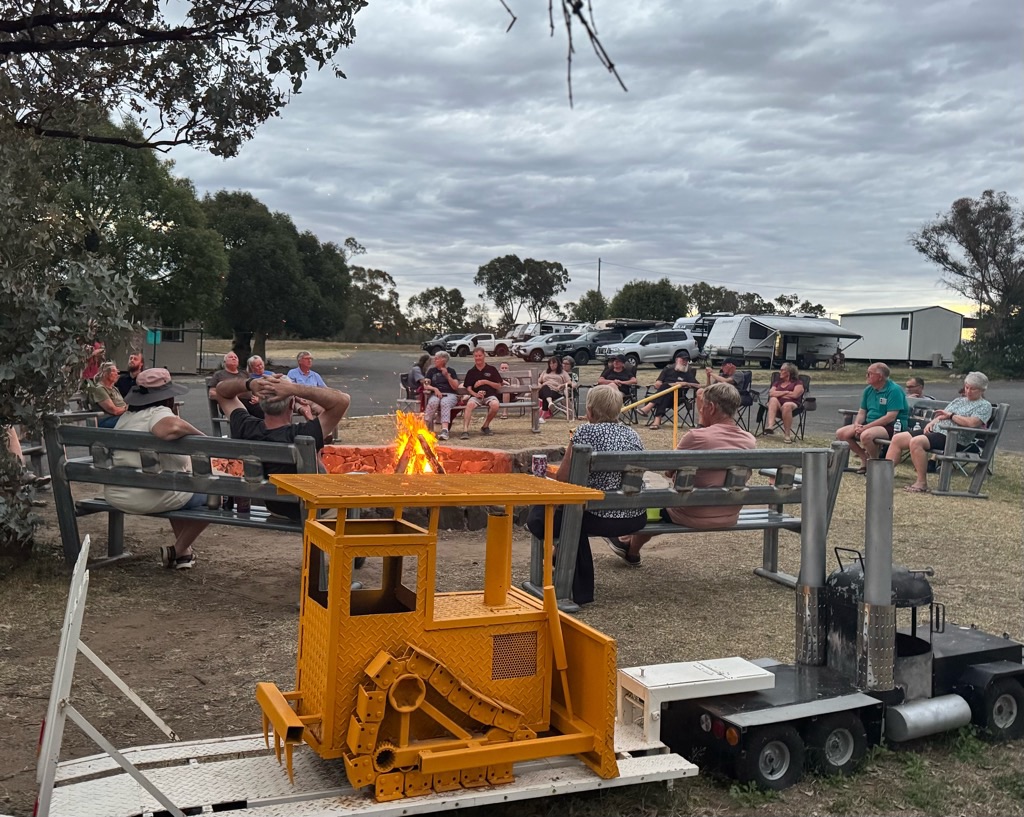
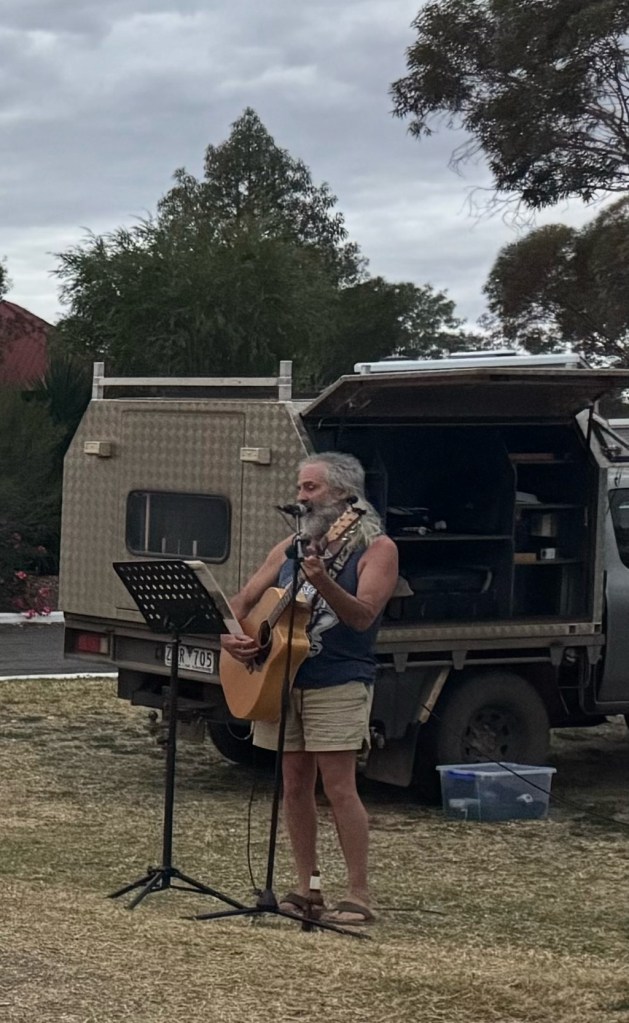
There was a communal bonfire in the early evening with a country singer and his guitar who entertained the campers staying at the site.
The day after we arrived we walked into town to find Mitchell’s artesian spa, famous for its health-giving properties.
Artesian water comes from a “confined” aquifer – a layer of permeable rock, sand, or gravel, that holds naturally pressurised water. This means that when a bore or well is tapped into the aquifer, the water rises to the surface without the need for pumping.
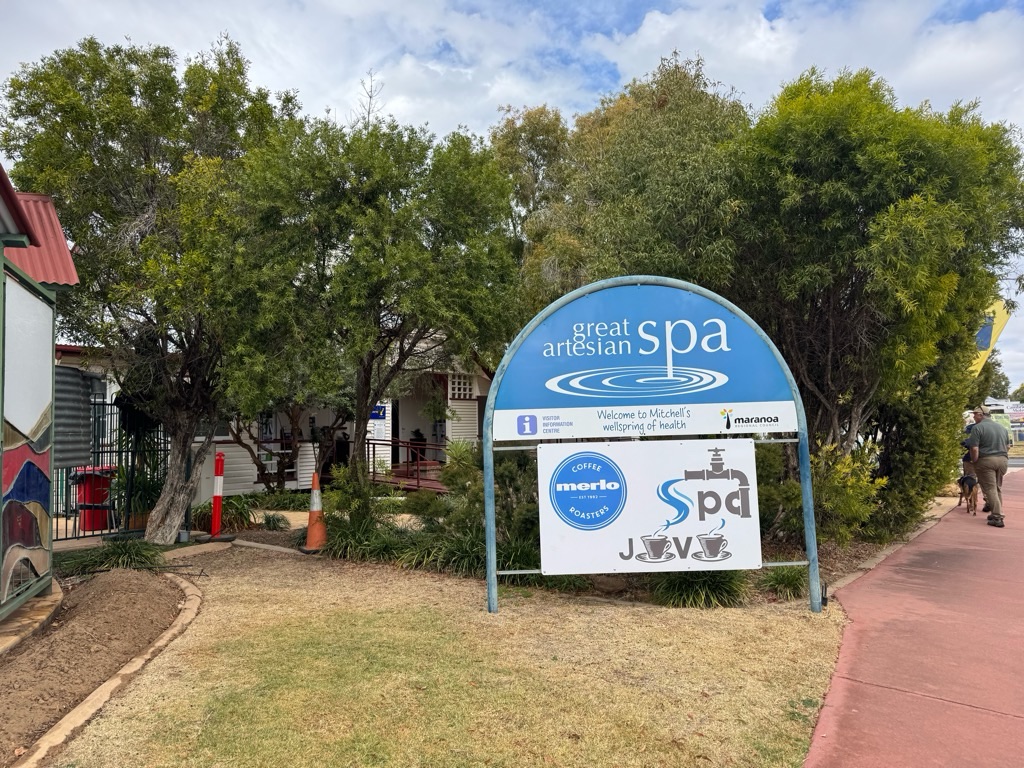
In Mitchell the water comes from the Great Artesian Basin – one of the largest and deepest artesian groundwater basins in the world. It spans 1.7 million square kilometres across four Australian states – including Queensland.
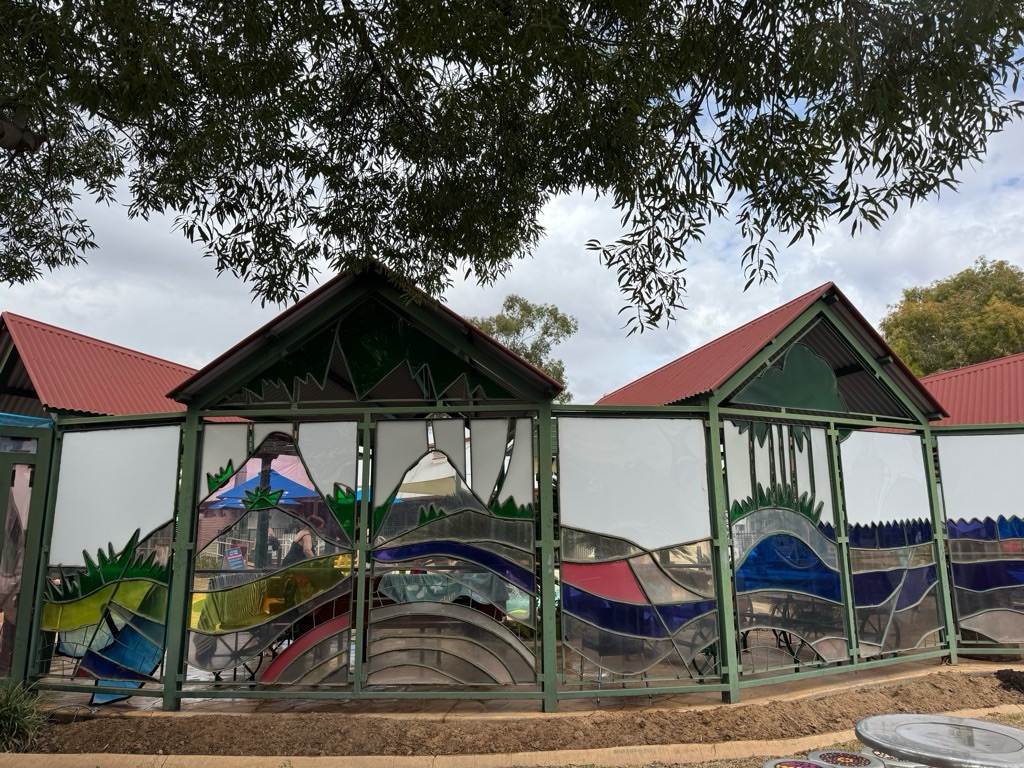
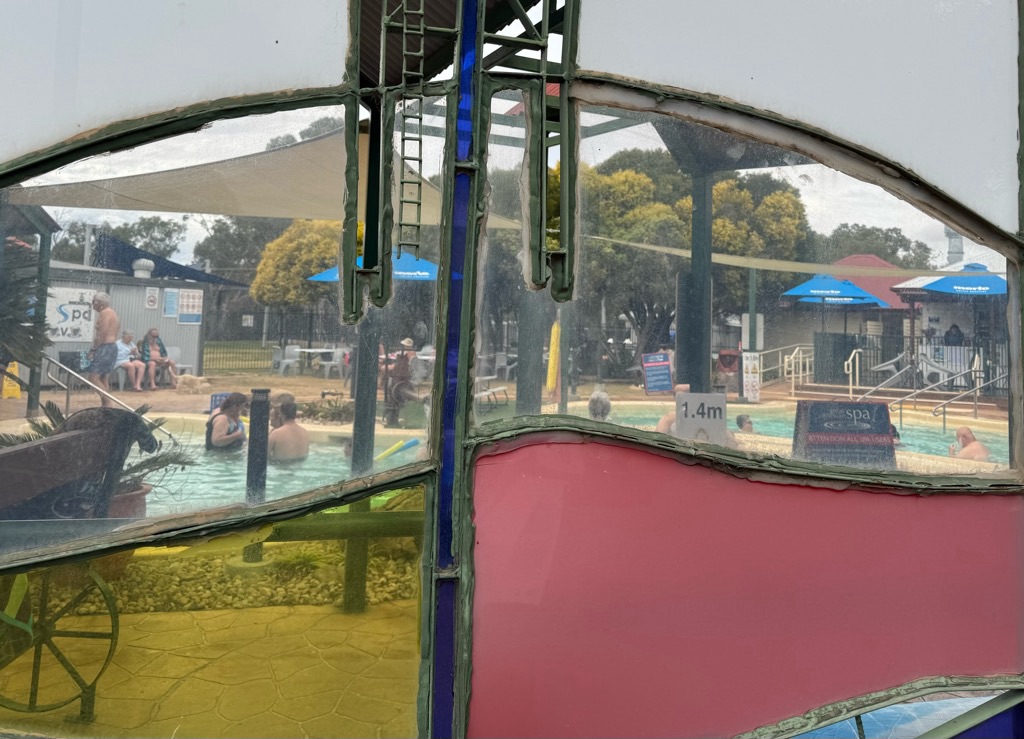
Unfortunately the smell of chlorinated water was overwhelming as we approached the Spa so we decided not to test the waters.
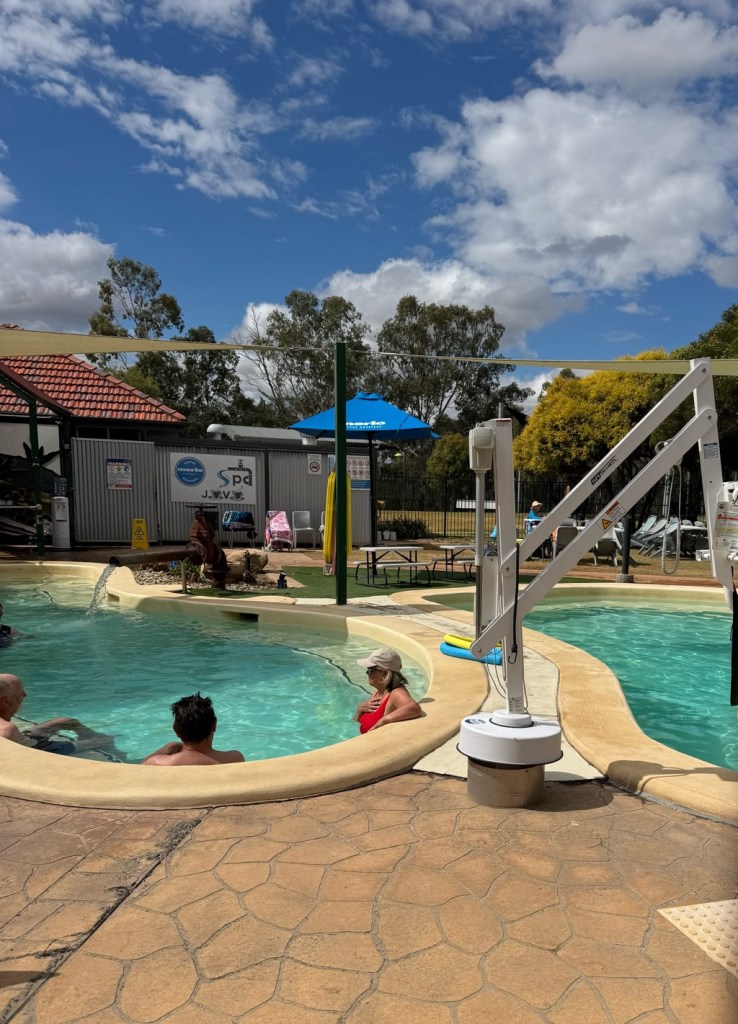
smell of chlorine was overwhelming!
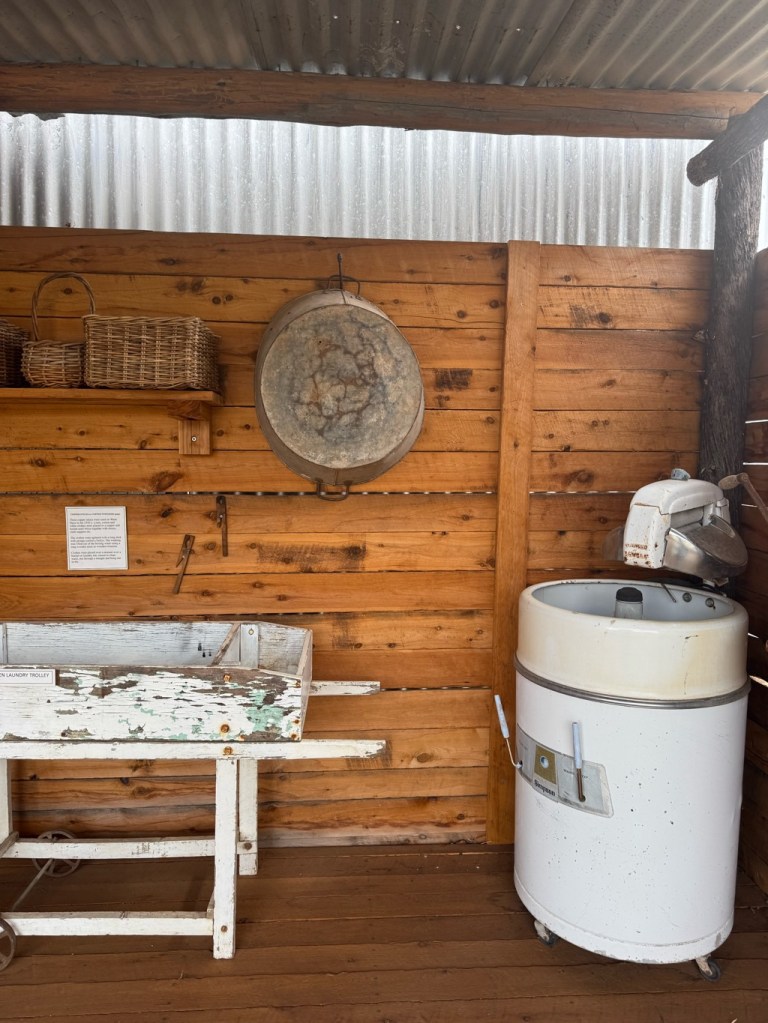
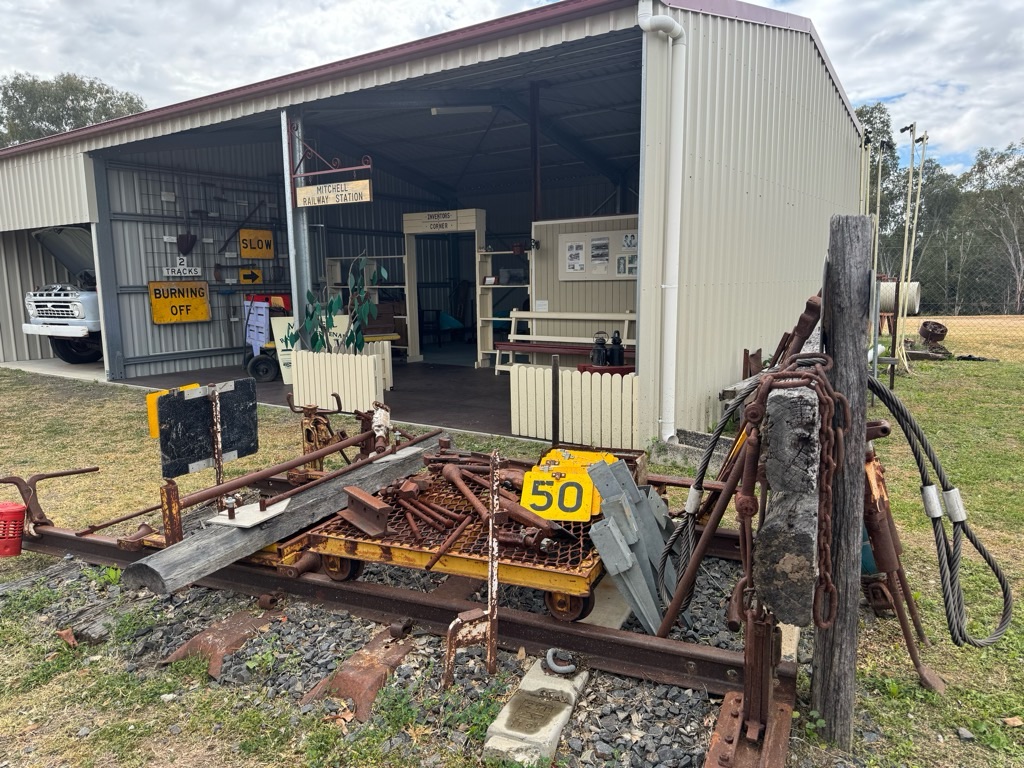
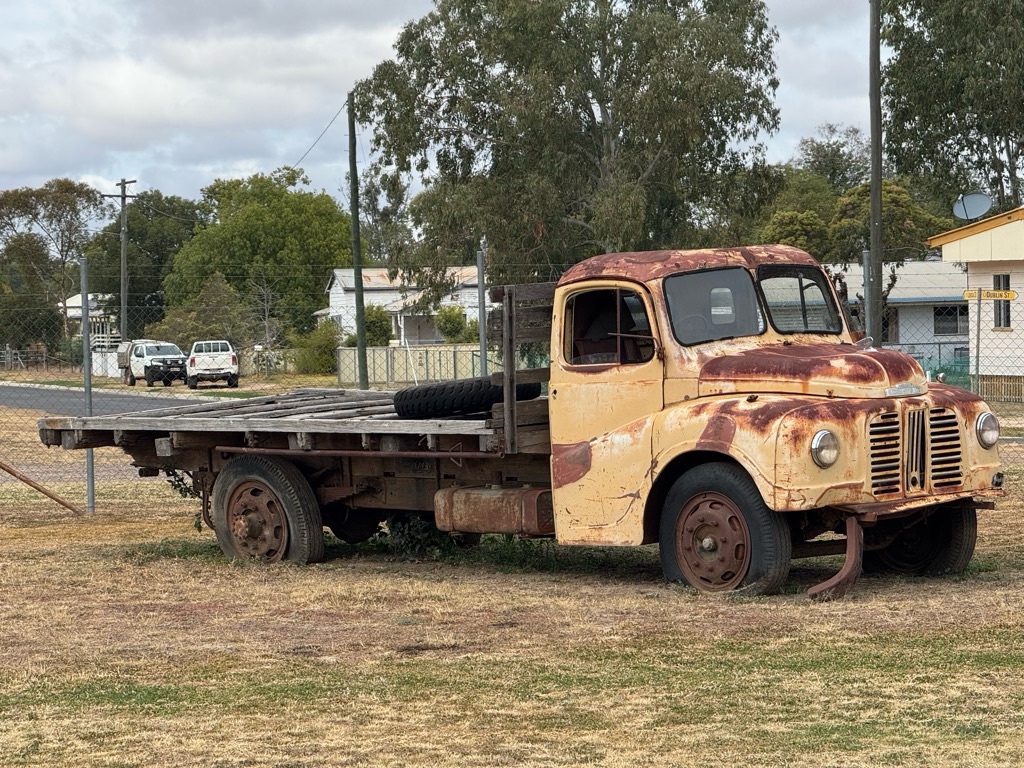
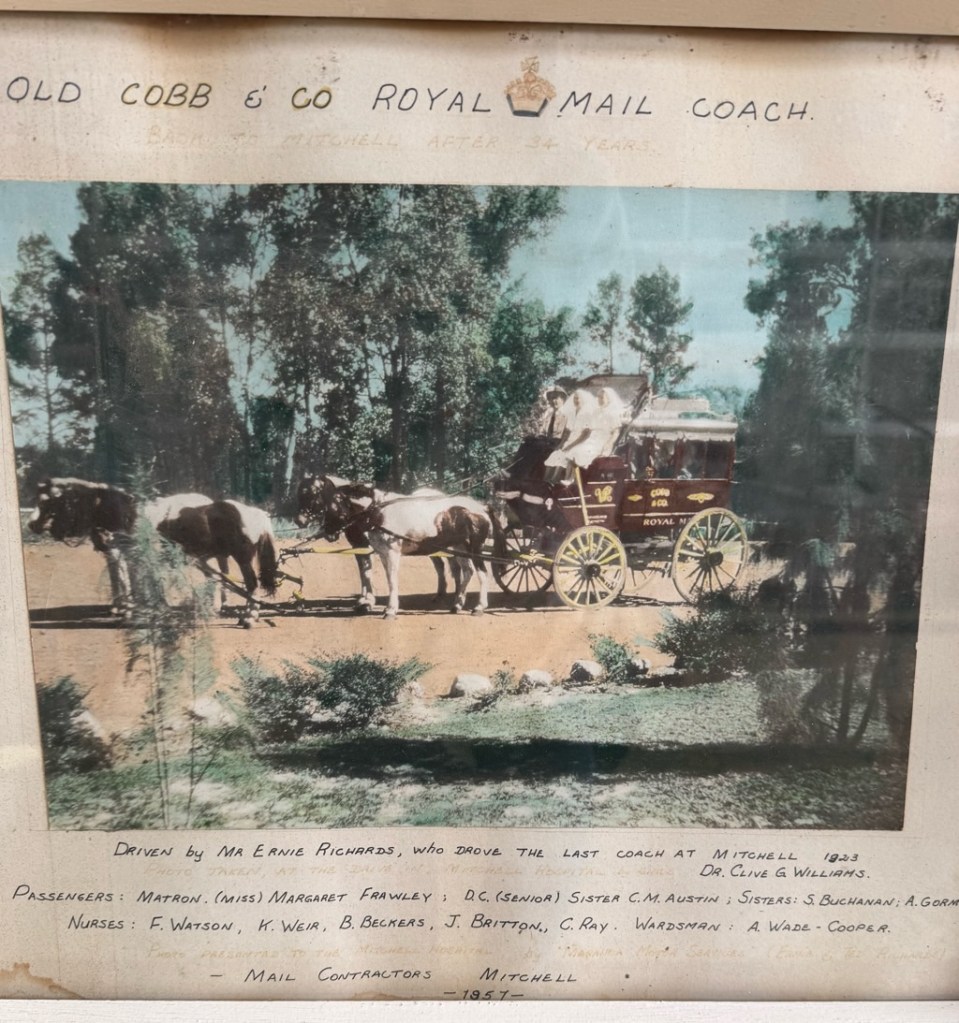
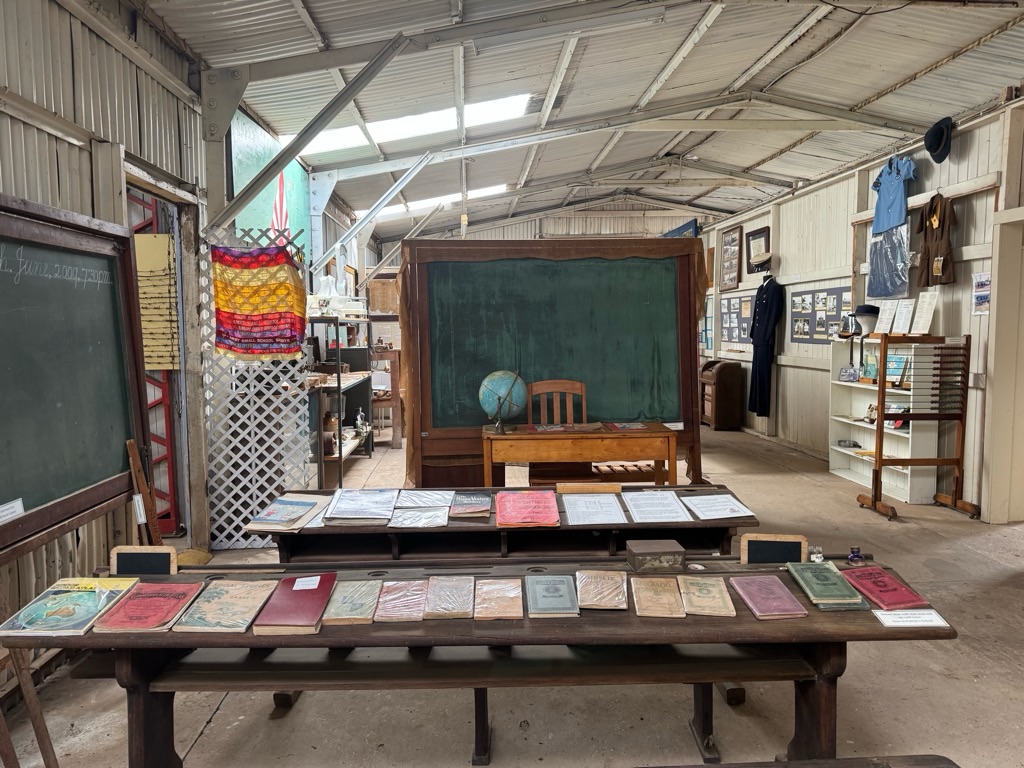
A little further down the road we found the local museum which was situated in an old shire council workshop.
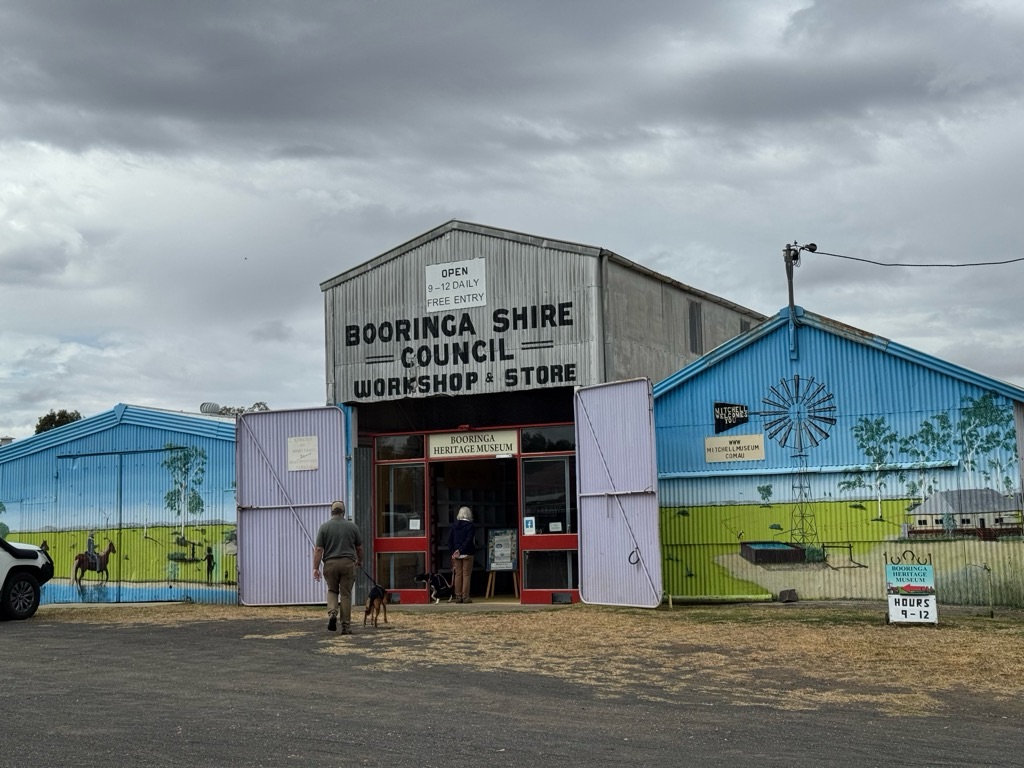
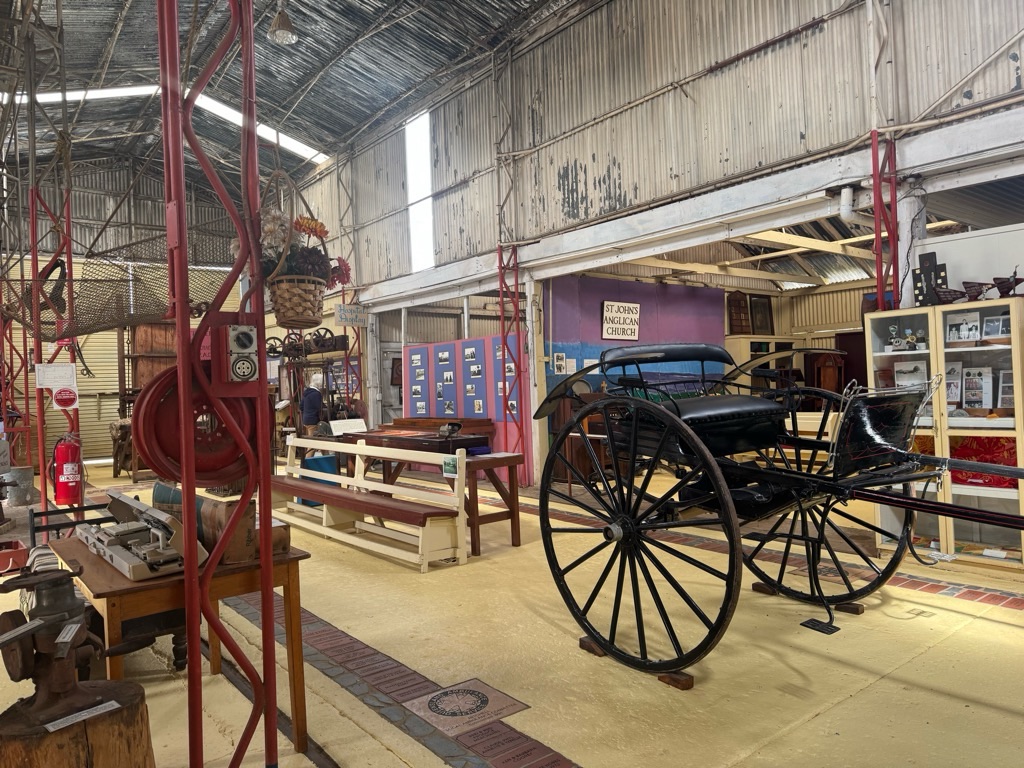
massive shed
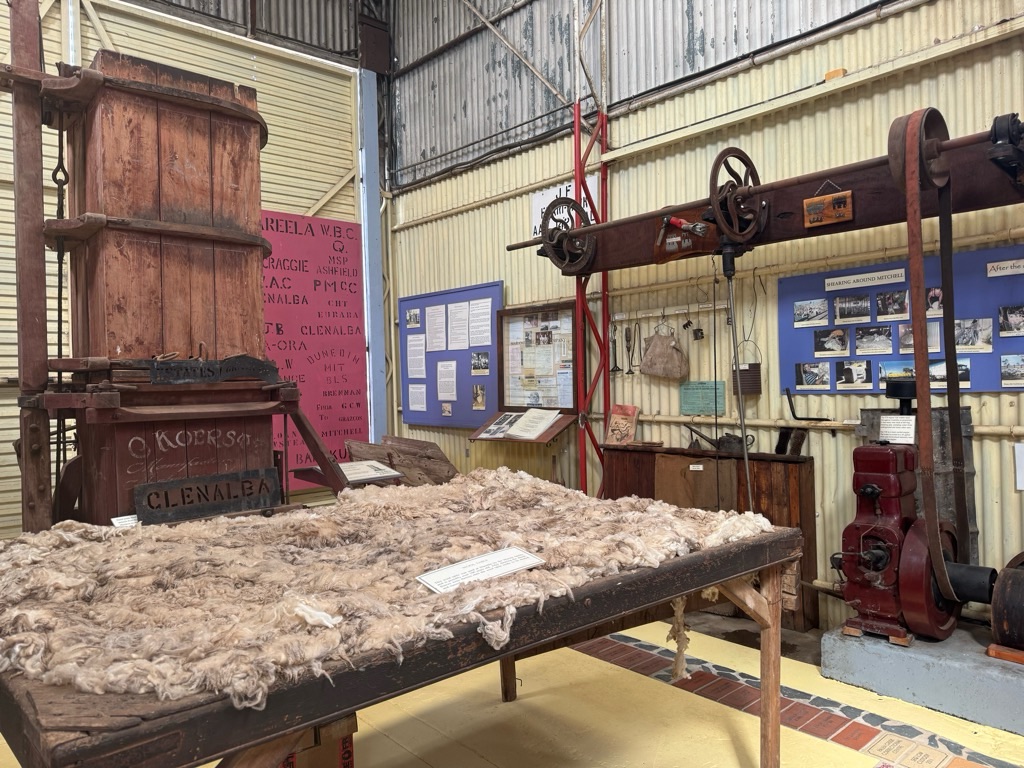
The museum was packed with regional artefacts, historical photographs, and pioneer items detailing outback life over the past 130 years.
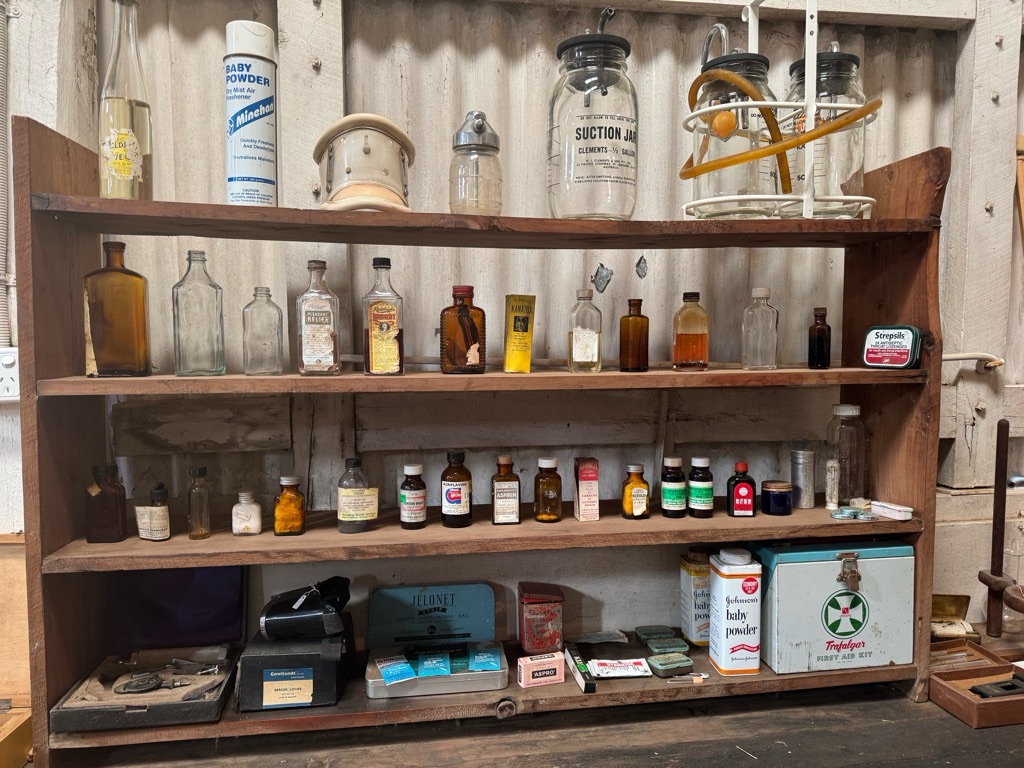
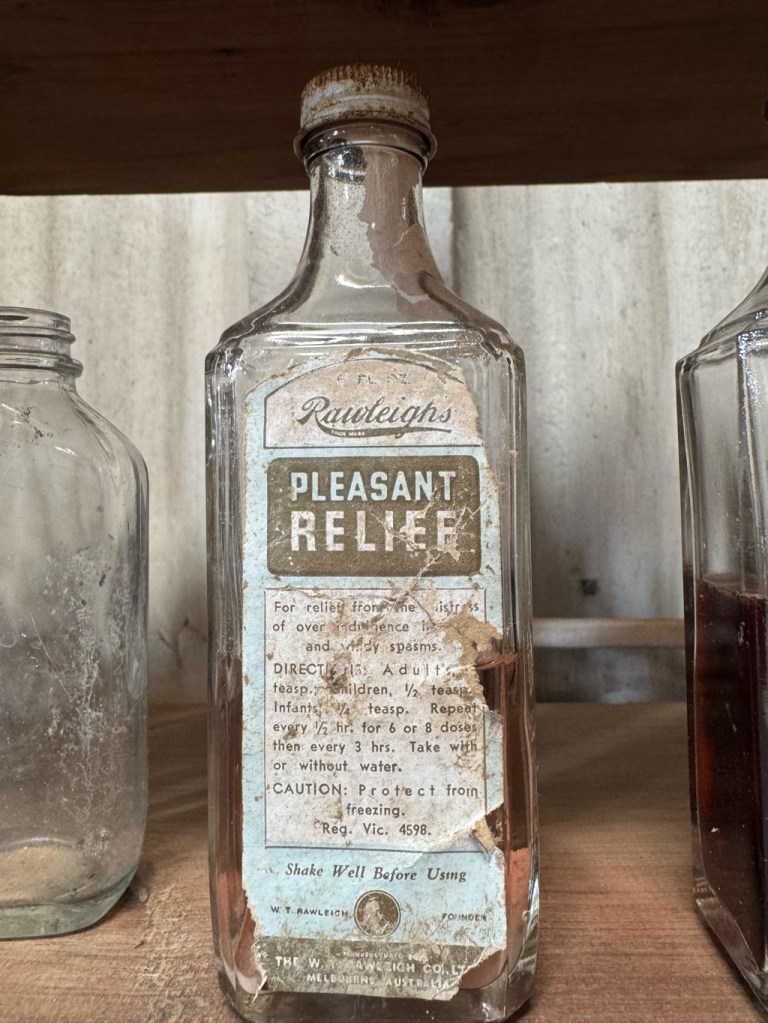
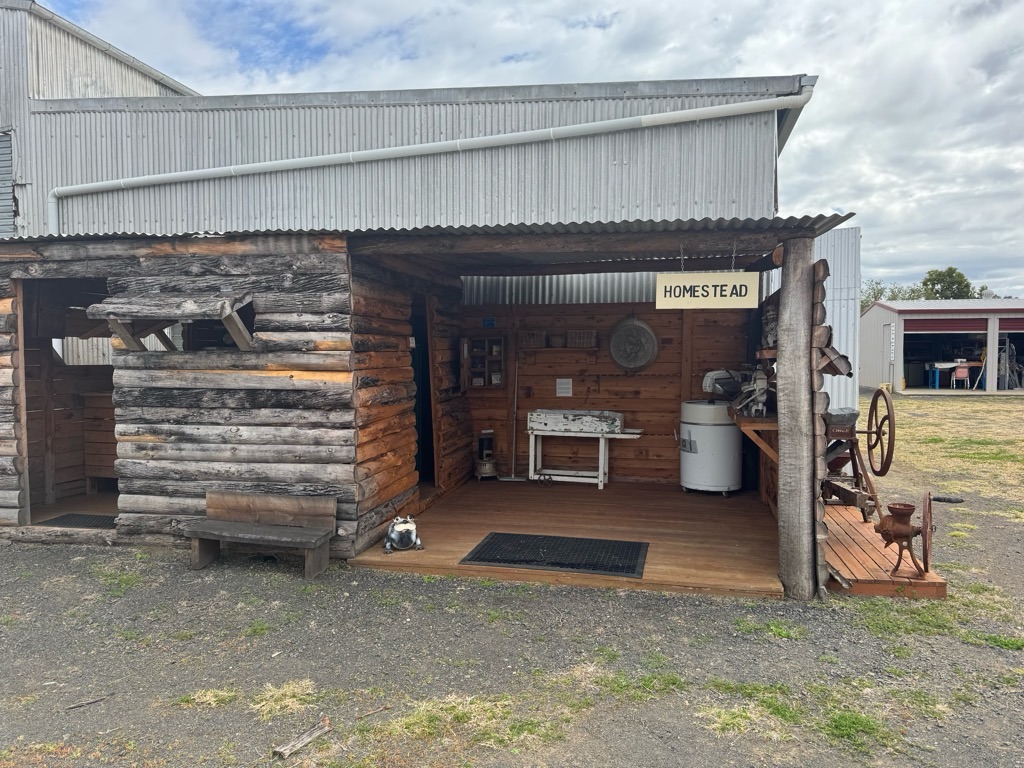
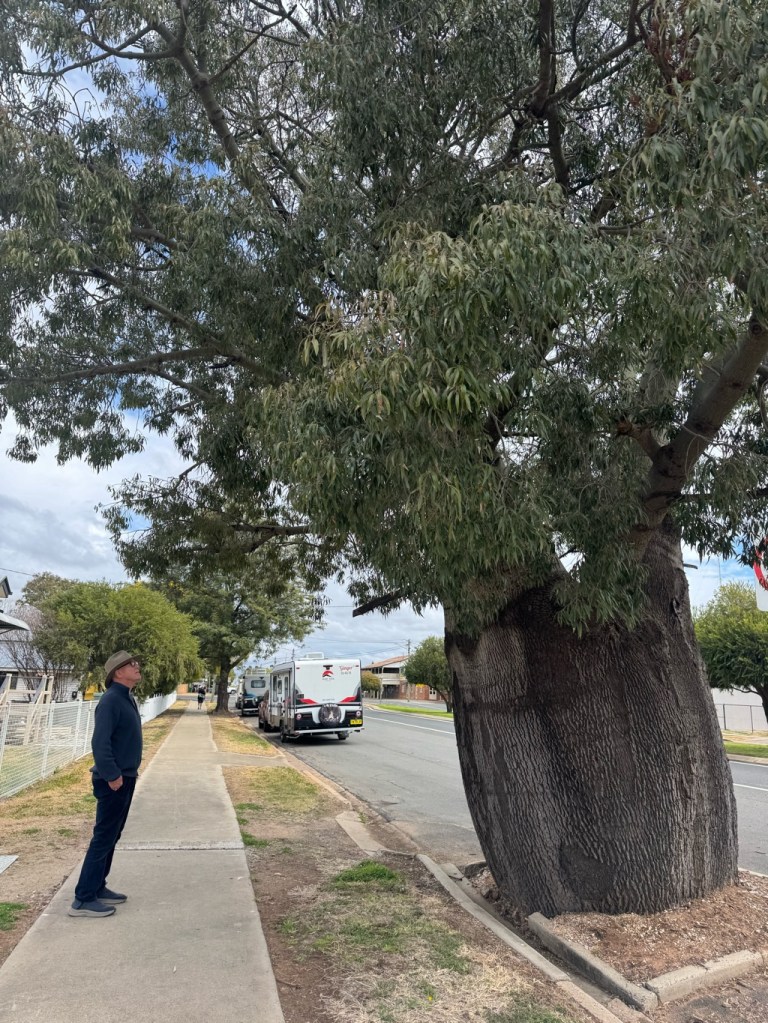
The centre of Mitchell was quite small and to our surprise all the shops (including cafes) closed at 1 pm (early closing on Saturdays and nothing open on Sundays!)
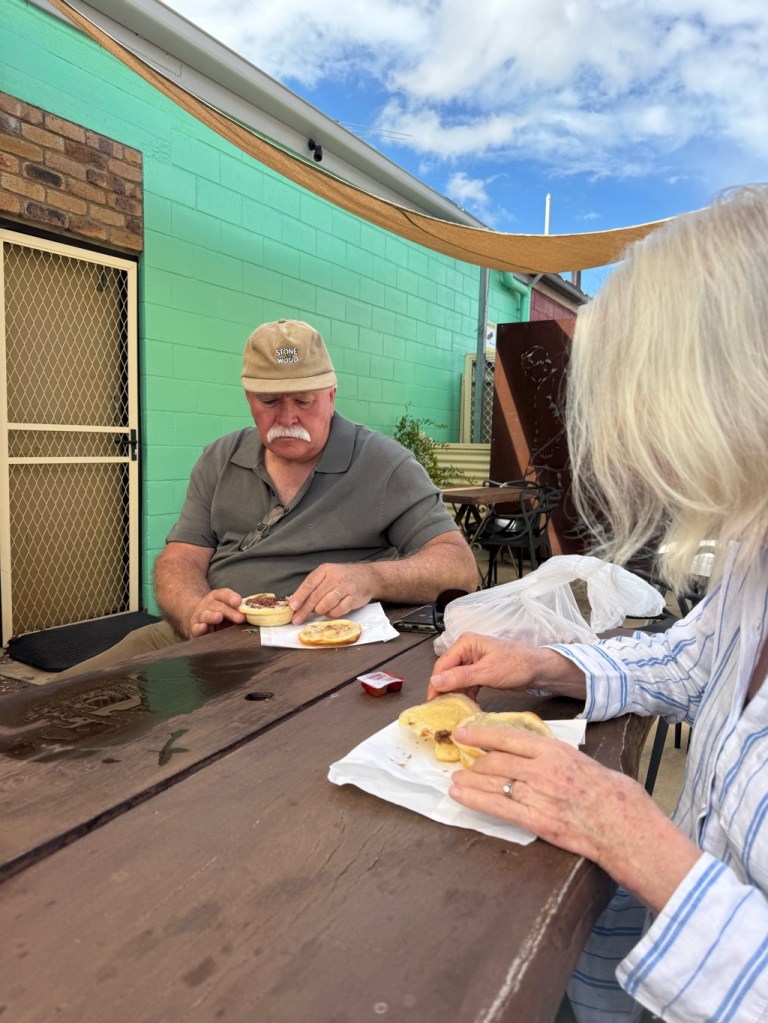
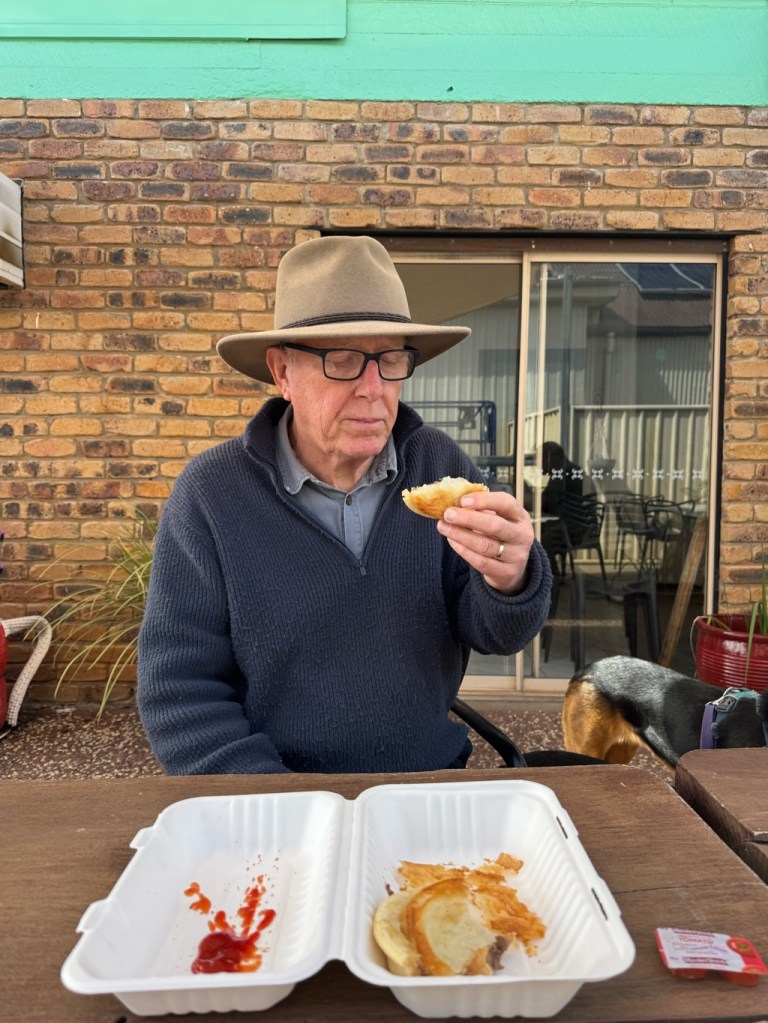
We just managed to buy coffees and (prizewinning) pies in the nick of time before the bakery shut its doors.
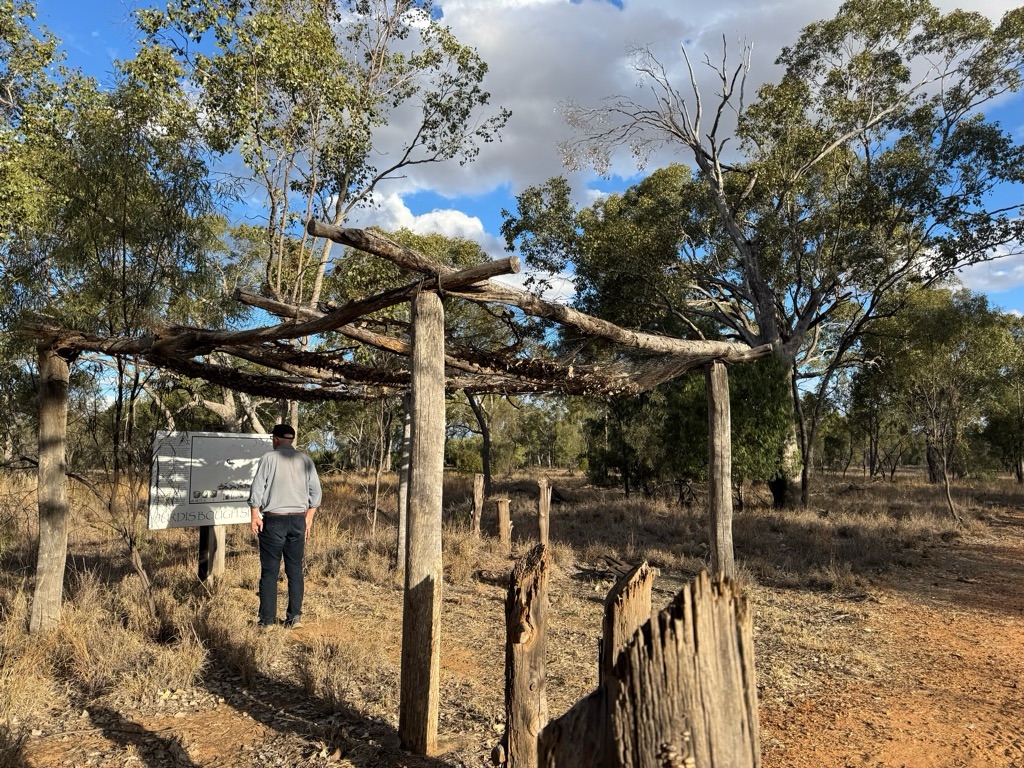
Later on we went for a beautiful walk along the banks of the Maranoa River. There were notices on the trail giving some of the history of the area and we were saddened and angered to read about the injustice inflicted on the people whose land we were walking on.
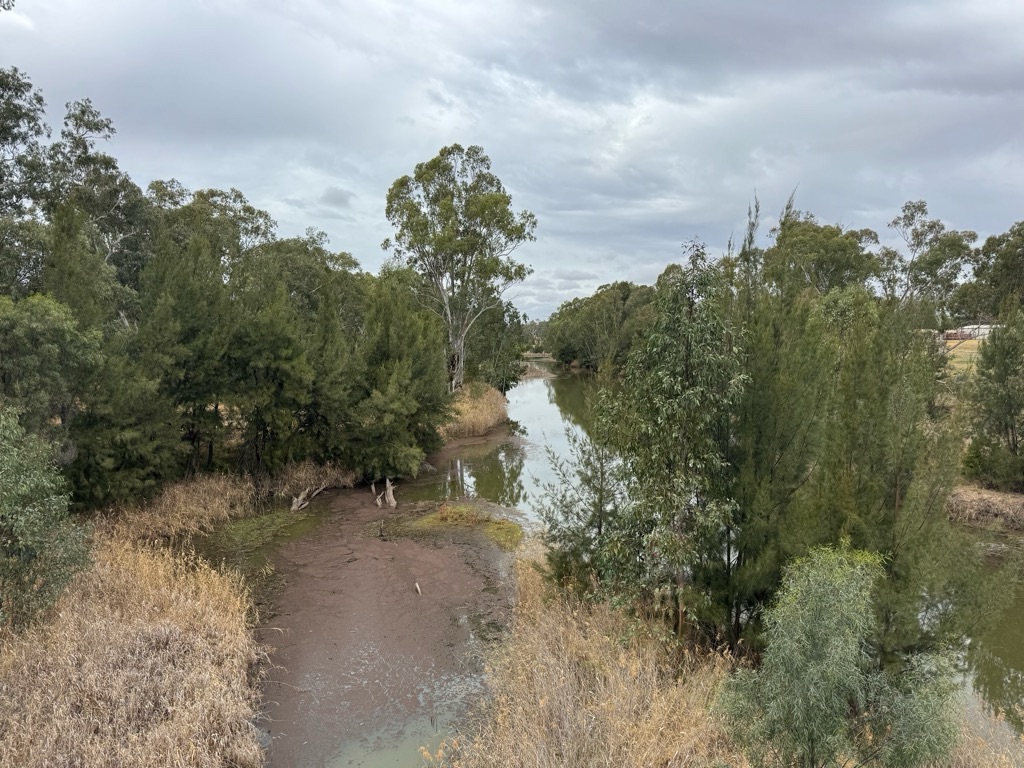
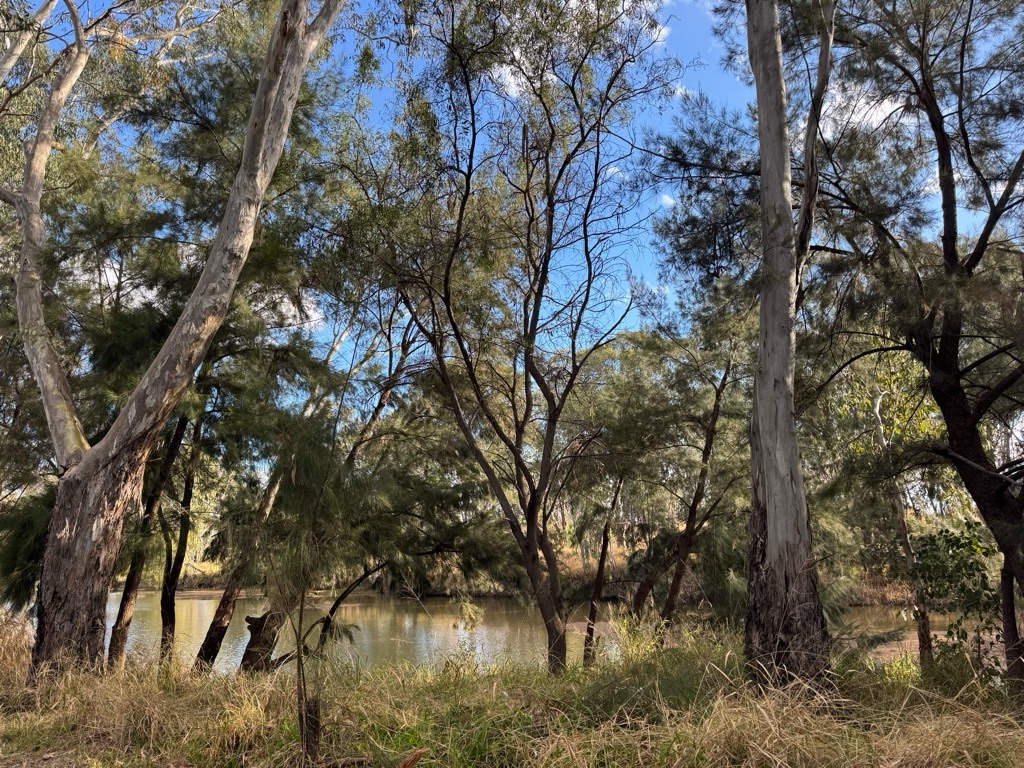
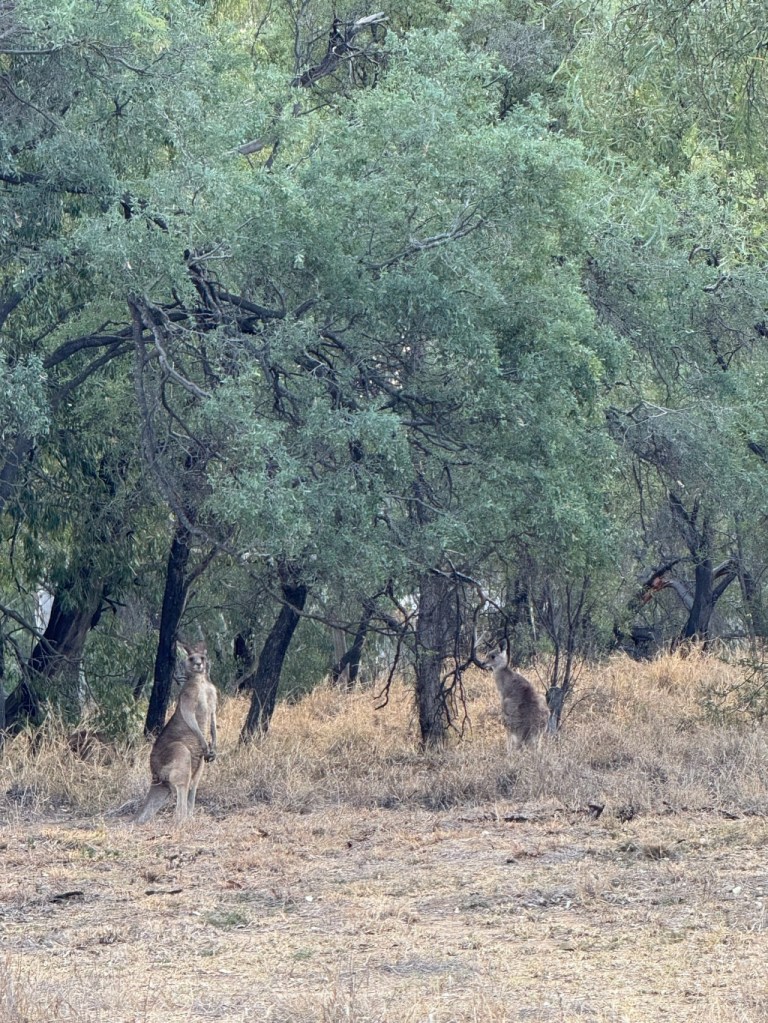
There had once been an aboriginal encampment in the vicinity of the caravan park that had been forcibly broken up in 1957 by the then new local council.
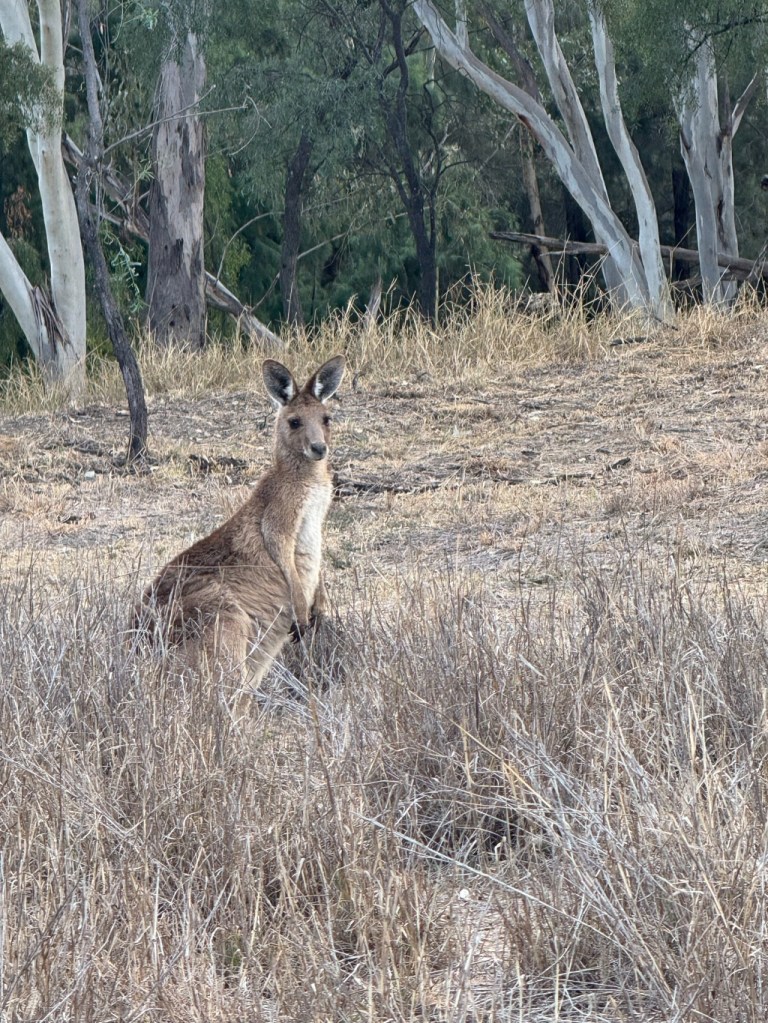
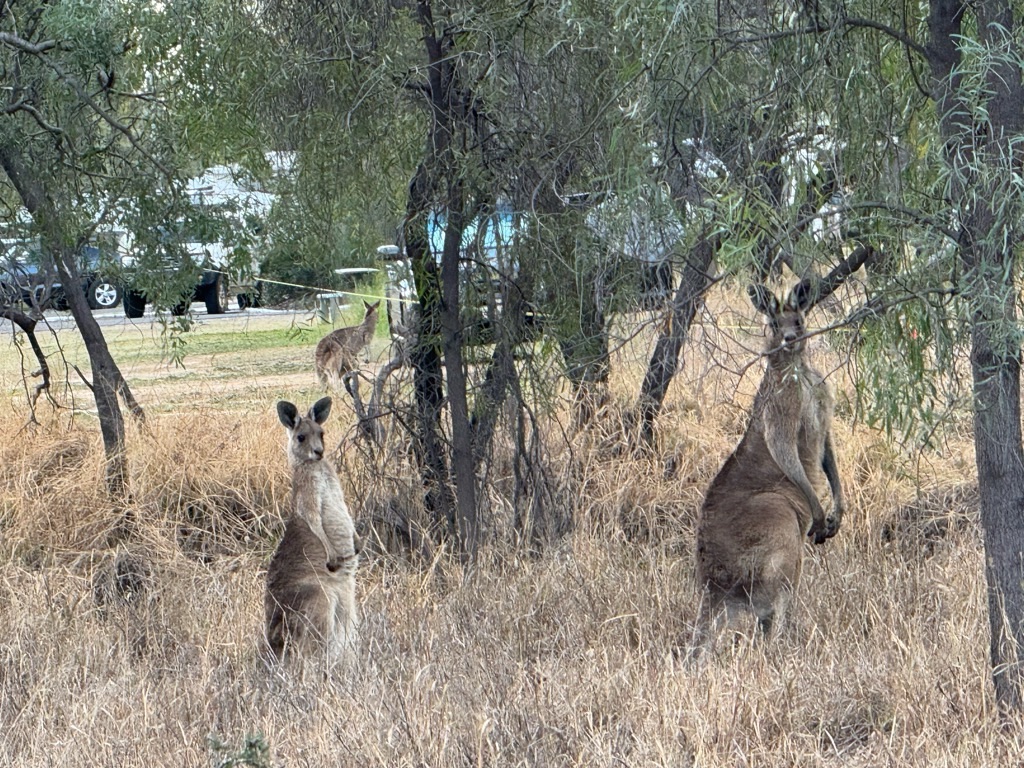
So the local indigenous peoples were not only forced from their traditional homeland during European colonisation in the 19th century but those who managed to escape or resist total displacement and who gravitated back toward their traditional country to Yumba on the outskirts of Mitchell, were forcibly moved on again.
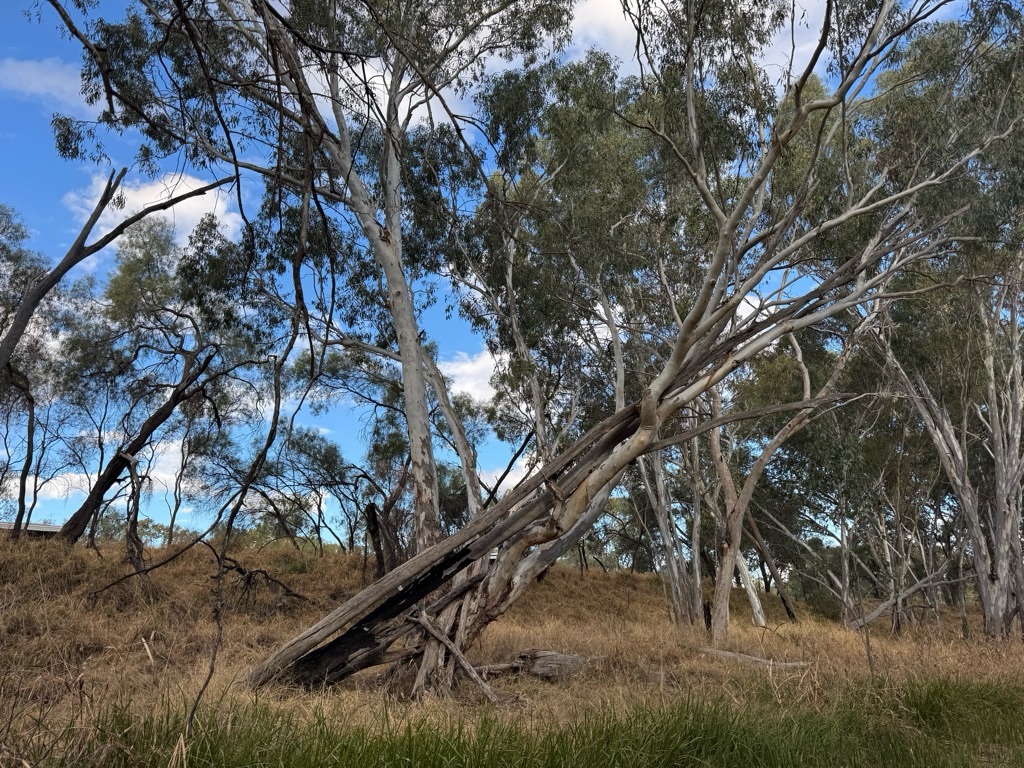
The physical settlement was destroyed, but in the early 1990s, local Aboriginal groups successfully lobbied to have the original and historic Yumba schoolhouse returned to the site and today the area is recognized as a sacred ancestral space.
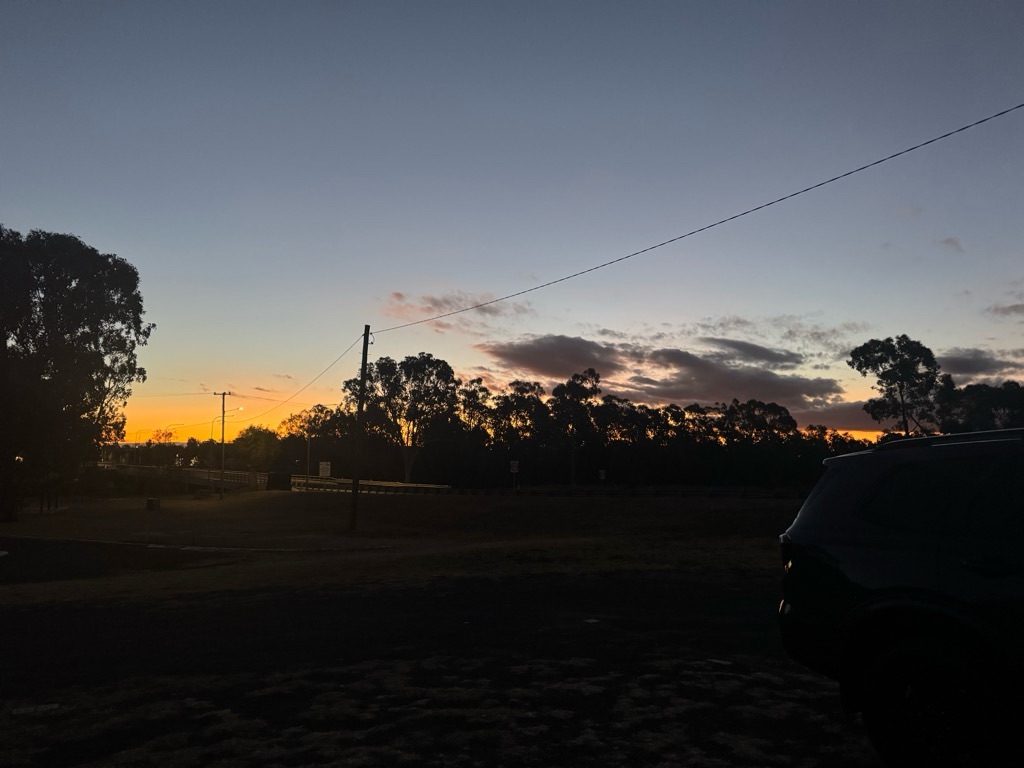
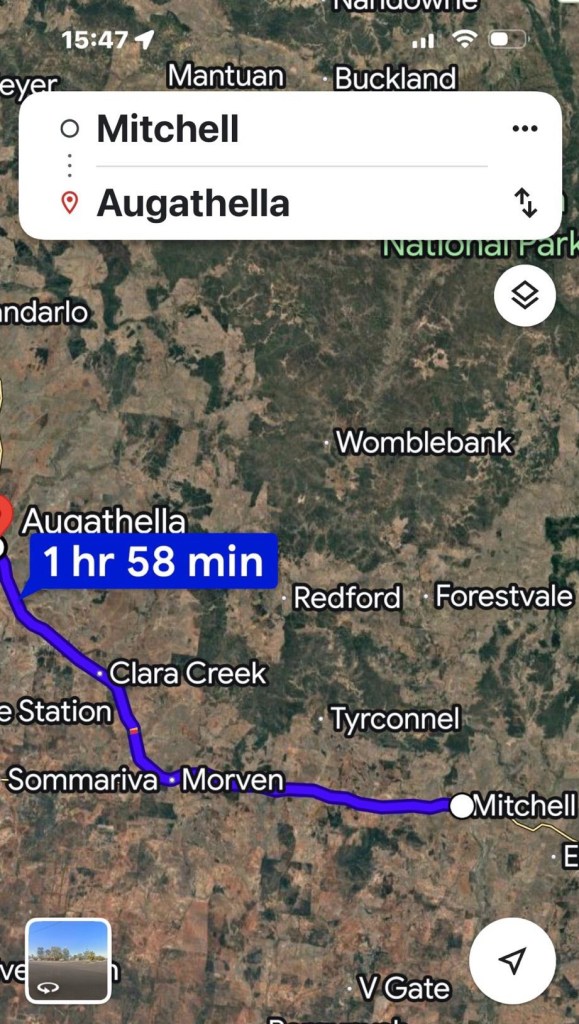
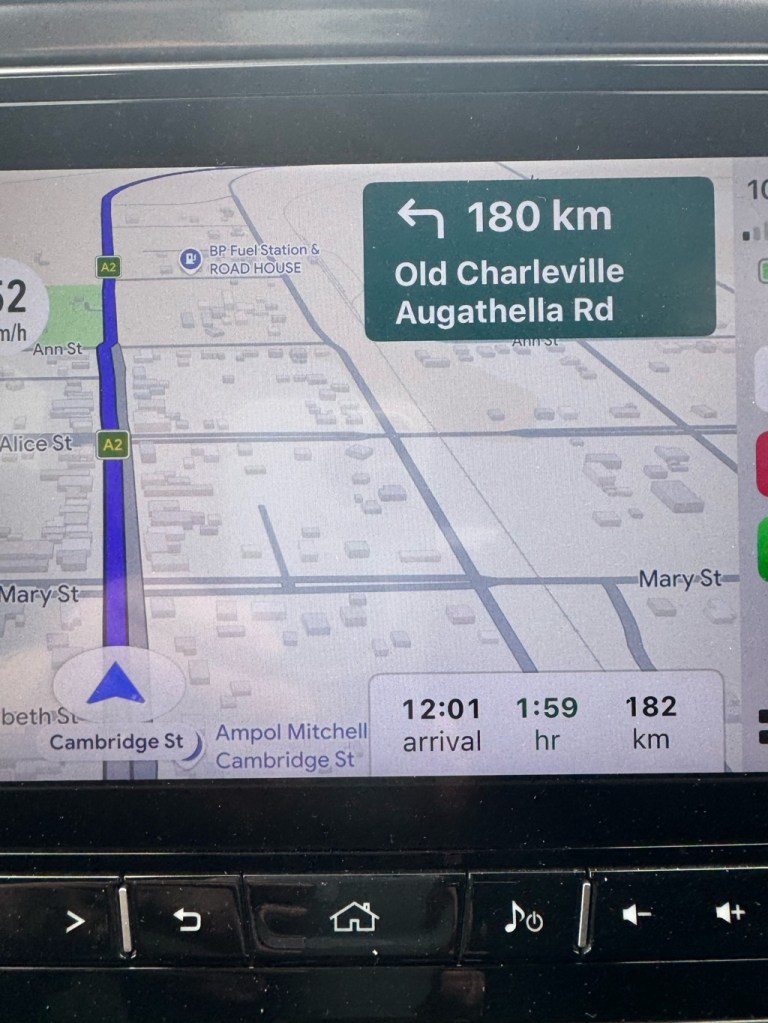
Our next stop was the small town of Augathella (population 328) – a further drive of 180 km northwest.
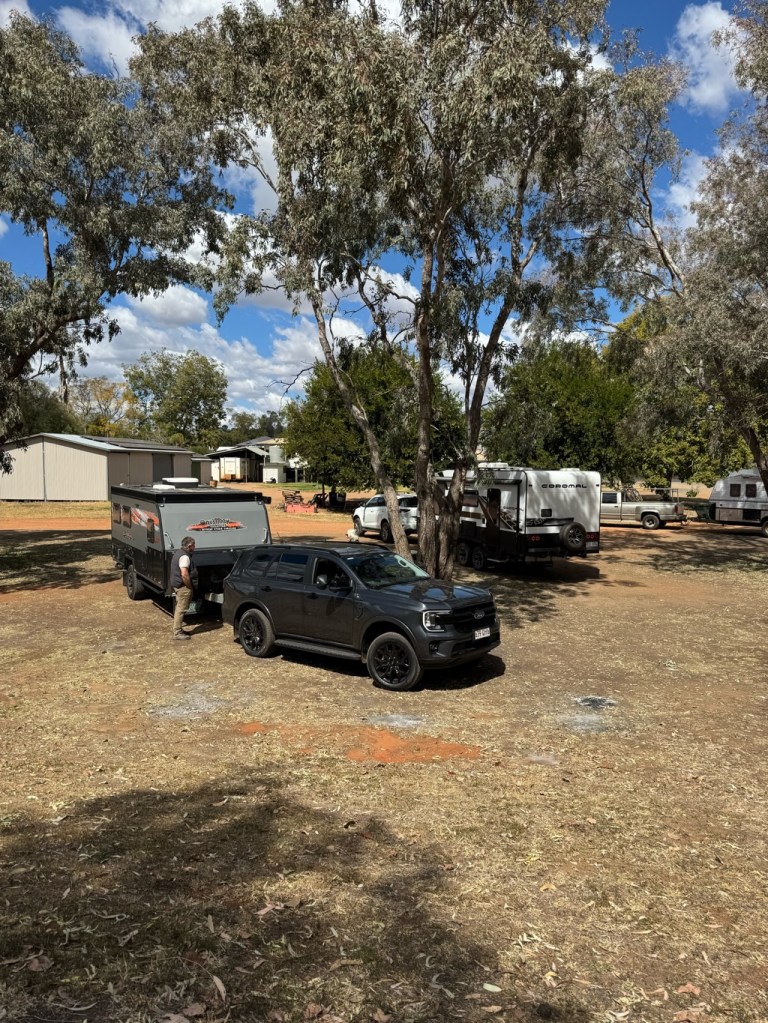
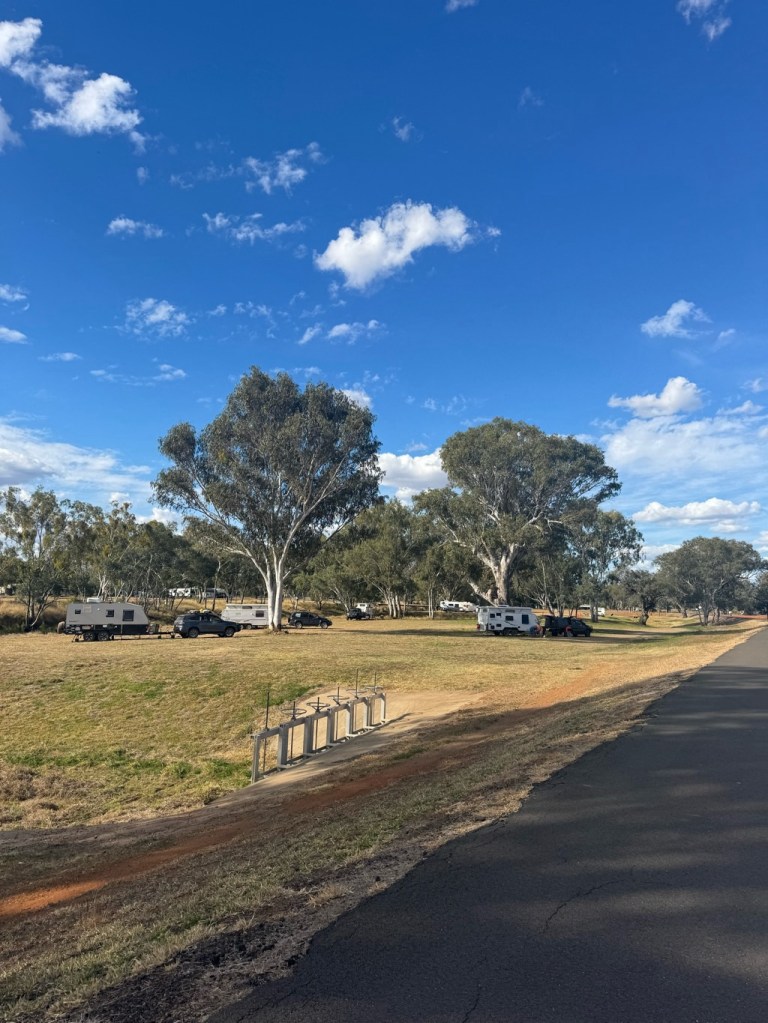
Here we found a very pleasant free campground very handily positioned just opposite the pub.
Augathella has massively wide streets which seem totally over the top for its small population until you realise that the reason for these amazingly capacious highways is to accommodate massive herds of cattle when they are being driven on to the next place along the stock route.
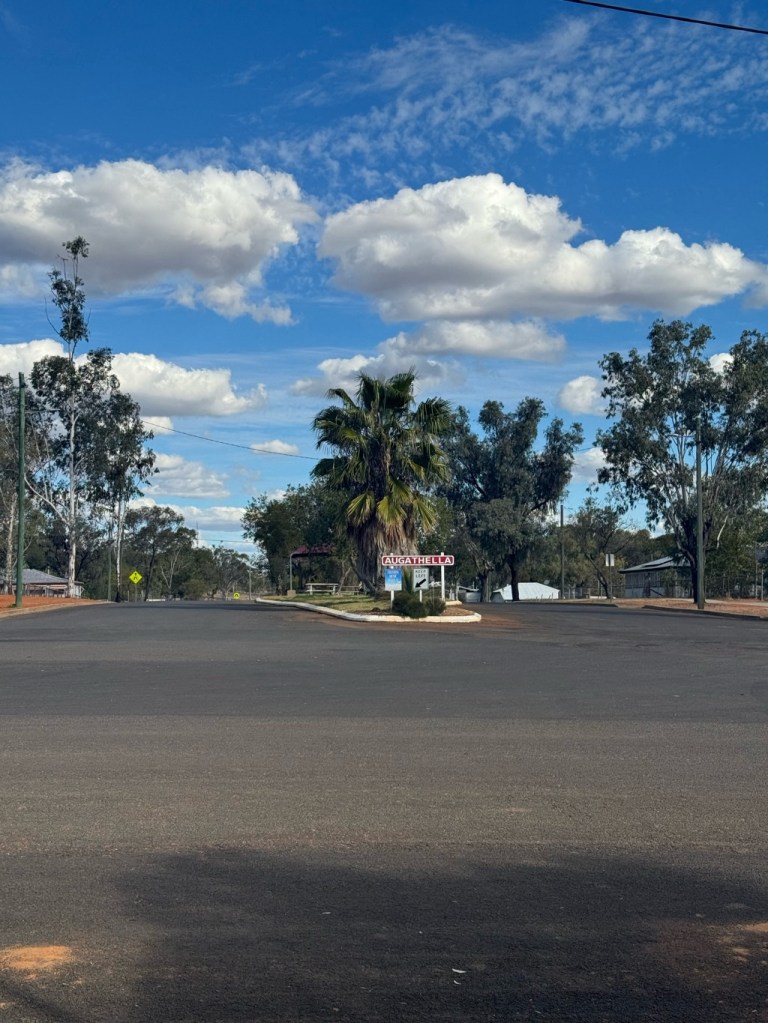
The historic travelling stock routes around Augathella (part of the vast network across Outback Queensland) are still actively used during drier periods or special heritage events.
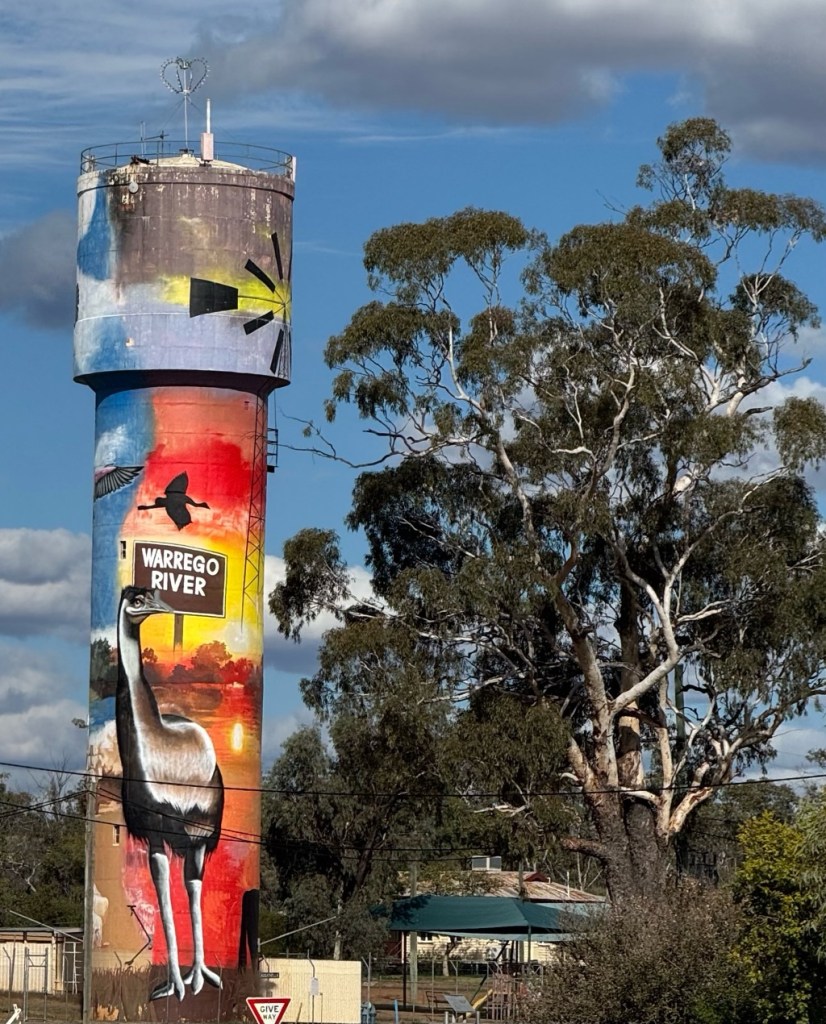
One of Augathella’s claims to fame was that it was the childhood home of Moore Neville Raymond the author of the 1950’s children’s classic “ Smiley” who wrote the stories about his childhood friend Didy “Smiley” Creevey.
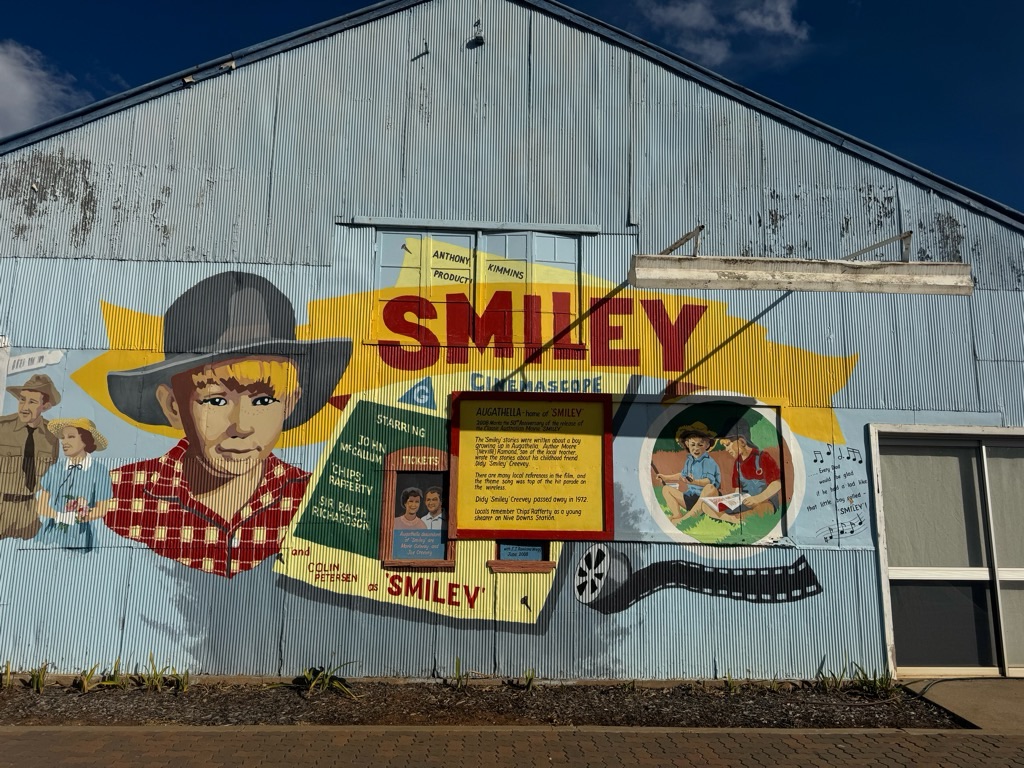
The book was turned into a popular movie starring Chips Rafferty and the renowned English actor Sir Ralph Richardson.
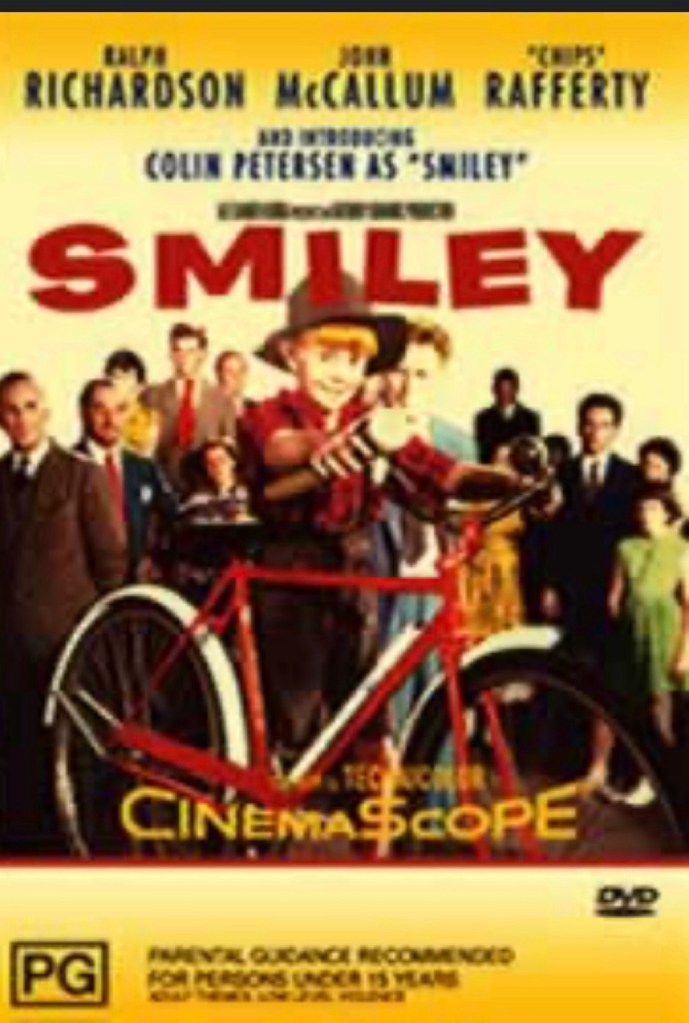
When I was a small girl I loved the theme song to the movie “Little boy sitting on a wooden pier” so it was an unexpected and rather sweet trip down memory lane when we saw the information on the wall of the cinema.
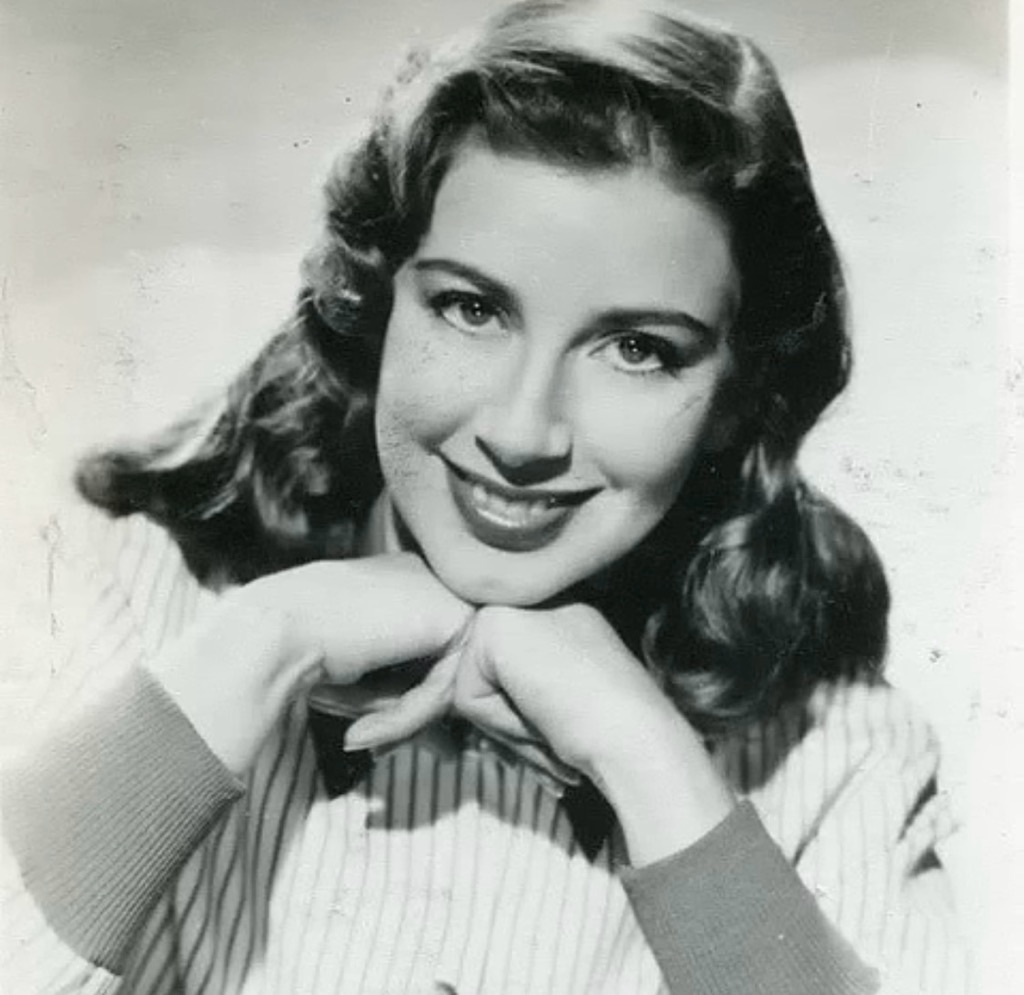
Shirley Abicair – singer of the hit song from Smiley
Apparently there are regular screenings of this Australian classic but disappointingly the cinema was closed the whole time we were there.
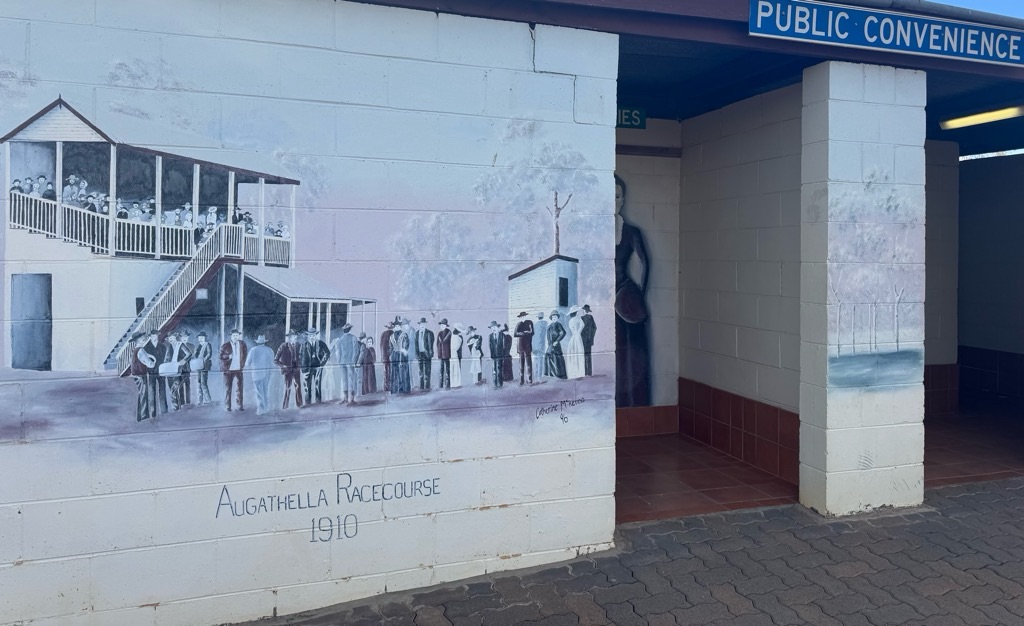
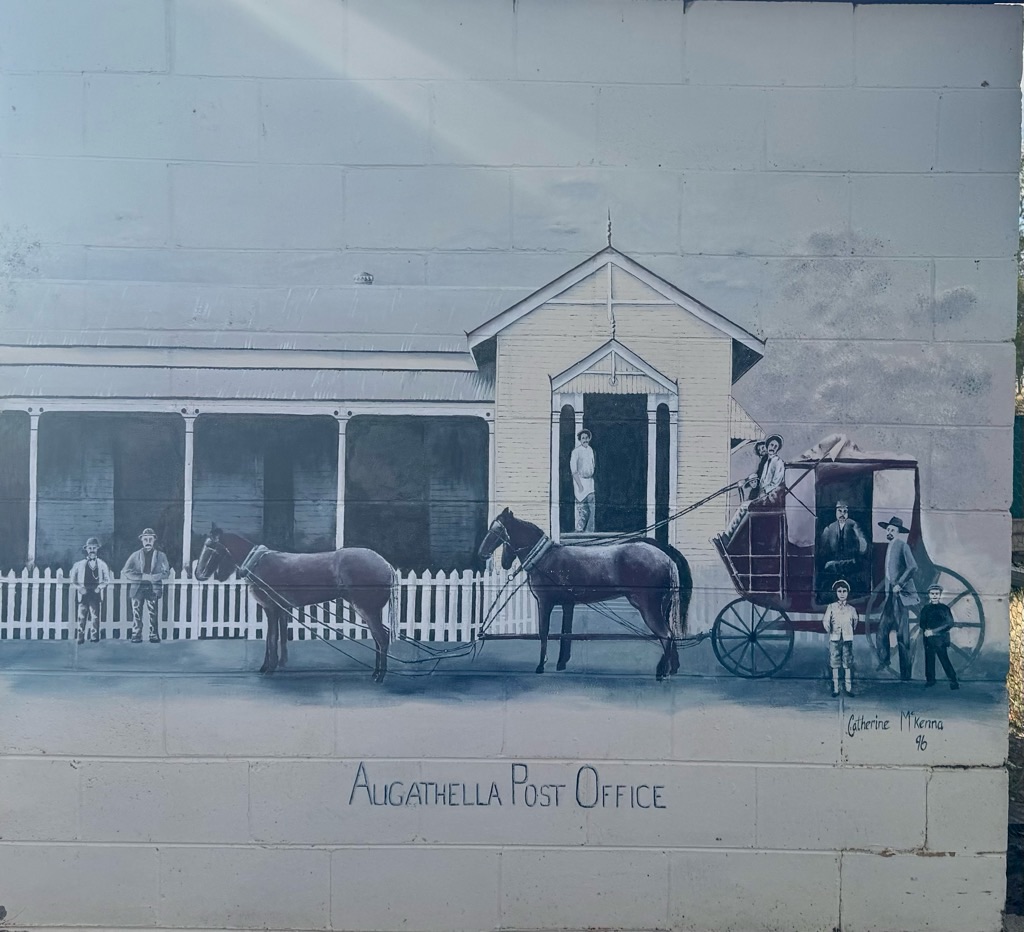
on its walls
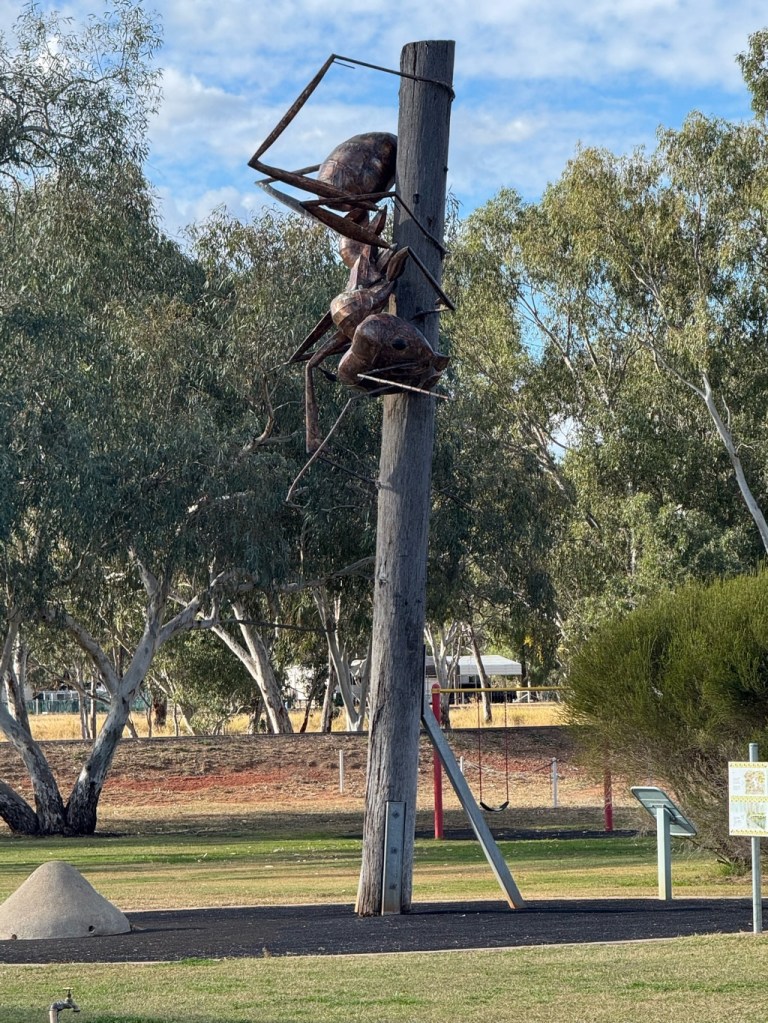
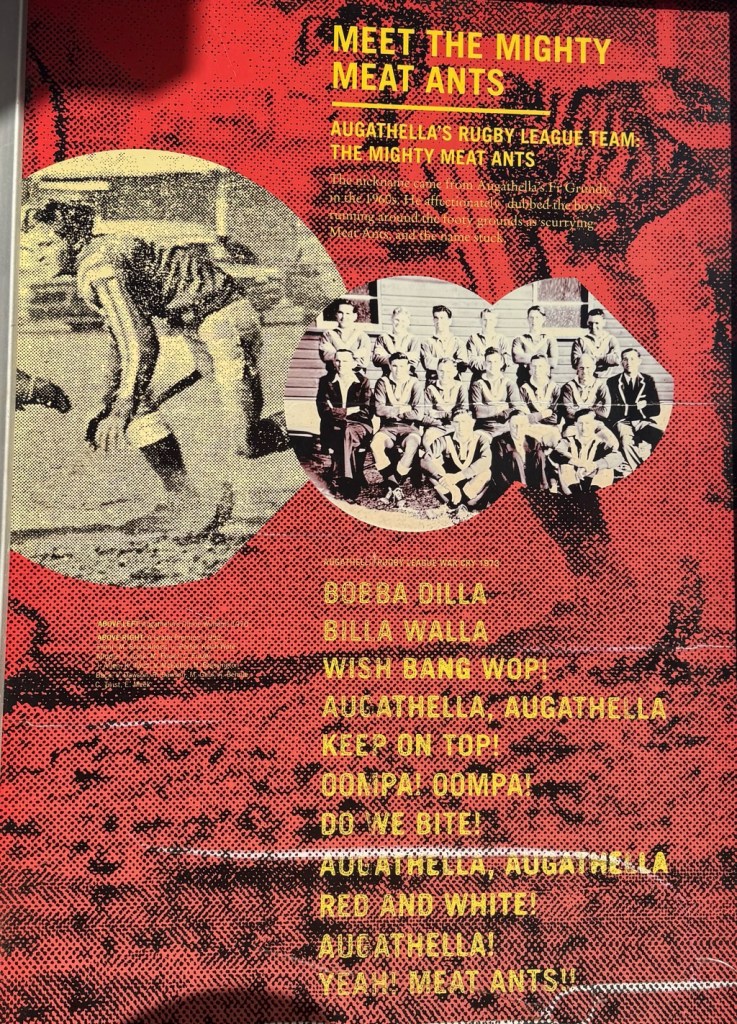
Another Augathella draw card is the giant statue of a meat ant! Apparently these critters are quite aggressive and can give a nasty bite when they feel under threat. If an animal carcass is left near a meat ant nest it will be reduced to bones within a few weeks!
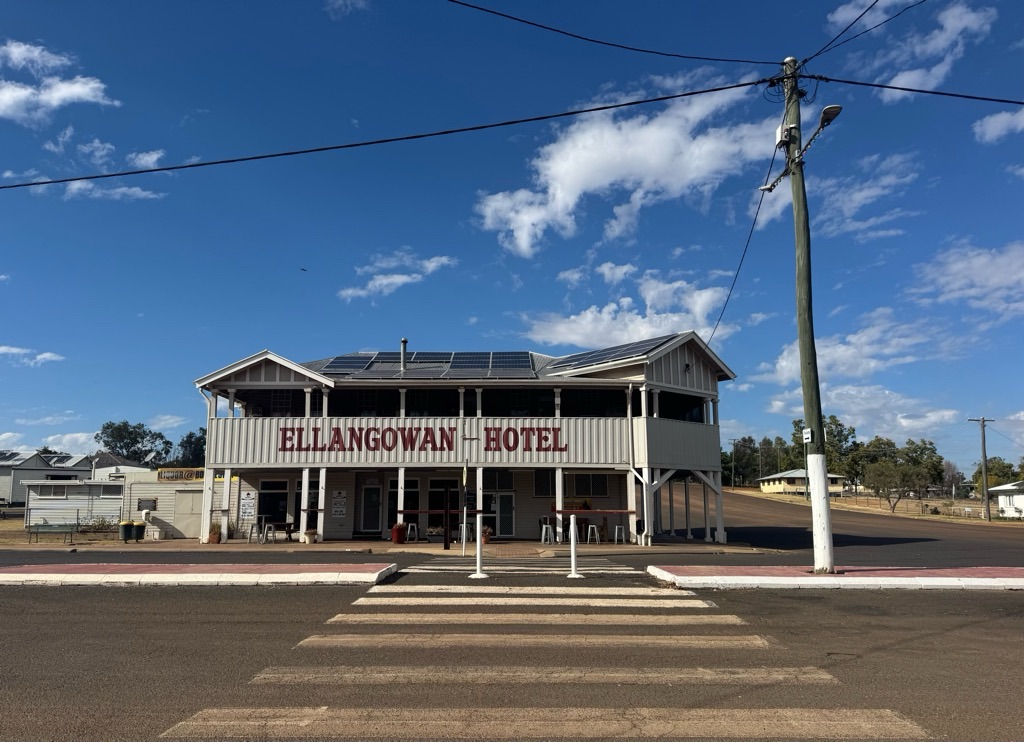
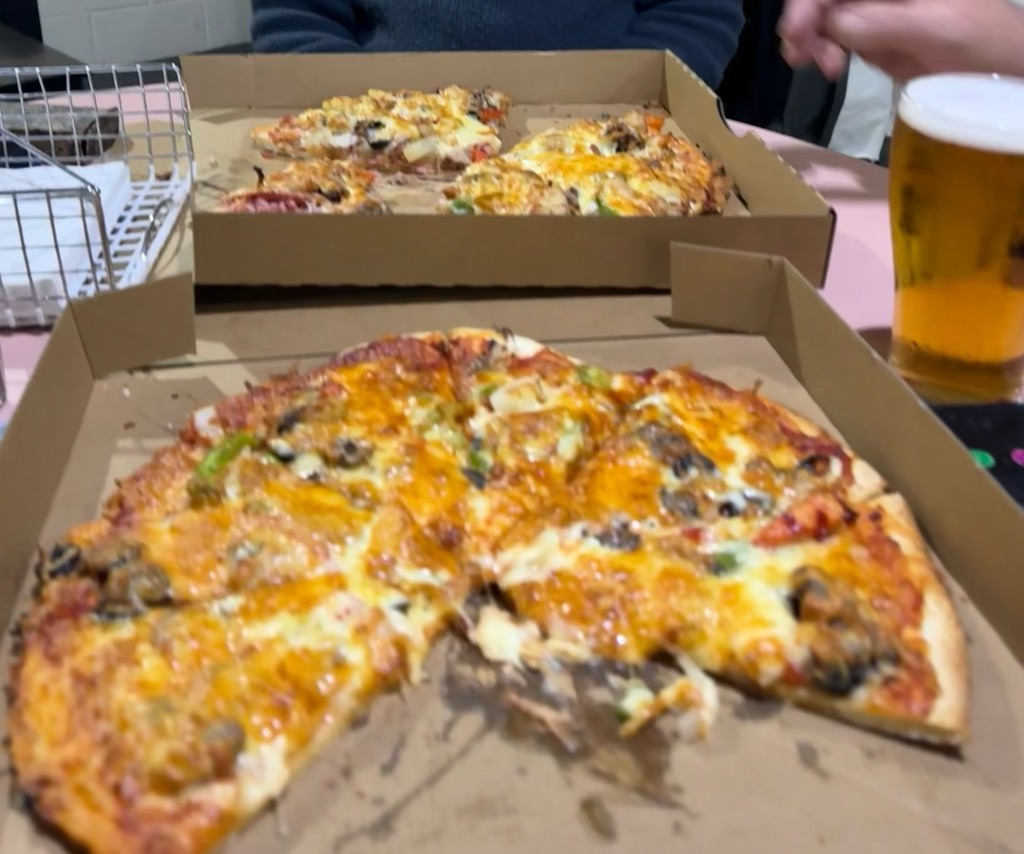
The night before we left Augathella we decided to have a meal at the grandly named pub – the Ellangowan Hotel. As it was a Sunday night (chef’s night off!) the pub only had pizzas on the menu but it was good to have dinner cooked for us and no washing up!


Leave a Reply