Although we had intended to stay longer in Maurole we set off for Ruing, our next official stop, after one night due to the uncomfortable roll in the anchorage.
The water was a magnificent deep navy blue that day and we had a good sail for some of the time although we had to motor sail for a while before stopping overnight in Ciendeh Bay which was beautifully calm. We had a lovely cooling swim there and a great night’s sleep.
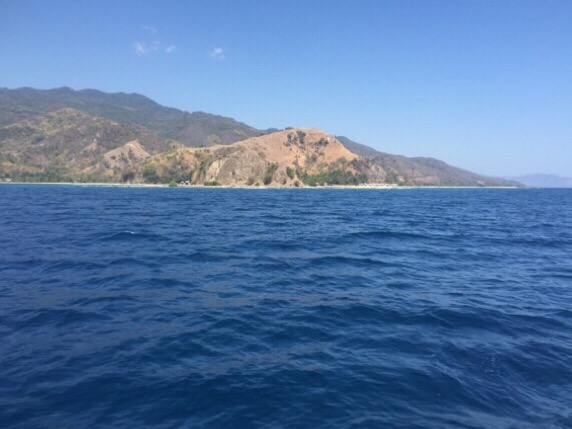 On our way to Ciendeh Bay
The next day there wasn’t much wind again so we motor sailed most of the way and arrived in Ruing at mid afternoon.
We should have learnt our lesson that when in a new anchorage we should take the dinghy to land for the first time in daylight – especially after we copped a soaking in Maurole trying to get onto the beach in the pitch dark.
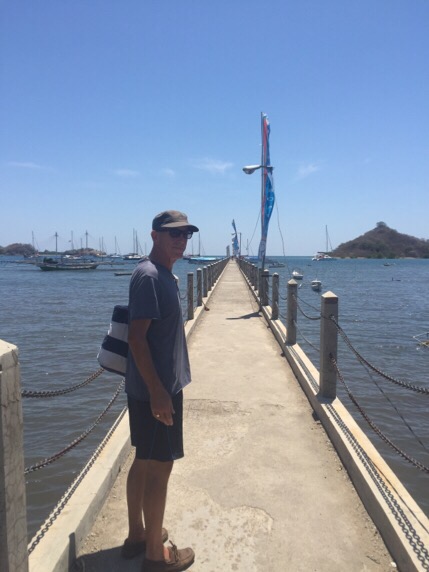 The immensely long finger wharf
We tied up on an extremely dodgy floating wharf which leant drunkenly to one side and which lurched as we walked along it. Then we had to negotiate a steep ladder which was vertical or horizontal or anywhere in between, according to the state of the tide, and which was joined to the safety of the cement finger wharf.
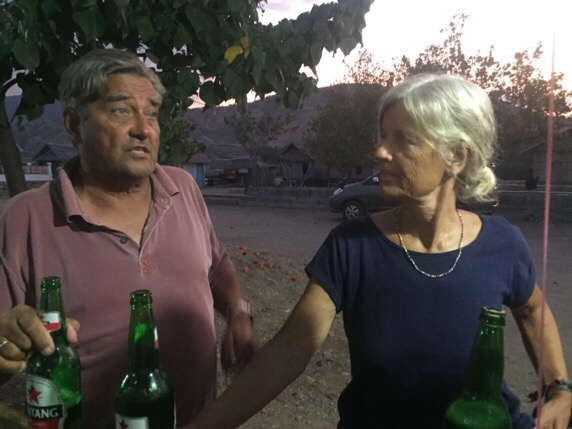 The crew of Pikaditu, a Dutch Boat at the restaurant near the wharf
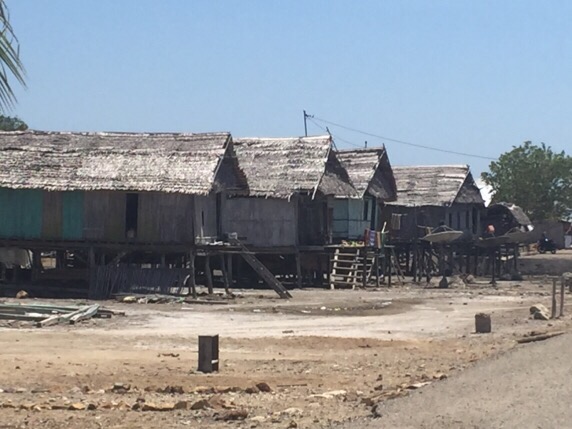 Near the harbour at Riung
 The road to Riung market
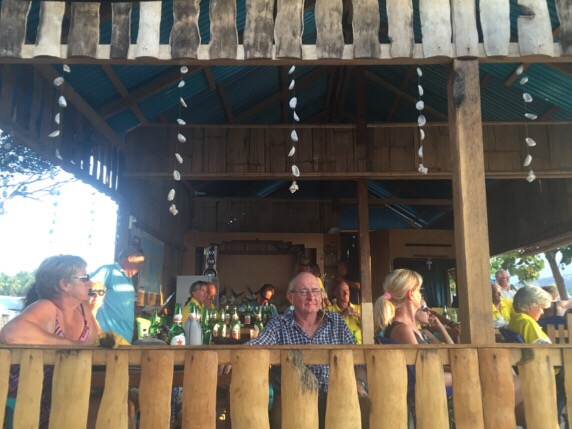 Rally crews at the Ruing festivities
Rather than gala dinner it was a gala tea and cake and thankfully there was only one speech followed by some dancing (everyone shuffling round in a circle).
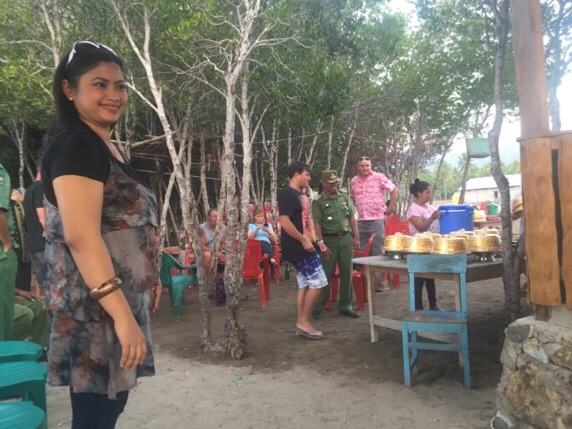 The Gala afternoon tea!
So it was an early start – on land ready to meet the car for a 6.30 am departure.
On our way through Ruing we picked up a huge sack of rice (20 kilos at least), a large envelope and had to stop so our driver could have a chat with someone and make a phone call! So half an hour later we eventually left the little town and started climbing the first mountain on a road that was more pot holes than tarmac!
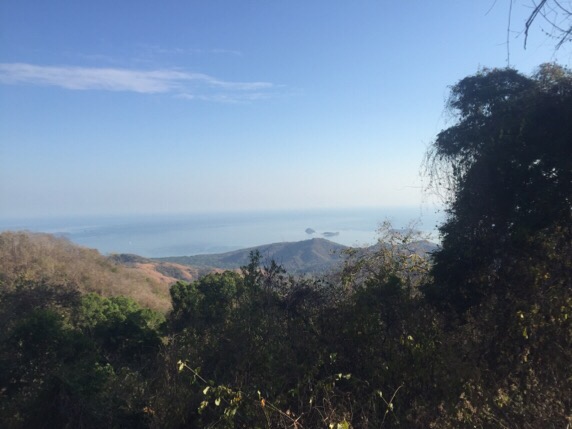 Stunning views but terrible road
Despite the bumpy ride, the trip was excellent as the scenery was breathtaking and we drove through some really interesting little villages.
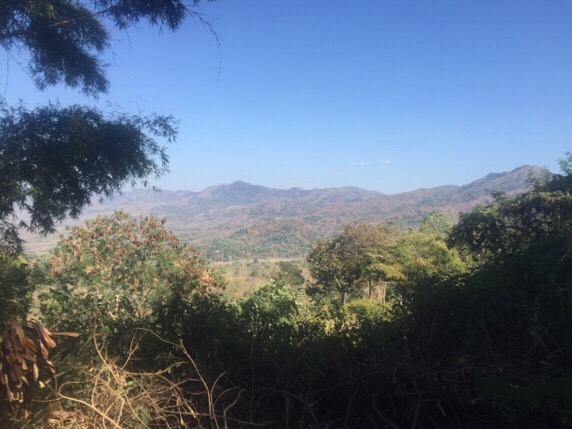
After a couple of hours we stopped for a welcome Nasi Goreng and cup of coffee at a little wayside warung.
 The owner of the warung
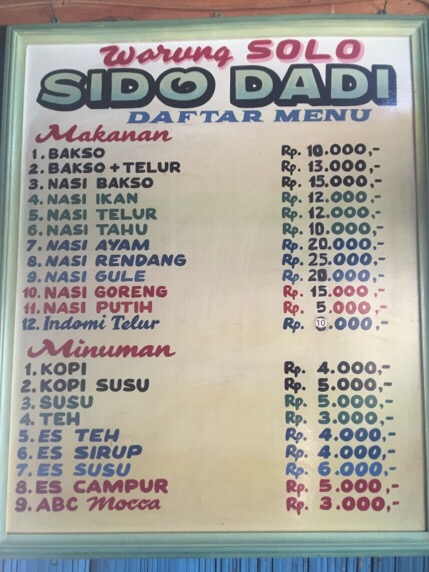 So cheap! 10,000 rupiah is equivalent to $1 Australian!
The road improved on the other side of the mountain and became even better as we climbed up to the town of Bajawa (about 70 km from Riung) in the central highlands of Flores.
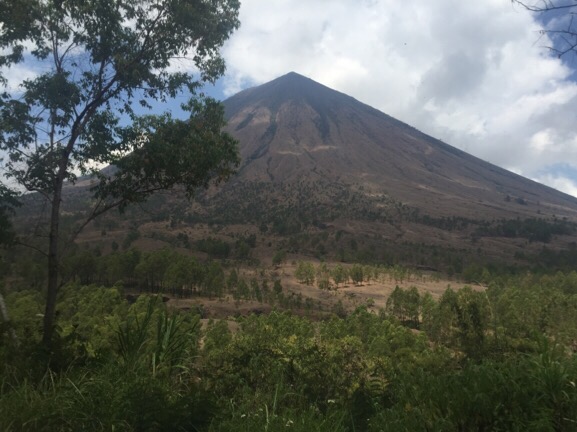 Another grest view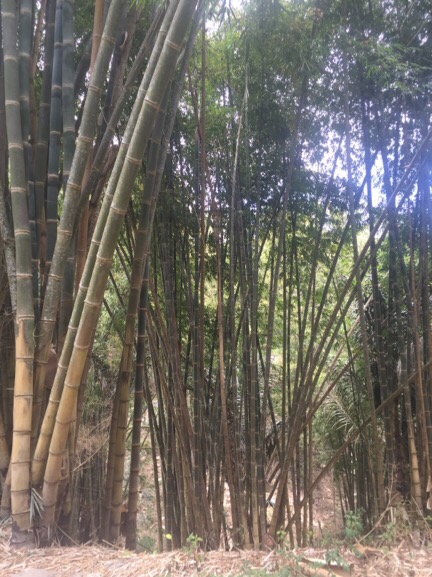
Here we picked up our guide who had excellent English and explained a little about the traditional villages, the ngadhu (carved poles representing the male ancestors of a clan) and bhaga (small huts representing the females).
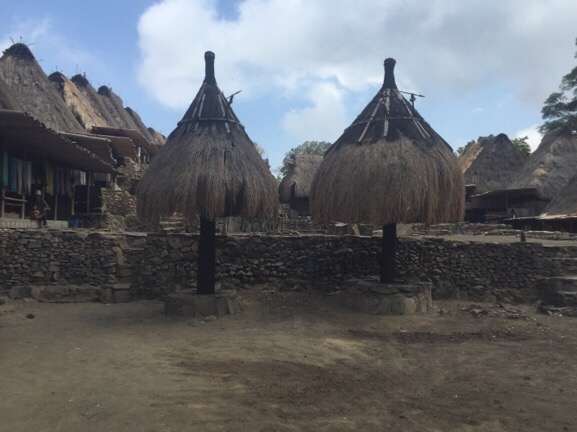 Bhaga and Ngadhu
On the way through to the main tourist attractions – Bena village and Luba – we stopped off at two small collections of dwellings with ancient stone megaliths in front of the houses. It was great to see these in an absolutely non-tourist situation.
These amazing and mysterious megaliths connect the clan members to their dead ancestors – there are two different types of stones – the ones that are placed vertically and a few horizontally – rather like altars. In fact they are the site, even to this day, of animal sacrifices that occur whenever a new home is completed or something else momentous happens.
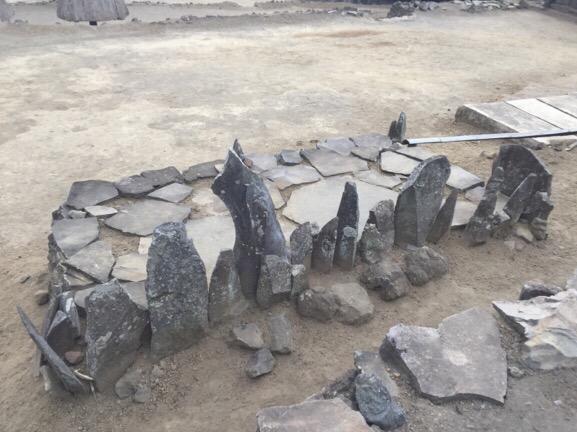 Standing stones in Luba village
When we arrived in Bena we were told that such a sacrifice had happened only days earlier. Several oxen, a larger number of pigs and lots of chickens had been sacrificed. We could see the blood stains and the sickly smell of death was still evident as we walked through the village.
The sacrifices do not go to waste – the carcasses are partially cooked, cut up and then distributed between the hundreds of extended family members that attend the ceremony. Nothing goes to waste. The horns of the buffalo and pig skulls are then displayed outside the new house.
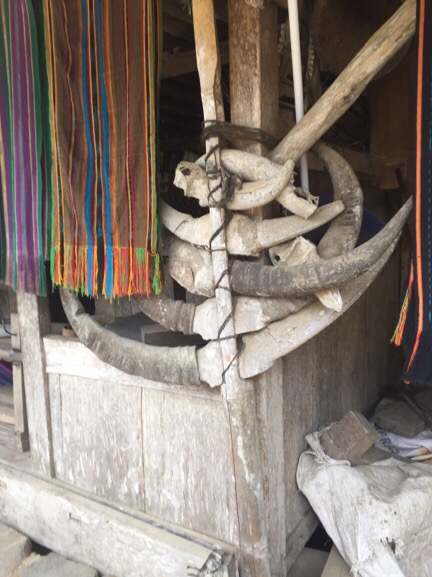 Sacrificial remains
We were interested to see at Luba village that there were Christian headstones in amongst the megalith stones. It seems that the clan members are happy to accept Christianity but continue their ancestor worship as well. I suppose there’s no harm in having a bet each way!
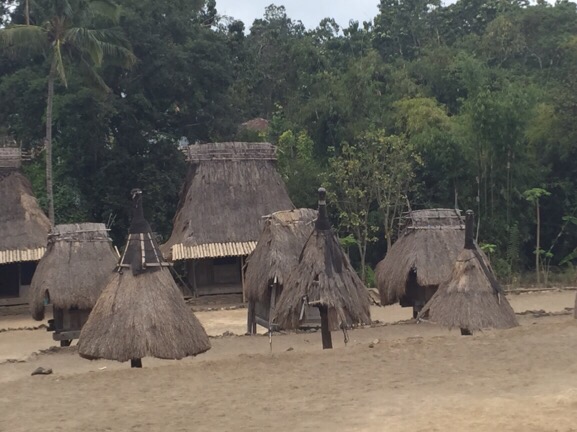 Bena village
The traditional villages were just amazing – although they are visited every day by tourists they are not there for tourists. They genuinely exist as part of the life of the people – both the matriarch who lives there and all her descendants who throughout the years come back to visit to touch base with their family both dead and alive. Unusually these clans are matriarchal and everything is passed on through the female line.
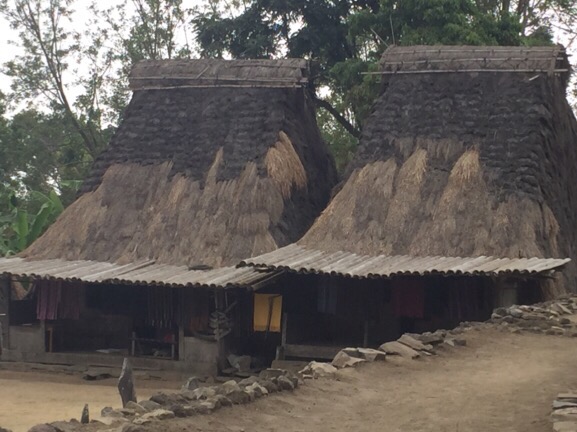 Luba village
 Houses in Bena
Outside the intriguing thatched houses the women spun cotton, prepared looms and wove cloth. It was fascinating to see how they introduced the patterns into the warp dyed (Ikat) fabric.
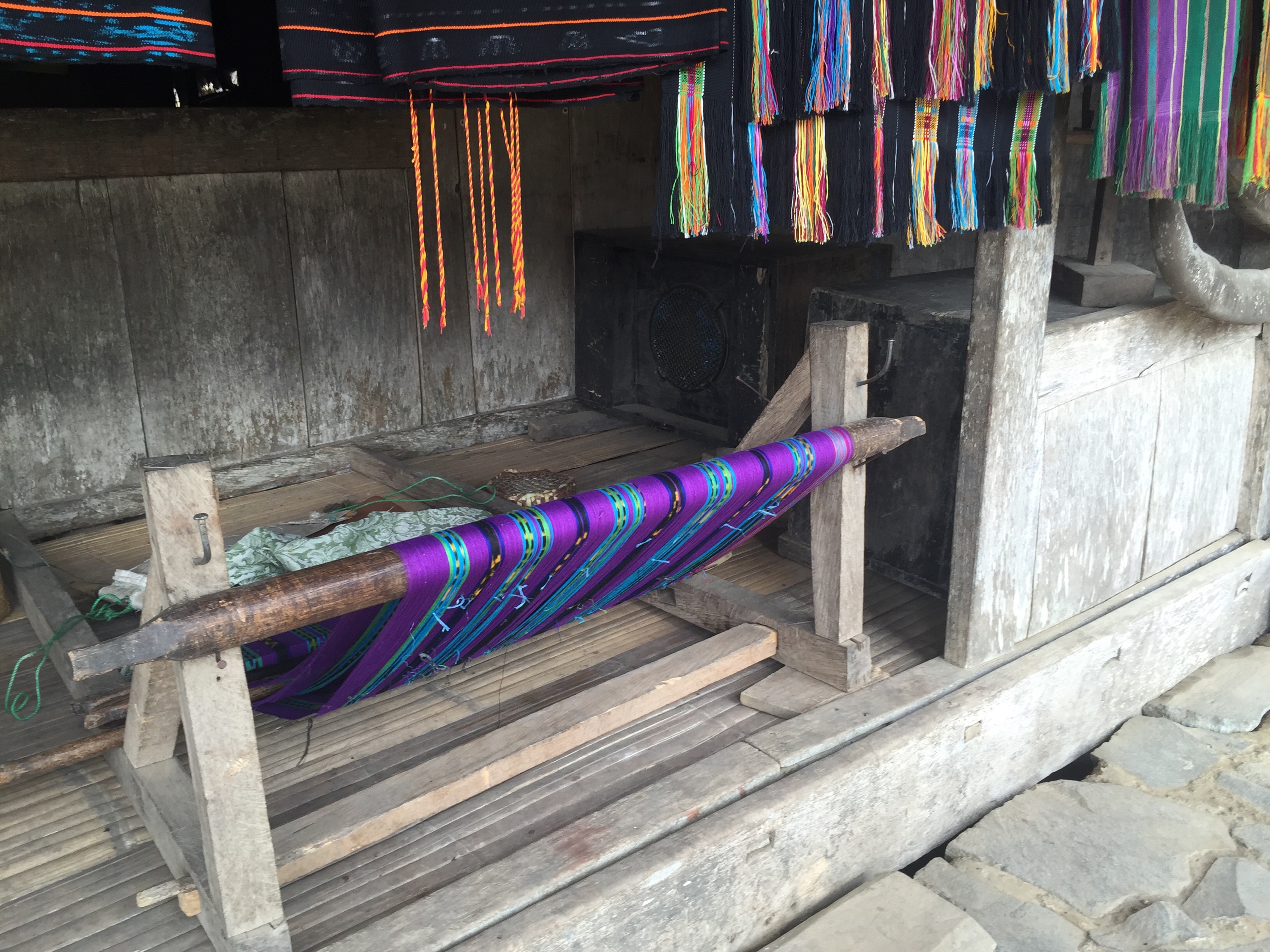
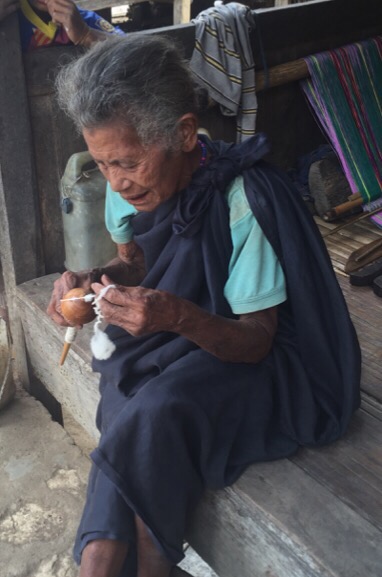 Lady spinning cotton
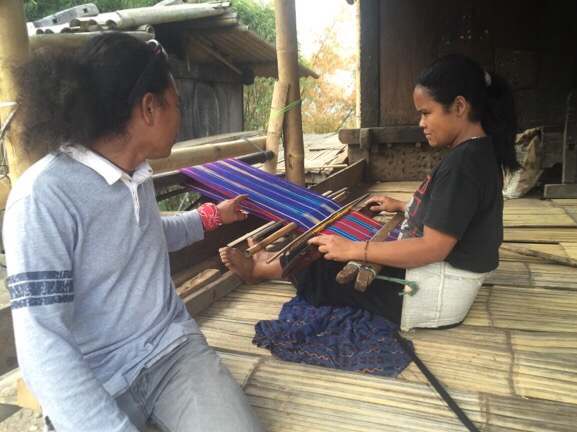 Ikat weaving in progress
On the way back to Ruing we stopped to drop off our guide in Bajawa and bought some fruit and veg in the market and then started the long bumpy trip home.
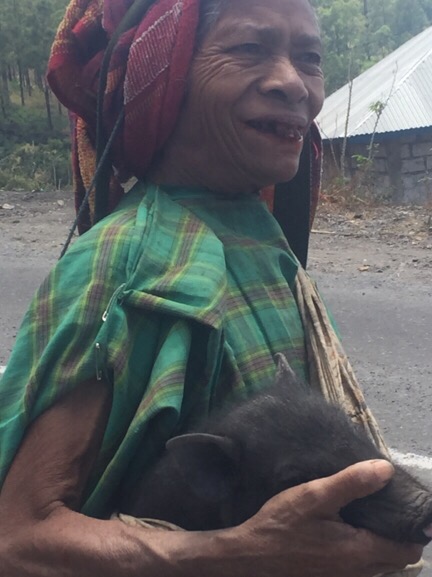 Loved this lady and her very noisy little pig!
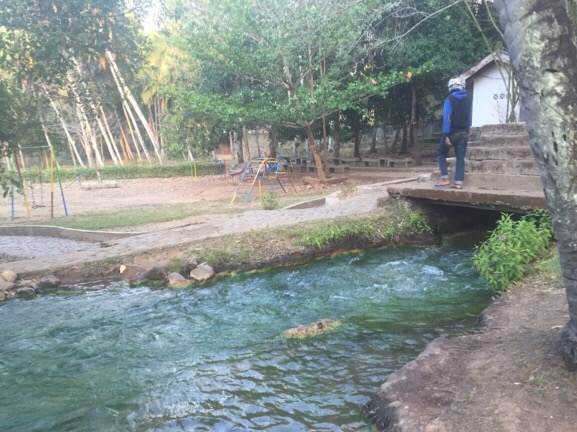
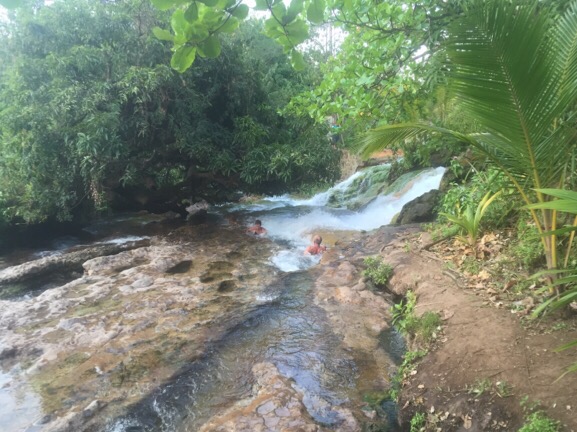
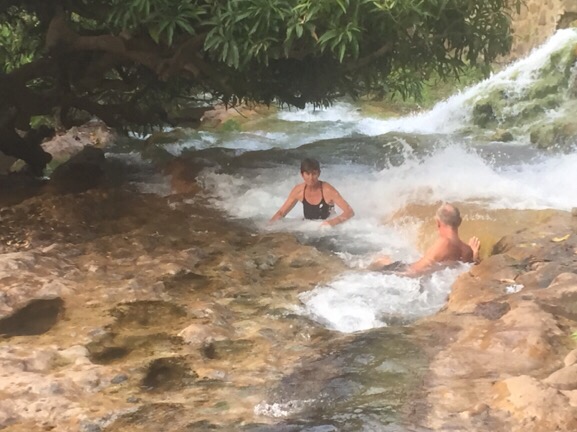
A quick diversion to a lovely park with hot springs was our last stop before enduring what seemed hours of extreme four wheel driving. Our travel companions jumped in but we were happy just to paddle rather than go through the drama of changing in the rather unappealing bathrooms or the exposed changing rooms
 .
.
We arrived back quite weary but very happy to have made the trip to catch a glimpse of a culture which hasn’t changed for possibly many thousands of years.


 Salty tales from Bali Hai on Sunday
Leave a reply to julia Cancel reply